educationDec 1, 20251:00:24pending
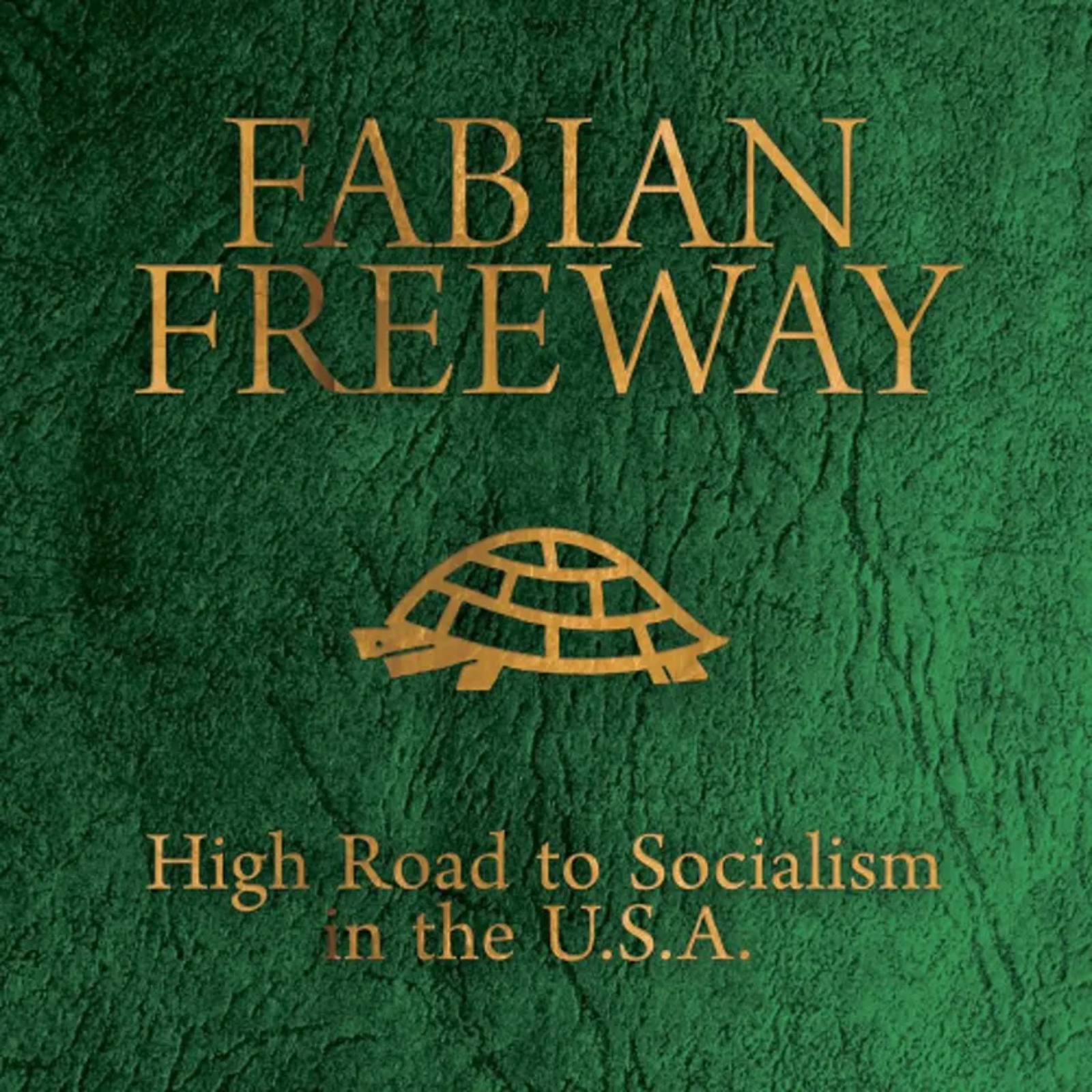
Fabian Freeway by Rose L Martin (1966) - Part 1
About this episode
Grammar – What They Say
- Fabian socialism is portrayed as a covert, elite-driven movement undermining constitutional government in Britain and the United States.
- “A revolutionary secret society behind a beguiling false front of benevolence and learning.”
- The author claims Fabian socialism and communism share the same final goal, differing only in tactics.
- ⚠️ “The ultimate objective of the Fabian socialist movement is no different than the ultimate objective of the communist movement.”
- Fabian strategy is defined by gradualism, symbolized by the tortoise and the motto Festina lente (“Make haste slowly”).
- The United States is depicted as already deeply infiltrated through bureaucracy, executive agencies, and elite intellectual circles.
- “Fabians were more successful in capturing administrative than legislative posts.”
- Chapter One introduces Turtle Bay as an American Fabian hub linking intellectuals, editors, and policy influencers.
- The origins of Fabianism are traced to late-19th-century Britain, rooted in secularized, middle-class intellectual discontent.
Logic – How They Argue
- The argument relies on historical progression: Fabian success in Britain → similar methods applied in the U.S. → inevitable socialist outcome.
- ⚠️ Implied premise: What worked once will work again if unopposed.
- Fabian secrecy (“obscurantism”) is treated as proof of revolutionary intent, not prudence.
- Socialists and communists are framed as strategic partners, not rivals.
- ⚠️ “The Communists can be regarded as frontline troops while the Socialists serve as the big guns in the rear.”
- Growth in federal bureaucracy is used as quantitative evidence of Fabian advance, assuming ideological causation.
- Individual figures (e.g., Schlesinger, ADA officials) are cited to generalize about systemic capture.
Rhetoric – Why It Persuades
- Persistent war metaphors cast politics as existential struggle rather than policy debate.
- Strong elite-betrayal framing: respectable, educated figures are portrayed as masking revolutionary aims.
- ⚠️ “Endow social revolution with an aura of lofty respectability.”
- Moral absolutism: Fabianism is associated with decay and death; resistance with survival and freedom.
- Appeals to reader vigilance flatter the audience as awakened truth-seekers.
- “Instead of being anesthetized by slogans or lulled by promises.”
- Scholarly citations are blended with alarmist tone to combine authority and urgency.
Get every episode summarized
Each time HEYS REVIEWS Podcast publishes, we email you a written briefing from the transcript — the topics, who appeared, and any specific claims, with the ad reads skipped.
Email me new episodesFree for 3 shows. No card needed.
Hosts & guests
No transcript yet
This episode has not been transcribed. Request it and it moves to the front of the queue.
More episodes
More from HEYS REVIEWS Podcast

Fabian Freeway by Rose L Martin (1966) - Part 7
HEYS REVIEWS Podcast
Feb 1, 202656:05pending

Fabian Freeway by Rose L Martin (1966) - Part 6
HEYS REVIEWS Podcast
Jan 25, 20261:40:47pending

Fabian Freeway by Rose L Martin (1966) - Part 5
HEYS REVIEWS Podcast
Jan 15, 20261:44:33pending

Fabian Freeway by Rose L Martin (1966) - Part 4
HEYS REVIEWS Podcast
Dec 22, 20252:01:58pending