About this episode
Get every episode summarized
Each time This Week publishes, we email you a written briefing from the transcript — the topics, who appeared, and any specific claims, with the ad reads skipped.
Email me new episodesFree for 3 shows. No card needed.
Hosts & guests
Transcript ready
84 searchable segments. Every word is indexed and playable.
Full transcript
This Week — Expert warns of impact inflation will have on construction sector. Machine-transcribed; use the interactive transcript above to jump the player to any line.
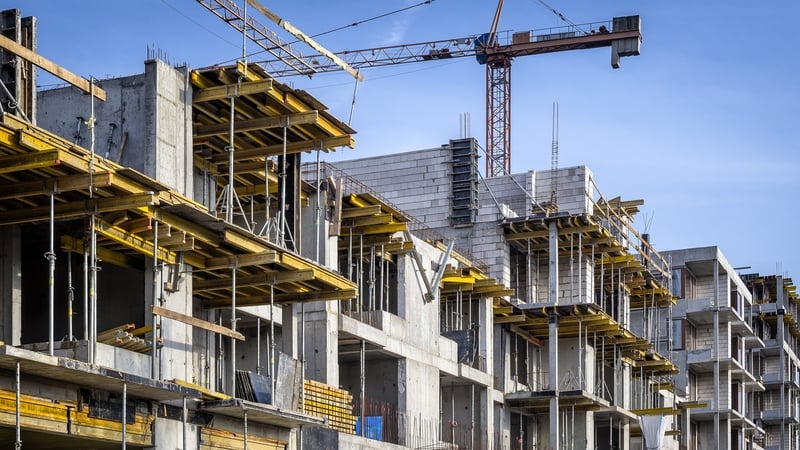
Back home, there's mountain concern in government circles that the inflationary impact of the U.S. and Israeli war in Iran might not just worsen the cost of living crisis, but also negatively impact its crucial house-building plans. Yesterday, the Yemeni rebel group the Houthis increased that pressure after they threatened to block a second oil trade route through the Red Sea. The interruption to normal trade through the Strait of Hormuz has already dramatically pushed up global energy prices. Our reporter, Ethan Adal, has been taking a look at the emerging signs of trouble, starting by talking to builders at Brooks Suppliers in San Differt, South Dublin. It seems everything is going up day by day, you know, it's very hard to judge. Does that mean it's hard for you to give your customer a kind of a guide price, or do you fix yourself on prices? And we do, but the cost of labor is going to cost the transports, the cost of materials, kind of, so we have to increase our prices accordingly, but like the clients, they are understanding most of them, but it is difficult, very difficult, it's getting more
difficult. Everything is going up all the time, like with the diesel, and then obviously, costs of everything getting shipped in, obviously, that's going to get hit next. If you're given a price, you have to say, well, that's up to a certain date, and after that date, then it's going to have to change. Have you noticed inflation going up? Absolutely, yeah. Has it been passed on to your customers, or are they kind of understanding? I think it has to be passed on to customers. We're not paying for it. Yeah, materials are going up constantly, yeah. Everything's a little airy, it's very difficult to give them a fixed price, yeah. You know, as a customer, all they want to do is get a, that the lowest price is possible, but as a builder, we suffer from it then, like... Speaking to builders, as their shopper supplies in Brox and Sandyford in Dublin, it's clear that inflation is picking up. Price shocks since COVID-19 have caused some serious spikes in inflation over the past five years, but it had looked like it was calming, that is, until four weeks ago, when Israel and the US attacked Iran. Certainly, the unfolding situation is very concerning. Undoubtedly, if the conflict continues, it will have an inflationary impact on construction
prices as well as more generally in the economy. Tomas Kelly is the vice president of the Society of Charter Travellers, Ireland. Construction in general, really, is a pretty highly energy-intensive industry, and fuel underpins materials, production, transportation, and the plant operation. So those heavy industries, the steel and concrete, you know, would obviously be subject to those kind of higher increases. A world event that disrupts the international supply of energy causes a shock to the global economy that results in price rises. Inflation can be felt very quickly in items that are bought in small quantities regularly, such as food and petrol. However, for large-scale projects like construction, it can take longer to be felt, but also last longer in its impacts. So we'll see fuel and energy costs increase, we see electricity and gas prices increase, we see shipping and logistics costs increase, and then all the input materials, the plastic, the metals, the chemicals, they increase. Dr. Paul Davis is a lecturer in public procurement at Dublin City University.
We've had these over the last three to five years from COVID onwards, which has shown supply chains are very precarious, where I had 100 euros, when I've got an increase in costs, that 100 euros doesn't buy the same amount as it did previously. From a consumer point of view, it knows that instinctively. The problem with public procurement is that we've contracts in place, and those contracts in some cases don't literally have any escalation clauses in place. So contractors then are alive, but they become economically stressed. That economically stressed says we can't deliver to you, because the cost of chemicals that the cost of construction materials are actually increasing to such an extent they're outside of the contract that we're doing. Ireland plans to spend 275 billion euros before 2035 on public capital investments, according to the government's national development plan. This includes strategic projects in water, transport and energy, as well as the delivery of more homes and schools. The sum that we have the 275 billion that we're talking about by 2035, we've only got
that fixed amount of money, but it's now going to buy less concrete, less steel. Government needs to get realistic about the way that they're communicating this message. We're all talking about the consumer impact, but we need to look at what this impact is going to be on the services impact over the next six to 12 months, because it will have an impact. It's not something that we can avoid. We need to have a public conversation on us so that people are aware of what this means. If I increase my energy costs, which will happen, there's no doubt that that's going to happen. That means that I have to knock back services being delivered, whether that's in schools, whether that's in health, whether that's in roads, whether that's in construction, and I don't think we're having that on us a conversation yet. Ethnidal reporting, that's our lot for today. Mark Dwyer was on sound. Our broadcast coordinator with Stephen Higgins, Connor Barrens is the editor, staying tuned for Sunday Sport, which is up next here on RT Radio One, but from me Paul Cunningham and all the team, thanks for listening and take care.
More episodes
More from This Week

Minister Chambers on Budget 2027, Carbon Tax, Fare Hikes
This Week

Legal row sees Tusla paying for legal aid for children
This Week

Remembering Frank McDonald
This Week

Summer tourism 'on par with last year' - Fáilte Ireland
This Week