About this episode
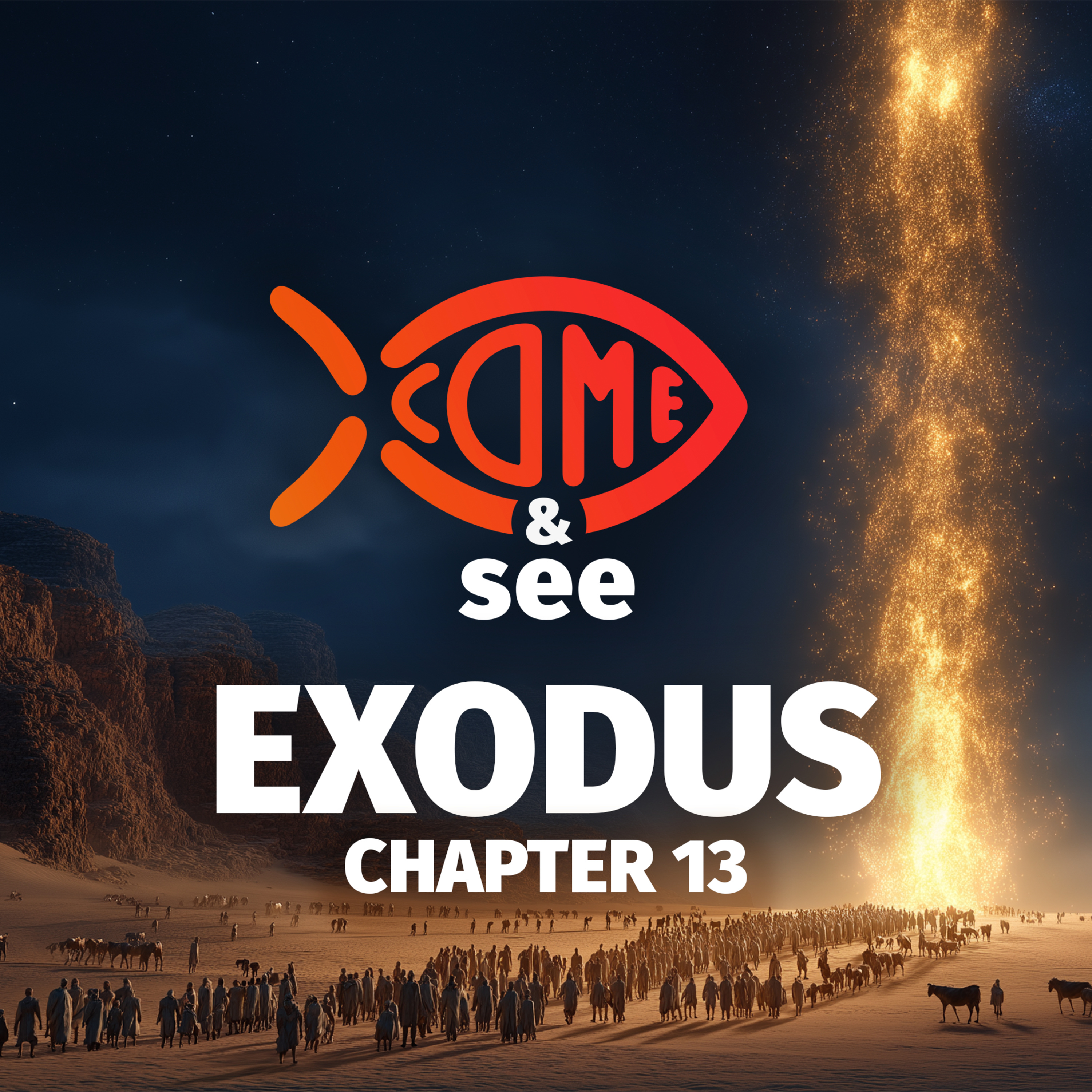
God could have taken Israel straight to the Promised Land. The direct route along the coast of Philistia was shorter, faster, and more obvious. God chose not to take it. Instead, He led them the long way — through the wilderness — because He knew that if they faced war too soon, they would run back to Egypt.The God who parts seas also plans routes.
And sometimes the longer road is the more merciful one.In this episode, we explore Exodus chapter 13 and the rich theology woven into Israel's departure. The consecration of the firstborn — every firstborn son belonging to God, every firstborn donkey redeemed by a lamb — foreshadows the redemption of humanity by the Lamb of God.
The Feast of Unleavened Bread is not just a commemoration of the past; it is a call to live in the reality of freedom right now.And then there is the pillar of cloud by day and the pillar of fire by night — the visible, tangible, constant presence of God guiding His people. He did not speak from a distance. He went with them.
Key questions explored:
- Why did God choose the longer route — and what does this reveal about how He leads us?
- What does it mean that every firstborn donkey had to be redeemed by a lamb — or have its neck broken?
- How does the consecration of the firstborn point to Christ as the firstborn of all creation?
- What is the theological significance of the pillar of cloud and pillar of fire?
Get every episode summarized
Each time Come & See Podcast publishes, we email you a written briefing from the transcript — the topics, who appeared, and any specific claims, with the ad reads skipped.
Email me new episodesFree for 3 shows. No card needed.
Hosts & guests
No transcript yet
This episode has not been transcribed. Request it and it moves to the front of the queue.
More episodes


