About this episode
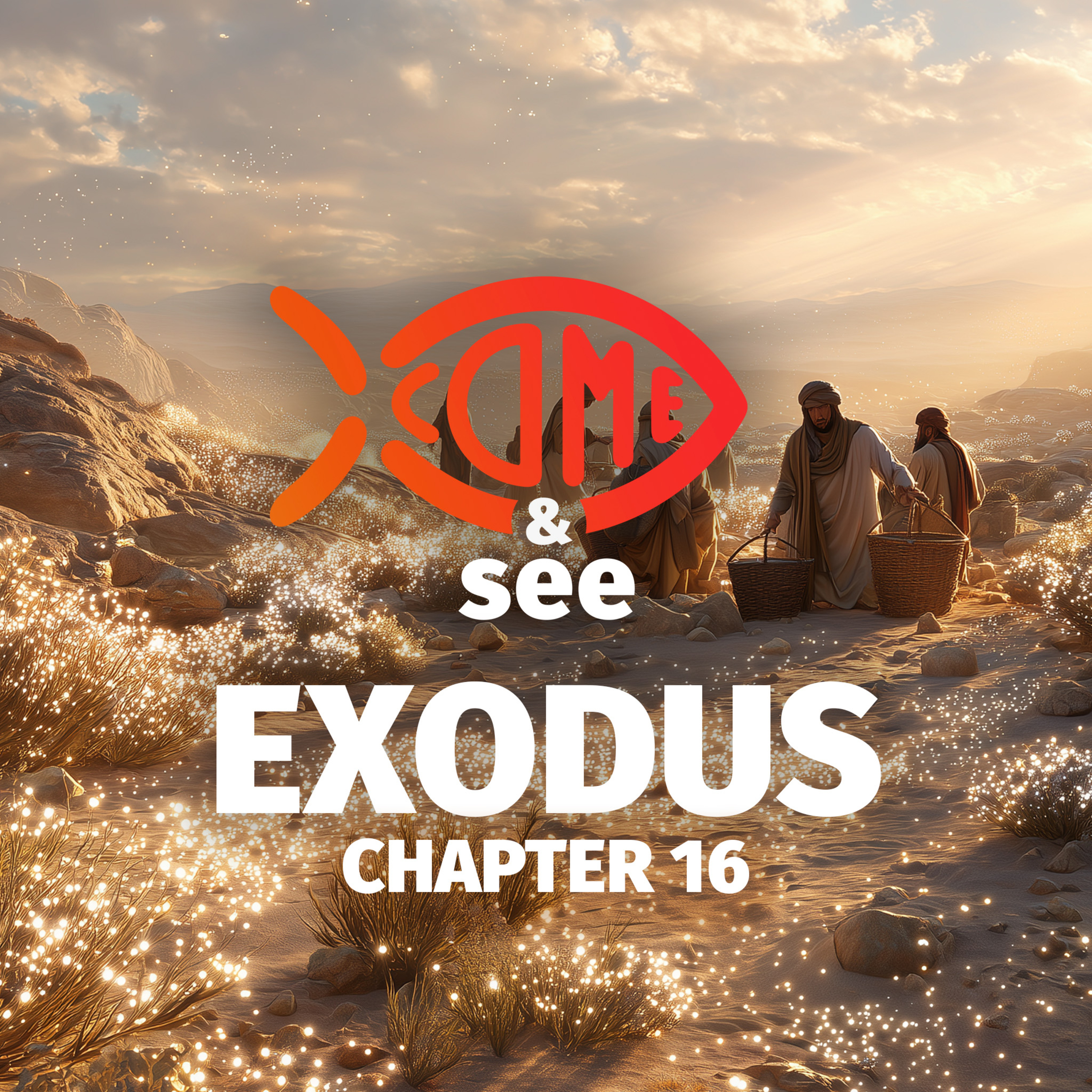
It has been six weeks since the Red Sea. The food is running out. And Israel, with remarkable speed, has begun to remember Egypt fondly — the fish they ate freely, the cucumbers, the melons, the leeks and garlic. They have forgotten the whips. They have forgotten the mud. What they remember is the food.This is not weakness unique to Israel. It is the human condition: suffering sharpens memory selectively, and comfort dulls it just as fast.God's response to their grumbling is not punishment. It is bread. Each morning, a thin, flake-like substance appears on the ground — "What is it?" the people say, which is exactly what the Hebrew word manna means. Each evening, quail cover the camp. The instructions are precise: gather only what you need for today. Do not keep it until morning. On the sixth day, gather double. On the seventh, rest.This is not merely food. It is a school. God is teaching His people to trust Him one day at a time.In this episode, we explore Exodus chapter 16 and its extraordinary theological depth — including how Jesus draws directly on this chapter in John 6 when He calls Himself the true bread from heaven, and how manna prefigures the Eucharist in ways that the Church Fathers found inexhaustible.Key questions explored:• Why does God restrict how much manna the people can gather — and what is He teaching them?• What is the significance of the double portion on the sixth day and the rest on the seventh?• How does Jesus use the language of Exodus 16 in John 6 to speak about the Eucharist?• What does manna as "bread from heaven" reveal about the nature of the Incarnation?
Hosts & guests
No transcript yet
This episode has not been transcribed. Request it and it moves to the front of the queue.
More episodes


