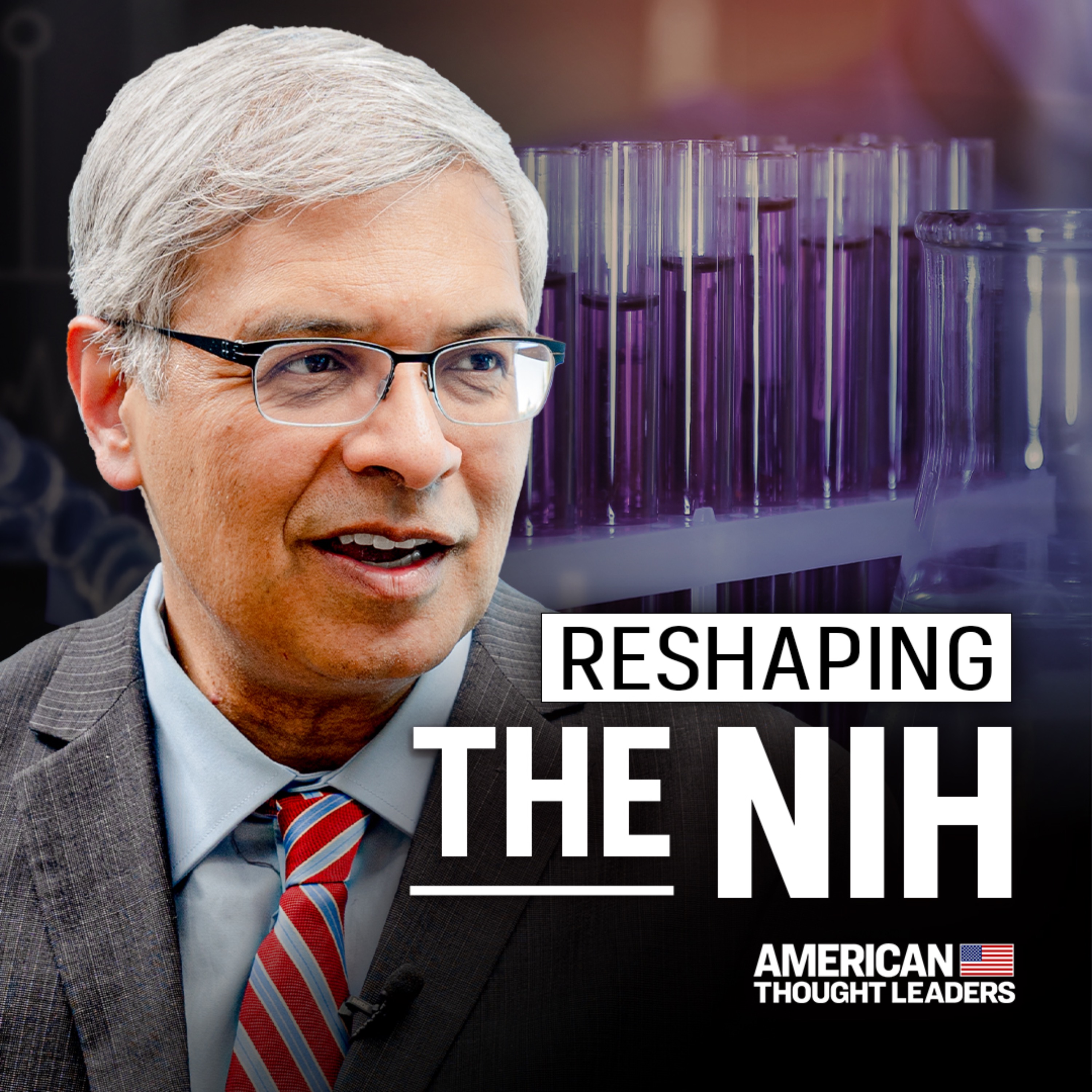
Exclusive: Dr. Jay Bhattacharya on How the NIH Is Rethinking Autism, DEI, China Ties, and Gain-of-Function
About this episode
In this no-holds-barred interview, Dr. Jay Bhattacharya, director of the National Institutes of Health, breaks down how the world’s largest public funder of biomedical research is changing under his leadership.
Bhattacharya, a former professor of Stanford University, public health expert, and coauthor of the anti-lockdown Great Barrington Declaration, was sworn in as director of the NIH in April last year.
With an annual budget of almost $50 billion, the NIH sets the direction of research at universities, medical centers, and research institutes across America.
It encompasses 27 institutes and centers that cover different areas of health and employ some 20,000 people. One of those is the National Institute of Allergy and Infectious Diseases, which was headed by Dr. Anthony Fauci for nearly 40 years.
The NIH, Bhattacharya told me, “really hasn’t had a change in leadership in decades. ... We’ve had new directors, but the fundamental structure and direction of the NIH has been basically the same until last year.”
Bhattacharya says his top priority is to end the practice of “funding the scientific enterprise for the sake of funding science” and ensure that NIH-funded scientific research actually produces better health outcomes for the American people. The goal should be improvements in health and longevity, not just more scientific papers, he says.
During our interview, we covered a lot of ground, including:
-Has the NIH completely stopped funding gain-of-function research?
-Is the NIH continuing to fund research with China?
-How has funding for international research institutes been restructured?
-Has the NIH stopped funding all research grants related to diversity, equity, and inclusion initiatives?
-What is being done to reverse the politicization of science?
-What is the NIH doing to help those who suffered injuries from the mandated COVID-19 mRNA vaccines?
-What can the NIH do to alleviate the massive replication crisis in research?
-How does he view the controversy surrounding vaccines and autism? Is the NIH looking into potential links?
-How is the NIH restructuring the allocation of funding?
What America needs, Bhattacharya told me, is a “second scientific revolution,” saying: “The NIH has the capacity to induce that second scientific revolution. That’s what I’m going to work toward for the next few years.”
Views expressed in this video are opinions of the host and the guest, and do not necessarily reflect the views of The Epoch Times.
Get every episode summarized
Each time American Thought Leaders publishes, we email you a written briefing from the transcript — the topics, who appeared, and any specific claims, with the ad reads skipped.
Email me new episodesFree for 3 shows. No card needed.
Hosts & guests

No transcript yet
This episode has not been transcribed. Request it and it moves to the front of the queue.
More episodes
More from American Thought Leaders

EXCLUSIVE: How a Tiny Nation Is Defying Beijing and Defending Its Sovereignty |...
American Thought Leaders

The Hidden Costs of a World Without Anything Worth Fighting For | Rusty Reno
American Thought Leaders

How I Reversed My Near-Fatal Autoimmune Conditions | Sina McCullough
American Thought Leaders

Here’s What People Get Wrong About Modern Warfare | John Spencer
American Thought Leaders