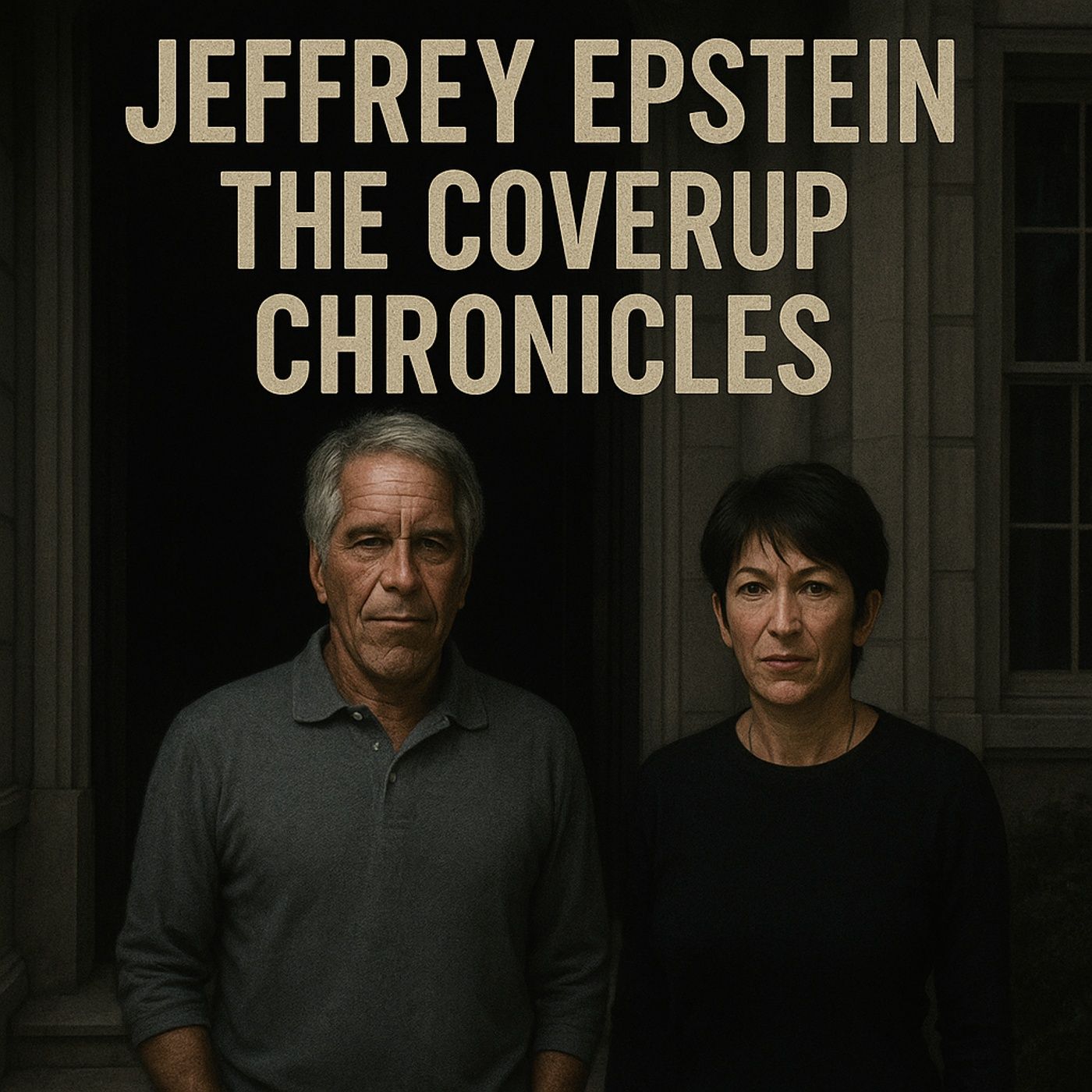
Epstein Case Files Indicate Broader Criminal Exposure Than Previously Acknowledged
About this episode
The most damning aspect of the unsealed document is not merely who appears on the list, but what it exposes about prosecutorial intent quietly evaporating behind closed doors. This wasn’t a case where investigators lacked imagination or awareness; the file shows they understood the architecture of Epstein’s operation and mapped out how it functioned as a criminal enterprise with interchangeable parts. Yet instead of dismantling that structure, the system narrowed its focus until Epstein became both the beginning and the end of the story. Names were flagged, conduct was outlined, and potential charges were sketched—then the trail simply stops. The silence that follows reads less like oversight and more like retreat, leaving behind a record that suggests justice was not defeated by ignorance, but abandoned by choice.
to contact me:
[email protected]
source:
Newly unearthed Epstein documents reveal long list of potential SDNY prosecutions in wake of pedo's death | New York Post
Get every episode summarized
Each time Jeffrey Epstein: The Coverup Chronicles publishes, we email you a written briefing from the transcript — the topics, who appeared, and any specific claims, with the ad reads skipped.
Email me new episodesFree for 3 shows. No card needed.
Hosts & guests
Transcript ready
204 searchable segments. Every word is indexed and playable.
Full transcript
Jeffrey Epstein: The Coverup Chronicles — Epstein Case Files Indicate Broader Criminal Exposure Than Previously Acknowledged. Machine-transcribed; use the interactive transcript above to jump the player to any line.
Craving the coffee flavor you love, but without the caffeine? Kachava's got you covered with their newest coffee flavor. This all-in-one nutrition shake delivers bold, authentic flavor, crafted from premium, decaffeinated Brazilian beans with 25 grams of protein, 6 grams of fiber, greens, and so much more. Treat yourself to the flavor and nutrition your body craves. Go to kachava.com and use code news. New customers get 15% off their first order. Go to kachava.com and use code news. New customers get 15% off their first order. This all-in-one nutrition shake delivers bold, authentic flavor, crafted from premium, decaffeinated Brazilian beans with 25 grams of protein, 6 grams of fiber, greens, and so much more. Treat yourself to the flavor and nutrition your body craves. Go to kachava.com and use code news. New customers get 15% off their first order. That's kachava.com code news.
What's up everyone and welcome to another episode of the Epstein Chronicles. What has become undeniable, no longer arguable, no longer speculative, is that Jeffrey Epstein and Glenn Maxwell did not operate an isolation. The evidentiary record now visible to the public confirms what serious observers have known for years. That this was a coordinated criminal enterprise with multiple layers of participation. The idea that two people alone could sustain a transnational sex trafficking operation for decades defies logic. No complex system of abuse survives without facilitators, fixers, protectors, and enablers. Epstein's longevity was not accidental, it was engineered. The infrastructure surrounding them existed to absorb risk and redirect scrutiny, and that infrastructure functioned exactly as designed and it worked for an astonishingly long time. The Department of Justice has always framed Epstein as an anomaly, a grotesque outlier
who slipped through the cracks. Now that framing collapses the moment one examines how consistently institutions bent around them. Banks ignored red flags, prosecutors deferred accountability, and intermediaries manage logistics that Epstein himself could not. We're not talking about negligence operating in a vacuum, it was systemic accommodation. Patterns repeated across jurisdictions, administrations, and agencies. The same name surfaced again and again in filings, depositions, and testimony. Yet accountability remains surgically limited, and as you all know, that is not how justice normally behaves. The concept of Epstein as a lone predator was never persuasive to anyone familiar with organized crime dynamics. His operation mirrored the structure of insulated criminal enterprise, where visibility decreases the closer one gets to power. Firewalls were constructed through shell companies, intermediaries, and can part mentalize roles. Each layer created plausible
deniability for the one above it. In traditional criminal prosecutions, such architecture invites conspiracy charges. When patterns of facilitation emerge, investigators follow the chain upward and outward. That is precisely how Rico statutes were designed to function. You don't need every participant to commit the predicate offense to establish liability, you need proof of knowing participation in the enterprise. By that standard Epstein's case is an anomaly bordering on absurdity. The absence of expansive conspiracy charges demands an explanation, and guess what, silence is not an explanation. Angolan Maxwell's conviction didn't resolve the problem, it highlighted it. Her trial was narrowed by design, constrained in scope, and deliberately insulated from broader exposure. Key questions were excluded, names were avoided, and institutional relationships were treated as irrelevant context. That was not an accident
of courtroom management. Prosecutors make strategic choices about what stories they're willing to tell. In this case, the story was truncated to prevent collateral consequence. The public was offered a scapegoat narrative instead of a structural one. And what makes the current moment different is not the existence of co-conspirators, it's the visibility of proof, emails, logs, financial records, and sworn testimony now exist in plain view. The public no longer has to infer it can read. The myth of ignorance has collapsed under the weight of documentation. These are not rumors passed through tabloid filters. Their receipts introduced under penalty of perjury. Once evidence crosses that threshold, institutional credibility becomes fragile. The DOJ now faces the dilemma of its own making. It can acknowledge that prior charging decisions were incomplete, or it can attempt to reframe reality retroactively. Neither option is comfortable.
Ignatement invites questions about why accountability was delayed, reframing invite accusations of bad faith. And the longer the delay persists, the more suspicious the silence becomes. Justice delayed is not merely justice denied. It is evidence of resistance. Institutions do not remain passive when innocent. Now, I think it's critical to understand that Epstein's protection was not ideological or partisan. It transcended administrations and political alignments. His survival depended on continuity, not loyalty to any single faction. And that continuity suggests bureaucratic inertia reinforced by mutual risk exposure. Once too many people know too much, exposure becomes a shared threat. At that point, protection becomes self-preservation. That's how the system rots without any one issuing explicit orders. Now, the financial dimension alone dismantles
loan actor theory. Epstein's money moved through regulated institutions that are legally obligated to detect abuse. Those institutions did not merely fail, they rationalized. Compliance mechanisms were overridden, exceptions were granted, and scrutiny softened. That requires human decisions, not algorithmic error. Decisions imply discretion. Discretion implies responsibility, and responsibility should imply culpability. Because the logistics of Epstein's trafficking operation also demands scrutiny. Transportation, scheduling, recruitment, and housing do not self-organize. These are operational tasks requiring coordination and trust. Individuals performed these roles repeatedly over long periods. Some were paid, some were protected, and some were rewarded with proximity to power. None of that occurred accidentally. Criminal enterprises persist because participation is
incentivized. That incentive structure deserves exposure. So what the public is now grappling with is not merely criminality but hierarchy. Listen, loan predators hide. Epstein flaunted access. He was visible because visibility protected him. When scrutiny approached, it was redirected downward or outward. This is classic decoy behavior, and decoys exist to protect something more valuable behind them. And one of the biggest slaps in the face is the failure to pursue a comprehensive conspiracy investigation, because it has consequences beyond this case. It signals the future offenders that complexity itself can be a shield. It teaches institutions that partial accountability is sufficient to preserve legitimacy. The law is supposed to deter a sophistication, not rewarded. When complexity becomes armor, the system has inverted its purpose. That inversion cannot be ignored indefinitely. Look, public trust is not eroded by prosecution.
It's eroded by restraint, masquerading, as prudence. The DOJ's credibility depends not on caution, but on consistency. When ordinary defendants face expansive conspiracy charges, for far less selective minimalism becomes conspicuous. Discretion is only defensible when it's evenly applied. In the Epstein case, it plainly was not. And disparity invites scrutiny. Caused for a true investigation, again are not caused for evangence. Their demands for coherence. Warning, the following Zipper Cruder radio spot you are about to hear is going to be filled with F words. When you're hiring, we at Zipper Cruder know you can feel frustrated. For Lauren, even, like your efforts are futile, and you can spend a fortune trying to find fabulous people, only to get flooded with candidates who are just fine. Fortunately, Zipper Cruder figured out how to fix all that. And right now, you can try Zipper Cruder for free at zippercruder.com-zip.
With Zipper Cruder, you can forget your frustrations, because we find the right people for your roles fast, which is our absolute favorite effort. In fact, four out of five employers who post on Zipper Cruder get a quality candidate within the first day. Fantastic! So, whether you need to hire four, 40, or 400 people, get ready to meet first rate talent. Just go to zippercruder.com-zip to try Zipper Cruder for free. Don't forget that zippercruder.com-zip. Finally, that zippercruder.com-zip. Finding great candidates to hire can be like, well, trying to find a needle in a haystack. Sure, you can post your job to some job board, but then all you can do is hope the right person comes along, which is why you should try Zipper Cruder for free. At zippercruder.com-zip. Zipper Cruder doesn't depend on candidates finding you. It finds them for you. It's powerful technology identifies people with the right experience, and actively invites them to apply to your job. You get qualified candidates fast,
so while other companies might deliver a lot of, hey, zippercruder, find you what you're looking for. The needle in the haystack. See why four out of five employers who post a job on Zipper Cruder get a quality candidate within the first day. Zipper Cruder, the smartest way to hire, and right now you can try Zipper Cruder for free. That's right. Free at zippercruder.com-zip. That zippercruder.com-zip-zip-zippercruder.com-zip. Access to affordable credit helps me pay my employees, but I don't really need it. Infliction is killing me. What do we have! Big retailers and making record profits! That's why we support the Durban-Marshall credit card bill. See, banks and credit unions help small businesses make payroll, and this bill would cut the vital resources they need. While increasing Megastore profits, they deserve it. Don't they? Tell Congress, stop the Durbin-Marshall Money Grab for corporate megastores, paid for by the Electronic Payments Coalition.
The existing narrative does not explain the facts on the record that gap is where suspicion thrives. Institutions at value legitimacy close gaps with transparency, not platitudes. A full accounting would not weaken the system, it would restore it. Avoidance does the opposite. Avoidance signals fear. There's no plausible argument that all responsible parties are dead, unreachable, or unknowable, names exist, roles exist, evidence exists. What does not exist is prosecutorial will, come measure it with the scale of the crime, and that discrepancy is now visible to the public. And once visibility reaches that level, narratives collapse quickly, control over perception is no longer centralized. And I think the comparison to organized crime is not rhetorical flourish. I think it's structurally accurate. Epstein's operation met every functional criterion of a criminal enterprise, a generated profit, maintained hierarchy, enforced silence, and neutralized threats.
The absence of ricocharges is therefore not merely curious, it's aborational. Legal tools exist precisely for this kind of case. Their non-use is in itself a data point, and I truly believe that what happens next will define institutional credibility for a generation. Either the DOJ confronts the full scope of the Epstein enterprise or it confirms the belief that power determines prosecutorial boundaries. The public has already moved past denial, it's now evaluating response. And delay will be interpreted as defiance, not deliberation, institutions rarely recover from that perception, and what do we always say about history? Well it's unforgiving, especially the systems that protect themselves at the expense of truth. Records outlast press conferences, filings outlast your narratives. The Epstein case will be studied, not for its horror alone, but for what it revealed about institutional behavior under stress.
The question is no longer whether co-conspirators existed, the question is whether accountability will ever match reality. And if it does not, the verdict will be rendered anyway by history, not by the courts. Because the record already exists, and at this point it's no longer a waiting permission to matter. Every name left untouched, every charge never filed, every obvious co-conspirator waved away, becomes part of the indictment, whether prosecutors like it or not. This isn't a mystery anymore, it's a choice, and choices leave fingerprints just as clearly as crimes do. If no real reckoning comes, the conclusion will be unavoidable, the system did not fail Epstein, it protected him. And that realization doesn't fade with time, it metastasizes. Because once the public understands that justice stopped, not for the lack of evidence, but for the lack of courage, the illusion is gone forever. And no amount of silence, spin, or procedural bullshit will ever put it back.
All of the information that goes with this episode can be found in the description box. Warning, the following Zipper Cruder Radio spot you are about to hear is going to be filled with F words. When you're hiring, we at Zipper Cruder know you can feel frustrated. For Lauren even, like your efforts are futile, and you can spend a fortune trying to find fabulous people, only to get flooded with candidates who are just... fine. F***! Fortunately, Zipper Cruder figured out how to fix all that. And right now, you can try Zipper Cruder for free at zippercruder.com slash zip. With Zipper Cruder, you can forget your frustrations, because we find the right people for your roles fast, which is our absolute favorite F word. In fact, four out of five employers who post on Zipper Cruder get a quality candidate within the first day. Fantastic! So whether you need to hire four, forty, or four hundred people, get ready to meet first straight talent. Just go to zippercruder.com slash zip to try Zipper Cruder for free. Don't forget that zippercruder.com slash zip.
Finally, that zippercruder.com slash zip. Access to affordable credit helps me pay my employees, but I don't really need it. Infliction is killing me! What do you care? Big retailers are making record profits! That's why we support the Durban Marshall Credit Card Bill! See? Banks and credit unions help small businesses make payroll. This bill would cut the vital resources they need. While increasing Megastore profits, they deserve it. Don't they? Tell Congress, stop the Durban Marshall Money Grab for corporate Megastores. Paid for by the Electronic Payments Coalition.
More episodes
More from Jeffrey Epstein: The Coverup Chronicles

Julia Molchanova on Escaping Jeffrey Epstein’s Cult-Like World (Part 2) (9/8/26)
Jeffrey Epstein: The Coverup Chronicles
Julia Molchanova on Escaping Jeffrey Epstein’s Cult-Like World (Part 1) (9/8/26)
Jeffrey Epstein: The Coverup Chronicles
Mega Edition: Jeffrey Epstein And The Dossiers He Kept On The Survivors (9/7/26...
Jeffrey Epstein: The Coverup Chronicles
Mega Edition: Ghislaine Maxwell And Her Descent Into "Poverty" (9/8/26)
Jeffrey Epstein: The Coverup Chronicles