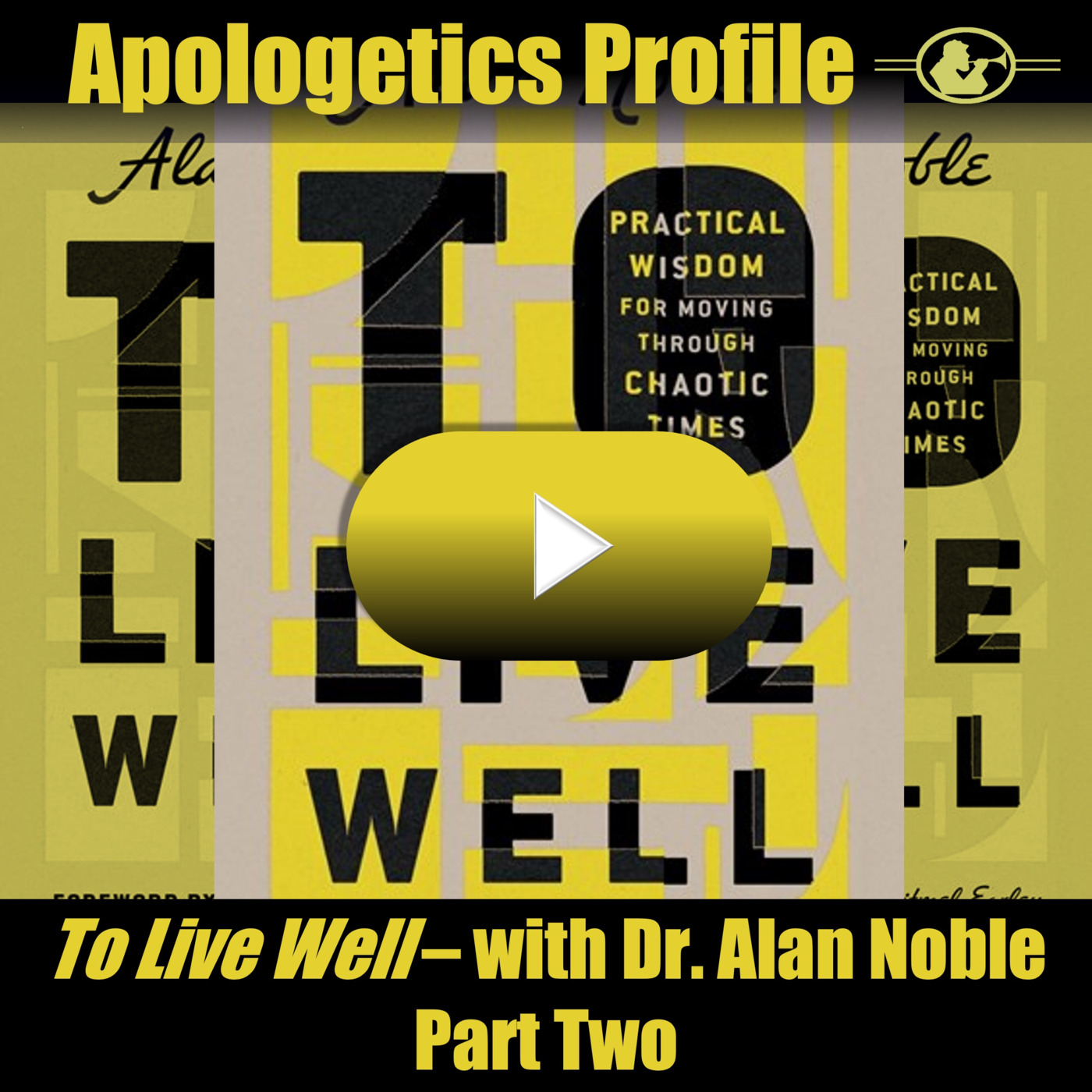
About this episode
In the chaotic times in which we live, how can we navigate through its darkness? Where can we find the light of true wisdom? Where can we find rest for our souls?
Jesus says in Matthew 11:28-30 "Come to Me, all who are weary and heavy-laden, and I will give you rest. Take My yoke upon you, and learn from Me, for I am gentle and humble in heart; and YOU SHALL FIND REST FOR YOUR SOULS. For My yoke is easy, and My load is light.”
Jesus also tells us He is the Way, the Truth, and the Life. And by being in Christ, we have been declared righteous. We are on the path of righteousness, and,
"...the path of the righteous is like the light of dawn,
That shines brighter and brighter until the full day" (Proverbs 4:18).
By not leaning on our own understanding, by trusting in the Lord with all of our hearts, we act virtuously and shine as lights in a dark world. But even our virtuous acts are all of grace (Ephesians 2:8-10).
This is part two of our conversation with English Professor at Oklahoma Baptist University Dr. Alan Noble about his latest book To Live Well. Come and see!
From AlanNoble.com
Alan Noble is Assistant Professor of English at Oklahoma Baptist University. Alan launched the group Public Faith with Michael Wear to offer an alternative evangelical political voice. He also joined The AND Campaign as an advisor, were he served for a number of years. Alan has written articles for Christian publications such as Modern Reformation, InTouch Magazine, and Christianity Today and for secular publications like VOX, Buzzfeed, and The Atlantic. He has been interviewed, quoted, or cited in The New York Times, The Washington Post, MTV News, MSNBC, The Guardian, Buzzfeed, Politico, Village Voice, Yahoo! News, ThinkProgress, The Blaze, WORLD Magazine, and Slate. And he has spoken at colleges, organizations, churches, and youth groups on a range of topics related to the church and culture. In 2023, Alan became a “fellow” at the Keller Center for Cultural Apologetics.
Free Watchman Profile articles. These profiles provide an overview of the person and ideas as well as a concise biblical response.
Naturalism
Deconstruction
Atheism
Carl Sagan's Cosmos
Richard Dawkins
Nihilism
Additional Resources:
FREE: We are also offering a subscription to our 4-page bimonthly Profiles here: www.watchman.org/Free
PROFILE NOTEBOOK: Order the complete collection of Watchman Fellowship Profiles (two volumes totalling over 700 pages -- from Astrology to Zen Buddhism) in either printed or PDF formats here: www.watchman.org/Notebook
SUPPORT: Help us create more content like this. Make a tax-deductible donation here: www.watchman.org/Give
Apologetics Profile is a ministry of Watchman Fellowship For more information, visit www.watchman.org © 2026 Watchman Fellowship, Inc.
Get every episode summarized
Each time Apologetics Profile publishes, we email you a written briefing from the transcript — the topics, who appeared, and any specific claims, with the ad reads skipped.
Email me new episodesFree for 3 shows. No card needed.
Hosts & guests
Transcript ready
468 searchable segments. Every word is indexed and playable.
Full transcript
Apologetics Profile — Episode 355: To Live Well with Dr. Alan Noble - Part Two. Machine-transcribed; use the interactive transcript above to jump the player to any line.
You're listening to a polygetics profile. If you slow down and start contemplating and your mind is not resting in Christ's imputed righteousness, your justification before God, if it is not resting in what Christ has done for you, then you are going to feel overwhelmed with guilt and shame in a sense that you need to be getting busy doing other things. We live in an increasingly anxiety-ridden age. It isn't necessary here to quote statistics about the use of antidepressants.
Suicide rates are just how much we routinely are confronted in social media by a looming specter of perpetual fear. We are also a distracted culture, trying in vain to find a way to numb or dead in our anxieties. But our self-made remedies routinely fail to give our souls the respite for which they truly yearn. We often turn to an increased religious activity, thinking a devoted busy-ness might provide a much-needed balm. But eventually, that burns us out, too. We soon realize that there is finally no end to such frenetic religiosity. Maybe we've even succumbed to the idea that if we do these things for God, He will somehow give us the things we desire. But that doesn't work, and that is not biblical righteousness. We learn often the hard way that no amount of religious activity, church attendance, tithing, volunteering, him singing, or serving others, can earn God's favor. And we've all likely experienced this at some point or another in our lives.
Busy-ness is not finally rest at all. How busy do we have to be, for example? How many blocks do we need to check? How many deeds must we accomplish? Before God is pleased with us. The answer is none. There is no amount of human effort that can attain God's favor. He does not accept us because of anything we do for Him. The basis for His acceptance of us is not our work, but His through the person of His Son, our Lord and Savior, Jesus Christ. Through His perfect, active obedience to the law, and through His passive obedience, His death on the cross for our sin, we are made righteous. God declares us through Christ, in Christ, to be righteous. He declares us forgiven. He declares us free, in and through Christ, and what He has done for us. And it is in Jesus alone in whom we must rest, not trusting in ourselves, not leaning on
our own understanding, but in all our ways, acknowledging Him as He directs our paths. We must present our bodies as living sacrifices and be transformed by the renewing of our minds, not being conformed to the frenetic idolatry of a fallen world. In fully placing our trust, hope, and our very lives in Christ, we will find true rest for our souls. And even our faith in Christ is a gift from God. As Jesus says in Matthew 11 verses 28-30, QUOTE, COME TO ME, ALL WHO ARE WEARY AND HEVILAIDEN, AND I WILL GIVE YOU REST. TAKE MY Yoke upon you and learn from me, for I am gentle and humble and heart, and you will find rest for your souls. For my Yoke is easy, and my burden is light." This of course does not mean that we won't have trouble in this world, rather Jesus Himself is the way through our earthly troubles. The way of righteousness is the embodiment of the proverbial path of righteousness, in whom and from whom our true righteousness comes.
As our guest again this week, Dr. Alanobal says at the conclusion of his latest book to live well, quote, "...there is order, unity, meaning, purpose, mystery, and direction to the flow of life, despite the feeling of chaos and uncertainty presented by the contemporary world. The order of life is God's creation designed for humans and his cosmic plan of redemption. As we have seen, the virtues help us practice that order, insofar as they are oriented toward God. Noble points out that being made to participate in God's story is not because we are by nature virtuous, we are not. But because our Lord and Savior Jesus Christ both lived and died for us." Noble Sites Luke 21-28, where Jesus exhorts his disciples to straighten up and raise their heads because their redemption is drawing nigh. Noble concludes, quote, "...in the end, that is why we act virtuously because our redemption is secure and at hand.
The end is written for us in Christ. So let us straighten up and raise our heads confidently, walking steadfastly into our inheritance." As Psalm 47 verse 4 says, "...our Lord chooses our inheritance for us. By practicing the virtues, we are not earning our inheritance, but discovering just what that inheritance includes." Here again is Alan Noble. There's often this fear of being outside of God's will. Here's when you're outside of God's will, are you in sin? If you are in sin, if you are practicing sin, then you are outside of God's will. If there are two good choices before you and you choose one of them that glorifies God, then you're not outside of God's will. You are glorifying God. That's not outside of God's will. Walking that in confidence. That's not being outside of God's will.
Being outside of God's will is willfully walking in disobedience, lying in adultery, in no deception, in violence. That's walking in sin. That's being outside of God's will. So I think there's a lot of Christian freedom that we have to use the wisdom, the prudence that God has given us and the counselors God has given us to make good decisions, to glorify Him. He desires us to do that. He promises in James. There's a promise he will give us wisdom if we ask. Let's do that. Then let's walk resolutely in that wisdom. But to keep in mind as you read this book, for those of you that have not, again, this is not, you're going to be disappointed if you pick this up and are wanting Alan to tell you what to do. Right. It's going to be different for everybody. But the idea here is to take time to contemplate slowly crock pot thinking about these things
and not rushing to them because before we turned on the mic, we were talking about how you speak. People come up to you and say, Alan, what do I do? And the mentality behind it is almost like, okay, you make good points. Now what am I supposed to do? Almost like there's just approaching it from a spirit of complete practicality. Just tell me the steps I got to do. What are the buttons I have to push? And you're giving them the more full aesthetic contemplative tributaries to help enlighten making prudent decisions and walking virtuously. You're giving them the artistic context. People want a sort of a bob Ross, tell me how to paint a tree. And you're like, here's some brushes. Here's canvas, here's some paint. Try to paint a tree. You don't have to paint. You don't have to do bob Ross. This isn't a bob Ross how to live virtuously though the title sounds like it's how to maybe how to think and walk virtuously.
I guess that's, I'm trying to make it much bigger than what some people might see that it is. This is a much broader conversation that is very ancient and it's not modern self-help. You talk about that a little bit where this, we're so used to self-help terms, we're afraid of like, you talk about things that we're afraid of because we hear them in self-help, like loving yourself and that kind of thing. So what, for people that are a little nervous about this, how, here I am asking a practical question, are cultures not, it's such a fast paced Alan, how do we begin to have a contemplative life that enables the virtues to breathe, God breath the virtues into us? How do we sit back and, you know, we're microwave chefs, how do we suddenly become skilled at crockpot cooking and cooking like grandma, you know? Yeah, that's a good question. You know, to some extent it begins with the virtues, it begins with, I would say, a virtue of temperance. Right.
In the virtue of temperance chapter, I talk about the importance of taking an inventory of your life, not, and I don't have a worksheet where I say, you know, chart how you spend your day. Right. So it's not, it's, because it's not a self-help book, so I don't have that kind of thing. But I do mean sit down and contemplate your day and look at how you are ordering your loves, how you are ordering your time, how you are ordering your attention, because temperance is about your inner, the inner order of your life. And if there is no space in your life for contemplation about what you were doing, how you were using your time, how you were using your, your, whether or not there is any space in your life for contemplation, then you're living intemperately.
You were, you were, you were falling into intemperance. You point out to speak exactly what you're saying. You point out in the book about how sometimes if we get on this, we get enthusiastic about cultivating virtues, it turns into busyness. Oh, yeah. I mean, I think that's the way I'm going to go do these things, but really I think ground level for this kind of lifestyle would be to sit quietly. I mean, yeah, that sounds like the silliest thing in the world, but how many of us are really comfortable in silence with our thoughts, no music, no screens, where we can get alone in a space. And I switch it, you talked a little bit about Jesus, you know, getting alone, taking time to ponder and contemplate. Jesus Peefer was all about what's his book on leisure. Yeah, leisure that requires a contemplation, but I think that has to begin with being okay with your, with your thoughts, being okay to be quiet and to be alone and to, to let God begin to speak because we tend to think that as you said at the beginning, so
many voices, competing voices in the world in our minds and in your love chapter, you talk about the conversations and the things and the images that we see in our own minds. We have to quiet all that and I think that's Romans 12. Renewing our minds, means allowing the dust to settle in our minds so that we can think about, yeah, begin to, because without the contemplation, I think I could see very easily people turning this into a project like Ben Franklin and becoming very easily frustrated with it because they can't, they can't do it. But you're saying, well, I know you can't do it. These are, these are amazingly difficult things to do, but again, getting back to what you're the thesis of it is you are not saying you're going to be perfect in this, you're not saying these are going to be easy, this is a lifetime of working these things out. So this, I think gets back to what you're talking about earlier in the book about loving yourself, give yourself the space to slow down, to stop to think about these things and, and I think that takes stock. But it's just, it's just kind of a, the book reminded me of just like slowing down, hitting
the breaks. You're in a 35 mile an hour zone, not a 75 mile an hour. So, and the only way you can slow down like that is understanding grace properly. So if you slow down and start contemplating and your mind is not resting in Christ's imputed righteousness, this, this, this, your justification before God, if it is not resting in what Christ has done for you, then you are going to feel overwhelmed with guilt and shame in a sense that you need to be getting busy doing other things. You should be being productive right now. You should be working right now. You should be helping other people. This is selfish. This is a waste of time. I need to be active. I need to be serving people.
But if we serve a God who is both sovereign and who loves us and who has died for us, then we have the freedom to truly rest. And that is exciting news for us. Because then we have the ability to contemplate. We have the ability to just sit back and, and be and just exist. And that goes to the, to the definition of love that I get from Yosuf Piper. You know, he says, he says that love is this declaration that is wonderful that you exist, how good that you are. Right. And that's what God is saying to us. How wonderful you exist, how good that you are. And you know, he can declare that about us. And we can accept the fact that it's good. God is pleased that we exist. And we can just rest in that. We can just rest in the fact that he's pleased that we exist. And so we can just be and accept his grace for us and contemplate what we need to do.
And, and how we can, how we can, how we are using our time and how we are doing things. And also just delight in him. Yeah. That's another thing is that we can delight in the good gifts he's given us. You talk about a term that's a social media term in the book. I forgot which virtue you, where you mentioned it, but you're talking about in relation to a spouse. I thought it was some really good points. You mentioned the fear of missing out. Oh, yeah. That we think, well, I'm semi committing to this person as a mate. Yeah. Okay. The commitment, suddenly, what people recognize in that instance is that suddenly the gates go up. Yeah. I'm in the cattle pen and I'm committed. I'm going down the chute and what starts to happen. I want to make sure that I'm in the, I've got the one that I want and what, well, what about that one over there? Yeah. Or what about that? I mean, it's not just a person, but it could be anything. I'm committing to a house, a new neighborhood, a new school, a new job.
Yes. And as soon as I've signed on the dotted line and made the commitment, all of a sudden, I'm looking around because now the commitment feels like I've been, like the Psalmist says in 139, been hedged in. Yeah. Yeah. And we're a little uncomfortable with making that you'd mentioned that earlier about being frozen in ability to, we have so many decisions like this happens to me on the serial. I'm in the trial at the grocery store. It's like what I'm frozen with choice, you know, I'm indecisive about that. But how can we, when we're employing the virtues and we, we are committed, what, what is a, how do we combat FOMO? Yeah. We're missing out. Like, like, how do the virtues apply to that where we just, I guess we, it could expect what you were just saying about rest. Yeah. Yeah. It does. Like there are a couple of things that we can think through. One is that we, it circles back to what we talked about earlier, which is that we, we recognize that our task is just to make a good decision, a prudent decision and walk that
through. So, so that's one, that's one aspect of this. And another is having the courage and, and this would fall under justice, the honesty to, and the integrity to hold to our, our, our vows, you know, and some vows are, you know, not all vows are the same, you know, work contract is not the same as, you know, a vow of marriage, you know. But, you know, when it comes to marriage, you know, I think I write about this in the book. If not, I've certainly spoken about this, you know, when you get married, you know, you, at first you think, wow, this is, this is the perfect person. You know, I love this person. This is great. You're going to meet somebody who, at some point, who you think that person is probably a better fit for me. Because there are, there are statistically speaking, there is somebody who is a better
fit for you out there in the world. That's just almost, almost guaranteed. There are so many people out there in the world. There's probably somebody who is more beautiful, more interesting, more statistically aligned, a better match for you than the person you're with. That's probably statistically the case. And that doesn't matter. That just doesn't matter. What matters is you have committed to someone who is good and beautiful and it's wonderful that you're committed to that person and your task is to be faithful to the person that you're with and to have the courage to walk through that and to have the faithfulness to walk through that. And so part of that is learning to be content and to have joy in what you have and not circle back. Maybe here the virtue of hope comes in a bit too because despair comes to you and says,
I can't have joy. I can't have joy if I can't have joy if I don't have what I, if I only have what I have now, I need to have something else or someone else or someone else, right? I need to have something else. So I'm going to fall into despair and be hopeless. And hope says actually you can continue to experience joy and there is pleasure to be had. There is wonder to be had. So I think the virtues can help us in these practical, everyone experiences this on some whether it's jobs or careers or friendships or marriage. This is a dynamic, this fear of missing out of committing, this fear of committing that we all experience. You have a chapter on suffering.
Would that be, would that be a concerted patience? Would you see as the way or long suffering? Yeah, endurance. Endurance. Yeah. I know I had mentioned this to you before our talk and I just wanted to bring it up for listeners as I think it's a fifth century Christian author by the name of Prudentius who has a poem called The Fight for Man's Soul where he portrays the virtues as soldiers and the vices as monsters. And it's a really excellent way of describing. It's a wonderful parallel to your book, but there's a the soldier called Long Suffering in the book. And he was standing with stayed countenance, unmoved amid the battle and it's confused uproar with fixed gaze, watching the wounds inflicted as the stiff javelins pierced the vital parts while she waited in actance, waited inactive. And then pitted against her is swelling wrath, the monster wrath, capital W. And wrath just keeps provoking, provoking her, throwing things at her, kneeling, cajoling, incessant
fury. And it gets to the point where long suffering, she doesn't say anything, doesn't do anything, doesn't react to the wrath. And finally, wrath can't stand the fact that she's not reacting and wrath, wrath destroys herself. Wow. Yeah. And I thought that that was exactly a compliment to a complimentary to your chapter on, on suffering that, that the the perseverance and the steadfastness, of course, it relates to hope all these things are tied together. But in not, it's like, it's like, this kind of speaks to the problem, maybe if evil doesn't solve it, but that people are just mouthing God, where is he? Why doesn't he do something? You know, the false dichotomies, if he can't, if he won't do something that he's not good, if he can't do something that he's not God, you know, this on and on and just centuries of enduring God listening to this and not acting. But finally, one day he will, but that's kind of the hope for us is that God sees us and is working all things together.
And the steadfastness that we have, the calmness of mind is kind of the way I saw it and the way you were writing it was a way to love our enemies because we are modeling for them, something that they don't see. Yeah. You know, how come this person is so unmoved by these things, not like, not unmoved, but like, how can you hold up under this kind of stuff? And as you said in our last interview, people are watching us. Right. And if we recognize that people are watching us, people are looking at and seeing us, what's different in that person? Yeah. Even though they may not come up to you, but I thought your chapter on suffering was, was good. And I thought the monster of wrath, you know, was a good example of how the vices destroy themselves eventually. Yeah. Yeah. No. You know, a quietness talks about, and I think I believe Aristotle too talks about endurance as the better part of courage or fortitude. And you know, he breaks down fortitude into two categories.
There's a tack, which is, you know, soldiers or, you know, first responders rushing into battle or rushing into a burning building. And then there's endurance where you just have to sit there. You don't get to do something. There's not really an option. You don't, there's nothing for you to do except endure the risk of suffering or endure the reality of suffering for the sake of some good, for some good reason. Right. And when I read that, and they both acknowledge a, a quietness and Aristotle acknowledge that it's actually endurance that is the better part, the better part of fortitude. And when I read that, I thought that that's, that's, you know, you know, that changes a lot of things in the way I think because I always think of, you know, these heroes rushing in that that's the really courageous thing like what we were just reading. Yeah. Yeah. But what you just read is actually endurance because you notice that the soldiers just
stood there. Mm hmm. They just stood there. They endured. They endured, right? Right? In long suffering, they endured and that actually takes more fortitude, more courage because you, you can't, you can't strike back against wrath. This is up to sit there. You, you bringing this up beautifully in the book about endurance can be something as, it's very domestic. You're dealing with a mental struggle. Yes. You, whatever perturbations are bothering you at home, kids, family, spouse, difficulties, financial, emotional, mental. Enduring is part of that. It's not rushing headlong onto, onto Normandy's beaches and storming the Nazis, although that is part of it, but, but really when it comes down to the practical aspects of these things, because we have hope in Christ, should give us that endurance and that fortitude. I mean, that's what the Bible is. He who endures to the end, you know, the God grants us that grace of endurance. True faith will endure. And, and that endurance is a shield as they talked about, as Prudentious mentions, as
a shield against the vices, as you cultivate these things and you witness the beneficence of God through the power he gives you to practice these virtues, you, you start to ward off evil. I mean, you're never going to do it perfectly, but this is exactly the, the analogy Paul's using in Ephesians take up the helmet in the sword and the shield and the breastplate and the, shot your feet and this kind of a reminder of how you cultivate these things. But I liked how you, you brought it down to the domestic level of our everyday lives where nobody sees us doing laundry. Nobody sees us clean in the bathroom. Nobody sees us doing everything that we have to do in order to function domestically. And that's the kind of endurance as well. It is. And that's the kind that we all, I think most of us need, is that daily grind and monotony. Like how can I just keep this a same as like groundhog day? It's the same thing over and over again. That's right. Same for walls, the same sunshine, the same trees and squirrels in my yard. And when's this ever going to change? But I think God is, God is working in those, in those moments, cultivating in the dark
what we can't see. That's right. Yeah. So, so final thoughts on, on this book and what you hope people take away from this and maybe ultimately reminding our listeners and ourselves about Jesus's Lordship and all of this because we can get lost and make this into a busy, technical, practical thing. And think we can do this. I got this God, thanks very much. I can go catch fish now. Yeah. And then Jesus comes along and says, throw your net. Oh, okay. So, how are you, how are we going to sum all this up in Christ? What is our hope that you want us to remember? Yeah. I want listeners to, I want readers to come away with this book, Stred Up to Love and Good Works. But I want them to understand that that love and good works comes through Christ through the work of the Holy Spirit and that again, I just want to emphasize that it's not mariting God's favor, but it's, it's had a freedom for what Christ has already done for them.
And I want that to be an exciting thing. I want them to feel that excitement that they're able to turn from sin and embrace the virtues, embrace righteousness because of what Christ has done for them. They're new creations. And that's, that's exciting news. They were in bondage to sin and they are no more because of Christ. That's amazing. They have freedom to turn from sin. So let's turn from sin and let's do these things. And through the power of the Holy Spirit. And so I hope this is an exciting book that, that, that inspires people and helps them just to circle back around, helps piece together those, those fragmented images to give people a sense that although there are lots of voices to pressuring them to live in certain ways, there is a coherent voice. And that's the voice of God. And there is a way to live that is, that is coherent, that makes sense, that is present,
that is steady, that is grounded, that can guide us through a chaotic world that is shifting under our feet, but, but will keep us grounded if we, if we hold on to what is true. So that's what I would hope for this book. We, it reminds me of the words of Paul. We have this treasure in clay jars and earthen vessels, you know, so that we know that the power within us comes from God and not ourselves. And I think the, the pieces metaphor is, is very apt for our culture today. And I think, as Christians, as new creations, that God, if you want to use the Romans eight way to look at it, God is working all of these pieces together for our good. He's the voice that helps you, that inspires you, that in strengthens you, in livens you, quickens you, to be able to assemble the pieces into a coherent whole. It's only his voice that makes sense. That's right.
You've been listening to a polygetics profile, a podcast ministry of watchman fellowship incorporated. For more information about our ministry and resources, visit our website at watchman.org. That's watchman.org.
More episodes
More from Apologetics Profile

Episode 355: To Live Well with Dr. Alan Noble - Part One
Apologetics Profile

Episode 356: Trading Questions with Your Mormon Friend - with Watchman Fellowshi...
Apologetics Profile

Episode 356: Trading Questions with Your Mormon Friend - with Watchman Fellowshi...
Apologetics Profile

Episode 354: Is the Bible Just Another Myth? with Old Testament Scholar Dr. John...
Apologetics Profile