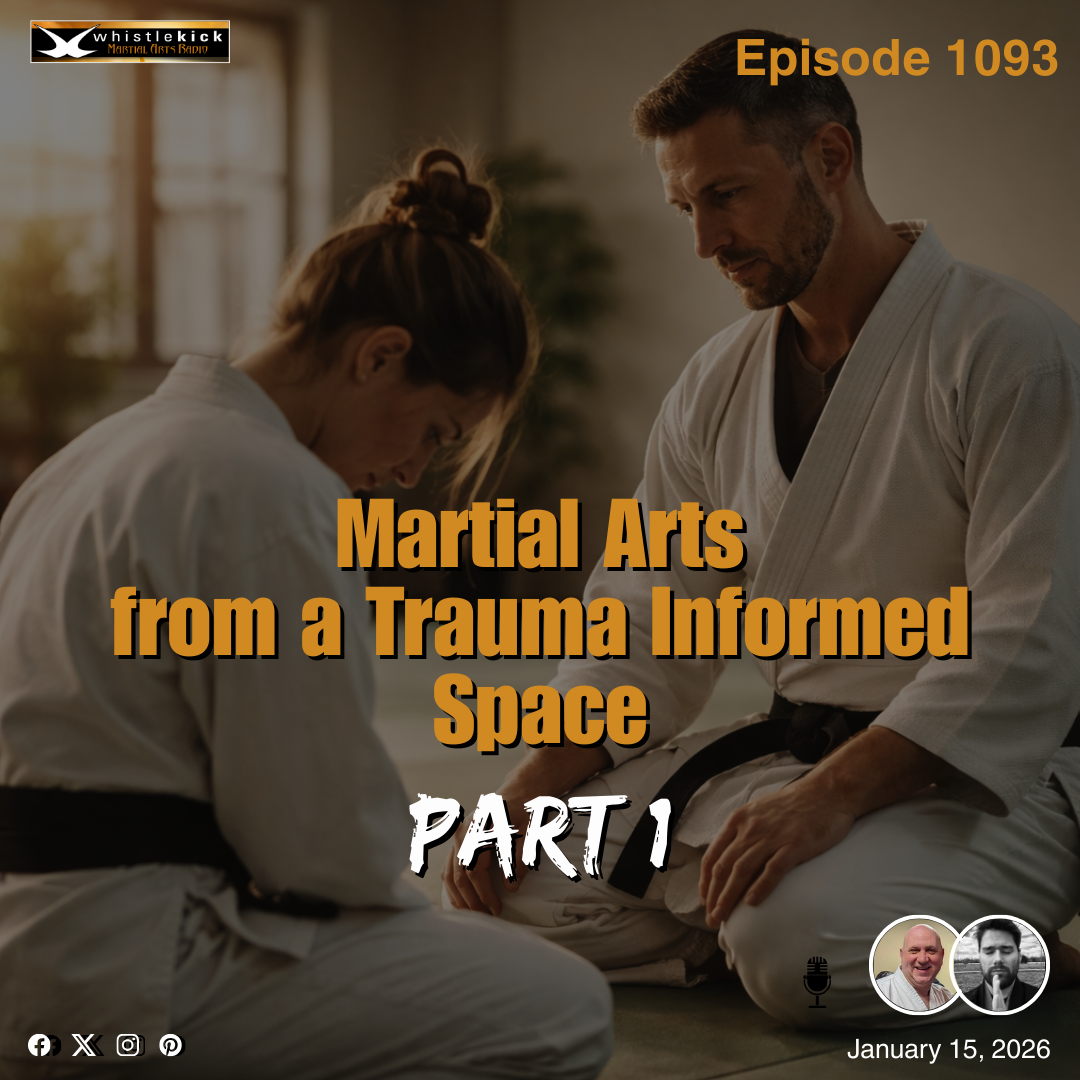
Episode 1093 - Martial Arts from a Trauma Informed Space: Part 1
About this episode
SUMMARY
In this episode, Andrew is joined by Paul Coffey and they discuss the importance of teaching martial arts from a trauma-informed perspective. They explore the nuances of class planning, the distinction between soft and hard skills, and how to effectively navigate violence and nonviolence in martial arts education. The conversation emphasizes the need for sensitivity and understanding when working with students who may have experienced trauma, and the importance of effective communication in creating a safe learning environment. In this conversation, Paul Coffey discusses the importance of crisis intervention and soft skills in martial arts, particularly for vulnerable populations. He emphasizes the need for instructors to build trust with their students, create a safe training environment, and understand the significance of intention in martial arts practice. The discussion also highlights the necessity of teaching nonviolent techniques for self-defense and the critical role of listening to students to address their unique needs and traumas.
TAKEAWAYS
· Teaching from a trauma-informed perspective is essential.
· Nonviolent individuals can learn to navigate violent situations.
· Soft skills in martial arts are crucial for effective teaching.
· Class planning should consider the audience's background.
· The distinction between soft and hard skills is important.
· Trauma can affect how individuals respond to violence.
· Effective communication is key in trauma-informed teaching.
· Crisis intervention is essential before physical conflict occurs.
· Soft skills can help mitigate damage while protecting oneself.
· Building trust with students is crucial for effective teaching.
· Instructors must listen to both verbal and non-verbal cues from students.
· Creating a safe training environment is vital for trauma-informed practices.
· Intention in martial arts training can change the perception of techniques.
· Every trauma is valid; do not compare traumas.
· Teaching nonviolent techniques can empower students who have experienced trauma.
· Instructors should express boundaries clearly to foster a safe space.
· Listening to students can reveal their unspoken needs and concerns.
Join our EXCLUSIVE newsletter to get notified of each episode as it comes out!
Subscribe — whistlekick Martial Arts Radio
Get every episode summarized
Each time whistlekick Martial Arts Radio publishes, we email you a written briefing from the transcript — the topics, who appeared, and any specific claims, with the ad reads skipped.
Email me new episodesFree for 3 shows. No card needed.
Hosts & guests
No transcript yet
This episode has not been transcribed. Request it and it moves to the front of the queue.
More episodes
More from whistlekick Martial Arts Radio

Episode 1111 - Martial Arts Word Association: Road Trip Edition
whistlekick Martial Arts Radio

Episode 1110 - Collin Lieberman
whistlekick Martial Arts Radio

Episode 1109 - Martial Things with Sensei Hanlon
whistlekick Martial Arts Radio

Episode 1108 - Sensei Jesús Jiménez
whistlekick Martial Arts Radio