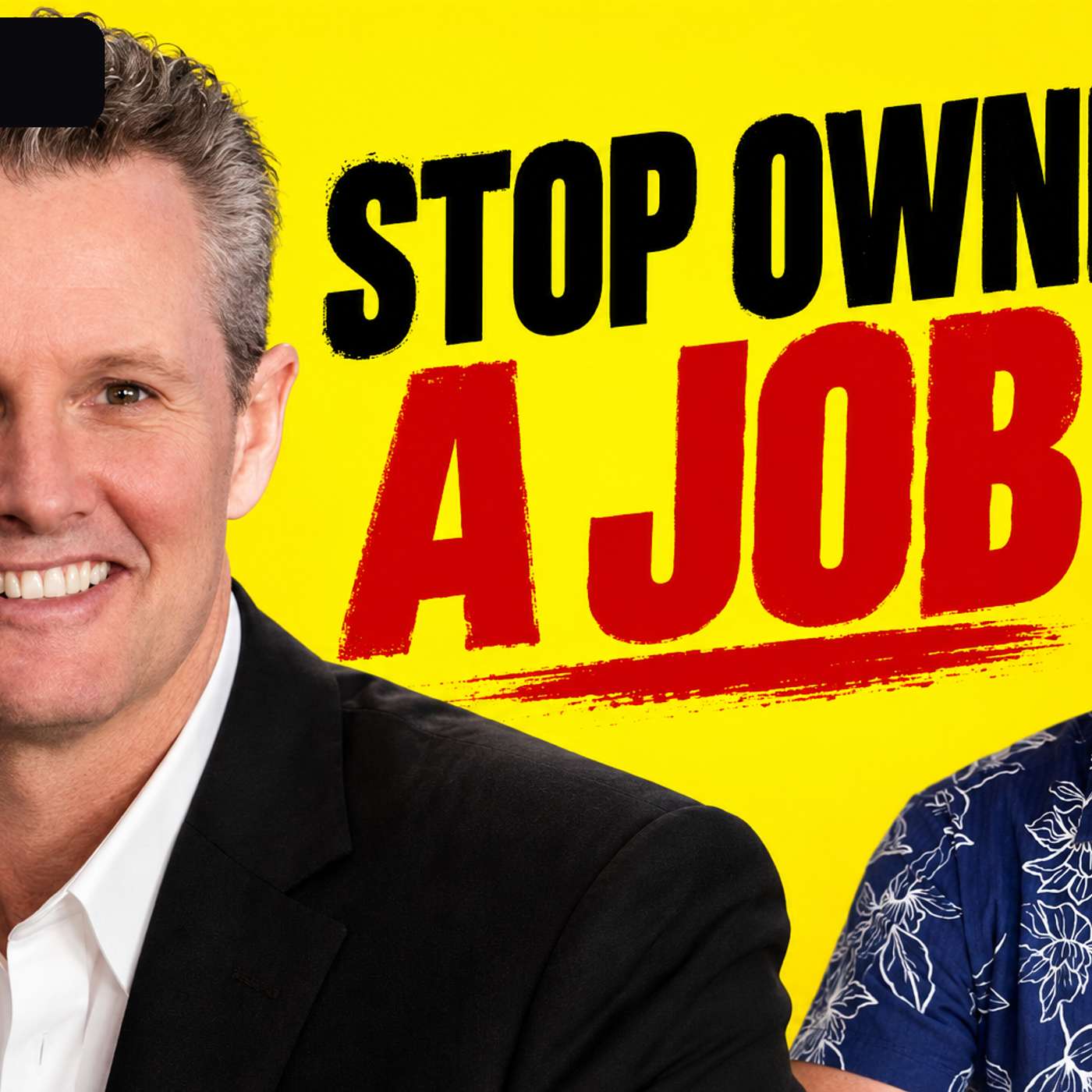
EP388: Escape Bottleneck-Itis: Build a Business That Works Without You
About this episode
Get every episode summarized
Each time High Voltage Business Builders Podcast publishes, we email you a written briefing from the transcript — the topics, who appeared, and any specific claims, with the ad reads skipped.
Email me new episodesFree for 3 shows. No card needed.
Hosts & guests
Transcript ready
1,165 searchable segments. Every word is indexed and playable.
Full transcript
High Voltage Business Builders Podcast — EP388: Escape Bottleneck-Itis: Build a Business That Works Without You. Machine-transcribed; use the interactive transcript above to jump the player to any line.
This is the High Voltage Business Builders Podcast, daily intelligence for serious e-commerce portfolio builders across Amazon, TikTok Shop, Shopify, Walmart, and every channel that moves the needle. Neil Toi and his voltage team all day, every day, since 2012. Let's get into it. Brad, how you doing today out there in Vegas? Fantastic, thank you, Neil. Excellent. Is warm there as it is here today, because we're starting to scorch out here in the Midwest. Yeah, look, we just, we used to that. So it's like, people tell us it's hot. It's like, yeah, it's always hot here. It's always hot, though. Yeah. So have you in your busy days, I know you're extremely busy, and I appreciate you taking some of your valuable time here to come chat with us in your business leadership and marketing experiences. Is there anything you've read lately that you find very interesting? You might want to share with us any book or something you just kind of felt that's very interesting,
because I haven't been reading much marketing stuff lately, because marketing's changing at such a rapid rate and knots with AI doing what it's doing. And even crazy enough, AI says it wants new stuff, but it's still credit stuff from four years ago, stronger than it credit stuff from four weeks. The whole citations, yeah. So it's one of those crazy, mixed up worlds where I think that we're still in that phase of, are you aiming at bottom of funnel, mid funnel, or top of funnel for the marketing that you're doing today? And I still see way too many people doing way too much top of funnel stuff, and not enough bottom funnel and mid funnel. You go to their website, and there's very few articles on how to buy what it is they sell, and there's a bunch of stuff around it. Their social media is a lot of energy and effort. They don't put any real effort into their permanent media, their website, blogs, YouTube channel. You know, the permanent stuff is still way more important than anything else that's out there.
Yeah, I would have gone. Interestingly, I've been rewriting all of my books, because most of my books are 20 years old, or the original books were 20 years old, and I just rewrote billionaire in training. And it was interesting, because 21 years later, when I first wrote it, a billionaire was like a tooth fairy. You know, they were very, you didn't see them very often, you know, but nowadays, a billionaire is something that's relatively normal. So it's just like a million people. Yeah, it has changed, hasn't it? It has changed in the wealth and opportunity, consolidation of wealth, something I was talking about on an earlier event was that, you know, in our space in one vertical Amazon, and there's multiple verticals of e-commerce, just in this one, in the last six years, prior six years, there was 50, $100 million companies on Amazon. And in the last six years, there's 235. Yeah, so it's crazy. E-commerce consolidation, a $7 trillion market, which is e-commerce, is just like going off the rails. I don't think anybody sees it in the way we do,
but man, it's something else to witness. Well, that's where, you know, you start looking at product-based businesses, versus service-based businesses, and it's so difference the scalability of that product-based business. But even turning your knowledge into products, I mean, I mentioned Amazon, and I look at KDP, you know, the amount of money that we still get on Kindle Unlimited by creating e-books that I, you know, I literally once a month I'm churning out a new book, and you throw it in, and hey, Presto, there's your percentage royalty on there, on Spotify, on all of these sorts of things. So there's plenty of ways to do it today, but even YouTube, you know, I now, I'm in the 100,000 subscriber club, and I'm still only in the top, what, 750,000 YouTubers in the world. You talk. And there about to be a whole lot less from what I read yesterday, because they moved the hours from 4,000 to 8,000. Did you read that, you say? Yeah, they had to, and it makes sense that they did, because when you look at the number of hours,
you can get just by shoving one video up and promoting it into the Philippines, or something, and you'll be, you know, at 4,000 pretty dang quick. Now you won't make any money off of it. But you jack their system. Yeah. But you've jacked the system, yeah. So that AI has been doing that too, right? 100%. And so that's where we start seeing a lot of those things, changing the way it is. And that's where YouTube's fighting, you know, it's fighting back on the AI videos now, thank goodness. So, you know, the real live stuff is, you and me chatting here today is more powerful than someone putting a AI podcast up type thing. Well, it is. I do both of those. So wait, so with you, and I do an AI podcast, but here's what I've learned about that in contradiction, just a little bit, it's not the belittle of your point, but there's true, it's that there's no value. It's AI slop. We have to be very careful with that, right? So I curate mine, I audit mine, and mine goes out at an operational level every day. That's become part of my bottom of funnel. I have a conversation with people. If you was part of my bottom funnel, then the funnel is them out there searching for other things, assets, information, et cetera. Trying to disseminate trust from Hopium Guru mindset,
and then trying to decide what's going on. But you're right. Part of the conversation we had in one of our marketing companies this morning, in our marketing division of a company for physical products was, top of funnel's great revenue sounds good, it's all turning upward, but what's my net? What's my keep on that? Money and money out. And what's there, LTV? What are we actually seeing turn on that? Down. And we're seeing medical growth. It's really challenging today, Neil, for a lot of new beginners in business, because there is so many minute things that need to be shifted, changed, done, and those minute things that you don't realize until you've done it for six or 12 months, until you do that. I was with someone on YouTube yesterday, and they said, what should I do on here? I said, well, how many leaves you get from YouTube? And they said, we don't get any. I said, let's say you look at your comments. And of course, his description of everything, the actual link to his page was way down the bottom. I said, I want your link to your page at the very top. So no matter what anyone sees in your description,
the first thing they see is your link to your page, your two-year thing, or two-year offer. Because it shows the first two lines of your description every time someone watches it. And if the first two lines of your offer or your link, then you're ahead. And tiny things like that, Neil, that just make a difference to stuff. Little tweaks, little efforts. And that comes back to some things, I can't replicate. Some things, AI is not the best at. AI can definitely help though. Like you jump in YouTube creator, and you go in and you, you know, all of a sudden your shorts, now you can add a cover photo to your shorts type thing. And it's AI created on YouTube studio. But if they're helping you create it, they can't negative you back through that one. So absolutely. You're talking about YouTube quite a bit in your affect as there's something that you're digging into more yourself, is there something you're learning about that? Anything you want to share with us? You know, I think that it's just a permanency factor. What reminded me of its power, Neil,
is I had a gentleman who we're doing a deal with right now in the ivory coast. And he said to me, Brad, you know, I found you guys by watching a video that you put up 12 years ago with one of your French teammates. That's pretty permanent. You know, if I put a, like I look at it this way, let's say I go and sponsor an event and there's 500 people at the event and I have to pay for my team to fly their hotels plus the booth, the whole thing. And let's say I get in front of 500 people. I put a video up on YouTube. And even if it doesn't, like even if I have to pay to get it in front of the right people type thing, I might pay 500 bucks to get it in front of the 500 right people. But guess what? It's also going to be out there for the next 20 years in front of 500 people a year type thing. If it's the right subject with the right material. So, you know, I do, I do focus a lot, Neil, on the permanent marketing. Mm-hmm. Bob's web. Anything that's, anything that's going to be there forever where, because your content compounds, if you do it right, you know,
the compounding effect of going on a thousand podcasts is different to doing a thousand Instagram posts. Yeah, very valid point or a thousand YouTube videos. Are you, are you making those videos yourself? Just hitting record and going or do you have a team or do you like use AI on that or what do you? Half and half myself in team. Okay. So, you know, I literally have a TV studio that I go and jump in on. But even, like, I'll give people three simple hints because I don't believe you need to just create content. I believe you can just be the content. So, like, right now, I got it. Like this morning, I created, so I use an AI platform to help me write my blog articles. It interviews me, Neil. So, it's an audio interview. It talks to me. And so, I literally set a camera up to the side with my microphone on and I film myself giving 10 answers to this thing. And magically each answers between 30 and 60 seconds. So, I then take that piece of video, throw it into captions. It'll cut it up into 10 videos for me to put out there
into the market and it'll also rate them and say, hey, Brad, this one's awful. Don't put that one up. But put up these ones because these ones are really good sort of thing. And so, so that being the content is important. And that's where even if I'm doing a seminar, I'll be filming. And I was just in India and the Philippines, we filmed every single thing. And that'll cut into, I don't know, 50 or 100 pieces, type things. So, yeah, there's director camera, but there's other stuff. And then the team creates non-video material as well. And they allow create the, you know, three Brad standing next to each other, talking about a million business, 10 million and 100 million. Or they'll do the five Brad quotes in a carousel on instant. You know, there's all those sorts of things that your team can do. For the employee you can do. And there's certain things that if you want authenticity, you've got to do it yourself. Like, you know, I can't have a team and become on this pod with you. I've actually got to do that yourself, Brad. That's a commitment that you have to make.
Right. That's why I don't have any podcast hosts myself. It's just me. Yeah. You know, authenticity against the AI machine is one of those things to look at. I love it for what it is. I love for what it's doing in our business. It's an operating system. We've installed for our brands and stuff. That's amazing, but there still has to be some authenticity in your brand. Well, it's hard for people. You don't build a personal brand if people don't get to actually know you, you know, and and chatting like this with you is a difference between someone seeing me and someone getting to know me if that makes sense and knowing that I have a dog in my house. Yeah. That's the human imperfect factor. We love that, right? Kids playing dogs barking. You know, yeah, I was on a podcast the other day. My eight year old daughter just walks in and says, hey, dad, what about it? It's like, yeah. Oh, I don't want to record on this podcast when my daughter was in here a minute ago as we were talking, trying to get a box for her eBay business stuff, which, you know, I think there's a level of professionalism. There's authenticity and then there's just genuine relationship-driven components to all of this
at the end of the day, right? And I see that also in the physical product world where a lot of people think, you know, they're pushing to sales, but they're missing the authenticity of their brand. They're missing the message. They're missing that conversation. They should be having with their customers. Yeah, a great example of that just the other day with a guy that I was buying something for myself on Amazon dog product. Yeah. And literally get a message back from them saying, hey, we're a little family business. We love it if you give us testimonials or reviews or at least give us a score on there for what we did and give us that shout out because that's what builds our business and we really thank you for it. So, you know, that little personal touch made the difference between, there's no way in the world I would send a referral to this or a leave a testimonial or review. And then all of a sudden I find myself going, oh, all right. Now, too, I didn't even begrudgingly. Yeah. I think some of those people do that on ours as well. When I hear them, I'm like, you know, why don't we get more reviews?
Because I think people just, you know, they know they got to take that two minutes to do it and they're like, oh, I don't know if I wanted to do that. I like the product. It's like, no one's going to care if I put a review on it or not. I was like, eh, whatever. Yeah. But you and I both know that if reviews stop for a period of time, then the reviews are gone, basically, you know, pretty much within three months or less, they're gone. So you've got to keep the newest, latest, greatest reviews to the testimonials. Yeah, people need that social proof. They need to know your products good. And Amazon and other platforms only look back three months anyways. So I think that people misunderstand social media and they don't see that it is social proof media. It is social proof. It's social, it's social mentions and social proof. If you really think of it that way, yes, you can become a YouTuber and go and create that and make YouTube your business, but that's not what most businesses need. Most businesses need the social proof. Someone's going to look on your Instagram. Someone's going to look on your Facebook or your LinkedIn and check out if you're real and if you've got testimonials or if you've got people who've interacted with you if you've published articles or videos recently.
So it's important to think about it as social proof. And that's why I still think we see far too few testimonials and customer stories and case studies and stuff on people's social media today. Yeah. And it's again, I think, yeah, you're right. And I think there's a bit of folks who are getting a little desensitized to some of that in some ways because they feel like, well, how much of it could be fake? I could be the Queen of England online if I want. And with AI, I know I could literally become the Queen of England. Some people would even know. I mean, after boomers on Meta, don't even know that stuff is fake when they're on there, right? It's an interesting one that we sit down and we start saying, does that mean we don't do it? Now it doesn't mean we don't do it. That's right. We've got to get better at doing it properly and get better at it. I literally have my team members zoom with our customers to do the conversation with them because then you get the real conversations coming out of people.
Yeah. Well, that's just smart marketing and adaptation to a changing system that we're within now. Social commerce has changed things dramatically. TikTok ought to lead the front of that demand creation for everybody, including the social and social commerce aspect. And in 2026, what we're saying is the pivot through AI, which I think will be fully recognized in 2027, what's your thoughts on that? Yeah, it's an interesting one, buddy, because when I started in business, 80% of business was routine, so you systematized it. Today, 80% of business is going to be, yeah, I'd say probably next year, maybe the year after 80% of business will be computerized. If you look at your accounting today, it's more than 90% computerized as you're accounting today. If you're up to date between your Shopify and your accounting software and your banking software, the three of them just interact and you'll put your touch return in straight away sort of thing. It's just done for you type stuff. I think we're getting to more and more of that.
The average consumer, we're over 40% now of average consumers don't want to talk to a salesperson. We're at average consumers hitting more than 70% of wanting to be 70% of the way through the sale before they communicate with a salesperson if they ever do. So we're definitely changing how much the world is. Where I mean, the tiktokification moving social media from your friends and followers to those who are interested in the subject you're putting out, that I've struggled to even call it social media anymore. I feel like it's interest media. It's what am I watching? I'm watching stuff I'm interested in. I'm not watching the people that are my friends. Tiktok was the first word out. We're not watching our friends our way. That's a very good insight. Your friends are boring. I just don't on me. That's not what I'm doing. It's totally true. And I never thought about that way, but it just hit me and maybe somebody else
on this podcast just realized that we're not watching our friends. You and I both know that Facebook worked it out, right? That your friends are boring. So they needed to start filling your feed. And people were like, I don't know if you remember that early on, people were like, oh, why am I getting things other than my friends? Yes, there was that for a while. All that for all of that. If it's just your friends, you'll stay on Facebook for all of four minutes a day. Sure enough. If it's everything else, you'll be on there for 45 minutes a day. So now we're into social engineering because that's exactly what's happening there, right? Yeah. Which is a social engineering, a construct of ideas and stuff that push you a certain direction towards like my goodness and the A guys pushing towards concepts you constantly want to watch. And of course, it's tracking every three, six and nine seconds to figure out what it is you do or do not like and then show you more of that. And then show you other things every once in a while just to kind of tap in because I've never seen that recently on a number of networks where suddenly you're not seeing anything the way you used to see it. Have you realized that recently? I think in the last 60 days or so. In, I guess for me, yes,
because for the last 30 something days I was in the Philippines Singapore India. So of course, boom. Yeah, everything changed. Everything's completely jacked up. You know, it's like I did a few appearances on social media in India and all of a sudden I've got another X number of thousands of followers in India on my Instagram and that's awesome. That's awesome. And that's something. You know, those are the things that change. But the algorithms are going back to your point on AI. The algorithms, I don't think are ever going to end. I think the algorithms will keep growing faster and faster. I think it's options fans will get faster and faster. You know, so we're kind of in an exciting stage where the transition is happening and we're not sure exactly. But if we look at it from a business perspective, our employees or team members are going to get anywhere from two to five to 10 times more effective.
You know, and if we want an example of that, all we got to do is look at either automobile manufacturing or your accounting. You know, to do accounting back when you needed on paper, you had 20 people doing it. Now you've got one person and you shop a firesite and you're banking software and you're done. You know, so- That's a consolidation of intellectual capital, isn't it? Yeah. And that's where we're moving from labor getting things done to the technology, getting things done. So the use of labor is going to go down and we're going to see that over the next few years. I mean, we're only 100 years ago, Neil, if when Henry Ford and his business partners moved just to a 40-hour work week. That's right. So when we hit the 20-hour work week in the next 10 years, people are going to go, wow, where did that come from? Well, that's where we're going. We've already seen markets around the world moving to four days and 38 hours, 36 hours type thing. And I think we're going to be fascinating to watch our culture, though, because we are in some degrees
a workaholic culture forced by people. Especially here in the US, yes, definitely here in the US. But the biggest trend we're going to watch is the building your own business trend. We're going backwards in society. Pre-1930, it was everyone worked for themselves, basically. You didn't have a big company where everybody works. That's right. Then from 30 to 50s, people could move to the cities. Once refrigeration, electricity, and all of those things came around. And so we're going back the other way. All of these, like I was talking into the UK yesterday and there's what was the numbers? 75,000 kids a year graduating college coming up to know jobs. And so they're all having to start their own business. And so I'm looking at it from a perspective of, OK, let me get incubators. Let me get startup things. How to start your own business? All of that sort of stuff, because I think that there's going to be tens of thousands of young university leaders looking for some way to start their own business in the next little while. I think that's why you're seeing what you're doing,
booming, why we're seeing what we're doing, booming, because there is just a move not through, oh, we should all do this, because it's great. It's, well, I can't find a job. And my mom and dad are on me. It's like, yeah, go and start your own business. Start your side, heartless. Start your daughter. Start your eBay thing. Start your Amazon thing. Do something that makes you money. And I watch it. I see young kids now making more in 10, 20 hours a week of work than they would have had a full-time job. Yeah, I know this is true. And there's been kind of a lull, I think, in that framework, roughly for the last two years or so. And I think it's just really been about people, cautiousness, change, market economics, with social, I hope that's your variables playing into that. But I do agree the conversation is now a wait with these technology sets, with this bit of training, with this adaptation, with this change in the market, for e-commerce, sales, or software, or whatever. I can do what now? How fast can I do that? And it's like, people are seeing all these new,
exploding opportunities. There's obviously the trend to see who becomes the first billionaire and a single person company. Meaning AI, who's going to be the first to win that one. There's so much of our business model now on the e-commerce side, where we move a product from concept ideation through development and out-of-the-back door with one real manual interaction, which is the manufacturing site, where the rest of the components are being built and done by AI systems. We built an entire system to run that and even optimize it and run it after it's going on all eight parameters of the business. So we can see how this shifts opportunity and consolidation of opportunity, as I was speaking to you earlier about, just how fast these businesses are consolidating at the size at which they're growing. If you want the CEO operator, Blueprint, join Neil Toa, CEO of Voltage, on the next live workshop. He goes over the five steps to building generational wealth through almost automated income with FBA. Save your seat at voltagedm.com slash AI Workshop.
And now, back to the podcast. Nice chatting opportunity. I'm not going to be my daughter, and I've made some of these hats for my own team, right? And just for me and my team. Yeah. I've made them just for fun. And all of a sudden, my team is, can we get those? How many of those can we get? Can I buy a dozen of those? Can I buy two dozen? I just say to my daughter, go on, find five conceptual things you want to put on a hat. Off you go. That's the way to do it. It's not hard to be able to create ideation builds. You don't even have to manufacture it. You can have fun to it. You can manufacture on demand with print, or you can find a manufacturer like we do and go get it and private label it. Well, one way that's for sure, you can even start with printing on demand and eventually move it into private label as you find your niche, right? It's so many opportunities. It's so safe. I interviewed a young man the other day, and Danny Dixon, and he started a clothing label that's now doing $140 million a year, because just through dropping shirts that he liked, he liked flannel shirts, he couldn't find good ones. He designed them himself. He did drops. And now, hey, Presto, here he is 13 years later,
he's been doing 100 and something million a year, and people go, that's amazing. I say, yeah, it is amazing, but that's the opportunity today. That is. Yeah, every age. There's more chance of someone being creating a billion dollar company in five to 10 years today than there ever has been in the history of the world. And so when I first wrote the book, Billionaire and Training 21 years ago, it took generations to create billions. Today, you can do a billion dollar company in under 10 years. It's already happening, right? There's already the proof that we're going to see that happen in the next five years. The four minute miles busted. Yeah, the four minute miles crushed just recently. But even for a young person, Neil, to build a $1 million company today, it's not hard. They can do that inside one year. They've just got to find the right product and the right distribution source. And as you pointed out, Amazon's a great one. eBay's one. Etsy's one. There's so many great distribution channels today. Oh, so they've Walmart, Target. You're on the website. Yeah, TikTok, Walmart.
You name it. You've got like 20 distribution channels that are available. And all you got to do is go on chat, GPT and say, hey, I want to build a hat business. I don't want to get it to a million dollars a year. What are the best distribution methodals? So jump on complexity, because then you can connect it into everything. And you can have that business up and running inside seven days. Yeah. And all of that is just so easy. I know we jokingly say it's just so easy, but then people get caught in all the business aspects. And by the way, oh, keeping it profitable. Now, there's the real kicker, right? Ensuring that we keep it profitable. Getting to a million revenue sounds really sexy, but if you don't keep any profit in the process. Well, if you don't charge enough, and that's, I think, where a lot of young startup companies fail, but even big companies today, they haven't raised their prices in six months, 12 months. And they wonder where their profit's gone. If you haven't raised your prices in six or 12 months, there's where your profit's gone, dude, because the market has shifted. The prices have shifted. Costs have shifted. Taxed. So yeah, I love giving people the understanding, though,
that if you don't be the cheapest, don't ever try and be the cheapest. Be a good price point. Look at the highest price of what you're selling and be somewhere just below that. Don't try and be Louis Vuitton, but don't try and be Walmart either. There's a price point at which you can make profits and there's a price point, which you'll just beat yourself up all day. No, 100%. We resonate on that. We agree. It's part of my playbook. We don't sell anything less than 50 bucks. That wasn't already established with a long brand presence. So if it's brand new or it's going in the market or adapting, it's 50 to 150 in retail, minimum, or larger than that. If you're talking about membership tile stuff that was getting involved in the business to business kind of thing, that's always something that comes back to something that I think I love about what you do and what you teach is that I've always been a preacher of subscription businesses of, you know, repeat business, membership, subscription, anything where you can buy the box, you know, the hat of the month club type thing, you know, just create something that is just all ongoing.
So you just keep building on top of yourself. And I think that's a great starting point. Oh, compounding, obviously. Yeah. Selling a single product is great, but if you can't get them a buy with a reasonable amount of time and you can't track your lifetime value, then, you know, subscriptions are a great way to ensure growth upon growth and, you know, buy them one time, sell them 10 different things in e-commerce or services or other things. Just don't try to go start a software company right now, folks. That's probably not the greatest idea in the world. It's funny, you say that because I've just, you know, over the last two years, built an amazing amount of software based on, but, you know, we also did have 30 years of intellectual property to establish into the software and data. So probably existing customer base to go into. So you had some traction to gain. You might say that. Yeah. That was, that was kind of a thing of worth doing for, but I also look at it that every one of us has this opportunity in front of us today to go and look at business and you can brainstorm faster today than you've ever brainstormed and researched today faster than you've ever
researched. So that there is no excuse for starting your own business today. Distributions easier, manufacturing easier. Everything is so simple today. All you've got to do is have a bit of gumption to go out there and find a trial service and try and sell it. You got to just try. That's the message of this whole podcast today, right? You know, doing something imperfectly and something perfect will have a long way, right? Yeah, I'd love to think it was always that easy. I had a mentor at my one time said, you know, it's a million in one chance something goes wrong, but there's a million things that could go wrong. So, you know, talking about, you're going to be okay if you do. You're going to be okay if you don't. The end result is if you try, you at least will have a luck. Like we talk about the distance between an opportunity is how many pieces of luck do you have in the time frame that it takes to get you? And all businesses are variable of luck. You can stay in there longer, the longer you fight, the harder you go. Luck will happen in business just because you have stayed in the fight a lot longer. And that's where not everybody wants to hear the other component of this, which is why
you can do all the wonderful things. We just talk about faster and easier. Even sometimes cheaper. You've got to stay in the fight long enough to figure out what you sell, who you sell it to and how you sell them more of it. And if you can't stay in that fight long enough because you run out of money, you run out of time, you run out of energy, you run out of attention. The money just is, you know, the money you're expecting isn't going to come because you just have a little bit of luck along the way. It would be great to say that everyone can be an entrepreneur, but not everyone has the tenacity. No, everybody has the attitude. No, it's just, it's an unfortunate thing, but still yet a true thing. And I was telling my daughters this the other day, I said, you know, what do you think it's easier to be somebody who works a job or somebody who's an entrepreneur? They just laughed and all of a sudden we're like, oh, it's, it's easier to just take a job. I'm like, yeah, no, it absolutely is. You should know that. You've been around me your entire life. Yeah. It was easier to just go get a job. You ask people, what's the hardest built to get into martial arts? And the average person will say it's the black belt. It's got to be the hardest belt to get. No, the white belt is the hardest built to get. Getting started, doing step one.
Getting out of the gate. Yeah, that's the hardest one. And that's that fear and that anxiousness that everybody feels and every step of the business. And it's just a pillar of growth, no matter what, whether you start for the growth that you're shooting for or whether you're in the business fighting for that next level of growth or where you hit 10 million, you're like, well, how do I get to 50? You're always going to find something in the similar category. And I know you know this when you get above a million, above five million, above 10 million, the number one factor that most people fail under, you know, you know what it is, right? Well, you've got to build my science two things. I say it's the people and the systems. People in the point in time, you know, you get to the million by grinding it out. And being the best on the job, you get to the 10 million by building managers who do the work when you're not. You build redundancy. That's right. You've got to be the leader. You've got to build people and systems to get to the 10 million to get to the 100 million. You got to build leaders. You got to build the rest of the leaders. That's absolutely right. That's exactly what I was heading for because that's that is the perseverance, perseverance and tenacity we were just talking about, right? It's that first level struggle. It's getting in the fight.
It's that first 10,000 a month, right? And then replicating and fixing and the losses and the problems. It's getting 100 K to a million a month is fixing the systems, getting the redundancies in place, fixing the capitalization because that's always going to happen. Getting your mindset right? That's usually the biggest one. I love at that level, challenging someone to when do you quit your side hustle and call your job, call them actual business. It's a side hustle. At some point you got to quit the side hustle and stop the actual business. When do you tell people I have my answer? What's your answer? When you've doubled your income. When you doubled your income. When is when your income is replaced after three months of consistency? It's three months of doing it. Yeah. Three months of consistency replacing your income. Get out. The only way you're going to double your income at that point is if all your focus is now on what's actually making you money. Yeah. Yeah, I looked at that focus becomes a thing and it's that, you know, crazy, what was the old quote of, you know, it doesn't take one crazy person to change the world.
That's the only person that can. I'm paraphrasing, of course. It's something like that. Yeah. That's right. It really does come down to you having that committed factor to it. You know, we call it blind optimism around here. Yeah. I call it brightness of the future. It's a slightly different word slightly different effect. It always go. Yeah. My blind optimism is literally you have to go against the tide like the salmon upstream knowing that there are bears trying to eat you at every turn and then just keep going. Like just optimistically, just keep going. It makes a problem pivot, be agile, keep going, keep swimming, just keep swimming as this thing goes. We can always go back to Disney movie, huh? Yes, we can. I can. My house. And pick a princess. We'll go to that one too. We've all these girls in my house. I got princesses up the yin-yin. But yeah, I know you just keep moving. That's it really is true. And at the end, people want to know why some of these folks got to be so successful. And it's just that there's a pattern of repetition in their personality types. Yeah. I think that if you sit down and you start understanding that the success factor is building
it so it can run without you and you're removing yourself at every stage, whether you're moving yourself with another human, a system, a piece of technology, but removing yourself at every single stage. Yeah. But that then eventually gets to a point of, okay, let's go right to the top end of removing yourself. Apple. Steve Jobs dies at Apple, right? Right, right, right. It had not won, not won massive innovation since Jobs left. So I'm not going to get the iPhone 17, like what's the point? I mean, it's the same. It's just that it's the same. I now have the camera from the Galaxy number one. Yeah, absolutely lost their edge. Every time you see those posts, you get the Android and iPhone people all yelling at each other. We had that two years ago. Yeah. Like we had that feature. That's not an invitation. But this is where you look at the two types of people that run a company. You had Steve Jobs, who's the visionary, and you've got Tim Cook, who's the operator. Most great companies have both of those people, okay? True enough. It's just the ones that change the world are generally led by the visionary, the Roy Disney's,
the Steve Jobs, you know, the Ray Cross. You know, everyone has, but almost all of them have that second person in the background who is the installer implementer, yet it gets the job done, type person. So it's rare. You can be both up until that million, maybe even three million, but it's rare to get passed that without the two different sides. And they're two different people and the compromise required to understand both of those is difficult. I have that in both of my wife relationship and my work husband relationship with Reed. They're exactly those two can get together and right, and they have this conversation. I don't quite understand. I just listen to the way they talk to each other. I'm totally the opposite in that process. I don't quite understand where they're going. I'm the guy that jumps off the bridge with no parachute. And just as let's figure it out as we go and they're like, no, but you didn't pack this and you didn't make that and you didn't have a list and you didn't get to tan and you didn't do like, we can't do that. And I push them to jump while, you know, they're holding me back to some measure and without
that. I'm not freed up to do what I do and they don't get to put themselves in the place where they're the most successful. Yeah. And how they make it. I know for us, we just celebrated our 33rd birthday as a company. And if it wasn't for the fact that I kept pushing for new. Yeah. And if it wasn't for the fact that my team kept going, whoa, whoa, whoa, whoa. Okay. We get it. You want to do that. Let's put a beta group together to do that part and let's keep the rest of the company focused on doing the normal things that we're doing. Somebody has to be pushing 60% of growth of the business. Someone's got to be the beta test. 60% of growth, right? If you can't keep pushing that, then your risk and opportunity quadrant is out of balance, right? And be that person, get into a group, get a coach, get them into, get in the right room, find out where those people are who will push you. If you're not that person, you've got to get next to those people, right? It's crazy to me that the number of entrepreneurs that don't believe in themselves until they get around other entrepreneurs. And they go, hey, you just, you just doubled your business, doubling your business as possible.
How does that happen? I never thought about it that way. I didn't know you could do it this way. I never thought, see, we're gonna, you and I work in guidelines. Yeah. We don't work in rules. People don't understand that, but I work in guidelines. Everything's a kind of, except for with my kids, there's rules there. Well, that's different. Okay, time out, because they might be listening to this high-daughters. Yeah, the, the output is you have rules, rules for the even not for me, right? So, yeah, I agree with that 100%. It's, you know, what? Because as an entrepreneur, and, you know, I said it on a podcast one time, and I, we still never said it quite this way, as an entrepreneur is a liar. We tell you something that's not true. That's what we do, but you call it a vision. You call it a future. You call it a dream. You call it that thing. And, you know, to a normal person who's an operator, they're looking and she's going, that doesn't, how do you do that? You can't do that. That's not possible. I know. I'm going to invent this. It's this. Something we're gonna figure out. You know, I'm an inventor. I'm a scientist.
I'm an innovator. I'm an innovator. Yeah, I'm an innovator. I'm a scientist. So, a lot of what we do as the innovator of a company is push those boundaries. Because without the boundaries being pushed, you wouldn't have a company five years from now. Oh, it's absolutely true. It's absolutely true, right? Status quo will lose your company. It just will. Pivoting and added stability is where I see my question earlier being answered in 2027. And those who are willing to adapt and pivot in 2026, we'll see the benefits of it. Those who are still waiting to find out how to do it, how to accept it, how to place it, or even seeing it as a, you know, if you're determined to the way they're doing things are going to be very negatively impacted in 2027. If you're not playing with AI now, you don't have to install AI right now. You don't have to do it. You just have to start playing with it. Yeah, so I figured out where you're going to be. Where you're going to be when your competitors are already doing it. You just have to. You can resist it. That's fine. I'm not a huge proponent of technology for technology sake. Because I think there's a lot of crap that can come out of it.
And it'll mislead you. It'll confirmation bias what you're doing. And if you ask it to change and you don't have any controls in place, it'll say, sure, that's a great idea. And it's like, what? I've gone out of walking my wife there a day and we were talking to it, asking some questions. And we got it to reconfirm something in the numbers. It was completely a lie. It just confirmed our lie. And my wife was like, that's not even true. And I'm like, yeah, no, it just confirmed the numbers were wrong. And it said, oh, yeah, this is the way we're going to do it. Like, okay, no, that you didn't, you didn't, and if you're going to rely on that 100 percent, you got problems. So use carefully, use wisely. Remember garbage in and garbage out. But figure out how you're going to adapt it, right? Yeah. That's where I think the longer you work with a piece of AI, the better it's going to get because it understands more and more and more. But I even look at it for our client management. In inside of our systems, when we manage our clients, it's taking such better notes and such better capabilities than the handwritten notes that I would have taken. And bringing things back up with our clients that have follow up stuff.
Yeah, remember two weeks ago, you said, check on this. Okay, it's now two weeks later. And it's like, dang, I would have probably forgotten that. Probably would have forgotten it at the response, or I can't read my notes. That's never happened. No, I have terrible handwriting. I usually write things over and almost an auto writing to the right ear. And I not even know what I'm putting, but I just committing it to memory by the action of writing it down. And I'll go back and look at it and be like, well, I can't read that. So if you start looking at the growth rate with AI today, and we're still, and this is where it's still overestimated for people, yes, 70 to 80% of B2B companies are using AI. Correct. Okay, fantastic. But it's three to seven percent, depending on the market, you're in a using paid AI. That's right. Very simple. You know, it's where in tiny, tiny adoption levels, let's be blunt. Most business people still can't do their Instagram properly. So let's not. Fundamentals. They're missing some of the fundamentals. And it's very, it's very well said what you're going after here, the components of success
and business will not be because you have AI. It'll be because you actually used it correctly because you do how to do it. It's not replacing strategy thinking. It's not replacing leadership. It's not replacing all of the human interaction with your customers. It's not replacing that. What's doing though is it's making that more important than it's ever been. If you look at comparison, retail, retail where they lost the experiential part of retail died fairly quickly, right? You didn't know. I don't want to go there. Why? Because it's annoying to me. You know, but Louis Vuitton and Ferrari and these, the high end brands where it is an amazing experience to go shopping there. You get treated and you feel and all those sorts of things. They're doing amazingly well, if that makes sense. You know, they all get experiential. Anything with an experience is doing really, really well. And that's where it doesn't matter what your business is. You're in the business of providing an experience for your customers. And so if you're drop shipping a product, what goes in with the product?
What's the box look like? How's the wrapping? You know, Steve Jobs was the genius of that for stuff saying, you know, how it's boxed is a big part. That noise it makes when the air suction comes apart. Like you're in the experience business. And even my restaurants, I know in our restaurants too, it's quite incredible to see we take the chicken palm, normal chicken palm and instead of serving it to you on the plate with the sauce and the cheese already on there, we serve it on the plate, crispy chicken palm. We bring out the hot skillet and we pour the cheese and the sauce over it on your table. And we tell you, by the way, you want to film this and people film it. Guess what? How many times does that get put up on the internet? How many times does that get shared across Instagram and TikTok? Sounds delicious. Sounds delicious. I'm already getting hungry. It's the experience business deal. Well, it is. And in products and services are not separate, not wholly separate from that. I mean, you talked about the product, the box, you're talking about the chicken.
This is something I try to iterate into brand differentiation with people who are selling Amazon or TikTok or Facebook, etc. You can't just sell the product for sales sake. You need the brand. You need the narrative. You need the reason why they would touch and use your product differently. You need the videos. You need something that cooperates their desire to keep you and feel something emotional from that sensitivity. They want to jump higher, run faster, lose weight, gain weight, eat more ice cream in my case because I have an ice cream maker. They want to feel good. And they want those things for themselves. The product is just the mechanism. The service is just the mechanism. The software is just the mechanism. The chicken is just the mechanism. Right. But it's all about experience, such good stuff. Look, I get to sit here and talk to you for another hour. I feel like we could do this for another hour. Let's go shout out to you real quick and your Instagram connections where you want people to chat with you. If you haven't figured out what you're doing just yet with Brad, you know, let's get through on that. Jump on, jump on Insta or any product and just DM me the word playbook and we'll make sure that you get at least connected into our ecosystems so that you can start learning with
all the free stuff. Yeah. And I get you moving from there. Business and entrepreneurism, growth and strategy. That's Brad sugars. Go check him out on Instagram and everywhere else show notes and everything. Of course, we'll always have this for you guys to go check out. And as always, we appreciate your listening. Thanks for bringing a good word today, Brad. Cheers, buddy. Well, as I said, guys, once before and I'll say it again, you do something imperfect, something perfect will happen along the way. So go take some action out of today's effort on the podcast. Stay tuned for more episodes to get our daily episodes that take you at an operational level. And as always, hit us up on one of the social media networks and hope us big tech at their own game by sharing this with someone else who might need to hear a good message today. Thanks for joining me. Catch you in the next episode. Brad sugars just showed us how to kill bottleneck. Most of us think we are the bottleneck. We are not. Our lack of systems is. We stay in the weeds because we have not built a business that works without us. It is time to stop being the hero and start being the architect.
You do not need more e-commerce noise. You need clarity. That is why I built the voltage e-commerce brief. It gives you the five updates that actually matter. You get to see what changed and more importantly, what to do next. It is free every Tuesday and Friday. No fluff. Just the signal. Go to voltagedm.com slash newsletter. Sign up today. It is the fastest way to stay ahead of the curve without drowning in data. We will see you back here tomorrow. Until then, stay high voltage.
More episodes
More from High Voltage Business Builders Podcast

EP387: Amazon vs TikTok Shop: Why Your Top Ten High-Ticket SKUs Need Both Platfo...
High Voltage Business Builders Podcast

EP386: TikTok Shop winners inherit Amazon demand: Amazon FBA rank buys you almos...
High Voltage Business Builders Podcast

EP385: Stop guessing your next Amazon FBA purchase order and protect your cash f...
High Voltage Business Builders Podcast

EP384: TikTok Shop Surpasses Target: What This Means for Sellers Looking to Dive...
High Voltage Business Builders Podcast