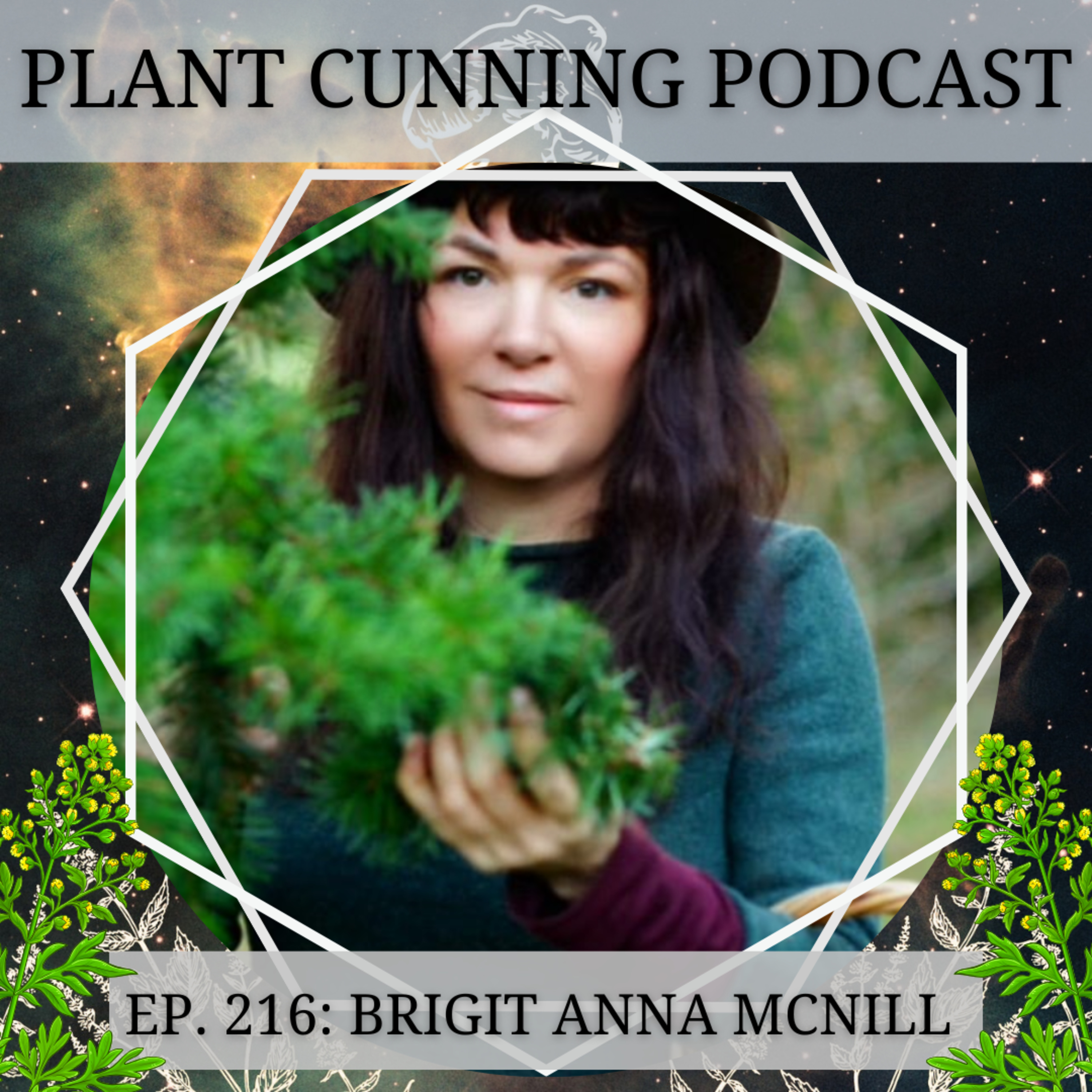
About this episode
In this episode, hosts AC and Isaac Hill welcome Brigit Anna McNeil. Bridget, a writer, eco psychotherapist, and herbalist, shares insights from her newly released book 'The Wild Within.' We explore her personal journey influenced by two incredible grandmothers, the importance of seasonal cycles, and the significance of telling and retelling stories that connect us back to nature. Additionally, Bridget discusses her beliefs on rewilding and how creative practices and rituals can be tools for personal transformation. Don't miss this thought-provoking episode that bridges the gap between the natural world and our inner selves.
00:00 Introduction and Guest Introduction
01:44 Brigit's Journey to Herbalism
06:45 Influential Teachers and Mentors
07:55 The Concept of 'The Wild Within'
09:25 Cultural Perceptions of Wildness
18:46 Rewilding and Connection to Nature
27:31 Seasonal Cycles and Beginnings
37:24 Rituals and Personal Growth
40:03 Winter Herbal Allies
42:08 The Enigmatic Yew Tree
46:15 Eco-Psychotherapy Explained
50:48 The Healing Power of Creativity
01:03:05 Imagination and Inner Child
01:09:22 Imbolc Traditions and Reflections
01:11:17 Conclusion
Get every episode summarized
Each time Plant Cunning Podcast publishes, we email you a written briefing from the transcript — the topics, who appeared, and any specific claims, with the ad reads skipped.
Email me new episodesFree for 3 shows. No card needed.
Transcript ready
886 searchable segments. Every word is indexed and playable.
Full transcript
Plant Cunning Podcast — Ep. 216: Brigit Anna McNeill and the Wild Within. Machine-transcribed; use the interactive transcript above to jump the player to any line.
Welcome to the Plant Cunning Podcast. Where we explore a relationship to plants, other people, and the mysteries of nature. Coming to you from the High Allegheny Plateau in Central New York. We are your hosts, AC Stobble, and Isaac Hill. Welcome to another episode of the Plant Cunning Podcast. Today on the show we have Bridget Anna McNeil, who is a writer, eco-psychotherapist and an herbalist, and we have a wonderful conversation with her. Before we get into it, I would like to let people know that I am available for Vedic astrology consultations. You can email me at infoatplantcunning.com and we can set up a reading. Also, I would like to thank all of our subscribers, all of our Patreon patrons.
It's very nice, it helps us keep this going. And I appreciate all the likes, the shares, the comments on the YouTube videos, and all of that. So thank you for listening and I hope you enjoy this episode. Today on the Plant Cunning Podcast, we have Bridget Anna McNeil, who is a writer, eco-psychotherapist, herbalist, author, mentor, guide. And she's just come out with a new book called The Wild Within. So Bridget, how are you doing? I'm really good, thanks, it's really lovely to be here with you. We're very excited to have you on the show, thank you for being here. That's a pleasure. So you're an herbalist, eco-psychotherapist, we've been looking through your book, reading your book, it's really beautiful writing, this beautiful writer, it's like this poetic prose. Every line, thank you.
But you are a plant person, you're not like a doctor or a clinical herbalist, but you're an herbalist, right? I think that's beautiful. I think it's a great thing for writers, too, to have a connection with The Wild. It's like some of my favorite writers have that, and there's a lot of stale-ness if there's not... But what brought you to the plant path? That's generally our first question here. Well, the beginning, I would say, I was so fortunate to have two incredible grandmothers. Who one lived in a cottage in the forest, and she was eccentric and wild, and she just taught me this deep friendliness that existed within the forest. Yeah, and she grew herbs, and she told stories for Radio 4, so she had this incredible way
of weaving or pulling you in when she was telling you the stories of the forest and of mythical beings, and it was, and she always was making friends with the animals of the forest, so she taught me this sort of love and reciprocity that exists in the wilder world within the trees and the plants, and through her, I started to understand that The Wild was a place that could hold me, that I could feel safe in. And then my other granny lived in a house in the city, but she had this incredible garden which she grew all sorts of herbs, she grew vegetables, she grew fruit, I always remember the smell of her tomato plants with the basil and the oregano, and just that understanding
that she brought to me about planting seeds and having faith in the soil and having faith in the world around and choosing our tomorrows through that sort of planting, and she made everything by hand, whether it's medicines or food, so all of those herbs, all of the vegetables were in everything, and that again taught me just this. Yeah, sense of care that comes when we choose to have a relationship with the wilder world or let's say wilder world with the living world. So Grandma Mary and Grandma Rosemary? That's right. Yeah. So it was which, can you guess Rosemary was the one in the woods? Yeah, yeah. I guess, and through knowing them they planted seeds, I would say, inside me.
And then when I grew, I definitely moved so far away from all of that, and I remember at school as well, when we were ever taught plants it was so boring, so boring, and it was lots of names I couldn't remember, lots of black and white photocopies, isn't it? Yeah. Although a lot of that is necessary in a way, for me it just took the soil out, and it was suddenly a product or something dissected. And also in my culture, the stories about plants are about weeds that need controlling, and it all suddenly felt very dull, and I moved away from it, but it was a time when I really was at it in a bad place, and really needed to change my life, that I remembered them. I remembered their earthy hands, I remember the seeds, I remember the forest, and I kept
dreaming that I would walk into a garden or a field, and I would stick my face in a hedgerow and it's dreaming about consuming wild plants. And so I just knew I had to, to follow that somehow, it was like a lifeline that had been thrown to me. Through them, which is really beautiful inside my teachers, and who are some of your teachers and mentors or people that have inspired you as you started getting into learning more about herbalism and plants? I think one of the first people that really inspired me was Susan Wheat. It's kind of fierce, loving women who kind of give so much in the way of her information about plants, and she seemed so readily available as well. One of the people who really deeply inspired me was Stephen Harrod Boone, through his writings,
but also through him coming down to Devon as well. And so there's a whole wealth of people in that way, interestingly, mostly American. And then here I had a mentor, a woman called Ada, who taught me a lot about plants, and then from there, lots of other people who were incredible and all brought their own way of seeing the world, which would be the gift to be part of. So the book that you've written, it's called The Wild Within, and so what is The Wild Within? Oh, let's get right into it. I think The Wild Within is the innate self below the concrete, below the stories that have
been pressed into us, below the taming and the trauma is something innate and natural. And we are very much woven and made from the natural world. And for me, a lot of my own recovery journey has been about remembering that and coming back to that. And what really helped me was when I woke up to the fact of being wild, it helped me to understand even more that the stories and the processes I was witnessing in the living world were also my processes. So that process of the Nicarado, of the composting, of winter, the needing to be still and the spring. And it really helped me to understand recovery and better and also working in rewilding helped me massively to see how there is this in wildness, I think, often the word wild
is quite negative for people. You know, if you imagine animals or a space, it's often cruel and unintelligent, not very easy. And if you imagine a person, it's someone's self-sabotaging, snorting coke of someone's chest and, you know, not sleeping, whereas from witnessing spaces rewild, I saw something really different, which was that wild is a continuous process for recovery and maximum health. And I sort of started to wonder that surely we can't be the only beings that don't have that within us that want to grow, that want to thrive, that want to bring the flavour of our medicine into the world. And it really helped me to understand that I don't necessarily need to look outside for
something that was already living inside me. Yeah, that's beautiful. And I think it really brings, like in the book, you have, you bring up this dichotomy between like the true wild and the pseudo wild. And I think it brought up memories of reading like Alan Ginsberg and Gary Snyder, and studying, you know, Zen Buddhism and so on and my early, like late teens, early 20s and seemed like what liberation is to Alan Ginsberg compared to what like a spiritual liberation is, you know, the more like what is in our culture, we have this idea of wild as like going out and partying when it's really the opposite of that. Absolutely. And I think that's the thing I, I hungered for wild, but I didn't know that the stories, there wasn't enough stories. There are so much negativity as we were saying about, well, even the stories about wolves
or about women or about the wildness is always is tainted with something dirty or ugly or cruel. And I hungered for wild for years, but didn't really understand what that was. Yeah, so that journey of starting to understand what true wild is. And there is something about it breaking the concrete, breaking the mold, breaking the neat presentation that we were told we had to fit into. And I guess that can lead to drinking and sabotaging and not wanting to fit into that tight way of being that we're told to fit into, but actually it doesn't have to look like self sabotage or, you know, pain or craziness. Yeah, and perhaps maybe, you know, it's in a way healthy to be very unhealthy, to like experience that, that mode of living, you know, in order to then balance back into some
kind of true wholeness. Yeah, it's interesting that, isn't it? Like it was, is that path a necessary path? Does it happen because we don't have often in our culture some really amazing rights of passage? Yeah. Or I don't know because I haven't lived a life where I received the mentors and the elders and the stories that may have changed or would have changed the path I went on. It would be lovely to see a kind of not the timeline to see, um, yeah. I think that that has a lot to do with it, the, we, the, the right of passage, we don't have that so much. Like, I actually think back now to my college years, and, you know, this may surprise, I don't know if anybody knows this, but like in college, I joined a fraternity, um, and part of that was the, I mean, I was homeschooled before then, so I wanted to like see what like normal people were like, um, but part of it was that I wanted an initiation.
Yeah. I mean, and then it goes along with that initiation is lots of drinking and part, you know, yeah, yeah. But we don't have those, those ceremonies and those things that really push us kind of beyond the comfort zone, um, into something else. Yeah. Yeah, I mean, and there, there actually is a really wonderful part of side of the fraternities that most people don't know about. Like that is initiation. Yeah, yeah, yeah, and community and, you know, people being there for you, because you're all in it together kind of thing. Yeah, yeah. Yeah, I also think about this like dis, distaste for wildness in the mainstream culture as a means of control from authority, because there's a difference between like a wild landscape and a pristine landscape. And what is the pristine is monoculture, cut grass, very manicured, selected plants versus what I see a wild landscape.
It's full of diversity. It's full of color and it's full, you know, it's full of life. Yeah, what is this insane push to finiteness? Yeah. Sometimes I see beautiful verges full of dandelions and oxide, daisy and nettles and muck rotten, all these things. And, and then you suddenly see someone just shaving it all away. It's not quite how we got here. And this, this fight against so many plants and dandelions being this incredible medicine. And how we got to this space of, or place of, of preferring to put poison on a landscape rather than have a dandelion grow. I was with a group of people and I had picked up some dandelion leaves and I said, oh, would anyone like one eating them?
And some, a couple of people looked at me and said, did you just pick that off the ground? That's disgusting. And I was thinking, wow, if I'd have got out with my pocket a bag of haribo sweets or something, I don't know if you have those there. No, just horrible sweets. In a plastic bag, you know, not good for your body at all. The opposite good for your body and offered those. No one would have thought anything was strange. Yeah. But those dandelion leaves were weird and odd and dirty. How did we get here where we've really believe in that story of the plastic bag and the cleanliness and that being okay? These beautiful wild plants that offer so much, not only to the human world, but the more than human. The cleansed and taken away and we have these monoculture green lawns that are just frightening.
Even more frightening. Do you have this here where people have plastic grass? Yeah. Not so much around where we live. No, you see it, but not around here, but in Texas, in place where there's less water and things instead of having like a sandy rock garden with cactus or whatever in their yard. Yeah. We'll go out and hoover it. Yeah. And there's a lot. Yeah, all of the microplastics in that, like they've actually started placing a lot of sports fields with the turf here. So high schools and colleges, it's easier to maintain, but it actually, every time the kids like skin their knee, they're getting like microplastics into their bodies. And they're leaching and they're impossible to take all these little bits of, yeah, it's a nightmare. I could go on. But yeah. Yeah, crazy, completely for her, for her to see just natural grass. If you're going to be grass, you know, with lovely bacteria coming off it and bacteria that helps you feel calm and centered.
Microplastics embedding into your veins. Exactly. I don't know how we got here, but we did. I think I feel like we, I think we actually, we got collectively sold a spell that made us believe that we are disconnected from nature. We're not part of nature that the world isn't enchanted. Yeah. And so like we, on a subconscious level, most people in our society believe that. But it's not actually the case. Yeah, no, yeah, we really believe that we are sort of molded from ingredients that come from somewhere else. You know, we're, we're other than everything else instead of that realization that everything you look at outside is the same, it's made of the same ingredients as us. Totally. How do we, you talked a little bit about like rewilding and your process, but how, how do we start to begin that, that process of rewilding or encouraging other people in our lives to eat the dandelion green or whatever it may be any tips.
Yeah. Gosh, it so depends on the person and the access they have. I mean, so many people don't actually have access to land that isn't being having chemicals put on it or dogs going on it. It's, it's hard. I mean, I live in the forest here. So I'm, you know, lucky in a way or fortunate, but. But what I do get the sense of from the workshops I lead is, and meeting people is there is a sort of. Maybe it's that innate wildness that sort of want to know or that want to remember. And there's something about when we learn more about the one of the things for me that's really important is the stories. And rewilding or restoring the stories. Because the stories we have, whether it's the soil is dirty.
But insects are creepy crawlies out to get you or the plants are weeds. They all, they all in a very small, but quite significant way. Cut you off from connection. They just inject a bit of fear. Everything you start to see is, is fearful. And I think when you can keep weaving and putting out like a spider, the stories that are beautiful, that are connective, that are true, that are real. I think people know those stories somewhere deep in their bones and they resonate. And so for me, I found. When I teach the greatest way is to start bringing those stories in rather than this is the underlying. It does this, this, this, and this. And you can, which is also important and part of it.
But to weave the story of. Of, you know, what the root does under the soil or all the different creatures that love that plant or how we used to use them. And so, you know, the old stories that went with them and, and they said, I feel that in that way and to talk about the negative stories. And in that way, something. Fools away and a sort of. Yeah, resonance arrives for people, I feel. Yeah, I feel like that really is true about the stories and, and. And being able to connect with people through those different rewriting of those stories that were told from. Do you find people really do hunger for it? Yeah, connection and. They seek out the herbalists and the cunning folk and. Sometimes like the grannies and things like that to. To, yeah, to find that connection.
Yeah. What an awesome granny to have to as a. Like the archetypical. Granny in the woods. I know totally. Yeah. And she had different knocks or noises at different times in the night. And she would know, oh, it's the fox. Oh, it's the pheasant. And it was as if. So she would, they would come to her. When so the fox had come when they had hurt their poor. The pheasant had come. I can't remember why the pheasant, but these different creatures. And I don't know if there was a story in the forest about the woman who lived in the. But it was, I remember being having to be really quiet by her door. And there would be this scrape and she'd open it and there would be. Box and she'd give the fox whatever and. Yeah, just all these. Amazing times. Yeah, but it was quite normal then. It's that you know, now it's like, wow, that was, that was amazing.
Yeah. Wow. And so. Now that's like life goal. Like I want the fox to come to my door. Yeah, absolutely. The big dogs might not be so happy. Yeah. Yeah. Oh, maybe. No, maybe. Yeah. Our little guys kind of like a little fox. Yeah. What creatures do you have around you? Lots of foxes and. Dear. We have lots of deer. And we have the occasional roaming like big cat like a mountain lion. Yeah. There's coyotes. And we haven't seen any bear in here, but they do. I've heard. There are bears around. We haven't seen any. We've got like one of my favorites. Well, we have the big birds. We have blue griplow herons. Mm hmm. And bald eagles. Yes. And they're rare. You know, like so when you see them, they're like, ah, that's a good moment. Yeah. Yeah.
How gorgeous. Yeah. Yeah. Yeah. Yeah. The woods are fairly new around here. Yeah. Yeah. Definitely clear cut in the early part of the 19th century. And there's lots of farmland around. But, um, yeah, a few conifers and lots of maples and. Northern hardwoods. Most of the meatballs. Maples. Maples. Oh. Yeah. We have actually meat, meatball trees. It's a, it's a really, it's, I think people in a permaculture are going to be really into it because it's like you get protein right off of the tree. You don't even have to do anything. No, those are the actual. What about, what about your forest? What are, what kind of trees and creatures you have? Um, well, it's a kind of, it's on Dartmore. So it's this sort of temperate rain forest. Um, you know, like in and moss. Really. And granite rocks. Rivers. And there's wild boar.
There's plants. There's deer. Foxes. Um, uh, falcons. Lots of birds. Um, yeah, many, many beings, which is really lovely. And at night time. It definitely sounds quite interesting out there. These apples and hoots and screams and all sorts of things. Yeah. I remember being in America and seeing a mountain lion. I think I miss. I miss those spaces that have those predators in. Yeah. They're the bears and the wolves. There's something for me where I feel it feels more whole. Mm hmm. Whereas here, you know, we've got rid of them all. So if they're feels like there's something wrong in that way. Right. Yeah. We're definitely, unfortunately, heading in that direction too. I feel like the, the big predators are, uh, need to be protected still.
Mm hmm. Yeah. But actually, I mean, I also feel like. Well, so for one, the coyotes around here. Um, are, are we, they've been recently have been found to have wolf genes in them. They're like. They're part wolf and some of them. Yeah. So they're coming, you know, the wolves are coming back through the coyotes. Yeah. And it's quite interesting, isn't it? Yeah. They're big. Yeah. Is that those genes were always there and people didn't understand that or they have bread. They have bread. There's also dogs, dog genes. Wow. Uh, so the coyotes are just, you know, they're. Yeah. Doing a thing. And we have a wolf sanctuary, like 20 minutes from us. Uh, big acreage, fenced in big acreage for wolves. Well, they're not, they're not wild. No, they're saved from. Yeah. Hases, but. So you read the book What Wolf Wilder by Catherine Rundle?
No. It's a children's book, but it's incredibly beautiful. And it's about the tamed wolves get taken to the wolf wilder. And it's a mother and daughter who live in the forest. Maybe wild the wolves. And it's very beautiful. Oh, that's so cool. Time to check it out. Thanks for the tip. So to get back to your book. The story of your book is, is, is a seasonal, is the seasonal story. Yeah. Which I think is a very, another, it's like a deep. Ties to that are archetypical. Like the wheel of the year is very. Is a strong image for people. And it's also something that so it's. This or all, you know, like the seasons are always changing. And it ties you to the, to the, to the, to the, to nature to the wild. And it's also like this, the image of. Change. And. Which is, you know, time.
Change things in permanence. But permanence within the impermanence, you know. Yeah, yeah, yeah. So my, my, my, my first question was like, why did you start with autumn? Oh, I started with autumn. That's a really good question because so my granny is Scottish and Irish Mary. And she. For her, she had grown up with the idea that all the story that Halloween. Sowing is the new year. And it's this time of where the Caliach be. The ancient flag of the time comes and she. Bashes her black thorn staff on the ground and she creates this threshold. As a symbol and Bridgett would go under the earth. She's the sort of Celtic Persephone. And, and it was a story of how beginnings.
They are. Start in the darkness. They start with the compost and the breaking down and the, and the thresholds. And just like the seed in the soil or the baby in the womb. That's where it all begins. And autumn and autumn and winter sort of seen as midwife. Times of, of tending to those seeds and tending to those beginnings. And then in, in bulk, we arise. From the earth and Bridgett would arise with dandelions as the gift to what we needed. And dandelions are incredible at helping people and the land to rewild as a pioneer species and how. They, you know, move stagnancy and shift. And then we can build up concrete or, or build up foods and help us to remember something more energised and, and wild within.
And so for me, when I, that story I found much kinder. Then beginnings being this upward outward golden shining thing. Because it just, it just felt like a lot of pressure. And when I. Actually beginnings were really messy in a way. And that you had to kind of. I find that in my life beginnings always ask for a sacrifice. And that sacrifice is usually what it is that stopped you stepping into this beginning. A mold way of being that has to be laid on the stone of the threshold. In order to, to, to grow or to, yeah, to grow. So that felt so much better to me knowing that actually, beginning is periods of, of, of dripping black fermenting.
Compost, you know, that turns into a womb of, of, of life. And so for me. And also, so that is the beginning for me that season. And also. I would say the journey starts with. Yeah, the realization of the stories I hold that keep me back. And I think that's always something to attend to. Yeah. When stepping in that threshold is our saying. Yeah, and there, there, there is something about that time of the year, the, the, the dark time. The new moon of the year where it's. It's like, for me, like, especially this, this, this last round. You know, like, I, I, you come into into into, you confront like your expectations of yourself and like what you want to be doing and like what you actually are doing.
Yeah. And then there's that balance between resting and like letting yourself decompose a little bit. And also in a healthy way. And then in a, in a non healthy way, like, how do you make sure you're not just decomposing into nothing? Yeah, yeah, yeah, yeah. Like letting, letting bad habits take, take the, take more strength, you know. What do you, what do you think about that? About how the deliciousness of collapse, you mean? Yeah, the deliciousness of collapse and, and, and, and you know, how much you should let go and how much you shouldn't. Yeah, I mean, I never liked the words letting go because I feel that it's passive. Whereas I feel like at that time of year or that time in our lives when it appears, it's about composting. And I like that because it's about rolling up your sleeves and getting your fingers in.
And really looking, and I think it's a lot about bringing what resides in the shadows of our psyche and shining the light of awareness on it. So it becomes conscious. And so then it, then we're more aware of actually what really is being called to compost with a knowing that, you know, when we start to shed, when we start to decay, that that does turn into fertility. Yeah, it's interesting, isn't it? Because I know that I've stuck my fingers into the known because the, to step into the unknown is too, too scary. I would rather choose something that doesn't serve me than that sort of field of unknownness. So that's a constant practice for me because actually we're always stepping into the unknown, aren't we? I mean, my roof might collapse in 10 seconds or you just, you just don't know what's about to happen.
But I don't know about when I guess we, when to stop letting go or when it just becomes a delicious puddle that we just want to be in forever. So we don't reach the growing phase. I guess we always have to be kind with ourselves and only go as far as we can. I feel like people have learned to always push themselves, whether it's detoxing, whether it's whatever it may be, instead of a sort of slower kind of listening and just going one step. At a time because I think that's much more powerful. Than, than always sort of self harming in the way of pushing ourselves through and getting rid of everything. Yeah, I don't know if that answers your question, particularly.
And I like what you said about the, the active part of this like composting and the winter and the visualization of like your fingers pushing through the soil. It's like there's still work to be done internally doesn't maybe the difference between like letting go is like a dissociating first is like a shadow work versus looking within. And like think about the little mycelium like these fingers pushing through the soil. But they are the ones that are pushing through this like hard stone and soil to make connections for a new fruiting body to grow, you know. And also I think if we are inspired to shed something it's often inspired by a dream or a plan or a hope that resides in us in the way of a seed. Sort of like the seeds growing in the concrete that sort of I think our bodies or our souls are always trying to push us on to the right path.
Maybe it's it's much more about listening. Yeah, that makes that makes sense. Yeah, listening is also active. Yeah, right. Yeah, rest is also active. Yeah. An action. Yeah. I think that they are their own gatekeepers. I always remember someone saying to me, I've got some good news for you and I've got some bad news for you. The bad news is that it's down to you. The good news is it's down to you. And that was amazing for me. And of course it's not saying you're totally on your own because we can we can take support and care and love from all sorts of different spaces. But it is our choice to choose to do something. And sometimes when I work with people in the way of ceremony, I always make sure if it is around letting go or I find that people too often will put a wish out as if the fairies or the fates or the gods.
Are going to listen and just do something. Whereas actually in the ritual, it's about creating a mark that we can remember in our psyche, something different. So we remember it and it helps us remember our intention because we have to put that that work in and that the ritual itself becomes more of a handrail on the journey. Yeah. And yeah. Ritual sometimes can be working on like that subconscious level on like the astral level to realize the blockages that we have. And that's maybe why we ask for help from those above or. So I'm curious like what kind of rituals you do and like what that looks like for people you work with.
A lot of the time there's self generated rituals, which is giving someone a kind of skeleton or a framework. I always have nature involved so solo time on the land. You know, the land is mirror or always like that. And then often, you know, coming back as community and sharing so everyone can eat from the story. But for me, the purpose of them is to to I always find ritual is an incredible way in which to wake wake us up. Because you're generally doing something that's a little bit out of your comfort zone. And when we do that, we sort of wake up a bit and also knowing that you're holding the space differently. And becoming more awake in that space and it's because it's different that people. Yeah, remember it more. And in that way, it becomes that touchstone that they can reach forth and remember their, their feeling on the land or remember those people that helped them or remember how the land helped them.
And then we can come back again to that intention when we inevitably fall off the path a little bit. Yeah. So what are some of the, I mean, in the book, you know, you go through this with seasons and you go through with plants. Yeah. So what are some of the plants that you, that you lean on in this in the winter, this winter time. Hmm. I am often always drinking mugwort, I can miss your bogaris. I find that to be such a beautiful winter dreaming ally. I, a nettle is a big one for me, even in the winter when there's lots of areas that are streamed or there's still beautiful fresh nettle around. And also lots of dried nettle that I have.
I really love to the way nettle kind of grounds and nourishes and strengthens that really supports me through the winter and bringing those of beautiful minerals into the body. I think there are my two main ones. Yeah, I want to be drinking mugwort tea. Thanks for the reminder. Yeah, yeah. Well, that is one of the blessings of the dark time is the dream, the dream world is a little more open. Yeah. So that mugwort definitely helps. Definitely helps that. I haven't really thought about mugwort as a winter herb. No. Because it is, it's not as like warming, you know, when I think of winter herbs, I usually think of like cloves and cinnamon and. Ginger. Yeah. But, but that, but mugwort is a beautiful thing to be, you know, a beautiful plant to be working with in the, for the dreams in this time.
Definitely. And of course the nettle like you've got to have the. We got to make it through. Yeah, the strength. Yes. Then the nourishment. Yeah, exactly. Yeah. And so what about what about you, the you tree? Oh, yeah, the you tree. I love the you tree. Do you have many you then? Mostly in graveyards and plant them. Yeah, and then like some businesses will have them as like a human cities. Yeah, yeah. Out west there a little more wild though in California. There's a, there's a, there's a, they're not very common either though. And there is a, there is a, a native you that is more, it's like a smaller, it's not really a tree tree. It's like a ground tree. Ground cover. Interesting. It's a weird, it's a weird you. It's not very, it's more common more north as well.
Yeah. But definitely not wild. We have, we've got hemlock and. And spruce spruce. Yeah, and. Yeah. I put a bit of hemlock here as well. Oh, I mean, you have the hemlock tree. Really? Yeah. They grew in the UK. No, well, I think it's rare, but. But there are climax species out here. And yeah, there, there's a string just behind. And the hemlocker all over that part of the forest and redwoods as well. Oh, cool. Yeah, mixed in with hazel and oak and beach and birch and things. It's lovely. There's something, I love the hemlock cones in there. They're so cute. Oh, so soft. Yeah, they're so. Yeah. Hemlock, hemlock streams and grows are some of my favorite places to be. Ground is so soft and like the. It's a vibe. It's a vibe. Yeah, it really is. And, and you is.
Oh, it's very different vibe to hemlock, but it's so. They are so. Grounding. Yeah. Whereas hemlock almost feels very like. Yeah. You as a. And I just, I feel for me with my granny's you in her garden. It was just. It's just incredible being. And I love poisons. I have a lot of poisons and I find. The sort of understanding of how poisons are used in. In medication in, you know, with the you, the cancer and. There's something so beautiful in that as well. Yeah, poisons fascinate me. I would like to learn more. But there's sort of the ancientness of you. And I sort of told like and. Fold it and.
And then the sort of hollow cabin inside. Yeah. Yeah. I think it's interesting for here where we are in the US. They're still like they're this tree of life and death. Yeah. They're planted as a grave as a, as a, as a graveyard tree. Yeah. And you can need a berry, but don't need the seed of the berry. That's right. Yeah. That lovely, fleshy pink bit. Yes. Yeah. Yeah. Yeah. Yeah. Yeah. No, they're in graveyards here too. I think in the UK, we got rid of so many you. Trees through bow making. And using the word and some of the only remaining use now. You find in graveyards. There are. Others in places. But they show that the you is older than the church. So I think before the church, it was also an sort of ancestral bone ground, a burial ground. And so you. Has for so long had this story of, of life and death.
Especially because of the way they grow that their process for growing is, is, is very much sort of in that, in that world of life and death together. Yeah. Amazing beings. So I, I kind of wanted to ask, I asked this earlier, but. I forgot. But so, so what, what is an eco psychotherapist? It's really just someone who uses nature and the processes of nature and wildness to help. So I think it's someone in their journey of coming back to themselves or recovery. They're using therapeutic. Modes or ways, but, but. Infused with the stories of the land and people going out to the land and being with. The land. Yeah. Okay, so those, the ceremonies, rituals and like work, that's, that's part of that, that work.
Yeah, that's, that's, that's, that's sort of the direction I sometimes go. So I initially did art psychotherapy and I started to take that outside and noticed how much better it was outside. I think a room can sometimes be quite confrontational. You're just with someone. And I remember, I think I spoke of this in a book. I remember a man I worked with who spoke about realizing when he was in nature, he watched things die. And he watched things come from that death, you know, whether it be a rotting tree or the bare earth of winter and. And it started to help him feel that he also could have that capability where when he was in a room, he just always was facing the same stain on the wall and the same crooked leg of a table and the. You know, the same broken clock and he just felt he was under a weight of stagnancy.
I nothing was changing. And so I really noticed how people really thrived more in the sort of artistic practice outside. And that's when I then started to to learn more about the more wilderness sense of therapy. Yeah, very cool. And I think you follow that often follow the things that would have saved you. Or so in following it, I was probably also following something that I really needed, I think. Yeah. Yeah, I mean, is that what saved you? I think a big part of it, I would say, is nature. Definitely saved me, but also I would put that nature as as the nature inside me. That wild determination to to live to to somehow find a way of thriving.
So I would say, yeah, nature, wildness both within and outside is what saved me. Yeah, and I imagine too when you were, I mean, I also have experience when you're in a more wild place that you can recognize the wild that's inside of you better. There's this mirror. And when you're in a human. Designed created environment. It's a lot easier to believe the spell that we are not part of nature. Yeah, yeah, absolutely. And I remember living in cities for years and even the seasons start to become whitewashed. Yeah, just I just would notice them because I don't know, there was Christmas or it would get a bit annoying getting around the city because the weather changed or you didn't see the way a landscape changed or the plants that grew. Yeah, so it's almost so essential.
People talk about actually you just need TV screens with nature on them. But it's not the same. Probably better than like the football game, but yeah, yeah. So you must like this or you must look like this. You know, when you're there and you're receiving the bacteria and you're receiving the bird song and you're receiving all the things that help and you're watching the stories of how things shift and change. It's much more, you're much more able one is much more able to understand what resides inside us, I think. Can you speak a little bit to the process of creation, like creating things with your hands, you talked about your grandmother's in the morning, weaving at the afternoons of playing piano at night and you're an artist and you you lead these experiences with art and nature and you're an author.
So what what is that process to you. Yeah, I guess I have quite a creative family in the sense of my grandparents. There's lots of writers and we weavers and and so there was something natural about that. I was, yeah, I was an artistic kid. There's something about using your hands, like whether it's writing with a pen or feeling clay or painting that connects us far more to our hearts, I think. There's suddenly this slowing down and this beautiful connection, I think one of the things I miss that I grew up with with my granny again was the weaving and the understanding of of where the dies come from or where the world comes from and there's something about creation creating where you've suddenly brought in nature.
Like her weaving could be a whole blanket of the landscape that you're wrapping around you and at home, I have lots and lots of handmade things and it feels like there's a touch of the insult instead of lots of mass produced things which made me feel a bit uneasy. I have too much of them, but I think creativity, like I think we grow up believing so many people grew up believing they're not creative because creativity can at school can be taught in quite a type way. And quite a judgmental way and often if you don't feel safe within your peers in the classroom anyway, that also becomes very hard to create and you get told often to do a certain thing and if you can't do it within a time or do you're not very creative and people end up leaving school thinking I'm no good at art and can't sing I can't dance I can't write.
And yet I feel like creativity is sort of how our soul speaks and it's a shame that we learn to create for external eyes instead of just following what wants to come out and following color or thread or claim because it can be incredibly healing to just play. It can be and i'm thinking about all the the times that i'm creative like making art and my focus like it's not up here it's definitely in the heart yeah yeah it's in the heart so yeah it is connecting you to. Yeah and I think for me writing was a way. In which I could meet myself. More easily. Whereas I probably couldn't have been able to say those things necessarily to a person and I think that's been the same with me for the plants.
I think when I was exploring learning about the medicines of plants and exploring them through the sensory perception. It helped me to start exercising that sensory perception and start feeling my body again and start understanding what I was feeling and perceiving from the world and listening to that. Whereas I had been I had grown up learning to not listen to that you know don't listen to that don't feel don't be anything different from what you're being told to do. And so then there was that constant lesson of actually you're in a compass and you're feeling in your perception is defunct it doesn't work so you have to defer to someone else. And both creativity and plants helped me to reclaim that sense of feeling and knowing and I don't think.
I could have done that with just another person or people because I for me I had learned that people were not safe place. But plants and that way to create enabled and I find this with people I work with creativity can be a wonderful place if talking is is hard. Totally yeah and it's a lot kinder and softer both. Learning the plant world and learning creativity or playing with creativity can be lesson in its intense but less you know if you've learned to feel unsafe in that way it's so much more useful for me I find anyway. Absolutely I did just have a quick question was your grandmother weaving on a loom yeah she had huge looms cool okay yeah she would weave for liberties in London make these incredible and she would go and teach around the world helping women to come out of poverty and reclaim that kind of them or natural fabrics wow.
Yeah and I used to sit by her and listen to the clickety clack of the loom weaving songs and it was yeah did she really oh that's so amazing I want to I want to get into weaving with the loom. A pretty big one yeah. And I saw some people doing weaving like doing a concert performance with their loom with their floor the weaving songs and the rhythm. And I'm just like this is I'm dropping every like I this is where I need to be. Yeah and then I saw a video of Irish women from years and years and years ago singing and they're all kind of weaving together. Oh it's rhythm yeah it speaks to the soul and a really. There's a book by someone I met recently called vanishing landscapes and she's called Bonnie lander Johnson and she talks about how.
How we got to where we are now and how the landscapes have sort of vanished in our way of interacting with the landscapes and how it would have been this. communal process of weaving and gardening farming and growing and making and how everyone would have been together and she was saying how you would know where someone had come from by the colors they were wearing because people would weave with what they had. And I love that it shows how much in a way we've sort of lost. Yeah, totally. Yeah that's it's true. And when you're talking about like somebody weaving with sheep wool that came from a sheep not not too far away and then using these natural plant dies from plants that are just growing around. You like you literally are wearing the. Yeah. The land. Yeah. Whereas if you're wearing like some synthetic mass produce fibers you're wearing like petroleum and slave labor.
Yeah yeah yeah. So it's. Well, totally yeah. And it's so that I think I said earlier it's beautiful to think of the land wrapping around you you know you warm and. Yeah. There's all these different ways in which we have lost something. Yeah. I also think about like these people weaving as like that was like the original cottage industry. Mm hmm. You know and then and then the industrial revolution happened and everyone had to go to the and then there was like the the Luddite. Or you know the revolt but. It's like that. It's a loom. It created it. It gave away away for people to. Have their own income and their own. Yeah. Themselves instead of. And then have that. Be independent in a certain way. Yeah totally. Yeah. But still but it like still like this. Part of the land and part of the community. It's crazy isn't it in a way we sort of fell into that thing of.
If things become mass produced then instead of making them we need to buy them. So instead of being a weaver we become something that we might not love as much. So we can then. A Ford. I don't know. I don't know what I'm saying but not only. It's a strange it's a strange. Yeah I keep it I say it like it's a spell we got sold you know I like that. It doesn't make it. You know after that. The way you're using that what. There's a. A. A professor who got. Cool piano he got he got she got murdered. In like a 91 or something but you wrote this book Aeros and Magic in the Renaissance. And it's a really it's I always recommend that book. the modern, like the, we live in a modern magician state. Yeah. Where it's, it's what, what controls us isn't hard, um, totalitarianism, it's soft, um, yeah, it's advertisements and propaganda
and, yeah, like, why do you, why do people, why do we believe this instead of this? Anyway, absolutely. Yeah. That's where my, my mind is today. Yeah. This is also bringing me back to like the seasons and this being a part of the seasons and observing them, you're observing them with your own eyes and it's your own experience rather than a belief that's being sold to you. Yeah. And I think that is such a beautiful tool of the hunting folk as you have demonstrated with your, your, your book and with your workshops and, and teachings of how to connect back to nature because the seasons are a lived experience. Yeah. But interestingly, I think people have grown so disconnected from the experience they're having. Like, it's very easy. Oh, I'm just imagining it. Oh, I'm, and also the busy, busy mind, you know, and your phone on you. So people are experiencing things less and less, I feel. And there is, though, people like Robin Wall Kimmerer and other people who can bring in
science that help people in these times to start to believe something because if it's scientifically studied, people can have faith in it. It seems in these times. And so, yeah, it can help people to not put their feelings down to imagination or, although imagination is beautiful, but feelings down to stupidity or being childish or, you know, all those things that people think, oh, I felt amazing when I sat under that tree. I felt amazing when I, but it's just silly. You know, it's just childish. So it's lovely when these stories come out about how we are held by the wild, wild, that it can help people grasp those experiences as real, I think. That's a good point. Yes. And that's another spell we've been sold to is like the thinking imagination is this willy childish thing instead of an access point to creative power,
like the creation of the universe. You know, if you look at the esoteric traditions that like even to to bet in Vajrayana or Western, the magical traditions, like imagination is with a capital I, you know, like, it's access to the imaginal around, talk about Corban and like, you know, there's it's a, it's a really powerful tool. It's not just a childish. No, well, imagination is what helps you see different pathways, helps you imagine a different future. Imagination is vital. And yet in this country, people definitely get moved away from it as quick as possible. You know, over imaginative, oh, let go of that, you know, pull your socks up and be sensible. Yeah. Yeah. There's something as well in that movement away from the heart and to the to the head as well. And I feel like the head is meant to be part of this incredible
community, like a forest. And the poor head, the poor mind gets told to lead everything where actually it should also be listening openly to the heart, the communication of the heart and the gut and the nervous system because that's where we also perceive and the world around us. Yeah. Yeah. A lot of wisdom down there in the gut and the heart. Very much so. But love it when science proves the wise women right. Are you affirming? You find, because I find the more stories I gather and learn, like a different story from what I told. I'm continuously high-fiving the child in me. Yeah. I knew Dandelions were amazing or I knew that was whatever. I knew the soil was alive, but
and it's and there's something like I find on my journey, it has been about, and now I mentioned coming back to that wild estate, but it's actually been about coming back to the child in me before the trauma and the taming and the concrete coming back to that part because then I was the closest to my soul. And so also those stories help that. I knew the child in me wasn't stupid and dreamy and you know, or dreamy in a negative sense, but was feeling the world. Yeah. Yeah. And I'm just, I can't help but think about it an astrological perspective as well. You know, it's like when Mercury rules the hands, speech and writing, and even like that, like handy crafts, like working with the hands, even like the hand aspect of the Hennacroordination aspect of art, that's like more the mercury. But all these things, mercury is also the inner child.
Reason that the the poor, you know. Interesting. So it's like when you're you're activating Mercury by working with your hands or writing, speaking like you then you activate that that that that child like part within you. I love that. I didn't know that at all. That's gorgeous. Well, you know, that astrological framework is a fun. It's not just fun. It's like it could be you know, there's a reason that it's like the universe. One of the main structures of, you know, figuring it all out. Yeah. Yeah. Yeah. Yeah. In both, you know, in the West and in India, like a thrill of the civilized world. Yeah. Yeah. And how people have been studying that for thousands of years. Yeah. Yeah. Yeah. I definitely find high high five my inner child a lot as I've come onto the herbal path. Yeah. And like farming and just even like having dogs and cats. Like
that was like a dream for me. It's a kid. I was so allergic to them. I couldn't have them as a kid. But it's when I started, um, I think partially like healing my gut and then exposure and be spending more time in nature around like hay and animals that I didn't get exposed to a lot. I started to come used to them. Yeah. But yeah, my I think my inner child is pretty stoked that I live on a farm in. Absolutely. Yeah. That's really beautiful. Isn't it gorgeous to reach back and remember those dreams that were in us and and let them breathe and let them grow? Yeah. Really lovely. It is. Because there was a chunk of time there between the child and the herbalist adult where I was like, I'm going to be a lawyer. Yeah. I want to do this different thing, but I couldn't I couldn't hang. Yeah. Yeah.
I remember being at school and having careers advice. Yeah. And being like, well, I love animals. I love nature. I love art. And being told, but you can't really make money on those. So how about Secretaryalsky? Yeah, totally. So rubbish, isn't it? It is. Total rubbish. It's not easy. It's not necessarily always easy to make money on those things, but no, no, but they're still possible. Arts and wave. Yeah. Ways of letting those inhabit your life. And yeah. It seems like like like everyone who I know who is successful and that is doing it their own way. Yeah. Like they're creating their own path. Yeah. So yeah. And for that, you need to have that strong connection to the wild within. Yeah. And that mercury child. Yeah. Yeah. Yeah. I do have one last question. Are you doing any do you do anything for in bulk? Because that's
going to be coming up soon. It's like our next. Yeah. Holy day. So do you as the namesake day? Is there are there any traditions or anything that your grandmother's did or it's something that you do with your family? Yeah. My dad named me Bridget because I've worn in February as well. So strong one for me. I always remember going to gather snow drops or to go out and look for signs of life or not just look for signs of life but to feel signs of life because something changes, something in the feeling realm of the atmosphere changes. So that's really a beautiful thing to do. And yeah, it really changes, you know, alone time and also and planting, looking at thinking about seeds because it's all about in the belly, you know, what's staring in the belly, what seeds are sort of beginning to shift and speaking of those as well.
Yeah, it is, it is a shift even though it's subtle and around here, there's still a bit of snow on the ground so it doesn't feel much different than like January in the visual way but in a visceral way. Yeah, that shift that that's. Yeah, it's the it's the almost birthing, isn't it? And you know that all that time of pregnancy where it's like I just want to birth. Yeah. Yeah, whereas I think here, you know, there's there's snow drops and there's daffodils and there's things appearing, which is lovely. Yeah, yeah, beautiful. Well, we've had a wonderful time with you on the show. Thank you for being a part of it. Oh, it's lovely and it's so lovely to chat with both of you as well. Yeah, likewise. So you've got a sub-stack, you've got an Instagram, the book is coming, the book it should be out.
So how can people get in touch with you or follow you? Get the book. Yeah, get the book. If you, I think you can get it if you're in the state, some places in from black wells, they do free shipping, which is amazing. And otherwise Instagram or sub-stack, yeah, it's how to find me. Okay, awesome. Well, thanks again and wild blessings. Yeah, and to you. Thank you.
More episodes
More from Plant Cunning Podcast

Ep. 244: Dreaming, Herbalism, & Embodied Learning, with Kimberly Gallagher & Lau...
Plant Cunning Podcast

Ep. 243: Temperament & Graeco-Arabic Medicine with Cameron Allen
Plant Cunning Podcast

Ep. 242: Becoming Mushrooms with Madison Murphy Barney
Plant Cunning Podcast

Ep. 241: Telesmanica with Christopher Warnock
Plant Cunning Podcast