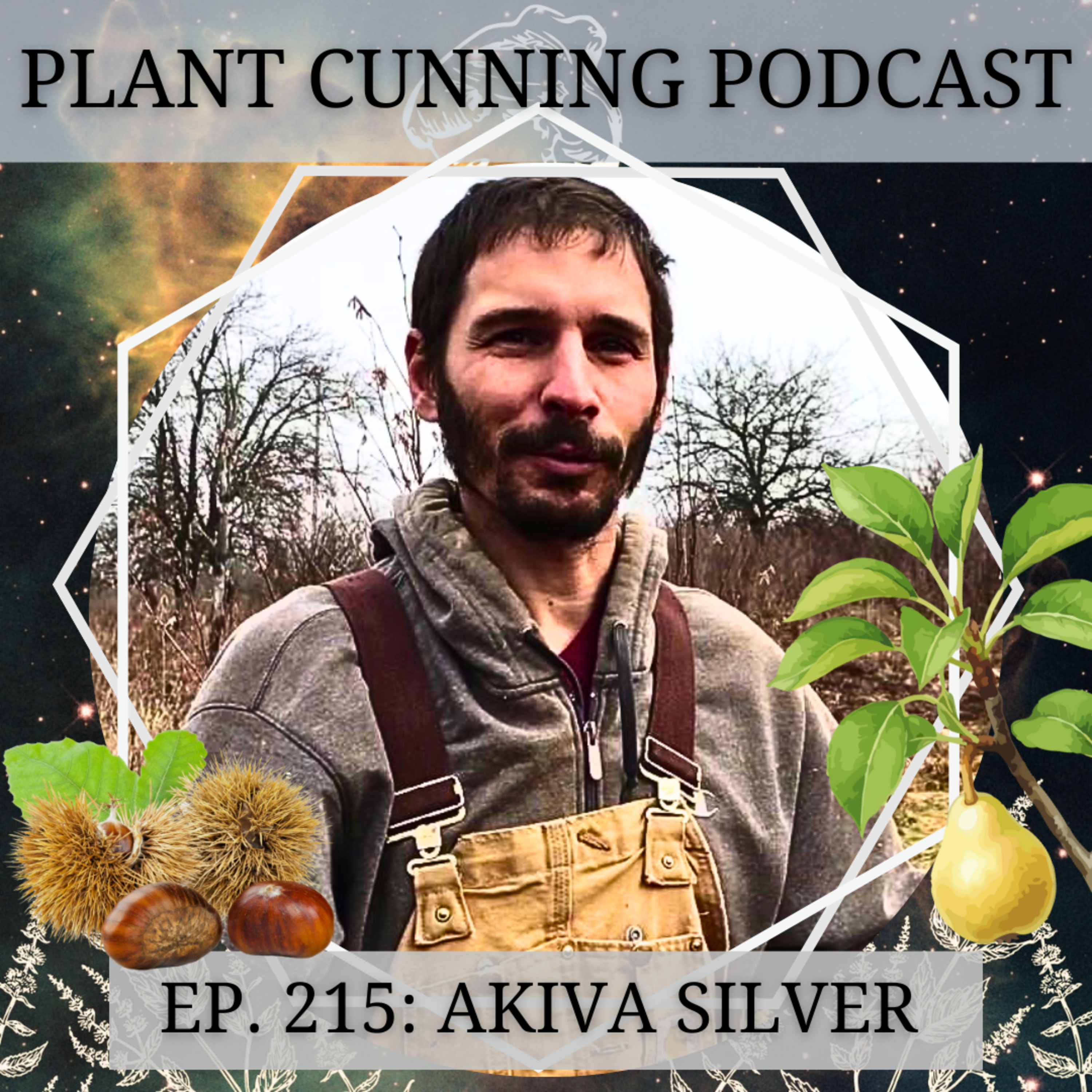
Ep. 215: Akiva Silver on Cultivating Conversation with the Land
About this episode
In this episode, we welcome Akiva Silver of Twisted Tree Farm. Our discussion wanders into the creation of lotus ponds, the selective use of nitrogen-fixing plants, and the importance of "hardening off" in the North. Akiva shares his journey from wilderness survival enthusiast to professional nurseryman, emphasizing the importance of having a 'conversation with the land.' He also touches on the philosophy behind his work, the benefits of diverse plantings, and the practicalities of building DIY ponds. Akiva's insightful perspective on managing land and fostering biodiversity is a must-listen for anyone interested in sustainable farming practices.00:00 Introduction to the Plant Cunning Podcast01:06 Upcoming Events and Announcements02:00 Akiva Silver's Journey and Philosophy03:12 The Art of Working with Land07:27 Planting Strategies and Observations15:34 Exploring Akiva's Farm and Plant Varieties22:11 Challenges and Learnings in Permaculture30:21 Balancing Experiments and Resilient Plants31:01 The Resilience and Early Production of Hazelnuts31:36 Chestnuts: A Versatile and Historical Nut35:36 Managing Abundance and Wildlife on the Farm37:59 Building and Maintaining Ponds Yourself39:53 The Benefits of Ponds for Wildlife and Recreation41:20 Specializing Ponds for Different Uses44:12 Renting Equipment and DIY Pond Construction48:38 The Importance of Taking Action and Learning by Doing49:47 Current Projects and Inspirations50:37 Books and Philosophies on Nature and Life53:14 Reflections on Modern Challenges and Resilience55:37 Conclusion and Farewell
Get every episode summarized
Each time Plant Cunning Podcast publishes, we email you a written briefing from the transcript — the topics, who appeared, and any specific claims, with the ad reads skipped.
Email me new episodesFree for 3 shows. No card needed.
Transcript ready
832 searchable segments. Every word is indexed and playable.
Full transcript
Plant Cunning Podcast — Ep. 215: Akiva Silver on Cultivating Conversation with the Land. Machine-transcribed; use the interactive transcript above to jump the player to any line.
Welcome to the Plant Cunning Podcast. Where we explore a relationship to plants, other people, and the mysteries of nature. Coming to you from the High Allegheny Plateau in Central New York. We are your hosts, AC Stobble, and Isaac Hill. Welcome to another episode of the Plant Cunning Podcast. Today on the show we have Akiva Silver of Twisted Tree Farms. Akiva is somewhat of a legend in the permaculture, sustainable ag, DIY nursery space, and we're very excited to have them on the show. We have a conversation that goes into lotus ponds, why he doesn't necessarily use nitrogen fixers too much in his plantings, and how to make sure that your plants do well in a
short season in New York State. Before we get to the show, I just want to let folks know that I'm available for Vedic astrology consultations. If you would like to see your chart as a map of your karma, then you can email me at info at plantcunning.com to set up a reading. I would also like to let people know that we are having our third plant cunning conference at our farm in Central New York on the weekend of July 24th through the 26th. Save the date. We'll have more information soon, but we have Dana O'Driskel coming. We have Seven Song and a lot of other fantastic herbalists, astrologers, and spiritual practitioners. It's going to be a great time, and I hope to see you there. I hope you enjoy the episode.
Today, on the Plant Cunning podcast, we are honored to have the one and only Akiva Silver on the show. I first heard about Akiva listening to podcasts back in the day when I was doing my permaculture projects in Pittsburgh, and he was talking about all sorts of ways to grow plants on your own and start a nursery business and help popularize a lot of ways to do that like air prune beds and things like that. And I've always had a lot of respect for Akiva, so I'm glad to have him on the show. So, Akiva, how are you doing? I'm doing pretty good, plugging along one day at a time, taking it as it comes, you know? Yeah, that's all you can do. Yeah. Yeah. Yeah. How are you doing? We're doing all right. You got a, you know, nice day. It's been a, been a, uh, already up a pretty long winter, but that's, that's how it goes
on Central New York. All right. It's going to get a lot longer. I know. Only in December or so. Great. We're just going to start. A long way to go. Yeah. So, Akiva, um, I know of you, I first heard of you in like more permaculture circles, um, but I know you also, you know, there's, I kind of see you more. It was like a post permaculture person. I don't know how to say that. Well, you're, you know, you're a Plantsman, you're a nurseryman, um, you've, you're an author. Uh, how do you, how do you see yourself? Like, if you were to, to, to say your own biography, like how, what, what, what key words would you put in there for yourself? Um, that's a tough question. I think it's really hard for a person to define themselves. I mean, probably the most important thing is some of that. And then I, I just like, like with working with land, like, I don't really, I don't really think about like permaculture or, um, probably spend somebody.
But I don't think about like indigenous wisdom or permaculture or any of these different ideologies. I think that I'm having a conversation with the land. And it's talking to me and I'm trying to listen. And then I, I keep saying things. And then it's like, no, that's, that's the idea. I'm like, all right, what about this? And it's like, so I feel like I'm in this back and forth kind of dialogue with the land. And with the trees here. And it's not like a, like a dialogue in English. It's more like I get inspirations or glimpses of vision or what, what could happen in a certain spot. And then, um, and then I try it out. And then the land responds. And it's like, gives me feedback of what works and what doesn't. And, you know, I just, I think that's more how I see myself as just somebody who's trying to listen to get really quiet.
And then what it's time to speak to just speak. But in a way that you're still open to feedback, you know, so. Because I think that you can have a conversation. But if you're not really listening and you're not really curious, then it's not really a conversation. And I think if you go in there with like, oh, I like write all these, you know, you know, you know, you know, you know, you're a person who's having conversation with the land. It's very honesty down to earth to me. Because again, like with, with things like permaculture or biodynamics or whatever, like conceptual framework or these, these frameworks that we have.
We want to apply them to the land. And sometimes that gets in the way of actually understanding what's best for the land in that particular circumstance. Right. Because it's like people like if you talk to a person, each person is so different. And then each piece of land is so different. And even just going like different parts of my property, it's completely different needs and things that can happen. Potential of different spots is different. The challenges are different and you really have to pay attention. I think if you go in with, I mean, it's good to have some knowledge for sure. But I think that we live in a like this information era and people are just, they got so much information that it can really.
I can really mess people up. I've seen like where you're just trying to impose your well. Because you know all this stuff and this is what's supposed to work and. Yeah, maybe I worked in one place for somebody, but doesn't mean it's going to work for you. And you might think of some of the coolest things that. I don't work for anybody else, but they work great for you, you know. Have you always been into plants or how did you kind of get into working with treat trees and plants and nature. I didn't really get into it till I was in my 20s and I just started getting kind of obsessed with nature. I started getting really into wilderness survival. And I not just like how to survive, but like earth skills, like primitive skills. And I wanted to just. I don't know, I was very ideological back then. And I just really wanted like a pure kind of experience with nature where.
I didn't have like a steel knife, but I didn't have like a Gore text jacket like I wanted to do everything so that I connected 100% with the earth. So I like made clothes out of animal skins and. And I would make shelters and friction fires and all that and. And while I was doing that, I had like a lot of adventures and it was pretty fun. But there was like some key moments that happened during that time in my life and I started to realize that. I can actually have a huge impact on the land around me by working with trees specifically like I was like wow. I saw clear cut areas grow up into into just pure stands of maple or aspen and I was like wow if somebody just came in here and put a couple oak trees in. I would it would echo for a long time with centuries and maybe even longer and you could actually increase wildlife populations and diversity and you can you can just by adding a few trees in the key spots, you could change songbirds.
There could be more songbirds, it could be more insects, there could be more mammals and I just had so excited about that and I just started trying to propagate trees just for fun. And then it's slowly became a business and now it's been my livelihood for a while. Yeah, that's that's awesome. It's, you know, there's like this like aha moment realizing, you know, what what humans, the positive impact that a human can do in the landscape. Yeah, I think about it's like like a like a person is just it's just like energy like it's like like we could be a tool and like if you have a hammer, you could take a hammer and you could just you could match a lot of things up. Or we could build something, you know, and I think a person is the same way, like we can we could build something really amazing or we could just make a huge mess, you know, and and and we're not just like an ordinary hammer, we got like a lot of potential.
And so, you know, it's like a responsibility for your life energy and you can do a lot of really good things with it or a lot of really harmful things. Yeah. So do you have a like a vision or a goal of what you see as your purpose? Is it connected with like is it the same as as when you first, you know, realized the importance of the human in the landscape or, you know, yeah, like what is that vision or that goal? Yeah, I hate to sound like too philosophical, but I don't really think it's important, which sounds kind of weird, but like I just think of it more like art and you're making something beautiful and it's just kind of for its own sake, it's not like I don't think I'm like trying to save the world or anything like that.
I honestly don't even think the world needs saving, which probably kind of weird some people, but as far as like the vision, I just want to make things beautiful and and that's kind of it, like I don't know, it's like I feel like I'm drawing a picture with colored pencils or something or painting and and I'm just like adding in strokes. I'm like, oh, roll of hazelnuts here, which just that would like seal that up and then and then I just keep adjusting like another little ponds here and oh, there should be like a little patch of swamp milkweed there and I don't know, it's almost like I just feel like I'm going around adding colors into different spots and I don't. I think that's a big part of what we're supposed to do or at least me is like we're supposed to add beauty to the world and and I don't know, I like making art and I feel like that's what my farm is, it's just like a huge work of art that I've been working on for 17 years this this property and.
Yeah, I don't know I don't think it's important though look I don't think it's critical I feel like the earth is very very old and and it's very resilient and and it's okay you know like it's we've gone through tremendous this planet has gone through such tremendous changes over billions of years and I don't know I tend to take like a pretty wide perspective. I think it's very effective on life and I think about you know the scope of galaxies and stuff like that and that actually keeps me grounded and because I think it's I think one of the most dangerous thing the person can do is to take themselves too seriously. I've been there yeah we all have for sure definitely me and as I get older i'm starting to learn to do that last and it's just kind of more just let things happen and it's it's all like a very fascinating thing to me to be alive and be part of this yeah.
I really resonate with what you said about how you approach your work with your with the land I also feel like that some in in the same way like you know a co creative artist you know like the land one certain things like this is the right plan for this spot there's just you know and I see it as like a as a as an art project to you know that like that yeah. Makes a lot of sense to me yeah and when you're making art like if anybody ever draws or paints or solves or whatever you really have to kind of stop thinking and feel the nuances of when you're making lines and you kind of have to get yourself out of the way so you can just drop into where you can just make the lines. That you know and they're not straight lines ever they're always like curving and so that that's how I think about it it's like.
I try not to be too analytical some people have a very different approach with working with land and I don't think there's anything wrong with it is just not my style but some people are very scientific in the measure everything and they know the pH of the soil and. What nutrients are not in the soil and honestly I haven't done the soil test here ever and I don't I don't know I just know how I operate. Can you can you tell us a little bit more about your land just describing what it's like. Yeah it's i'm in i'm sir New York it's southern tier of New York state and it's just very hilly around here so our property is 20 acres and there's a creek that runs through the bottom of it and then it goes uphill from there and we go up to the bridge line and when I first got here it was just all fields and some thickets and now it's.
I don't know how many ponds I've put in because some of them are pretty small so I don't know what you count as a pond but there's at least like nine swimming so a lot of water. I just keep adding orchards and it's got a pretty big chestwood planting it's probably about five acres and then find another three acres of hazelnuts and then a lot of mixed plantings just lots of fruit trees apples for Simmons bearers. And just a lot of hedgerows we just keep putting in hedgeries everywhere and then there's gardens with the perennials a lot of berry bushes I got kind of obsessed with berries the last. I don't know ten years I still feel kind of I can't I can't stop adding varieties of berries definitely way over a hundred varieties now.
Yeah I really into currents and sea berries and I don't know gooseberries they're so fun I mean we're still picking berries so it's December. Serious. 18s now yeah there's still berries to pick. That's insane. Yeah there's these I really I like a lot of different plants that some people hate like autumn olives. I do like autumn. Yeah yeah they're incredible I could talk for like at least an hour but I have one variety of them that it makes an orange berry and the birds don't touch it and it hangs on a winner and right now the bushes are still loaded and you go up there and you can just. It's like it's like you're eating a little peach apricots like tiny peach apricots and there's just gobs of them all over the branches. But yeah the bearity starts may with ask apps or honey berry.
Like May 20th we get our first fruit which is crazy because our last frost is usually like May 25th. You know but we're already getting right through from these ask apps and then. So anyways the berries just keep going all season and then fruit trees are fun and then nuts are amazing and then all the ponds and. Yeah. You know who I just recently got obsessed with this goomy. Yeah it's like a tropical like it tastes like a sour patch kid it's like sweet and sour and juicy and it has that. And all of like skin. Strings and sea with like yeah the little dots on it's so good. Yeah I got a bunch of doomy bushes here and they were really making huge crops the last couple years and it's been really fun. We've been making juice with them whether. Yeah people asked me what's a goomy and I'm like it's the closest thing you're gonna get to a gummy bear on a bush.
Yeah, exactly. It tastes like candy. I would like give them to people like just to see their eyes like widen and be like, what? This just came from Bush. So cool. Yeah, and there's different varieties of them. So there's there's some gummies that are, you know, they're like as big as an olive. They're just huge. Yeah, we have the, we've got some with the one that's that big. It's a car mine car mine. Yeah, there's ones even bigger than that that haven't been released in the United States yet that are like twice as big as car mine. Wow. Oh, no, I've been trying to get those though. Yeah, everybody wants it. I'm like, bigger is not always better. So that's true. Yeah, there's have you been are you growing a lot of your gummies from seed or are you propagating them from cuttings? I've grown them from seed and then from layering haven't had a lot of success rooting cuttings with them. It's been pretty challenging.
But but layering works good and then seed is pretty easy. Yeah, that's, yeah, that's definitely one of my favorites. I had, I had one successful layer of cutting work. But yeah, that I'll try layering. I have mostly just probably to them from seed though and try to get them from them. Yeah, they're pretty easy to layer. When you're talking about making hedges, do you have like hedges and then sort of like a movable row and then another hedge or is it like just plants and then more plants and plant, you know what I mean? Yeah, I I'll plant like a strip of trees and what I'll do is I'll typically is I'll plant like a whole strip of fruit trees or nut trees and then in between them, I'll put berry bushes. So a continuous hedge and then I'll just mow on either sides of it. So you get plenty of sunlight that way.
It's also a really good habitat. It's kind of fun. Once the hedges get bigger and older and you can kind of run between them. So a lot of my stuff that is with fruit trees, not the nut trees, they're bigger, but a lot of the fruit tree stuff that will be about 20, might be the part between the hedges. And I like that way more than like a grade of just fruit trees, just because it's more fun and it's pretty easy to mow. Yeah, and you just get more stuff, you know, because even if the fruit trees then make any fruit that year, they're still the berry bushes underneath. Yeah, that's cool. So when you're when you're planting these these plantings, are you like factoring in like nitrogen fixers, another like dynamic accumulators and all that, or you just planting it by by feel like what's what's that process like.
I feel like the nitrogen fixer thing is. I'm sure it's real, but I just think there's enough natural ones with all the clover and first foot treff oil. The autumn olives are everywhere on this property, like if I wasn't here, the whole 20 acres, and nobody moat it, it would turn into an auto model picket. I'm sure. So there's always those, but I don't I don't intentionally plant any nitrogen fixers because I feel like there's plenty also with trees. I don't I don't actually like there to be a lot of nitrogen. I don't even think the nitrogen fixers would add that much, but I generally don't want my trees to be overfed ever. So I don't fertilize anything when I first started growing stuff in the nursery.
The soil, I made it like too rich and the trees, which just grow like gangbusters and then, and then they would die back in the winter because they wouldn't harden off. And so I've learned that to not have a lot of die back, especially on some of the more sensitive stuff, like cold heart less cold hearty stuff, like mulberries or persimmons, I really don't want a lot of vigor in the plants. Like I want them to grow a little bit slow. Also, if you have too much nitrogen, you're not going to get as much fruit, you're going to get more vegetative growth. So I don't know, like I definitely hear like a lot of people talk about nitrogen fixers and this is amazing thing, but I think that I think just having like weeds around the plants and then chopping the weeds back is going to give you nitrogen and all the other minerals that those plants are taking up. You said dynamic accumulators, I used to grow like a lot of comfy around everything.
But now there's just so much comfy everywhere that really think about it. But I think just I think all of the plants like like grass, like if you just cut grass and collect those grass clippings, that's right. And and just just a wide array of weeds you're going to get anywhere and that that's going to the soil is going to, like things are going to show up that need to be there. Like if the soil needs more nitrogen, then clover, birth, foot, trough, oil, stuff like that will just come in. Yeah. Yeah, that makes sense. I was just talking to a biodynamic farmer about this at my farmers market recently, who was like, why would I spend so much money buying seeds for nitrogen fixing plants when there's already so much clover and grass and veg and I can just let it the weeds grow chop and drop.
And that's that's that, you know, like, yeah, to do. Huge bags of seeds for whole farm. Right, it makes a lot of sense to me to just kind of let things show up and chop it back. Yeah, I mean, you can, you can like buy bags of seeds and cover crop and stuff like that and sometimes I'll do that. But more often I won't, and I'll just let the, the fields here are just full of everything, you know, like, y'know, just everything's there. I love that observation too of like just noticing how if you put a bunch of compost in like when you were saying you first started planting, then they wouldn't get be cold hardy and like just that's such a. Yeah, having those observation and skills and, you know, deducing what to do from it is such a, it's such a part of being like a gardener plant person, you know, so it's cool that you were, you're noticing these types of things.
Yeah, you just keep making adjustments. It's no longer you work with a, with a place, the more familiar you become and start to realize. Yeah, oh, I won't do that again. Like you could breed something and then you breed it and you're like, OK, I know it. But when you experience it, then you know it. I won't do that again. And I've experienced that too with my persimmons as well. I think we're a little bit colder than you. We're maybe like 5a or even that we get down to negative 25 or more in the winter, but it's a pretty, pretty narrow growing season, you know. Like the persimmons really only get like one good growth spurt. And if that doesn't harden, then it dies back entirely. Yeah. Yeah. That's why I like that growth spurt to be short. Yeah. Yeah, make sense. Like I want the trees to start.
Like I don't, I don't give any water to nursery crops after like after July. Like in August, I want things to slow down and and start to just turn into wood, because there's a very big difference between growth and wood and, you know, things they'll be growing, but they haven't formed real wood with bark yet. So I like that to happen as early as possible. Yeah. And then if you have a late frost, then it pushes it back, even, you know, see if it only have two months, maybe one month for that that spurt. Yeah, late frost and be pretty devastating. Yeah. Yeah. They make me depressed. Yeah, it's, it's really sad when everything's coming out. And the next, you know, just dips chips just below and the next morning, everything's brown.
Oh, man. Oh, yeah. I've seen it. We had my first year here. It would drop down to 24 degrees the first week of June. And everything turned black. Like it's in turn brown. It's in black. Oh, bad. Like all the woods. Like the forests were black. It was so depressing. It's sad. Everything back. Like it's just kind of. Change is the whole growing season at one night. I really cry. Like what I have. Like I'm crying. You know, like it's so intense. Yeah. It makes me like. I like, I'll think different about God after that happens. But like, why did you do that? Oh, God. I know. Maddie. Me. Yeah. Yeah. Yeah. And then if those, those trees put out a growth spurt. And it goes too long. And then we're going to die back in the, in the fall or in the winter. Yeah. I think that's why it's important to really make sure that the bulkier planting is super tough.
Party stock that is suited for your area. So like you might read about all these cool plants in some book. But you've got to make sure that what you're growing works consistently. And, uh, and then all the other stuff you can grow. Just maybe don't make it the focus of your planting. So like I got tons of persimmons here. Poplar trees. Uh, medlar is all kinds of interesting stuff. But, but the bulk. Like the heart of my plantings is chestnuts and hazelnuts and apples. Because they. They really work. You know. Yeah. Yeah. Yeah. Yeah. Yeah. Yeah. It's good to push it. I just don't think. Whatever you're pushing like. You know, like if you're going to put all your eggs in one basket. Don't make it all full of fragile stuff. You know, like. Like I think it's good to have all these experiments and things you're trying.
And I wonder if I can get away with this. A lot of times you can and things will work out pretty good. But, uh, but then all of a sudden you'll get one year. Whoa, I did not see that coming. Yeah. Like an exceptionally cold year or an exceptionally dry summer or whatever. And you want to have plants that can handle all that. Which is kind of why I love hazelnuts so much because they don't care at all. It could be 110 and not rain for the whole summer and they be fine. Or it could be negative 40 and. And they would be fine. Like there's that top and. I like I like having stuff like that. Yeah, for sure. I mean hazelnuts are so amazing. They also start producing so much earlier than any other nut. Yeah. They start pretty young around age 34. Wow. Compared to Hickory. Right. But chestnuts will do that too. It's also start like around age four or five. Cool.
Yeah. Yeah. Cool. Yeah. I guess. Yeah. I have a few chestnuts, but they're still pretty small. I haven't really pampered them as much. But hopefully they'll still start producing here in it. Maybe next year. We'll see. Chestnuts will start. Like usually when they get about as tall as you are. They'll start making a couple of knots. Thanks. Yeah. Do you want to talk? Everything's different. Like if you say like four years or three years, it really depends. Yeah. If you have a really healthy soil. And well drain soil, then things are going to. And the deer are browsing on your plants. Things are going to happen a lot faster. You know, if you're just in like a really crappy. Heavy clay soil and. And with no. You know, like a high water table and things will just kind of never produce. You know, they'll just sit there. Yeah. Yeah. Yeah. Yeah. Yeah, especially the chestnuts seem to be pretty particular about their.
The well-drained soil. Absolutely. That's their number one requirement from what I've seen. So how big are some of the chestnuts that you first planted when you moved in like 17 years ago ish. Like, are they huge now? Pretty big. Yeah. Yeah, they're definitely. Probably like some of them are 20 30 feet. Oh wow. Yeah, they make like a lot of nuts. Some of the trees have just. Loaded. And then there's so many that bears started showing up here. Yeah, they're like, they're like ripped some of these trees apart. I like tore all these branches off them. But yeah, no, they're like big enough. You can climb the trees. Yeah, it's cool because I started them from seeds. So it's like, wow. It's worth. You know, like, it really does work. Yeah, so what what is so special about chestnuts? You want to talk like riff on chestnuts a little?
Yeah, they're probably the tree that I put the most effort into. The most like. I just so there used to be chestnuts everywhere in the Eastern part of North America. But they were the most common forestry around here. And then they got wiped out by a disease. Like around early 1900s and. But there's many species of chestnuts from around the world. So you can grow hybrids and Asian species pretty easily here. And a lot of people don't have never even had a chestnut. But I think they're. They're just delicious. They're like tastes good. But you can do anything with them. I think of chestnuts the way I think of. Like. Almost like potatoes, but more. I was like potatoes or corn. Like you can you can make anything. You can make.
I've made granola bars out of chestnuts cookies, cakes, breads. I've used them in stuffing. So it's like it's just endless. The products you can make with them. People made noodles like chestnut pasta. So there isn't a very starchy knife. It's not oily. Not like a hickory or hazel. And I just think of chestnuts as. As food like real food. Like if you had to survive. And you can only pick one thing. You probably make it on chestnuts. Wow. There's. They. Are just. Manna. Like you can make anything with them. It's like having rice, you know. And you could build any meal off of them. So I don't know. We dry and grind a lot of chestnuts. It makes flower. And it is an excellent flower. So one other question I had about. Like being on the land for that for 17 year plus years. At this point, like.
The plantings have become mature for a lot of you. And like I. Where I am. It's like I've been. We've. I've been here for five, six years. You know, it's like I'm still like looking ahead to. When things are mature. You know, and. I can already see though that like. We can get. Too much. So how do you work with that? Like do you process everything? Do you let stuff go for the wildlife? What. What do you. I can't. I can't get to it all. Like. I don't. I don't worry about it. But sometimes. I just like planning too much. I think it's fun. It's just. But. Yeah, I definitely can't pick everything. And. I don't even try to. Well, I actually do try. But I just know I'm not going to make it like the goomies this year. It was like. There's probably 50 goomi bushes that are. You know, eight feet wide and. And there's no way. We were going to pick them all.
You know, but it was just. Yeah, that's the idea. We just had friends come over and. And. And. And. They just. They just had the freedom to just go up there and like. Jump from this bush to that bush and then we could. Mess around it. And also you never know. Like when you're going to want a lot of something when you have some project. You're like, yo, I want to make. Like black current juice. But for real, you know, like gallons of it. And then you're like, oh, I actually. Do. I wish I would have planted more of these and. I have never regretted. And. And. And. And. And then the wildlife will get it. If. If I don't. And. So yeah, I don't know. I think it's just. Plant more because. Also, it's not everything's going to work every year. You know, like some. Some things are. It. It's just going to suck some years. So. The more.
The wider you cast your net, the more likely it is they do have an awesome. And. You know, awesome harvest or something. My battery is going to die. So. Okay. Well, yeah, I guess we're already kind of running through the time. Pretty quick too. But. I want to hear more about your, your ponds. Because I think that's just such a cool. I mean, I love ponds. I've, I've only. Created ponds by hand digging, you know, and. Very much smaller than like a. You can't swim in the hand done pond very well. No, you got it. I don't know. I, my friend Sean, uh, from Edible Acres. He does that where he like can digs ponds, but. Uh, that's like so. That's crazy to me. And I like. I think working hard is cool. But. Um, That doesn't make any sense. Like why. Well, I don't know. I mean, I guess if you don't have any money and you're broke and all you can afford is a shovel.
I don't know. I don't know. I don't know. I don't know. Sure. Dig a little pond. But if you can get some money together, you can rent an excavator for the day for like a few hundred bucks and, and dig as much as you would in like four hours, you could do what you would have done a year of digging. Sure. So, um, Yeah, I don't know. My property is well suited for ponds. Some properties are not like I have a hill. Right. Um, it's covered in. It's pretty thick clay, like the whole hillside. And then there's springs everywhere. So it's, it's an ideal setting for building ponds. If I was in like a sandy loam in the bottom land, it wouldn't make any sense. So. I, I, I, I'm not like well suited to grow like corn or soybeans or. Or vegetables even. But I could grow ponds. Or I could make ponds and then. So I just keep building them as I got like probably nine you can swim in, but there's probably 50 smaller ones.
And, uh, I just put them everywhere. And so. And I chain them together. And wildlife is really showed off. Like it's crazy. We've got everything just keeps showing like each year. I'm like, wow. Well, look at that. So there's been like wild dogs and geese. Lots of tons of frogs, turtles. So many different insects and birds. And then we started getting clams. Like freshwater clams. I couldn't believe it. They're huge. They're not like zebra mussels. They're like this biggest my whole hand with the fingers outstretched. You know, six inch. Clams. And. And they're the birds. I guess they got brought in because we've brought. There's a lot of fish, but we've brought a lot of fish. My kids like to fish. And so they. I guess clam. I have a larva stage. And in the larva stage, they attach themselves to, to a fish is gills.
And the kids they go fishing in the creeks and lakes and rivers around here. And they're always bringing back stuff. Yeah, I think we have like 13 species of fish in our pies. And. And my oldest son, he really likes fishing. So he's always up there catching fish and cooking them. Yeah, it's pretty. It's pretty awesome. The ponds are the best. You can ice skate. You can swim. They're just nice. So like, go sit, sit by. Yeah. So do you have like, do you specialize your ponds? Do you have some more for swimming? Some more for like different fish species? And like. Yeah. The lotus. That. That's another. Yeah, the plants too. The aquatic plants. There's so many cool aquatic plants. Yeah. That produce a lot of food. The Wapato and the lotus is definitely the best one. So I have some ponds that are just lotus ponds. Because once you put.
If you have a shallow pond, you put lotus in there. I don't know. I say shallow. I mean, like, like eight feet or less. Are you put lotus in there? 8 feet deeper. Less. Like, that's a lotus pond. You don't want to swim in it anymore. It's not fun. The stems are like intense. And. I don't think you would survive what they'll tangle you up. And they're sharp. They'll like cut you while they drown you. But they make them from incredible tuber. I mean, the lotus tubers. It tastes like a, like a garlic potato. Just if you just slice it and fry it up by itself, it's like you're eating like garlic potatoes. Very good. And they're just going to have a mud, right? And then. And then there's the seeds they make are like. They're kind of like peanuts or something. Plus, they're just very beautiful. Like the leaves are beautiful flowers are beautiful. Yeah. So I forgot what the question was.
Oh, the specialization of different ponds. Yeah, yeah. So, yeah, some ponds. And. Some ponds I built are really big. And they're more for swimming. And fish and stuff like that. And some are really small. And then with all of them, I try to make different levels. So different life forms. Can find places. And so. Make like almost like look little underwater terraces. And then. Different fish will find different things they need it. You know, they'll be different aquatic insects. And then. I like to make piles of rocks or brush or something. And then edge and things will find their home in there. And then some I try to not have any fish in. Because if you don't have any fish, then you can get more of the salamanders and other things that. You know, you know, We have a lot of pivians that will get eaten by fish because fish eat a lot.
And they will eat like. Tad poles and eggs and stuff like that. So I try to have some ponds that have zero fishing them. And then. And some that even dry up in the summer. You know. And then yeah, I try to have everything. Some are super deep, some that are super shallow. But yeah, and so you've you've dug all these yourself Yeah, I just you just rent I'm telling you like I don't I'm not very handy or anything But I just you could just rent these machines like you could just call up a construction company and rent a bulldozer for a week And it'll just yeah, just bring it to your house and they're like They don't care. Why you do? Yeah? Yeah, it's pretty wild It's not that hard. I like that first. I was like, I don't know how to drive this thing Yeah, like I asked the guy I mean the guy drops off this excavator in my house and and he's he just takes it off the trailer
And then he starts leaving and I was like he's showing me how to use it and he was like no and he just left and I'm like, okay I mean, it's like figure it out. It's like after like 30 minutes. I was like, okay This is kind of just fine. It's like joysticks and yeah Yeah But it it seems though that ponds can be kind of you know like with you have like a damn and spillway and like all these things They have to be like pretty precise to like did you have to study a lot before you made them I was a study, but you could definitely mess them up. I've messed up a few ponds Where the spillway wasn't working. So I mean all you really need is that What the water's coming in from somewhere either from spring or from runoff and then it has to have a place to leave because it's gonna fill up right and And then it just has to have a place to leave and that place has to not be where your dam is so you know
You have a dam especially me on the hillside So I have a dam on the downhill side and then I just make sure this spillway is off to the side and it's lower Than the dam which is If you try to eyeball it, it can be pretty hard because Things don't like you know, you kind of need a like a laser level or a string level But you need to you need to make sure that that spillways lower otherwise you'll have the dam wash out And I've had a couple of times because I do just even though I say that I eyeball everything Because I just am I just a mess but But I've had a couple of ponds where it was like that like scary like water's gushing through the dam And it was about to break and then we just like barely saved it Just getting up there with shuffles and like clear enough to spill away a little deeper But it can be yeah, you want to get it right for sure, but I wouldn't say study
I feel like you could learn what you need to know by like Like it 20 minutes of watching some YouTube videos about pond building. Yeah Yeah, that's true. Broly. Okay. Yeah I yeah, it's back in Pittsburgh. I could hand dig a small pond because there's no rocks, but out here It's like all rocks. So there's no way There's no way So many units, but the ponds I mean ponds seem like such an amazing way to increase Value for everybody for you know for the wildlife. Yeah, yeah, the the water and the landscape the and then there's so many I mean a fish swimming, you know, they're like There's so many important Gifts the ponds give Yeah, they really do change things It's It's worth it if you can put one in your property
This is going to be Isaac's next hyper fixation for this you know that was like ponds. I can already feel it It's like every year. It's something like that. Let's hear with blueberry fixation. I did a hundred template. Yeah Now it's going to be ponds. Well, I love ponds. It's just a matter of like, you know Getting the extra money to to rent something and having the the the the vision Well, also the confidence to do it, you know, because Seems like something you could mess up You can mess it up, but so what then you can just go back and fix it. I don't know but uh Yeah, it's not that hard like it's really not that hard and I think having a fixation is really good because you get that Thing done. So you're fixing down blueberries and now those blueberries are in the ground Yeah And then and then so I think it's really good to just kind of follow something you're inspired by And then and do it while you're inspired. Well, a lot of people get stuck thinking
They're like inspired, but then they just keep thinking and second-guessing and want to do it exactly right Which I understand like you want to do things right But it's almost better just to do it and not do it quite right because even if you plan everything you've done a ton of research You're still going to make mistakes like you're not going to Learn how to do anything until you've actually done it You know, you could read about like how to operate excavator all day and then she spent 30 minutes doing it You'll be like, oh, this is pretty fun Yeah That's great as well. Yeah, they'll they'll depends while you're inspired and when you grab get the money together Do it Okay, okay Yeah, so I don't want to take too much of your time Because it is a nice day out but how How can people get like what what are you doing right now? What are you inspired by right now and
How can people get in touch with you Well I do a lot of different things but As far as the farm goes and just selling seeds and cuttings right now And so we have all our collections of Have different fruits and berries and stuff so I sell cuttings from all the different currents and elderberries and And what not and if you look up twisted tree farm you'll see our website and it's got my books on there and All our plant offerings and seeds and stuff Yeah Tell us a little bit about your book I wrote four books and So one that most people Talk about is the trees of power and That was like talk about being inspired. I got my brain got hijacked I don't even know if I was thinking when I wrote that book It was yeah, it was just I couldn't stop I just it kind of like occurred to me and I just had to get it out and I didn't
I fairly I did it. I was just wake up and I start writing on it like one in the morning and then I wrote that book in like a month and And I think it came out really good. It's just about um About trees and how to work with them Our propagate them and then highlights 10 different species that I felt like we're kind of essential for For at least eastern North America, but not just really Just kind of showing the potential of of what it is to work with trees and how generous they are Yeah Then other books I wrote are are much More obscure, but I wrote just one recently called hunted and it's all about how um, you know like like wolves Hunt deer and so then the deer becomes more Fast or better hearing about a sense of smell quicker reflexes and the wolves kind of sharpen the deer senses and
And it's body and it's formed like that and and how That translates to people and how We've been formed and and by different things that pressure us, you know that hunt us and So I talked a lot about like depression and anxiety and stuff like that and how You can kind of just be like oh for me like I have to deal with this Can you know this depression or whatever Um or you can think about it more like the way a rabbit would like go I don't want this thing to kill me so I'm gonna get really fast and um So anyway, I just tried a lot of philosophy and stuff like that. Cool. That's super cool. Yeah I think that can be very helpful for people too um because depression can kill you I mean, I You know, there's more more twice as much suicide as homicide in our country Wow Yeah, it's pretty serious Yeah But yeah, I don't know crazy world
Yeah, I feel like there's a lot of my asthma especially currently. Yeah, well, what is it? What's that? Would you just use my asthma? What's that? It's like um a dark uh Feelings dark feeling like that. This it's like um there Nihilism there's nihilism. There's like like this claw the way I you know, I see it's like We're thinking about the astral plane, which is the plane of thoughts and emotions It's very um There's a lot of darkness there right now. It's a lot there's a lot there's because there's a lot of they think they're always I don't think so I mean like what about like if you were alive in 1136 and the Mongols were coming and they just like burned everybody to death and raped everyone and like once you'd be like That's so dark now You know like I don't know. I feel like it's not any different now than it used to be But I would say but different than maybe even 10 years ago or 15 years ago within our lifetime
Yeah, a lot of people are saying that and I am seeing some things but I also feel like a lot of people are just like getting really strong and and uh clear and I don't know I just think that earth has always been this place where these Different forces play against each other and influence each other and whenever one rises then It pushes the other one down, but then it's like a big wheel and it's it and then it just brings it back around again Yeah Well, but that that could be I mean part of that what you're talking about with the hunted um Because things are a little bit more There's a little bit more my asthma. There's a little more depression anxiety and the collective consciousness Um, it is causing some people to get more clear more, you know, because because yeah Yeah, cuz they have to survive and they have people If you have people that you care about then you have to you you can't afford to just become a cynical person like cynicism is
It's definitely doesn't serve any of the people in your life, you know, and and so I think like people love each other and they have to Fight against fight against stuff like that Yeah, yeah Ah, well, I think that's a good that's a good place to and um, thank you for being on the show I've had a great time talking with you Awesome. Thanks for having me. Yeah, cheers. Yeah All right, bye
More episodes
More from Plant Cunning Podcast

Ep. 244: Dreaming, Herbalism, & Embodied Learning, with Kimberly Gallagher & Lau...
Plant Cunning Podcast

Ep. 243: Temperament & Graeco-Arabic Medicine with Cameron Allen
Plant Cunning Podcast

Ep. 242: Becoming Mushrooms with Madison Murphy Barney
Plant Cunning Podcast

Ep. 241: Telesmanica with Christopher Warnock
Plant Cunning Podcast