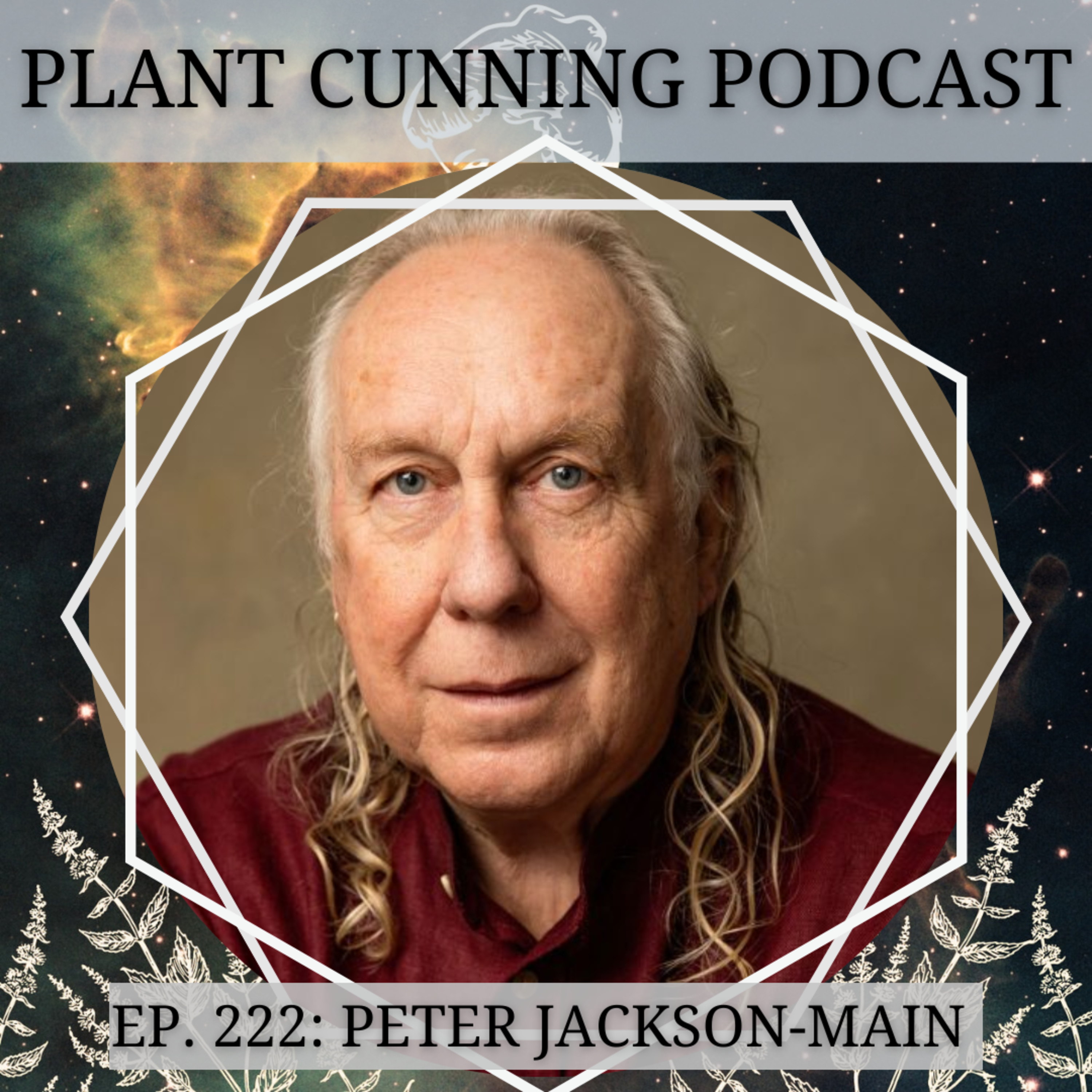
About this episode
In this episode, AC & Isaac welcome natural healing practitioner and teacher Peter Jackson-Main to discuss Natural Healing, his background in the Dr. John Christopher lineage, founding The Natural Center in the UK, and his clinical approach using structured case-taking alongside tongue and pulse diagnosis and iridology. They focus on what detoxification is, why it matters in a toxic environment, and how he supports organ-by-organ elimination (bowel, kidney, liver, lymph), including a gentler polarity-based liver flush using apple juice, lemon, garlic, ginger, olive oil, and a dandelion-root detox tea, plus seasonal timing in spring and autumn. Peter contrasts herbs with supplements, emphasizes patient commitment in chronic illness, and shares views on fasting as spiritual and physical medicine. He previews his forthcoming book The Medicine of Plants on ecology, exchange with plants, and plant intelligence, and shares favorite allies like astragalus, burdock, nettle, artemisia, and horsetail.
00:00 Podcast Welcome
00:34 Guest Intro and Announcements
03:01 Defining Natural Healing
04:29 Origin Story and Training
08:33 Building the Natural Centre
10:25 Herbal Preparations and Teas
12:51 Clinical Intake and Intuition
20:56 Detox Basics and Rationale
23:58 Organ by Organ Detox Strategy
28:41 Liver Flush Protocol
34:55 Seasonal Detox and Herb Choices
36:16 Warming Detox Tea
37:25 Fasting Basics and Benefits
40:17 Fasting as Whole-Being Practice
41:17 Handling Chronic Illness Cases
46:01 Eclectic Herbal Lineage
47:50 Rethinking Research and Reality
51:45 Supplements Versus Living Herbs
55:00 Plant Allies and Local Substitutes
58:47 New Book The Medicine of Plants
01:04:44 Closing and Where to Find Him
Get every episode summarized
Each time Plant Cunning Podcast publishes, we email you a written briefing from the transcript — the topics, who appeared, and any specific claims, with the ad reads skipped.
Email me new episodesFree for 3 shows. No card needed.
Transcript ready
652 searchable segments. Every word is indexed and playable.
Full transcript
Plant Cunning Podcast — Ep. 122: Natural Healing with Peter Jackson-Main. Machine-transcribed; use the interactive transcript above to jump the player to any line.
Welcome to the Plant Cunning Podcast. Where we explore a relationship to plants, other people, and the mysteries of nature. Coming to you from the High Allegheny Plateau in Central New York. We are your hosts, AC Stobble, and Isaac Hill. Welcome to another episode of the Plant Cunning Podcast. Today we have Peter Jackson Mane, who is a practitioner and teacher of natural medicine. This is a wonderful conversation, and we get into a lot of things about the philosophy behind natural medicine, as well as an especially detoxification. What detoxing actually is, and why we do it.
Before we get into it, I would like to remind folks that I am available for Vedic Astrology consultations. If you would like me to analyze your chart, seeing it as a map of your karma, and do a read it with me, then you can email me at Ask Isaac Hill at gmail.com, that's A-S-K-I-S-A-A-C-H-I-L-L at gmail.com. Also, Olga Tsogas, who was on our show last week, still has a few spots. I think just one or two spots open for her early bird ticket pricing for her trip to Greece to do some herbal foraging, mushroom foraging, natural fiber making. They're going to do a bunch of awesome stuff. If you're interested in that, which sounds amazing, then you can go to smugtownmusrooms.com
to check it out. Okay, here we go. Welcome to another episode of the Plant Cunning Podcast, and today on the show, we have Peter Jackson Main, who is a healing professional in the tradition of natural healing. In herbalist, a neurodologist, he's written many books and helped many people come into their health, and people learn how to do this as well. So, Peter, how are you doing today? I'm doing great. Thank you very much. I've been looking forward to this, and we're at a different time zone here. There's sort of later afternoon here in the UK, but I've got a, yeah, I've just been busy doing things and finally coming down to being here. So, nice to meet you both. Yeah, it's a pleasure to have you on. Thank you for being here.
So, the reason what we're having on you on the show this time is ostensibly for your book Natural Healing, which is out with Aon, but you've also written books on your ideology, and you're going on a new book that's coming out on plant intelligence and human intelligence and working with that. So, I'm excited to touch on all of these if we can. But you've also had a really long career as a natural path. Would you say, what words would you use to describe it? Yeah, you know, I studied in a school that called itself the School of Natural Healing, and it's in fact an American school, not a British one, and it was the great, the late great Dr. Christopher, I don't know whether you've heard of this guy. I never met him, but I met his son, and that was the school that I studied in, and I studied with the famous verb doc, Dr. Richard Schultz, who was my, but we used to call it natural healing after Dr. Christopher's school, but I teach here in the UK in a college called the College of Natural Apathic Medicine.
So, I'm comfortable with either term to be honest. I think most people, if you call yourself a natural path, people know pretty much what ballpark you're in. If you call yourself a natural healing, you could be pretty much anything. So, you know, I like natural healing as I explain in the book, because I think it makes the point that nature does the healing, you know. Right. Yeah, that's a really important point. So, usually when we start off these episodes, we ask, you know, what brought you to the plant path? So, how did you meet Dr. Christopher and get into the path of natural healing? Well, it's a long story, and actually, you mentioned I've actually finished a book, it's with the publisher at the moment, with Aeon again, which is called The Medicine of Plants, and I tell the story there, and some of it is told in natural healing as well, done with the beginning part of the book. I kind of talk a lot about that, but like most people, I guess, I came to it through my own needs. You know, I was directed towards a herbalist in my very early 20s by somebody I knew who'd been
to see her, and her name is Farida Sharan, and I don't know whether you've heard of her either, but she's written books, and she's also very well-known in the ideology field. And I was one of her first patients in Cambridge in 1977. I'd sort of found what we might call alternative and complementary medicine before that, and I've done a lot of stuff. I'd done things like massage and aroma therapy, and but this was my introduction to natural healing, because she was trained by Dr. Christopher, and that's how I found out about that whole school. And she fixed me in, you know, I just come out of university, and I was really, I was a bit not to be honest. I'd spent three years doing a lot of stuff I probably shouldn't have been doing, my health, and so a girlfriend of mine sort of pointed me in the direction of Farida, and she fixed me up in about three weeks, flat, which I was super impressed by, and then on the back of that, she said, well, and she was a herbalist, herbalist and naturopath and aerodonologist,
exactly what I'm doing now. And she said, well, what are you doing for the rest of your life? I haven't had any twenty-two-year-olds know the answer to that, but I had nothing apart from I want to be a rock star, so that wasn't really, probably wasn't too realistic. So she said, well, why don't you just come to a few workshops, and that's really where it started. I started attending little workshops with her on nutrition, on polarity therapy, was another thing that I got into, and just general naturopath, the cleansing and detoxification was a big part of it. And it kind of went on a quest from there to just find out as much as I could. There were no really no schools in the UK. There were a couple actually, but I wasn't particularly attracted to either of them. They seemed a bit stuffy to me. I was looking for something a bit more dynamic. I had sort of, you know, through contact with Farida, I knew about Dr. Christopher and the American tradition, and I was sort of quite attracted to that, if I'm honest, and then the opportunity to
study with Dr. Schultz himself in Europe came along. So there I was. So was the school in America or was it in Europe? No, no, they came over here. I had been to America a few times, but they came here. I think it was, can I remember, they came to Europe in 1992. That's where I trained first with Dr. Schultz and a couple of other people. Christopher Hobbs, do you know Christopher? He's there. Harry Wolf on the erudology side. And so they had about a kind of window about four or five years when these guys regularly came over and taught here, either ear or my first were seminar, expanded seminar two weeks in the south of Spain, what's not to like. And so that's where it all started really. And my partner also trained,
you know, a little bit later, but fairly sort of contemporaneously with me. So we set up the Natural Centre in 1993 here in the UK. And yeah, that's been it ever since. That's been, us. What's the Natural Centre all about? Well, the Natural Centre is basically, you know, our brand name, if you want, and I like it because it's the Natural Centre. And it feels like nature's the centre of everything. And so, but we are basically, you know, we offer a service, which is a natural healing or naturopathic consultations, and assessments with usually using traditional medicine modalities like tongue and pulse, but also erudology, of course. And if we need to, we'll go for functional medicine testing as well. So it's a comprehensive service for people to come and get the health look tack, whether they just want to just improve it,
or just find out about themselves through erudology, or whether they are actually seriously ill and in need of help. So I treat people with various levels of severity, you know, as a primary healthcare practitioner is what we call us here, where people don't have to have to see a doctor. But we're appropriately, you know, we're trained enough to be able to refer appropriately if we need to. But I've sort of made my reputation on the back of treating people with quite difficult things, things that nobody else seems to succeed with, including sometimes nutritionists and naturopaths. And I think probably, for me, the linchpin of that has been my involvement with plants, with its herbs. And it's for me, it's herbs over supplements any day. You can check out our website, thenaturalcenter.com. It's pretty, you know, explicit about what we do. And we offer, we have a full herbal dispensary here. So make our own medicines and, yeah, individualised for
treatment. Like tinctures and powders? Yeah, tinctures, powders and teas, you know, I mean, anything that people want. I have a lot of Muslim clients that don't want alcohol. So I had to expand the range of powders and teas that we use. That's been very successful, actually. But ultimately, loves working like with decotions and infusions. I think there's something sort of very hands on about that. You know, tinctures are, they're nice. And I do use them a lot, and they're by far the easiest thing for people. But it is a bit like, you know, popping a pill, isn't it? You know, don't go on, forget it. Whereas when you make a tea, there's an involvement of time and focus that I really like. And it works really well. Yeah. And water is sort of a more natural medium than alcohol. You don't have to distill the water necessarily. Yeah. Yeah. Yeah. We always use distilled. Yeah. Yeah. I mean, the hydroethanolic idea, the whole sort of extraction by using alcohol as well. You know, I do give thanks for it.
I do appreciate it. And I use tinctures myself. I mean, mixed of all sorts of things. But I just recently, I've sort of been going in the direction of more, yeah, water-based extractions. And the cost of the problem is always preserving them. So, you know, if you do a good root extraction, it'll keep for a couple of days in the fridge, but no longer than that. So your patients have really got to engage with it. And that's kind of, you know, some of them will. Many of them will. But some of them just want the easiest way of getting the herbs into themselves as well. Yeah. We're all busy people. Yeah, we're all, yes, we are all busy people. But there's there is also something to like taking the extra effort that I think creates extra reward too. I absolutely believe that Isaac. Yeah. I'm all for taking time and committing to your health. You know, it's paying your dues really. It's not a quick fix
usually, especially if you've got a chronic condition, you've taken time to get there, you're going to have to take time to get back again. And I think that focus is really, really important. Yeah. Yeah. Speaking of like the chronic conditions and things that you said, you treat that others have been sort of stumped by, I'm just curious about your process. Can you tell us a little bit more detail about how you investigate into someone's health? Yeah, sure. I guess because I'm actually an educator as well, we teach a degree level course in herbal medicine in London. Most of my work takes place in London. I live in Cambridge, but in the UK, it's 60 miles away from the place where I usually work. But down there, we have a college which is actually very well established college in the UK and abroad. We've got a big base in the United Arab Emirates at the moment as well. So it's sort of, you know, we push the thing out or rather our principal has. I didn't do it personally.
I just, I'm the academic director and the course director for herbal medicine. So when we teach students how to take cases, we're information gathering. We do it in a very structured and conventional way. You know, we gather the data under various headings of, you know, presenting complaints, medical history, lifestyle and diet. And then we do a thing called the systems check when we go through every single anatomical system and ask targeted questions to see whether, you know, anything that they hadn't told us in the presenting conditions is also going to pop up. And that frequently happens as well. So we do a full verbal questionnaire. And then I do, personally, I use traditional Chinese medicine tongue and pulse diagnosis that. And we teach Ayvedra as well in our college. But my personal preference is for the Chinese. I just formed an alliance or relationship with it a while back. And actually, you know, one of my ideology books, The Minds Eye, which is all
about the sort of energetic and kind of that sort of blend of, you know, how personality is a part of constitution, for example, you know, that whole approach comes really from the traditional Chinese medicine understanding of the organs having a sort of an emotional reality as well as a physical reality. So I do that. And that gives me a lot of data about, you know, the physical stuff that also may be about their energy generally as well. And then I do a ideology. And that's my consultation. And I usually take that that away and work it up into a treatment plan. Which I deliver, you know, subsequent to that regular follow-ups, if needed. And yeah, what I find though, I have to say this, you know, with nearly 35 years of practice behind me now, is that I very often find myself sort of going for the jugular. It's an unfortunate
expression in terms of healing, but like the ability somehow to hone in on what's really important from a very early phase in the consultation definitely does allow me to target my investigation a little bit more accurately, I guess. And I do find these days also that my, I don't know whether it's what it's happening or, you know, whether it's a development of intuition or even psychic intuition or whatever, but I find myself honing into people and kind of knowing intuitively where they need to go. Sometimes, for example, I've been known to say, well, I think you just need to fit with yourself where you are a little bit longer because, sure, obviously, you're not really committing to the process. And, you know, you're not, can I, can I be a little bit vulgar here? You're not shitting, you're not getting off the pot. And therefore, you know, maybe you're just not ready yet, you know what I mean. And I do feel sometimes that people come to healing in their own time.
They can't really be pushed. So I wait for the people who are really, really ready to go. And that might be because they've got a life threatening diagnosis hanging over the more it might be because they're just, I reach that point in their lives when they're not willing to compromise anymore. And I love that kind of interaction with people, you know, where they're really, really going to take up the the baton. And that's what the book, you know, Natural Healing, which is kind of what we're here to discuss. That's what that came out of really because, you know, it came out of me telling the same story over and over and over again to patients individually. And then I thought, well, I don't know, I'd just put it in a book. And then everybody can read it. My daughter actually wrote to me the other day and she's, she just finished reading it. She said, it's like a consultation for the masses. I know why I wrote it. Just to all of that stuff, like the understanding of what Natural Healing is and the basic foundational routines of how to address detoxifying
your organs of elimination, how to nourish your body correctly, and how to look after your lifestyle in naturopathic ways. It kind of cuts a lot of corners when you're treating people if they are already on that page. Know what I'm saying? If they're already down with that. And a lot of people think that they are, but then they find out that they're not, they've really only just scratched the surface. When they come to work with me, they get a lot of protocol, you know, they get a lot of things to do. Detoxing is not for the faint hearted, you know, you have to, you know, you have to spend time, yeah, and part of that is bring up herbal teas and things as well. Yeah, that's also, I mean, the detoxifying process is also like not just time, it's, it can be painful, you know, it brings up a lot of stuff too, I think. Yeah, yeah, it can and people need their hand holding through the process quite often. We do this thing of, I mean, the whole thing
about detoxification is really interesting because I was told it, one of the first things, you know, when I went to see Farida, one of the first things she had me doing was brewing things up and mixing horrible bitter, disgusting tasting potions and swallowing them. And in some cases, as I often joke, finding out the laws of jet propulsion, and I was just so convinced by, you know, for me, it was an absolute revelation, yeah, it wasn't a comfortable experience, but that's not so good. And we have an assessment that we do in our college where first year students have to do a detox on themselves and report on it, that's the assignment to write it up. And it's just incredible, they might, you know, for reasons of being very busy, they might choose a really simple one to start with. But even that, you know, you can see that we haven't created a table of a sort of comparative table of day-to-day experiences and with various markers like, you know, how much energy
they've got, how many bowel motions they pass, et cetera, et cetera. And by the end of it, pretty much all of them, you can see the improvements day by day. And it's a really, really great experience for them to have, because I don't think, you know, I mean, Dr. Schultz used to talk a lot about, you know, we don't want any virgin sex counsellors in this business, you know, you have to walk your talk, you have to be prepared to do what you ask your patients to do. And I've always believed in that as a fundamental principle. And so I train people like that as well, I train them to put themselves through it and to make their own bodies, their laboratory, if you like. You learn as much doing that as you do from books and that sort of stuff, for sure. If not more, you know, you have to have that grounded experience. And then you know, you're asking of people also. Yeah. But so I guess since we've brought up detoxification and detoxification can be a,
well, you know, some people think of it as just a bunch of crap. And then some people like take it to the extreme and have all the, you know, there, I think there's a lot of misunderstandings about what, what, what, what, what this process is. So from your perspective, having done this for so many years, like, what, what is the essential nature of detoxification? Well, what goes in must come out. And it either comes out in work done, you know, giving you energy or it comes out in cellular repair, or it literally comes out when you finish with it. And if it doesn't, then there's a problem. And that to me is, you know, is, is axiomatic, if you like. And there's a bit, I've tried to, I don't know whether you noticed it, I've tried to, to use humor a lot in the book, which I think is one of the best ways of teaching people actually, but, but I think, you know, where I start the chapter on detoxification by saying, you do know that they prove scientifically that detoxification
doesn't work is not necessary, et cetera, all conventional, you know, traditional naturopathic backup and go home. And that is like, you know, and then I say, well, the people are telling us that the so-called science, you know, especially functional medicine, I'm sorry, but functional medicine and nutritional science, because they are pretty much the same thing. Coming up with this idea that you don't need to detox anymore, these people have never done a detox in their lives. It seems to me, otherwise they'd know that what they, that they were talking rubbish. And do they have the experience of working with patients in this way? For me, the way I look at it is, if you're trying to build health on a filthy terrain, you're not going to get very far. And so, and it's also, we live in, and this is another point that I make in the book. We live in an intensely toxic environment. You know, we've got toxins in the water, toxins in the food, such that, you know, toxins in the earth that get into the food. And if that wasn't enough, we spray them with other stuff as well. You know, even if you buy organic, you can't really avoid that. And then, you know, this latest thing,
I think, which I also go through, there's a chapter on air quality, because, you know, ambient air was one of the six essentials or the six non-naturals of, you know, galenic, humal medicine. And so, they're dropping, dropping it on us from a great height as well. And what's our response to that? You know, I talk about living defensively, which means making sure stuff doesn't get in, making good choices about what you eat, for example. But also, you know, making sure that you clean up the house from time to time so that you don't start accumulating things that don't belong in you. You know, the two classes of toxins, really, as I look at it, and one of them is the class of toxins that that kind, which get in because idiots are putting stuff into the environment, why, you know, to make themselves rich apparently. But that's what's going on. And then the other type of toxins, which is super important as well, are metabolic byproducts that you produce yourself. And they're supposed to be eliminated. But, for example, one of the things I use a
radiology for is if I detect that there is a tendency towards stagnation, as we call it, or sluggishness in the liver, or the bowel, or the kidney, then at that point I know that the in-house detox mechanisms, they're okay, but they're overwhelmed. They're maybe not as efficient as they need to be. And so we work on that, you know. This is a big plus for a radiology for me. It doesn't tell me, but many people think, you know, there's people out there who look at your eyes and say, oh, you've got, you've got a filthy colon, or your lymphatic system is like a sewer. I don't do a radiology like that, but if I see someone with a lymph rosary, I know that there's a tendency towards lymphatic stagnation. If I see someone with, you know, certain pigments in the iris, I know that there are issues in certain organs, particularly the liver, liver comes up a lot. And where that's the case, it makes sense to address that. So we do detox on an organ,
an organ basis. We start with the bowel, because that's the fundamental exit channel. We then do the kidney, because that's sort of the secondary one. When we've done that, we do the liver, because the liver doesn't have its own, you know, doesn't have a pipe that leads to the liver to the outside. Well, it either shunts it down to the kidneys, or it puts it into the billy retract, where it goes into the digestive tract. And then we do the lymph, which again, you know, doesn't have a drainage as such, although you might say that sweating out is one way the lymph gets rid of stuff. But the point is to put, you know, we focus on the organs and systems of elimination, and we just give them a little bit of a tone up, a little bit of a work out, you know. And then we say, right, you've done that once, but detox is not just for Christmas. We've gotten some alive. So you have to do it again. And sometimes if people are really, you know, kind of dealing with a chronic health problem, I might put them through a detox two or three times a year, or certain parts
of it, certainly the liver, something I go back to again and again. But that's for me, it's, yeah, I know there's a lot of stuff out there, you know, I tell a story, which I'll repeat here, if it's in interest, which is some, well, decades back probably, and I was watching the lunchtime news on the second of January. And they had a little magazine article type thing about detoxing, you know, the January detox. And they got three doctors and an nutritionist to comment on it. And the doctors, two of the doctors came up and said, well, you don't need to detox. You've got organs to do that for you. And then the nutritionist came along and said, and they said, all you need to do is drink plenty of clean water, good food, fresh air, get some sleep. And the nutritionist came along and she said, yeah, it's pretty much it. You know, can't, I can't improve on that. Go with that. And then the third doctor came along and he was obviously a little bit cleverer than the others because he was from Cambridge. And he said, you know, we have this thing about Cambridge,
you know, Cambridge University and Oxford University being kind of, you know, the centres of excellence. And he said, yeah, you do need a good liver too. And at that point, I joked, you know, what do we do then? Go down the butchers and buy one. But he just accidentally shot the whole thing down because if you say you've got to have a good liver, what's a good liver? And how do you, you know, how do you make sure your liver is fit for purpose? And if you're saying that liver detox doesn't work. And I'd say this to nutritionists, you know, if you say that nutrition that liver detoxing doesn't work, why are you giving people milk fissile supplements? Why are you giving them blue to thion? Why are you working with things that you know, activate the liver and help it to eliminate? So there's not a lot of joined up thinking sometimes going on. This is what I find. And I was very keen to present something that was very common sense, you know, the describe it in ways that people can understand, which, yeah.
Well, yeah, we're not, not joined up thinking, which is what you would expect in a non-holistic you know, science or non-holic methodology, because they're, it is disjointed like the thinking. It's all system may cut up into, yeah. But so in detoxification and liver detoxification, so what would you, what would you suggest to somebody for liver detox say? In the first case, I do some preparation because I don't want to throw people into a liver detox before they've done anything else. And the reason for that is because as I said, you know, the liver shunts stuff down to the kidney. If the kidney is blocked up, that's just going to go nowhere. Or it shunts stuff into the digestive tract. And if you're constipated, again, it's going to go nowhere. So you've really got to get certain things done before you address the liver. But once you got onto that, I mean, I use a protocol that was developed originally by Dr. Randolph Stone. I don't know whether you've heard of this guy. He was the originator of polarity therapy.
He's with apologies to the female gender. He, Dr. Christopher and Dr. Jensen, Dr. Bernard Jensen, I call them the three grand old men of natural healing. They were, you know, they were men. There were lots of women around too, but they were the ones that for me, you know, they were my mentors, my guardian angels or whatever. And they were the ones because I studied with Jensen himself. He came to the UK in 1979, I think. And I was fortunate by dint of my connection with Farida to attend that seminar, which is a week in sitting in front of the master's, I'd just speak. And he had a lot to say about detoxification, particularly bowel cleansing. And that's where I start. But Dr. Stone had something called the polarity liver flush. And it was a, and many people know this and use it now. Although Andreas Moritz, one with the Epsom Salt sort of took over for a
while and everybody, and I had to rescue a lot of people from the Moritz cleanse. It was far too strong for a first time cleanse, I found a little bit alarming. Whereas the, this one, the polarity liver flush is pretty safe for anybody. And it consists in the smoothie that you make first thing in the morning, which is mainly apple juice, fresh, of course, with lemon juice, garlic, ginger, and olive oil. That's all it is. And it actually tastes great. And then you follow that up with a herbal detox tea, a bass mine on dandelion root, but it's got a lot of other stuff in it as well. And you, that's a decoction, so you cook it up and you just drink down, after doing the initial flush, the initial smoothie, you just drink dandelion coffee, basically, for about two hours. And then that's your cleanse. And after that, you, you week, you know, you eat cleanly, you eat a liver-friendly diet. But after that, that it's not a sort of thing that has to be done, you don't have to take a holiday to do it. I regularly live a flush and I'm traveling and doing my work. And you know, I don't find it's, you know, if you're hypoglycemic, it might be a bit of a problem,
not to eat for two or three hours in the morning. But generally, you know, that's the sort of thing I might want to get sorted out before I plunge people into a liver flush, maybe. But it's, again, that was the first thing I ever did. And I didn't even have a blender. This is what Farid told got me doing. I didn't even have a blender. So I was literally, I was putting all this stuff in a jug and whisking it with a fork. And so, you know, I was getting, drinking it down, I'm great big undersolved globs of olive oil going straight down. It was pretty, it was, it was pretty rank, actually. But it did the trick, you know, it really did the job. And I've never looked back. I've, it's a routine part of my own life, my family, it's life. And introducing patients to it is just, it's just brilliant, just to see how I usually, with a patient type, what I'll usually do is give them a, a one month harmonization. And usually that's going to be done with a best spoke herbal
tincture or formula, which will be, which will sort of be gentle, what we call alternative herbs, sort of starting the cleanse off for a gentleman, maybe an adapt to general to, to just kind of settle down stress levels and harmonize the energy a bit. And then if they're ready, then we go for the full details. And I've got it down to a, a one month program. These days, they do weeks, one and two, they do bowel and kidney and weeks two and three and four, they do liver and lymph. And actually, I've almost all my patients go for that now, after, you know, after the initial preparation period. And they love it, you know, and they regularly write to me and say, can we have, can we have a detox kit, please, time to do another detox. So, and I've certainly found in my own life that if I'm ever feeling a little bit jaded, a little bit sluggish, a little bit tired, fatigued, whatever, this will get me back on top. Because remember, the liver is, you know,
it's probably one of the core emotional organs in the body as well. If you are feeling sort of jaded, frustrated, angry, you know, resentful, etc. There's probably going to be some liver stagnation going on there. And this is kind of, I had a, I had a, a patient who came, we had a shop on the high street for a while here in Cambridge before they made it illegal to sell herbs to the public without registration. And I don't want to pay the government money so that I can sell herbs. I'm not into that at all. We have an arrangement in this country where, if you're a practitioner, you can sell herbs freely to your patients. They don't have to be registered at all, but everything else, if you want to sell to the public, they have to have licenses now. But anyway, we have this shop and put this young man on a liver dish. We came into the shop one day, it was full of people, banged his fists on the counter and said, I'm angry. And it's your fault. And that's, and I said,
okay, calm down. It's fine. You're just going through the liverflash and of course it's bringing up stuff, you know. But it is, you know, it's an emotional cleanse as well. Yeah. So you said you do it like if you're feeling like you need it, is there like a seasonal element to it for folks to if they just want to do one like once or twice a year, do you recommend that they do it in a certain time of year? Yeah, spring is the great place. It's the great time to do it. Although, I mean, I have to say that I say spring and autumn probably the two key times that I use because I think going into the winter, you want to make sure that you know, you haven't gotten the extra baggage before you start taking on some more. And so, and you can even get with the season, you know, the lovely thing about being a herb list is that you you kind of work with the seasons a lot. I mean, I know it's possible. You can dry herbs and store them. You can use them any time of the year, but I really like to use the traditional spring cleaning tonics, the cleavers,
the nettle, the dandelion, et cetera. And then as you get into autumn, the roots, burdock root, dandelion root, dock root, et cetera, et cetera. These are things that come into into their own then. But having said that, we do a standard detox tea, which is actually we call it 17 herb detox tea. It's a bit of a, you know, kind of a play on the Chinese mutie, which has 17 herbs in it. And that has everything in it. It has the leaves, the roots that it has, you know, kind of seeds. And it has plenty of great fennel cardamom. It's got ginger and it's got liquorice. It's got cinnamon, you know, as well as the really hardcore cleansers. And it's actually a great formula because it's very warming as well as being cleansing. A lot of cleansing and detoxifying is far too cold. You know, people talk about juicing. Well, you know, we have maybe two months of the year in this country where juicing is okay. And a lot of people have deficient digestion. So
cold, lots of cold liquids going in doesn't really do it. But the detox tea is like a, a kind of, you know, have you heard of the potassium broth as well, which is where you just get a load of old vegetable peeling. It's a new, as you boil them up and make a broth out of them. That's also very cleansing actually because it's alkalizing and sort of replaces the electrolytes and the alkaline buffers. But it's a bit like that, you know, and it has the elements, the warming stimulating elements in it to keep people going for that two hour fast that they're going to have to do. So hardly anybody actually feels hungry while they're doing it. That's great. That's another, I mean, there are so many things we can get into with with the book and with your practice. But I'm in this related, you brought up fasting. And in general, what do you, what are your recommendations for fasting? How important do you think fasting is? I think fasting is wonderful. I really do, you know, it's one of the best healing
modalities out there. There are some portions, if you never fast it before, you probably need to work up to it. So I'll probably get people doing intermittent fasting first. Not every day, just maybe three days a week. And then if they're ready, then they can try one day fast. And then maybe, you know, progress from there. But I've, you know, when I fast, it's just amazing. And it's amazing not to be focused on food all the time, because food seriously, you know, takes a lot of energy on so many levels, you know, not just digesting it, but also what should we cook tonight? You know, we've got to go shopping and all of that whole thing about producing and providing, which I love. I mean, I'm real foodie. I love cooking and I love, you know, good food. Which is also, you know, plant-based mainly. And I, but it's a focus. And one of the things about fasting is that enables you to focus on something else and claw back that energy that you
would normally reserve for that whole business and cooking and eating and providing food. And that's why I think, for me, a fast is more of a spiritual thing than anything, because it kind of, it just clears the mind. And it frees you up, you know, it frees you up to, yeah, from that sort of grade of one meal after another, et cetera, you know, time expands when you're fasting. It's great. Yeah, it does. I've mostly fasted, I've done a lot of intermittent fasting throughout the day. And I can, I can do that well. But if I'm doing like a day faster, a multi-day fast, I can't be doing anything else, basically. It's like, yeah. Interesting. Yeah. I think I would agree with that in the sense that, I mean, the last time I did like four or five day fast, and it was on a retreat, actually, which was, yeah. And it was the sort of dieting adiata, you know, past and, you know, that it was very, we had a very full program.
So we were doing things, but they were all very focused ritual ceremonial things. Yeah, I couldn't be doing the accounts. Yeah, it is, it is like a good, good for like praying or chanting or meditating or, yeah. Absolutely. But it's also good for the body. Sorry. But it's also good for the body. Yeah. Absolutely. Totally. Do you know Stephen Harabunas, but the fasting path? Yes. The one I kind of, you know, I often recommend that to students. And he makes the point right at the right at the beginning. Actually, fasting is a whole personal, whole entity program. It's not for just physical, you know, we prioritize the physical. And we sort of cut ourselves off, you know, we only see the physical body. We don't see the way in which thoughts and emotions contribute to this, you know, and our formative. And so I'm, you know, in my writing and in my teaching these days, I'm kind of wanting to emphasise the unity of body and mind, body
mind and soul, if you like, rather than this is for the body and that's for the emotions and that's for, you know, I don't really like that approach. I see it as a, as a whole thing. And so I think, yeah, fasting, it brings it all together, actually, on every level as a benefit. So I also wonder because you brought up earlier how you will often find difficult cases. And the other, other practitioners can't solve. And you talked a little bit about your process, but how do you, like, what, what happens in that situation where you have a very difficult case? How do you get them to become healed? Like, where other practitioners haven't been able to? Well, let me just fall disambiguation or whatever. Just say that I'm not claiming to do things that other practitioners can't do. When I said that, you know, I have a lot of people who come to me and they've been to practitioner after practitioner after practitioner, you have to watch that one. Because sometimes they're just, you know, they're kind of addicted to seeing people and helping them
fail, which, you know, there are a lot of people out there who sort of want to just prove that you can't do it. So you have to be quite careful. But I do have a lot of cases where either people are undergoing very, very difficult medical journeys. So they're, they've got cancer or they've got autoimmune disease. And they're working with medical teams. But they're having horrible side effects and it's a very unpleasant process generally. And then I can sort of join in with that. I'm very, I don't like the term integrated medicine or integrative medicine really because I feel far too often it ends up being a sort of mishmash and it always comes out in favor of the doctors. But what I'm working towards there is some way of mitigating the negativity of medical encounters by creating a space where people can be more positive about their health. And that for me is the main thing that I do in chronic illness because people are generally, you know, they've done the in by the fact they've got this thing going on. They, they don't really don't know how to handle it.
They don't know what they're, you know, they're told by the doctors frequently. Well, there's no cure. Yeah, we can manage, you know, you have an autoimmune disease. You will never cure it. Well, that's rubbish. I've, you know, I have done that a few times, you know, help people to reverse and and go into full remission from or chronic autoimmune conditions verified, you know, verified by the doctors who say, I don't think you need to come and see me anymore. We don't need to give you any more drugs, you know, whatever you're doing, keep doing it sort of thing. And I think all of those journeys, so I can think of the really kind of ones that really stand out. They're all extraordinary people. They all have what it takes to just the commitment, even when things are not going well to carry on and just kind of keep plugging away at it. And that's what you need to do. Nobody's going to reverse a chronic disease overnight or in a
couple of weeks or a couple of months or, you know, I've seen these research, you know, when I say there's no evidence for any of this, you know, such and such, her works for XYZ. And when you look at the kind of studies that they're doing, they're putting people through, you know, maximum and 12 week trials. That's not enough time. You'll never get anywhere in 12 weeks if somebody's spelled spent 20 years getting ill. You know, what do you know what I'm saying? And so, you've really got created space where people can stabilize with the idea that if they turn their health around, they turn, they change direction and keep resonately walking in that direction, their health will improve so that the the carrot that I give them on the first meeting usually is something like we're not going to cure you in, you know, in a month because you come back and see me again in a month for a follow-up. We're not going to cure you in a month, but I guarantee you will have some
improvement, however small. And that really gets them in and hey, Presto, when they when they see you again, yeah, they might say, well, not much difference really. And then I could start going through the detail and there's, oh, actually, you know what, that is better. And I say, I told you, and this is what we do step by step, point by point, symptom by symptom, if you like. And that's how that, you know, you have to be able to inspire people to be in it for the long haul. Yeah, the idea that we can fix everything in a couple of minutes comes from pharmaceutical medicine, which does it by suppressing symptoms. So I'm also interested in to go back to the beginning, basically, like what, because I'm interested in how people like the the their frameworks and integrating different, I mean, you've integrated a lot of different methodologies from different
traditions into this into your into your framework. And I think part of that is is because of this eclectic medicine tradition. But can you tell us a little bit about why Dr. Christopher's tradition was was appealing to you and about that eclectic medicine tradition? Yeah, the eclectics, I have to say that, you know, the from the American side of things, there was Samuel Thompson. And then there was the two rivers that flowed from that teaching, which were the physiometic list and the eclectic. And I'm very firmly in the eclectic camp, not that I don't appreciate physiometicalism because I do and I know that system as well. But because that was my first love, if you like, you know, that I met Frieda. She was trained by Dr Christopher. He was an eclectic physician. And I think what's amazing about the eclectics is because I love the word eclectic anyway because it means they're not afraid to take stuff from wherever they find it. A lot of sort of First Nation American knowledge goes into that as well. Dr Christopher
was very, very good friends with with some of the American Indian medicine men and healers. And that is important to me, you know, indigenous traditional medicine. That's what, you know, that's where I am situated. So, sorry, what was the question? Yeah, so what attracted you to this lineage in American? Okay, that's right. What attracted me? Yes, that attracted me. And you used to have paradigm or methodology. And you know, I did a master's in herbal medicine a decade ago now. And my research, and I was told not to do this. My research was on research. I did research, project on research. How circular is that? I found it's very important because I wanted to find out when some people say there's no, there's no research or the research is not conclusive about herbs, particularly. Then you look at what's being done in the name of herbal research. And you
think, well, you know, you know, the old maxim, if you ask a stupid question, you're going to get stupid answer. And that's what's going on a lot of the time. And I formed the opinion as a result of doing this that we need to, you know, it is all about research methodology. It's how you approach the topic. And that rests on a couple of other principles. At the very back of it is something called ontology, which is your rational for existence. Yeah, what is the world? What is the universe? What is this physical domain that we call reality? What is it? How is it constructed? And if you have the belief that it's, you know, sort of what we call a reductionist belief or a sort of what's the word rationalist belief, if you like, then it's always just going to be a load of stuff that you push around. And from that point of view, pharmaceuticals should work, but problem is they don't. Whereas if you have a more animistic or what's the word I want, comes into the new book that I'm
writing, where I've described the universe as a mind saturated process. That's not my term. I can't remember who actually said it, but there's a load of people out there rethinking things. I mean, people like Rupert Sheldrake and his son Merlin, who wrote the wonderful book about fun guy, James Lovelock, the guy hypothesis. And you start to sort of hone in on all of that. And you realize that we've we've sold people alive about what reality actually is. And when we see, I cannot remember the word that I'm actually reaching for here, but it's something to do with a pan-psychism, that's what it is, which means that the whole of creation is alive and aware. And if you take that as your ontology, then what flows from that in terms of how you might treat people is very, very different. And that really beyond any names like eclectics or physiometic list or whatever,
they are all vitalistic traditions. But the meaning of vitalism is precisely that, that nature is just zinging with this amazing energy. And if we can tap into it, that's where the healing comes from. Mm-hmm. Yeah, I think that's so important. And in a lot of ways, it's like, well, I really like what the meta project of researching research, because people oftentimes just accept that this headline says it was found that verbs are not working. That's right. Yeah, scientists say. I just say, they just take that as face value and they don't really realize how, I mean, so how shady that whole thing is. And there's this replication crisis, right? Yeah. And it's like, a lot of these studies can't be replicated. In fact, most of them can, or at least have them, can't be replicated. And people still have this blind faith in
science and in this worldview. But yeah. But once you experience the urge yourself, do you believe it? What do you see it you believe it? Absolutely. Yeah. And the thing about herbs and plants is that they're alive. I remember this story that's told, it's told in the book of Dr. Christopher. And he was invited to speak to a conference of people selling supplements, you know. And he walked up and down the aisles and he looked at all this stuff, fancy packaging, pills, potions, etc. All in their front being pushed out by mighty marketing machines, promoting them. And at the end of the day, he was he stood up to give his address. And he said, yeah, well, I've walked amongst you or I've walked up and down these aisles. I've seen what you're selling. And I have one thing to say about all of it. He said, they're all bad. And he banged his fist on the table, amidst huge protest and commotion was hastily bundled out of the auditorium
and onto the street because he'd upset too many people. And people do get upset. I mean, I have people around me who are, you know, who are kind of really into their supplements. And again, this is something that I address in natural healing in the book, which is you take your supplements if you're convinced by them. Pussybows are wonderful thing. But don't expect to get that vitality through that route because these things are actually they've been taken to pieces. They've been broken down. They've been refined. They've been processed. And that's what we think is good. But for me, what's good is the complexity and even the filth, the dirt of nature. You know, this is where we come from. This is what we're most suited to. Not to all this clean laboratory configured, you know, processed and very, very evidence-based stuff. And I wonder, you know, about
that stuff when there's a lot of, you know, laboratory evidence, etc. that proves that it worked. But for me, I regularly have people coming into the consulting room with a plastic bag. And they tip it all out, you know, in front of me. And I say, how much is that costing you? Well, they said about 500 pounds a month. And they want me to go through it piece by piece and tell them what what they can keep taking and what what they what they don't need. And I'm just like, I want to throw it all in the trash. You know, I don't want to take any of it. I might find a herb there. And I'll say take that one, you know. But for me, that it's just I'm a Luddite. What can I say? You know, a Luddite, do you have that? I just want to break things down to dead simple natural and the word natural again, you know, it's been annexed to a whole load of stuff that doesn't really, you know, natural hormone, natural progesterone supplements, not natural. It's been made in a
laboratory. It might have started life as natural, but it isn't. You know, natural to me is, you know, people say, what brand should I buy? I say, go out the door, turn left, keep walking till you come to a field. That's the brand that I want you to get, you know. Yeah, I love, I love this perspective of, you know, the animus perspective of seeing the living world as living, breathing, something we can interact with. And it reminds me of something you said earlier of how in your practice, you've kind of honed your intuition more. Yeah. And I'm wondering if there's any plants or plant alas that you have kind of whispering in your ear, like who are your homies, your, your plant? My homies. Yeah, good, good term. Yeah, yeah. Okay. Wow. I mean, I prefaced my new book with, with sort of acknowledgements to people help me, but also to, to, to, to my homies, my plants. And they're quite a lot of them now. I've accumulated it through a few. The first one I want to mention, which is an exotic, in a way,
because it's a very important herb in Chinese medicine, but it's time came with the pandemic. And it's just been so useful. It's been, it's been, it's been putting itself forward time and time and time again. And that's a stragglers, which I just think is just an amazing herb for, for everything you can do. But that is an exotic. It doesn't really grow here. So we have to ship it in. And, and there's, there's stuff around that that I don't like. So I'm always like teaching my students, for example, to try and think, okay, so think of your favorite, your favorite, exotic herb. It might be a gin saying, or it might be Angelica Sinansis Don Quai. It might be Ashwagandha. That's a big one at the moment. Then think, have we got anything around us that that will stand in for that? And there's always something. So for example, for me, Siberian Jinseng, which is endangered, I love it. And I've used it for many, many years, but it is problematic. So I go bird on route. Does pretty much think that Siberian Jinseng does.
And of course, you know, it's one half of the very important English tonic, Dandelion and Birdock, which again is an adactogenic tonic. And abundant. Sorry. And they're both so abundant. Absolutely. Completely abundant. Nettle. One, I mean, just what would I do without Nettle, you know? Artemisia species, wormwood and mugwort, particularly. Anything else, loads of stuff, but those are the ones that come to mind immediately. There's another important one knocking on the inside of my head, which says, I want to be wrapped in a horse tail. That's the one. Horse tail. I've really, really got a very strong relationship with the moment. And I have to thank the multiple sclerosis community in the UK for that. Because a lot of people with multiple sclerosis have real problems with urinary incontinence.
And so I started to use horse tail for that. And then it just, it's use, just, you know, what I saw it do was way beyond the urinary astringent. And I started using it myself. And I realized this herb is just a superhero. And it's very, very, as you probably know, it's very high in silica. So it's really good at removing heavy metals. And I think of it also as an antidote to silicon valley and all of that stuff as well. Nice. Being colonized by information technology, which is silicon based, basically. I go to a whole thing in the in the in the new book, which hasn't been published yet, about, you know, the carbon based versus the silicon based. Yeah. Yeah. Do you want to talk a little bit about that before you wrap it up? Like what, what, what, what, what is this book about and when's it coming out? Yeah. What can we look forward to? Okay. It's called the medicine of plants. And it's not what people
will expect from me or from that title. I wanted plant medicine, but our wonderful ex exes sadly passed over, Christopher Headley, had his notes republished by A on recently under the title plant medicine. So I couldn't have it. It was taken. But then I thought the medicine of plants was actually a very good title in its own right, especially for what I wanted to write about, which was really starting off, what is the problem? You know, why, why are we in such a mess? What is it we want to be rescued from? And how can the plants maybe come into the picture there? So that sort of goes into a big, you know, there's a lot of sort of ecological stuff there. So I'm making a point that that we are in the grip of something very insidious that's creeping up up on us at the moment. And it has all sorts of manifestations. The pandemic was part of it. The central bank digital currencies are part of it. The digital IDs are part of it.
And we need to be resisting it. So that's that and then I say, well, okay, we want the plants to help. What kind of, you know, what's the butter? What's the exchange? So I then go into the whole principle of exchange chapter two is actually called exchange and it's called bargaining with carbon. It brings forward the obvious fact that we breathe out carbon dioxide and we take in oxygen. Plants give us the oxygen and they use up our carbon dioxide, you know, and there's a very, very simple and gloriously elegant quid pro quo that's going on. And my own teaching in herbal medicine has always been on the basis that if you want plants to work for you, you've got to do something in return. At least you've got to be grateful. You've got to offer the gratitude. And so there we go on to look at the nature of medicine itself. What is what we call medicine?
And now it's so much broader concept than just pills and potions and surgeons, you know, that anything can be medicine, you know, this podcast might be medicine for somebody. Songs singing. Singing art. Yeah, anything. And then the nature of nature, what is the universe? So I go very, very broad and very, very deep with this one. And then I have a look at plants and how they do their healing. And I do, there's three chapters on that basically, which is sort of comparing contrast with what a plant does versus what a drug does. Or not so much what a drug, I don't target drugs themselves, but I target drug categories like I have a big, big bone to pick with the term antidepressant. I hate the term. I hate the whole idea of it. St. John's Walk got itself pegged as an antidepressant. I think that's good. Done that plant. No favors at all. And I am personally on a mission to rescue it from that, from that label because it's just, you know, it's rubbish. It's cow-towing to categories that don't
really belong to us natively. So then we go into and we go into how we communicate with plants. How is that possible? You know, do plants have intelligence? What is the evidence for that? And if they do, how can we get to talk to them? I tackle the master plants, so-called the the ones that mess with your head and all of that. And the agents? And the agents. Yeah, absolutely. Yeah. And end up, my final chapter is called Bringing It Back Home, the Medicine of the Human. So for me, this is my wrap-up point, really, I guess. It's not just about what plants can do for us. It's what we can do, as custodians of the planet, for everything else that is here with us. And we are all co-creators here. You know, we all co-create this reality. But we seem to have, we put ourselves on the top of the, we see ourselves as the king of the castle. We're not. And we need to get a whole lot more humble
in my opinion. And a lot more, yes, about decolonization, I guess, of seeing ourselves as equals to these other creatures. And asking the question, what can I do for you? How is, you know, and bring that forward, humans are important, I mean, to say that nature doesn't need humans, I think is wrong. In the same way that saying your body doesn't need its cancer is wrong, because your body's created the cancer, simply cutting it out won't cure it. Getting rid of humans will not cure it. Nature will miss us. We're part of nature. If we're mature humans, because for me it's all about being mature, not playing these silly games that people play all the time, and, you know, very dangerous games, genocide and, you know, controlling each other and, you know, all of that nasty stuff that goes on in the world, and has done for decade, you know, well, millennia. It's an old story, but what is it that we want?
You know, many of us, I think, come here this time around. It's my belief anyway. A lot of us come here this time around to create something different. So what's that going to look like? That's the question I'm asking. And I think it's going to look like humans who celebrate themselves as being human, and what humans can bring at their best. That sounds awesome. Yeah. Well, thank you so much for being on the show Peter. This has been a great conversation. So if folks want to get in touch with you or buy your books or find out more where on the interwebs can they find you? Way they can find me at thenaturalcenter.com. And please, because you, you know, you're in America, you spell center a different way. Oh yeah, how do we do that? You have to spell it CNTRE. Okay. Otherwise, it won't, it won't arrive. So, so the naturalcenter.com. And you can read about what we do. And there are some videos and stuff of me doing podcasts and
things. Maybe I'll put a link to this one. Awesome. When it's out. Yeah. And yeah, that's the best way to get hold of me. And you can also book consultations with me. I do online consultations as well as face-to-face too. Wonderful. Great to know. Well, thank you so much. Yeah. Pleasure. I've enjoyed the conversation too. So, thank you so much.
More episodes
More from Plant Cunning Podcast

Ep. 221: Fungi, Citrus, and Berries OH MY! with Olga Tzogas
Plant Cunning Podcast

Ep. 220: Eco-Spirituality in the 21st Century with Dana O'Driscoll
Plant Cunning Podcast

Ep. 219: John Michael Greer on the Great Neptune - Saturn Conjunction, Mundane A...
Plant Cunning Podcast

Ep.218: Amelia South and No BS Herbalism
Plant Cunning Podcast