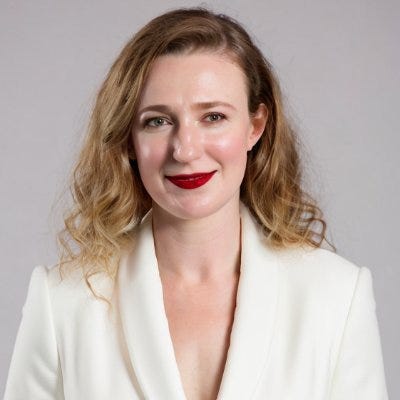
Eliah Overbey: the birth of bioastronautics
About this episode
If you have a sibling with autism, your future child’s risk for an autism diagnosis is increased by a factor of 2 to 3.5×. Orchid’s whole genome embryo reports can help mitigate your child’s risk by screening for over 200 genetic variants definitively linked to autism and other neurodevelopmental disorders. Discuss your situation with a genetics expert.
On this episode of Unsupervised Learning Razib talks to Dr. Eliah Overbey, assistant professor of bioastronautics at the University of Austin. Dr. Overbey has an undergraduate degree in computer science from UC San Diego, a Ph.D. in genomics from the University of Washington, and did her postdoctoral fellowship at the Weill Cornell Medical School. She joined University of Austin in the summer of 2024, and is setting up a genomics core facility in the fall.
First, Razib asks Overbey what bioastronautics as a field is, and what it attempts to discover. In short, bioastronautics focuses on the impact of spaceflight and zero gravity on the biological functioning of human astronauts and the organisms that have been taken into space. Overbey focuses on genomics and related fields, and talks about the difficulties of small sample size (only 600 humans have thus far been astronauts), as well as the funding difficulties in a field that falls between conventional disciplines (physics and biology). Razib and Overbey also discuss the possibilities opened by private space flight, and the likelihood in the near future of much larger sample sizes for studies given the efforts of SpaceX and Blue Origin. Overbey also talks about the biological difficulties in manned space flight, and the difficulties that might occur on a mission to Mars, from bone loss to radiation.
Overbey is optimistic in particular about the expansion of near-Ear
th space travel in the next decade due to the privatization of space flight, and the greater flexibility of some private actors in funding research studies than NASA enjoys. Anticipating larger sample sizes, she has begun a biobank focused on samples in space, and has begun engaging in widespread collaborations with other researchers in the nascent but growing field.
Get every episode summarized
Each time Razib Khan's Unsupervised Learning publishes, we email you a written briefing from the transcript — the topics, who appeared, and any specific claims, with the ad reads skipped.
Email me new episodesFree for 3 shows. No card needed.
Hosts & guests

No transcript yet
This episode has not been transcribed. Request it and it moves to the front of the queue.
More episodes
More from Razib Khan's Unsupervised Learning
Kyle Orton: Muslims before Islam
Razib Khan's Unsupervised Learning
Gabriel Rossman: the late marvelous Dr. Arday and the state of sociology
Razib Khan's Unsupervised Learning
Monologue: Jason Arday, Nathan Cofnas and the wages of DEI
Razib Khan's Unsupervised Learning

Nikolai Yakovenko: the wages of the Hugging Face hack
Razib Khan's Unsupervised Learning