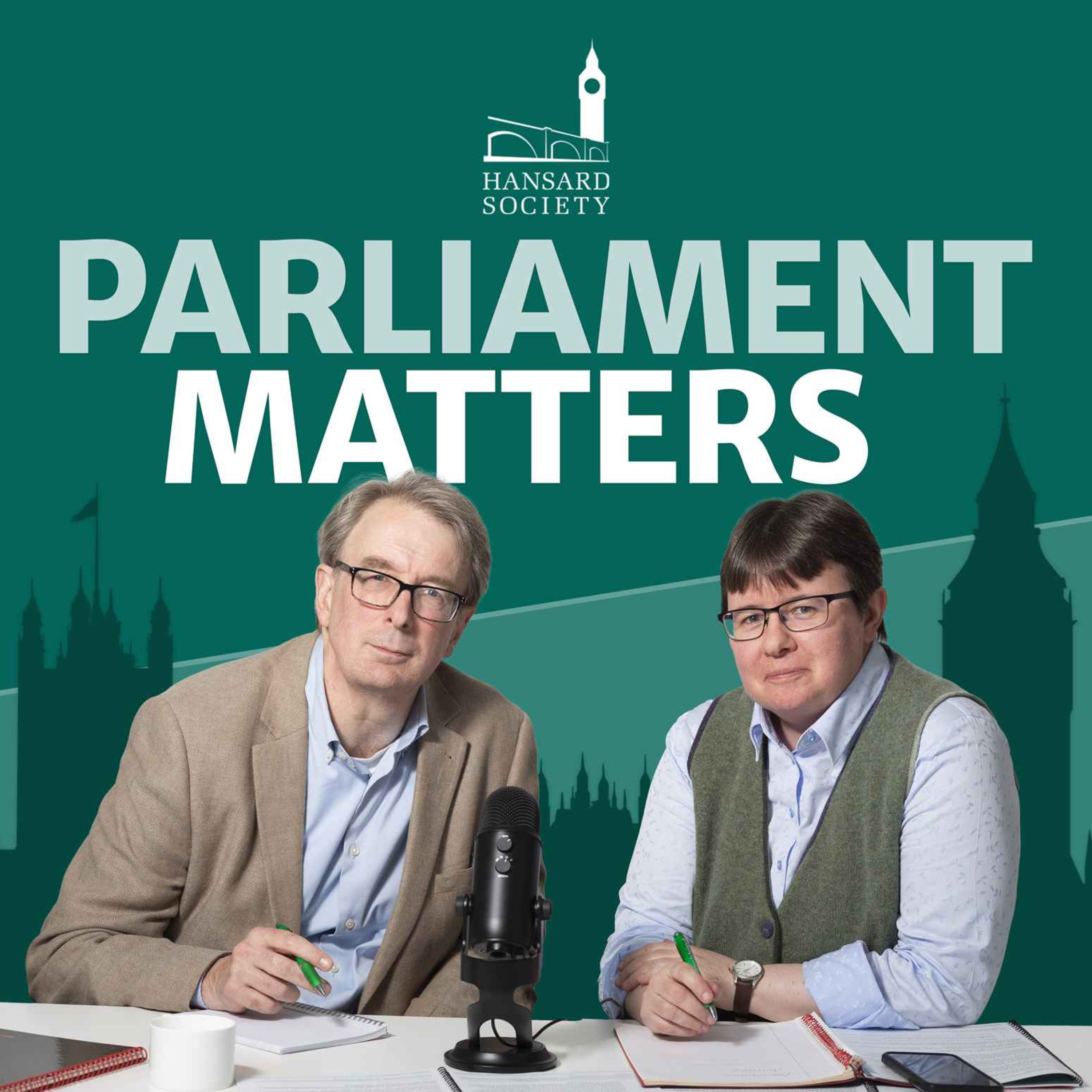
About this episode
The Conservative leadership race is heating up, but should MPs alone choose their leader? Should MPs who resign their party's whip face by-elections? On 29 November, MPs are expected to debate the controversial 'assisted dying' bill - will it stymie other Private Members’ Bills? Meanwhile, Nigel Farage is pushing for a parliamentary debate and vote on the government's deal regarding the Chagos Islands. Will he get his way?
In this episode, we dive into the high-stakes Conservative leadership contest. As party members face a pivotal decision, we ask whether MPs alone should have the final say in choosing their leader. We also explore Sir Graham Brady’s proposal for Conservative MPs to vote on the final two candidates, giving an indication of their preferred choice to party members. Would this approach bring clarity or add even more confusion to the leadership race?
Next, we turn to the dramatic resignation of Labour MP Rosie Duffield, who resigned the Labour whip just three months into this Parliament. In her scathing resignation letter, Duffield criticised Keir Starmer’s leadership and Labour’s internal policies. Her departure raises significant questions: should MPs who resign the whip be required to step down from Parliament and contest a by-election? Or should they face a recall petition from their constituents? We also reflect on past instances where MPs resigned the whip early in a new Parliament and the impact this has on their ability to represent their voters.
We then focus on the Government’s announcement of the 13 Fridays when the House of Commons will sit to consider Private Members’ Bills. The debate on Kim Leadbeater’s ‘assisted dying’ bill is likely to be scheduled for 29 November. Will this bill dominate parliamentary time and push other Private Members’ Bills to the sidelines? We explore the potential procedural roadblocks that could hinder the bill’s progress and how similar issues have been managed in the past.
Nigel Farage has led calls in the House of Commons for a debate on the future of the Chagos Islands. The government’s decision to transfer sovereignty of the islands to Mauritius while retaining control of the US base on Diego Garcia has raised both sovereignty and treaty scrutiny concerns. We discuss how this case once again exposes the limitations of Parliament’s oversight of international treaties and what might happen next.
Finally, we answer listener questions on a range of topics, from the role of All-Party Parliamentary Groups (APPGs) and the upcoming Budget to the tradition of MPs “bobbing” to catch the Speaker’s attention at Prime Minister’s Questions and the complexities of statutory consultation processes.
🎓 Learn more using our resources for the issues mentioned in this episode.
❓ Send us your questions about Parliament:
✅ Subscribe to our newsletter.
�� Follow us across social media @HansardSociety / @hansardsociety.bsky.social
£ - Support the Hansard Society and this podcast by making a donation today.
Parliament Matters is a Hansard Society production supported by the Joseph Rowntree Charitable Trust.
Producer: Richard Townsend
Hosted on Acast. See acast.com/privacy for more information.
Get every episode summarized
Each time Parliament Matters publishes, we email you a written briefing from the transcript — the topics, who appeared, and any specific claims, with the ad reads skipped.
Email me new episodesFree for 3 shows. No card needed.
Hosts & guests
No transcript yet
This episode has not been transcribed. Request it and it moves to the front of the queue.
More episodes
More from Parliament Matters

Will key Government bills pass by the end of the parliamentary Session?
Parliament Matters
Who really decides Immigration Rules: Parliament or the Home Secretary?
Parliament Matters
Jury trials under threat? The Courts and Tribunals Bill explained
Parliament Matters
Is the assisted dying bill being filibustered?
Parliament Matters