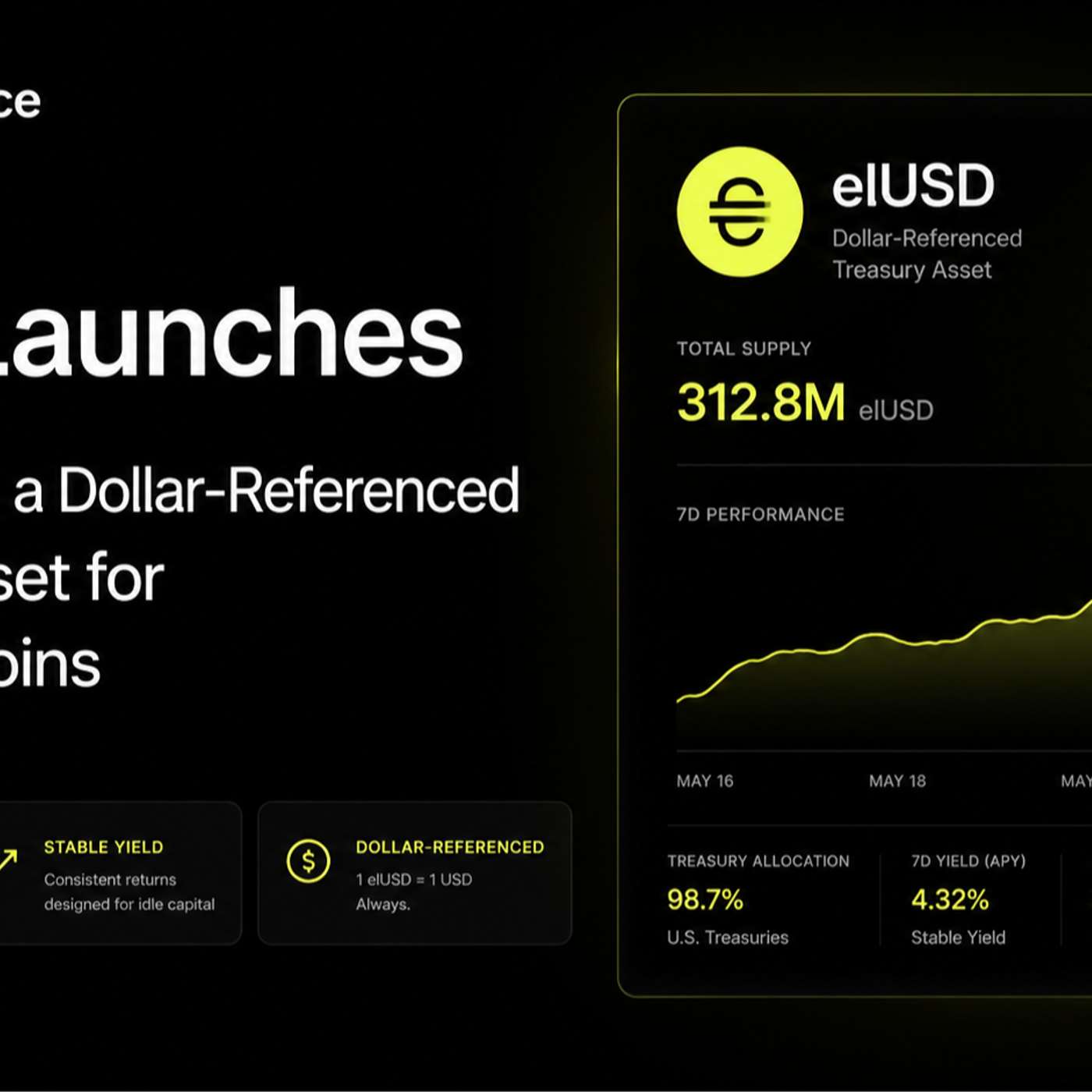
Elara Launches elUSD, a Dollar-Referenced Treasury Asset for Idle Stablecoins
About this episode
This story was originally published on HackerNoon at: https://hackernoon.com/elara-launches-elusd-a-dollar-referenced-treasury-asset-for-idle-stablecoins.
Elara turns idle stablecoins into a dollar-referenced treasury asset. How elUSD and sELUSD work, what the Sherlock audit covers and who the product is for.
Check more stories related to undefined at: https://hackernoon.com/c/undefined.
You can also check exclusive content about #elara, #web3, #defi, #stablecoin, #good-company, #software-engineering, #business, #treasury-management, and more.
This story was written by: @ishanpandey. Learn more about this writer by checking @ishanpandey's about page,
and for more stories, please visit hackernoon.com.
Elara turns idle stablecoins into a dollar-referenced treasury asset. How elUSD and sELUSD work, what the Sherlock audit covers and who the product is for.
Get every episode summarized
Each time The Good Tech Companies publishes, we email you a written briefing from the transcript — the topics, who appeared, and any specific claims, with the ad reads skipped.
Email me new episodesFree for 3 shows. No card needed.
Hosts & guests
Transcript ready
55 searchable segments. Every word is indexed and playable.
Full transcript
The Good Tech Companies — Elara Launches elUSD, a Dollar-Referenced Treasury Asset for Idle Stablecoins. Machine-transcribed; use the interactive transcript above to jump the player to any line.
This audio is presented by Hacker Noon, where anyone can learn anything about any technology. Alara launches LUSD, a dollar-referenced treasury asset for idle stablecoins, by Ashahn Pondy. There is more idle capital sitting on-chain than most people realize. The total stable coin float sits above $300 billion and has grown roughly 14% year over year. Yet billions of those dollars are parked in wallets earning nothing, or worse, rotated into mean coin plays in short-term gambles that erase the one thing those dollars were supposed to offer in the first place, which is safety. At the same time, the conversation around stablecoins is shifting fast at the institutional level. FASB is weighing whether stablecoins should count as a cash equivalent on corporate balance sheets, with a comment period running to 19 November. The Genius Act has put an actual regulatory framework around dollar-backed tokens in the US. Stablecoins are being treated as financial instruments now, not just trading chips. That raises an obvious question, if stablecoins are
graduating into real finance, why is so much of that capital still doing nothing? What Alara actually is? Alara is a treasury asset built inside the Briella ecosystem, designed to put dollar-denominated capital to work instead of letting it sit still. Briella is the restructured successor to true FI and runs Alara as its treasury management vertical, alongside NFT finance and institutional real-world asset lending. LUSD is not a stablecoin and Alara's own documentation is explicit about that distinction. It is not backed by FI at reserves sitting in a bank, and there is no government guarantee behind it. What it is instead is a dollar-referenced treasury asset built for capital preservation first, with yield as the outcome of active management underneath, not the starting promise. How it works? The mechanics are kept simple on purpose. Deposit an accepted stablecoin, and you receive LUSD, a liquid dollar-referenced token you can hold, move warding. If you want yield on top of that, stake your LUSD into SELUSD, a W wrapper that appreciates
in value as returns come in over time. No separate claim process, no token to go harvest somewhere. The yield is built directly into the asset itself. Exits are governed by a liquidity buffer that targets around 10% of system assets. Redemptions inside that buffer settle instantly, and larger ones are edipically processed within about 24 hours so positions can be unwound without slippage. How that yield actually gets generated is a longer story, and one worth telling properly. More on that soon, why it's worth paying attention to? Two things separate Alara from the usual new token noise. First, its core contracts have gone through a full security audit via Sherlock, not a quick scan for a badge. The published report covers every core contract in the system, the Vault, LUSD, SELUSD, Staking, the Price Oracle, the Treasury Adapter and the token registry. That is the full surface area, not just the parts that look good in a tweet. Second, the strategy behind Alara already had an operating track record before this public launch
ever happened. It was proven quietly first and marketed second, which is the opposite of how most of this space tends to work. There is no government backstop and no deposit insurance here, and Alara does not pretend authorize. Strategy and nav losses sit with SELUSD holders, with no reserve fund and no junior tranche behind them. But, audited and tested before going public, is a meaningfully different starting point than, live first, figure it out later. Who its for, corporate treasuries sitting on idle dollar reserves, looking for somewhere productive to park them? Fund managers parking dry powder between deployments instead of letting it sit flat. DAOs and protocol treasuries that want a yield bearing asset without needing to actively manage it. Qualified individual investors looking for a dollar-denominated alternative to a traditional savings account, without giving up liquidity. Access is not universal, minting and redeeming are permissionless at the contract level, but Alara is not available to US, UK, EU, EEA or Singaporepersons,
or to anyone in a jurisdiction where access would be prohibited or restricted. What's next? Alara's whole point is simple. Stop letting stablecoins sit idle, and stop treating, yield, as something that only comes from token emissions are a farmed dressed up to look sustainable. The FASB proposal and the Genius Act have moved dollar tokens onto the balance sheet as a serious asset class, and the question of what those dollars actually do while they sit there is only going to get louder. There is more than meets the eye in how that yield actually gets made, and it is worth explaining properly rather than squeezing it in here. Don't forget to like and share the story, vested interest disclosure. Hacker Noon has reviewed the report for quality, but the claims herein belong to the author. Hashtag dyor. Thank you for listening to this Hacker Noon story, read by artificial intelligence. Visit hackernoon.com to read, write, learn and publish.
More episodes
More from The Good Tech Companies

Protection Funds, Insurance and FDIC/SIPC: What Actually Covers What
The Good Tech Companies

Credible Captain Launches Independent Consumer Review Platform Focused on Transp...
The Good Tech Companies

4 Ways to Win a Hackathon (None of Them Is Writing Code)
The Good Tech Companies

Tokenized Stocks vs Real Stocks vs Stock Futures: Wall Street Without Walls and...
The Good Tech Companies