About this episode
How Money Works is made possible by:
Get every episode summarized
Each time How Money Works publishes, we email you a written briefing from the transcript — the topics, who appeared, and any specific claims, with the ad reads skipped.
Email me new episodesFree for 3 shows. No card needed.
Hosts & guests
Transcript ready
336 searchable segments. Every word is indexed and playable.
Full transcript
How Money Works — "Dude I'm Broke" Why Is My Data Worth Harvesting?. Machine-transcribed; use the interactive transcript above to jump the player to any line.
When you need to build up your team to handle the growing chaos at work, use Indeed Sponsored Jobs. It gives your job post the boost it needs to be seen and helps reach people with the right skills, certifications, and more. Spend less time searching and more time actually interviewing candidates who check all your boxes. Listeners of this show will get a $75 sponsor job credit at Indeed.com slash podcast. That's Indeed.com slash podcast, terms and conditions apply. Need a hiring hero? This is a job for Indeed Sponsored Jobs. Ball has never looked or tasted this good. Sweet Greens Fall Harvest Menu is back with seasonal favorites dressed to impress and made to be devoured. Warm roasted sweet potatoes, crisp apples, maple glazed brussels, and crave worthy flavors in the autumn harvest bowl, maple glazed salmon plate, and roasted bacon brussel side. The season's most desirable menu has returned to sweet green. And falls best dressed. Make your move. Order on the sweet green app.
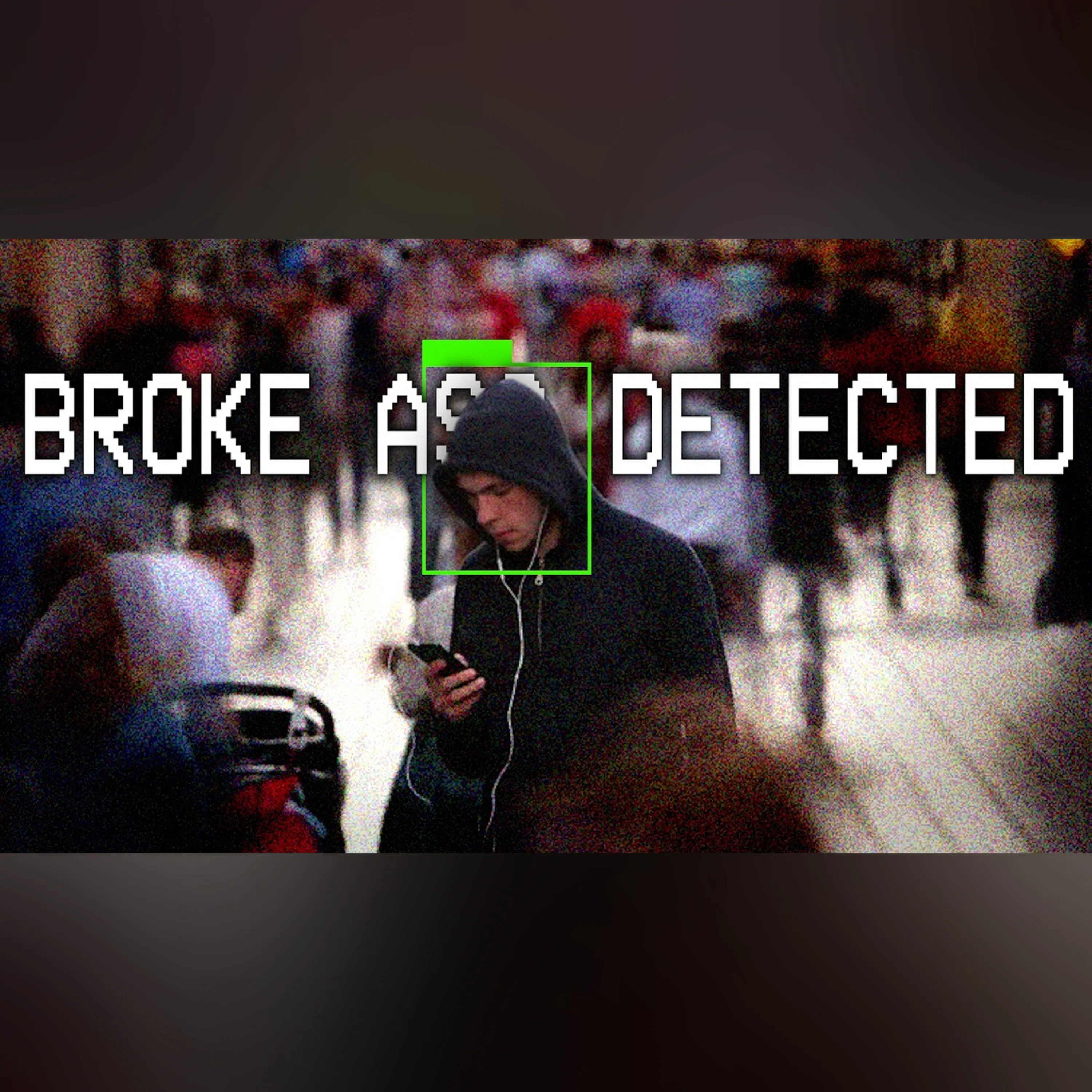
Did you know that big companies collect your data and use it to profit off you? Crazy, I know right? But even on top of a trend that was already pretty obvious, it does seem to be getting measurably worse. Most of us just accept that Google and Facebook and Amazon and Neopets and Reddit and X are collecting and collating our information to serve a slightly more effective ads so they can make slightly more revenue. And within reason, we even hand over a lot of our information to insurance companies in the hope that we might get a slightly better rate. Now, on top of all of this, your cart is monitoring your driving, your fridge is monitoring your eating, your smartwatch is monitoring your body, your TV is watching you watching me, and now I see that Sam Altman is watching your Reddit comments. Dario is reading your grandparents' books, Bezos is watching you react to this right now, Fluck is making a list and checking it once, Teal is doing whatever it is he does, and there's even an active marketplace for people's DNA sequences. Of course it's all very creepy and dystopian. And honestly, the more immediate question is, how is all of this even financially viable?
The numbers are, rather intentionally, left vague. But according to public financials and user metrics, these companies would need to be harvesting about $2,000 a year out of all of their users. This meant at current revenue multiples for a lot of these businesses and based on my own data I have about all of you watching, there is a good chance, John, that at your age, your data is worth more than you are. So how is that even possible? At the end of the day, there are only so many ads that you watch and insurance premiums that you pay. And yeah, sure, the state can help to optimize those numbers slightly. But surely we are well into the realm of diminishing returns, right? Well actually, no, I am sure you are all aware of the line that if you are not the customer, you are the product. But for a lot of these new markets, you are not really the customer or the product. And if anything, you are lucky to be the raw materials. Sam Washington, DC, are taking action against 23andMe, the bankrupt DNA testing company which has saliva samples from more than 15 million people is planning to actually sell
the genetic data to a third party. Turning now to the latest twist in the controversy over the surveillance company Flock. So nationwide, it has more than 120,000 cameras used by more than 6,000 law enforcement agencies. But there have been claims these license plate readers have been misused by some officers, including for stocking. The New York Times is reporting that apps like Life360, MyRadar and GasBuddy share driving data with some insurance companies. This one must be the new fridge. You like this? Look, it has a screen so you can see all the food that's inside. Kinda like that one. This one has an app so you can actually watch the food on your phone. All it needs to do is keep my f***ing beer cold. Okay, so it might be hard to imagine now, but just a few generations ago, the idea of big data didn't really exist at all, although it wasn't for a lack of trying. As something of a fun little brief history of corporate privacy violations, the retail credit company, which would eventually go on to be renamed Equifax, was actually founded all the way back in 1899, and for most of its history, it operated by making fact cards
about individuals that it could sell to insurance firms and lenders. These cards were not totally different from a modern credit score sheet, but they did contain a lot of non-standardized information, including a whole category that was essentially just rumors about people's marital troubles, sex lives, and political leanings. Apparently, these were important variables in a credit application. So, you know, not great. Now, apart from being generally horrific, from the company's perspective, the problem was that these records were quite expensive to produce, and even then, they still required a good amount of human discretion to make sense of. Those are a Republican with a good childhood, who was having marital affairs a bigger credit risk than a Democrat with a special male roommate. Well, that was really up to the insurance underwriter or the bank manager to make sense of. We have mentioned it before, but it was because of this human discretion that bank managers back then were generally seen as high-end professionals with valuable skills in line with a lawyer or a doctor. Their experience in telling good borrowers from bad could make a major difference to a bank's bottom line, and they were generally paid very good salaries for that experience.
One other thing was that, given the cost involved in producing, storing, and distributing these cards, it was really only worth doing for people with high enough incomes to justify the expense. This is actually a bit of a common theme, so, you know, try to keep it in mind. Now, this slowly changed around the 1970s, when retail credit and other similar companies started computerizing their messy records. It was also right around the time that Congress passed the Fair Credit Reporting Act, and the company decided its old name had picked up enough baggage that it was probably time for a rebrand. Digital records had the benefit that they could be pulled up without shuffling through thousands of actual paper files, and once a record was digital, making another copy of it cost effectively nothing. They could also be standardized. An engineer called Bill Fair, and a mathematician called Earl Isaac, had been selling credit scoring systems to Lenders since the late 1950s. And in 1989, their Fair Isaac company launched the General Purpose FICO score that aggregated all of this data into a single number. By 1995, just six years later, it had effectively become the industry standard with even Fannie
May and Freddie Mac adopting it for their mortgage guarantees. This standardization through computerization was a huge win for the financial industry. It meant that they bore minimal costs relative to the deals that could now do at scale, all without as much discretion coming from individual bank managers. And to be fair, this wasn't all bad for regular people either. Businessmen made loans much cheaper to approve, which meant far more of them got approved, and it meant a computer couldn't hold your special mail roommate against you, at least not officially. That doesn't mean this was a painless process though. The reason bank manager jobs are basically glorified credit card salesman today is because their actual role was effectively automated away by individualized digital data and a basic algorithm. Again, for shadowing alert. Now obviously this worked well for the financial industry, but there are a few reasons why it went from this narrow application to tracking, basically everything. The first is that data collection, storage, and analysis just got a lot cheaper. There really isn't too much to say about this one. It's pretty obvious. 40 years ago, data storage was really expensive.
In 1981, a single gigabyte of hard drive space would have set you back a couple hundred thousand dollars, so just keeping basic records on ordinary clients could add up very quickly, even if replacing these records was free. For more data points they kept about people, the more expensive it would get. Oh, and actually discerning anything from all of that information, while a lot easier than it was with paper records and gut feelings, was still really slow and hard because computers were far less powerful than they are today. Tracking someone's purchase preferences at every hour of the day would just cost more and hardware than it could ever hope to make back and slightly optimize sales. Cheap storage also made cheap collection worth doing. Today that same gigabyte costs less than a dime, and something dystopian like a modern connected car can generate a couple of terabytes of raw data about you every single day. A few decades ago, that would have quickly exceeded the entire world's data storage capacity, which obviously would not have made financial sense just for Geico to slap you specifically with a slightly higher premium for driving like an idiot. Today, data storage is cheap enough that it can realistically be used to fine tune even
something as mundane as what time of day you're most likely to poke at cheeseburgers on your phone. The easier data became to store, the easier it became to trade as well. And since copying it was already free, companies just saw hoarding it as a strategic investment. So yes, it became a lot cheaper to harvest your data, but by itself, that doesn't mean anything unless there is a way to actually profit from it. But of course, these companies have become more creative here than you would expect. Beyond the obvious targeted advertising, credit scoring, and insurance risk adjusting, this information has found some much less obvious applications. There is a good chance that these single most damaging set of data about you today is from a metric that you have never heard of, which is not entirely by accident. Just like you have a FICO score or whatever the equivalent credit score is in your home country, you probably now also have an employee score. Equifax has a service product called the work number. It's a similar kind of database to their far more well-known credit score, but instead of financial providers reporting your borrowing habits, it's employers documenting your work history.
This may obvious information like your start and end dates, but they can also submit your income, insurance status, pay frequency, job title, and in some cases, even whether you filed for unemployment after leaving. But most importantly, it also has information on whether a previous employer would rehire you and if they mark no, that's not a great sign to a potential new hiring manager. This database now has more than 839 million employee records contributed by over 5 million employers. So yeah, if you get fired from a job or even just quit in a way that you're old Boston and vibe with, there's a good chance that can now follow you around like a default on a loan. It sounds bad, but it gets worse. Your credit report at least comes with some rules forcing most negative marks to fall off after about seven years. The protections around this employment data are, to put it mildly, a lot murkier. Even for exemplary employees who just happened to get laid off, this kind of information can still be really valuable, because someone who has visibly been out of work for many months is probably going to have less negotiating power than someone who still has a job.
In the past, you could just fudge this information in your favor, and most half decent former managers would help you out with a good review. But with this kind of data source, it means the information asymmetry is very much on their side. Now we know this has real impacts, because it already has. When states started banning employers from asking about your salary history, pay for people changing jobs jumped by about 5%. But with data like this, they no longer really need to ask. It also helps potential employers sort through large batches of applications to identify the people with the least negotiating power. With 90% of employers already run applicants through an automated screening software before a human ever reads a resume. And if they use this tool, they can sort by people who have been out of a job for the longest or had the lowest previous salary, all to find the cheapest or most desperate applicant. In fact, pre-higher verification is one of the services Equifax openly sells this database for. So, yeah, it's not great. But it does help to explain how your data can be worth more than you are.
The point is, the value is coming out of your ability to make an income in the first place, rather than your desire to consume products with whatever discretionary spending you have left over at the end of the month, which is obviously a much wider pool. Oh yeah, and honestly, so far, this is one of the less creepy uses for your information. So it's time to learn how many works to find out why your data is worth more than you are. Right now, more Americans are starting their own businesses than at almost any point on record. Not because entrepreneurship suddenly got glamorous, but because the tools got so good that owning something small on the side no longer requires savings, a warehouse, or quitting your job. This video is sponsored by Printify, a print on demand platform that handles the parts of a product business nobody actually wants to run. Here's how it works. You put a design on a hoodie, a mug, a tote bag, whatever fits your idea using their editor. Nothing gets made until a customer actually orders it. Then Printify prints it through their network in the US and Europe and ships it straight to your customer. There's no inventory, no upfront costs, no boxes in your living room. Your store connects directly to Etsy, Shopify, TikTok shop, and other platforms.
So your product show up where people already shop and you keep the difference between printify's price and yours. Most stores start small and that's fine. Some merchants on the platform have grown their stores to meaningful businesses and it's easy to get started. If you have a design or an idea you've been sitting on, use my link in the description to sign up for free and use code HowManyWorks50 for 15% off your first order. The code applies to the first 100 people who use it. Okay, so making sure you never have the upper hand in a negotiation is all a big gross. But outside of this, big data has found a lot of other uses. Dynamic pricing algorithms have become extremely common in a lot of retail settings and they attempt to figure out the maximum possible price that someone would be willing to pay for something at any given time. But the thing that makes dynamic pricing dynamic is data about your income, your occupation, your marital status, and your past shopping habits. If you're a single guy working double shifts and getting significant overtime, you are statistically going to be willing to pay more for your groceries than a retiree on a fixed income. But arguably, that's still using your data to get your money.
Quantitative investment firms have been hoarding as much data as they can possibly get their hands on, all to feed into models that might get them slightly better risk-adjusted returns. Alternative data, which is just finance, bro, for everything from your credit card receipts to satellite photos of parking lots, is now a $30 billion dollar a year industry according to Grandview Research, which is itself an alternative data provider, so it's possible their future projections may be a little bit optimistic. It's also very useful for less sophisticated investors as well. Just like you have a credit score and an employee score, landlords are using the same kinds of data points to score tenets. Car companies have been selling your driving habits to insurance firms. GM was recently cost-passing driver behavior data from its connected cars to Lexus Nexus and Varysk, who packaged it up for insurers. One Chevy bulldoiner reportedly found this out after his insurance jumped 21%, and he specifically requested his data, which turned out to have 640 individually log trips in it. The saddest part about this is that they sold their most loyal customers out for a pretty pathetic bag. The data investigators found that Honda got paid about 26 cents per car for handing over
its customer's driving data. It sounds bad, but it gets worse. Political campaigns are compiling data down to the household level for more effective individualized messaging. One ad from boasted about matching 130,000 voter households to their IP addresses so they could hit every device in the house up to three times a day. And of course, taxpayer-funded law enforcement has gone all in on data collection and analysis. This is all information that gets collected from you, but it doesn't actually require you to make a purchase or apply for a loan or really do anything for somebody to make a return off it. It kind of goes beyond the old adage of you being the product that gets sold to advertisers because it's kind of worse than that. Now your value comes from your vote, your rent, your livelihood, or just your ability to be a crime statistic. But weirdly, the value of your data might actually also come from your data. Companies that collect a lot of data can build better targeting, which lets them attract more users to give them even more data to build better algorithms. This is what the venture capital guys lovingly call a data flywheel.
For a lot of companies, the data pile is now more valuable than the rest of the business. Early investors have figured out that bigger companies will acquire smaller companies just for the information they are sitting on. There are extreme cases like 23 and me selling their customers DNA information as a strategic asset during bankruptcy. And because the way your genealogy works, even if you personally never spat in a tube to find out you were 103% Irish with a 3% margin of error, there is a pretty good chance your information can be reverse engineered anyway through any of your distant relatives who did. Researchers found that 60% of Americans of European descent could already be identified through a third cousin or closer in these databases, and that was back in 2018. But even outside of examples like that, there are plenty of companies that exist, mostly to collect your data, and sell it to a higher bidder all under the guise of some other service. Among go was really just a way to get millions of people to point their cameras at city landmarks and build a crowdsource 3D map of high traffic areas. Last year, Niantic sold the actual games off to scoply for $3.5 billion and kept the
actual valuable asset which is the data. The leftover mapping business is now an AI outfit that says in its own words that it is using 10 million player scan locations to build geospatial models for robotics and autonomous systems. In plain English, so the delivery robots that replace your Uber Eats guy can get lost slightly less often. And yeah, of course, that has become the latest thing these companies are digging for in the data minds of your personal information. They don't only want who you are, but they also want to know how you think, all to train the machines that they hope will soon do all of that thinking for you. So yeah, remember those bank managers I told you to keep in mind 9 minutes ago? Their human discretion got automated because individualized data made it easy to replicate. The result was that their role became a lot less important and a lot cheaper to fill. Now imagine the same thing being done with every job. I know it's no secret that AI companies have become very data hungry, but it's gone so far that they have created a market for almost anything. Anthropic bought millions of physical antique books, sliced the bindings off, scanned them, and threw the paper away to feed its models.
That's also ignoring the books they have just straight up pirated. YouTube videos have been used as training data. Subtattles from more than 170,000 videos were scraped into data sets used by Apple, Nvidia, and Thropic and others without actually asking the creators involved. Amazon is scraping their own users and simultaneously scraping the bottom of the human intelligence barrel by doing the same thing on Twitch. I mean seriously, can you imagine the f***ing useless robots we make off that training data? Holy sh**. Oh yeah. And Reddit comments have become such prime training material that Google now pays $60 million a year for them, and they are one of the most cited sources in its AI search summaries. It sounds bad, but in just the most hilarious twist of irony, they have actually kind of played themselves. These companies fed the models that were supposed to eventually come for everybody's job, but what it actually came for was their web traffic. When a Google search now returns an AI summary, users click through to an actual website just 8% of the time. Stack Overflow, who sold their data to help train coding chapots, has seen new questions collapse back to the levels of 2009, which was incidentally the year it launched.
According to Wall Street Journal reporting, Google search traffic to business insider is down 85%. USA Today is down about 50%, and Reddit itself is now renegotiating that $60 million deal while it weighs the option of just blocking Google entirely. So I guess the point is, your juicy data is getting squeezed in a lot of new and creative ways, but the happy ending is that a lot of these companies are getting squos just as hard. Anyway, if you want to feel a little bit better, go and watch this video next to find out why Reddit basically shot itself in the foot in the first place, despite realistically knowing this is exactly where they would end up. And don't forget to like and subscribe to keep on learning how money works.
More episodes
More from How Money Works

What EVE Online's Tax Havens Teach Us About New York's Future - How Money Works...
How Money Works

Is Investing in Wine Better than the Stock Market? | How Money Works
How Money Works

You Are Not An Investor... But It's Important You THINK You Are... | How Money W...
How Money Works

Is The Federal Reserve Bank Profitable?! - How Money Works | How Money Works
How Money Works