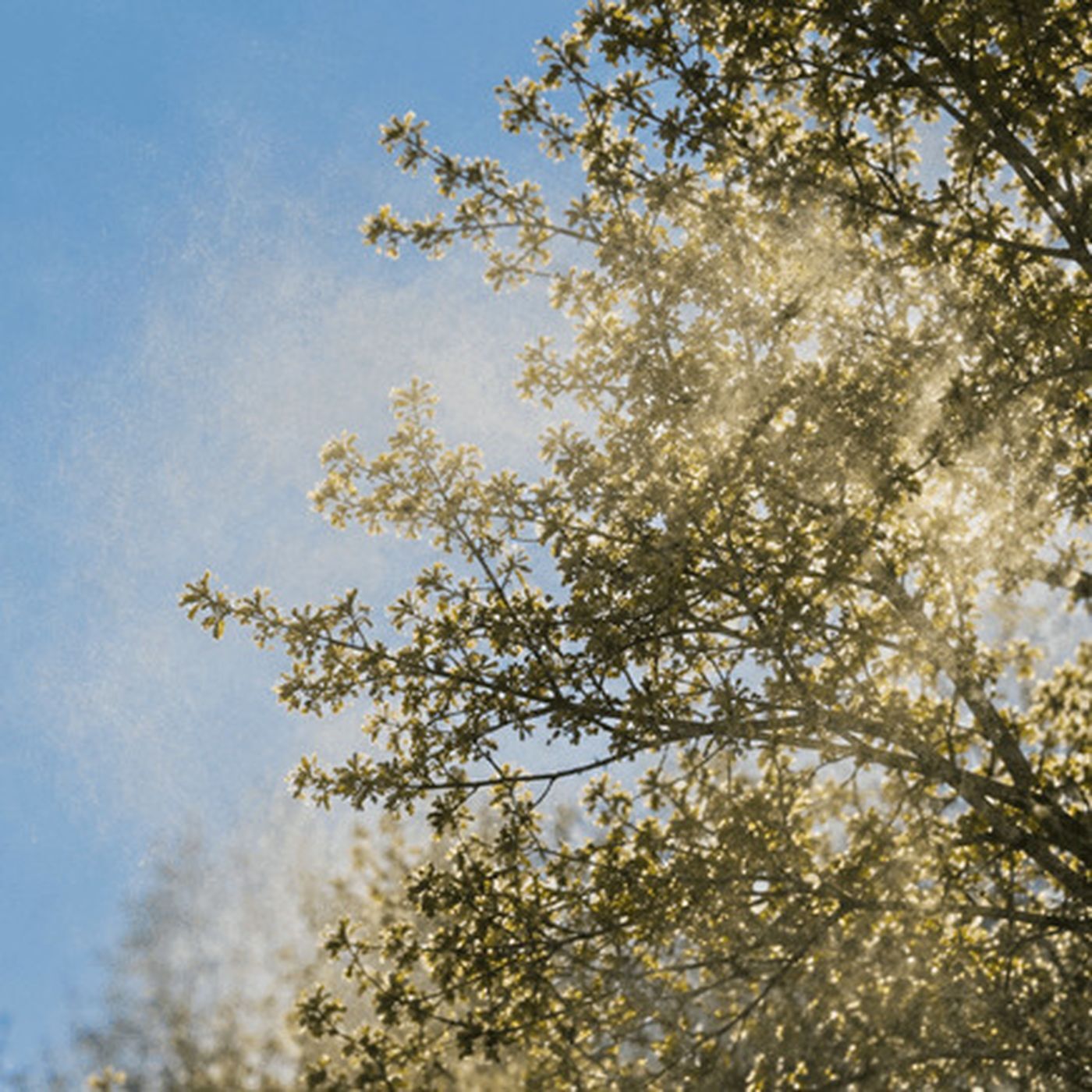
Does Pollen Affect Air Quality Readings? What the AQI Misses | Filterbuy
About this episode
Get every episode summarized
Each time Filterbuy.com Audio Blogs Podcast publishes, we email you a written briefing from the transcript — the topics, who appeared, and any specific claims, with the ad reads skipped.
Email me new episodesFree for 3 shows. No card needed.
Hosts & guests
Transcript ready
126 searchable segments. Every word is indexed and playable.
Full transcript
Filterbuy.com Audio Blogs Podcast — Does Pollen Affect Air Quality Readings? What the AQI Misses | Filterbuy. Machine-transcribed; use the interactive transcript above to jump the player to any line.
Booking a verbo vacation rental means you get Verbo care in 24-7 life support, verified reviews from real guests, and top-rated homes with the love by guest filter. I just booked my Verbo because there was a sweet line for it. We all have our reasons. If you know, give Verbo, terms apply, see Verbo.com slash trust for details. How pollen affects air quality and what the AQI doesn't tell you. Author Michelle Wann, reviewer, David Clark, licensed HVAC technician. TLDR, the air quality index does not include pollen. It's built from five pollutants the EPA regulates under the Clean Air Act and pollen isn't one of them. Most pollen grains are also too large to register in standard particle monitoring, which is why the AQI can read good while allergy symptoms are miserable.
Pollin counts come from separate monitoring networks, so checking both gives a fuller picture of what's in the air. Key takeaways. The AQI is calculated from ozone, PM2.5, PM10, carbon monoxide, nitrogen dioxide, and sulfur dioxide, not pollen. Intact pollen grains typically run 10 to 100 microns, too large for most PM2.5 or PM10 monitors to register. Rain and humidity can rupture pollen into fragments as small as a fraction of a micron, which can occasionally register in particle pollution readings. No federal agency runs an official dedicated pollen forecasting system. Checking pollen counts separately from the AQI gives allergy sufferers a more complete daily picture. A MIRV-13 filter is a reasonable step up for capturing fine airborne particles indoors, though it is not the same as a true heap of filter. Does the AQI include pollen? No. The AQI is an EPA tool built from five criteria pollutants regulated under the Clean Air Act,
ground level ozone, particle pollution, PM2.5 and PM10, carbon monoxide, nitrogen dioxide, and sulfur dioxide. Pollen isn't one of them, so a location can post a good or moderate AQI at peak pollen season. Whether apps and local news often display AQI and pollen numbers side by side, making them look like readings of the same thing. They aren't. The AQI measures pollution and pollen count measures allergens. The two can move independently, sometimes in opposite directions on the same day. Why pollen doesn't fit into standard air? Monitoring the gap comes down to particle size. In tact pollen grains generally measure 10 to 100 microns depending on the plant. Standard AQI monitoring focuses on PM2.5, PM2.5 microns and smaller and PM10, 10 microns and smaller. Even the coarser PM10 threshold sits at the bottom edge of pollen's size range,
so most whole grains don't register on AQI instruments. There's also no dedicated federal system for forecasting pollen the way there is for ozone or particle pollution. Pollin counts instead come from independent monitoring networks and certified counters. AQI versus pollen count at a glance category. Air quality index, AQI pollen count, what it measures. 5 regulated pollutants, ozone, PM2.5, PM10, CO, NO2, SO2. Airborne pollen grains from trees, grass and weeds calculated by US Environmental Protection Agency. Certified pollen counters and monitoring networks, scale used, 0 to 500 grains per cubic meter varies by network includes pollen. No, yes, best used for. Planning around pollution exposure, planning around allergy symptoms. When pollen can actually show up in air quality readings,
most consumer air quality content stops at AQI and pollen count are different things. Pollin isn't always too big to register. Rain, high humidity, and thunderstorms can cause pollen grains to absorb water and rupture, releasing smaller fragments called sub-pollin particles, small enough to be picked up by PM2.5 monitoring and to travel deeper into the lungs than an intact grain. That's the mechanism behind thunderstorm asthma, when grass or ragweed pollen season combines with a storm to spike both particle pollution and allergy symptoms at once. It's also why a rainy, humid spring day can nudge the AQI upward without any change in traffic or wildfire smoke. The pollen didn't disappear when the rain started. It just changed size enough to be counted differently. How to track pollen the right way? Because the AQI won't reliably reflect pollen levels, allergy sufferers need a second dedicated source. Certified pollen counters, including the National Allergy Bureau's Network of Stations report grains per cubic meter
figures by region. Many weather and allergy apps translate those counts into a simpler, low, moderate, high or very high rating. Checking that reading alongside filter bias live AQI map, rather than relying on the AQI alone, gives a fuller read on what's worth planning around each day. When pollen actually peaks by type and time of day, pollen follows a daily rhythm on top of its seasonal calendar, and timing outdoor activity around it helps symptom control more than checking the AQI does. Pollin type, typical season, daily peak, tree, late winter through spring, earlier in warmer climates, morning hours, grass, late spring through summer, midday, ragweed and weeds, late summer through fall, peaking mid-September, late morning to early afternoon. Regardless of season, pollen counts drop in the late afternoon and evening as temperatures cool. A few habits reduce exposure on high pollen days no matter what the AQI reads. Keep windows closed during your
region's peak pollen hours, not just on high AQI days. Shower and change clothes after extended time outside during pollen season. Run the HVAC fan on recirculate instead of opening windows on high pollen days. Replace your filter by filter on schedule, since a loaded filter loses capture efficiency before it looks dirty. Which filter rating actually helps with pollen. Merve short for minimum efficiency reporting value is the industry scale for how well an HVAC filter captures airborne particles. Filter by manufacturers pleated filters across the Merve 8, 11 and 13 range from every day dust to the fine fragments discussed above. Intact pollen grains are relatively large, so even a mid-range filter captures a meaningful share of them. Per the EPA's Merve table, a Merve 11 filter captures a minimum of 20% of particles in the 0.3 to 1.0 micron range, the band where sub-pollin fragments fall. A Merve 13 filter captures a minimum of 50% in that same range, where higher
Merve filters catch finer particles that lower ratings pass through. For more on how these ratings track against real-world air quality spikes, see our guide to choosing a Merve rating for high AQI days. Merve 13 is not the same as a true HEPA filter, and no residential filter eliminates pollen exposure. For a fuller breakdown, see our HEPA versus Merve comparison guide. A filter is one layer in reducing what circulates through a home's air, not a standalone fix. Merve rating quick reference for pollen and fine particles Merve range. Minimum captures 0.3 to 1.0 microns, minimum capture 3.0 to 10.0 microns, good for pollen fragments. Merve 1 to 4. Not rated, not rated, limited. Merve 5 to 8, not rated, 70% limited, Merve 9 to 12, 20%, 85%, partial. Merve 13 and higher, 50%, 90%, best option.
Most air quality tools are built to answer one question. Is it safe to be outside right now? They were never built to explain why your eyes are watering on a day the app says the air is fine. That's not a flaw in the AQI, it's just not what the index was designed to measure, and it's the question I see people get stuck on every spring, said Michelle Wann. After manufacturing filters for over a decade and serving more than two million households, filter buy has focused on giving people practical, honest information about what's actually in their air. Filter buys perspective. That manufacturing history shows up in more than 600 sizes, sold direct to consumer, all built in the United States. It also means the team spends less time forecasting pollen and more time helping households control the one thing they can. What their HVAC filter catches once outdoor pollen makes it inside. Want a filter by filter built to handle the fine particles that slip past standard air monitoring? Explore Merve 13 air filters to find the right size for your home. Frequently asked questions does AQI include pollen?
Know the AQI is calculated from ozone, particle pollution, carbon monoxide, nitrogen dioxide, and sulfur dioxide. pollen is tracked separately through independent monitoring networks. pollen versus AQI what is the real difference? The AQI measures air pollution levels and health risk. pollen count measures airborne allergen levels. The two are calculated and monitored differently and can move independently. Can high pollen ever raise the AQI occasionally? Rain and humidity can rupture pollen into fragments small enough to register in PM 2.5 readings, nudging particle pollution numbers upward during heavy pollen season. AQI pollen allergies should I trust the AQI for allergy planning. Not on its own, check a dedicated pollen count alongside the AQI for a fuller picture of what might trigger symptoms that day. What time of day is pollen? Count highest.
It depends on the type. Tree pollen peaks in the morning, grass pollen around mid-day, and ragweed in the late morning to early afternoon. Counts drop in the late afternoon and evening, seven trusted sources for understanding. pollen and air quality. Each source below backs a specific claim made on this page. Confirm exactly what the AQI does and doesn't measure. AirNOW's official breakdown defines the AQI as a 0-500 scale covering five pollutants regulated under the Clean Air Act. pollen is not one of them. Get the EPA's official definition of a MIRV rating. The EPA defines MIRV as a scale measuring how well a filter captures particles between 0.3 and 10 microns, the range covering sub-pollin fragments. See how the American Lung Association breaks down the AQI? The Lung Association confirms the AQI tracks. Ozone and particle pollution alongside four other pollutants. None of them pollen. Find out how your city ranks for
pollen allergies. AAFA's annual allergy capitals report ranks the 100 most populous U.S. cities by how tough they are for seasonal pollen allergy sufferers. Choose an air cleaner that actually fits your space. EnergySAR explains how to size and select a portable air cleaner correctly, pairing well with the right MIRV rated HVAC filter. Understand why pollen still has no official government forecast. N-O-A's Climate Program Office confirms no federal agency runs a dedicated pollen forecasting system today, unlike ozone or particulate matter. Keep your HVAC filter, change schedule on track. The Department of Energy recommends changing HVAC filters roughly every three months as part of routine heat pump maintenance. Supporting statistics, three data points ground the claims made on this page. 25.2% of U.S. adults had a diagnosed seasonal allergy in 2024.
N-W-S and EPA issue. AQI forecasts twice daily for ozone, smoke, and dust, but not pollen. A single ruptured pollen grain can release about 1,400 sub-pollin particles. Toyota's easy choice sales event is on. Whether you're looking for the performance of a camera, the versatility of Rav4, the efficiency of a Corolla, or all electric driving in the BZ, there's a Toyota that's just right for you. And with great deals across the lineup, now's the time to find yours. But hurry, these deals won't last long. Toyota's easy choice sales event ends soon. We make it easy. Toyota, let's go places.
More episodes
More from Filterbuy.com Audio Blogs Podcast

Live Air Quality Index AQI Map Tampa, FL Today | Filterbuy.com
Filterbuy.com Audio Blogs Podcast

Live Air Quality Index AQI Map Virginia Beach, VA Today | Filterbuy.com
Filterbuy.com Audio Blogs Podcast

Live Air Quality Index AQI Map Virginia Today | Filterbuy.com
Filterbuy.com Audio Blogs Podcast

Live Air Quality Index AQI Map Kansas City, MO Today | Filterbuy.com
Filterbuy.com Audio Blogs Podcast