Divine Revelation and Calling at the Burning Bush
About this episode
Divine Revelation and Calling at the Burning Bush
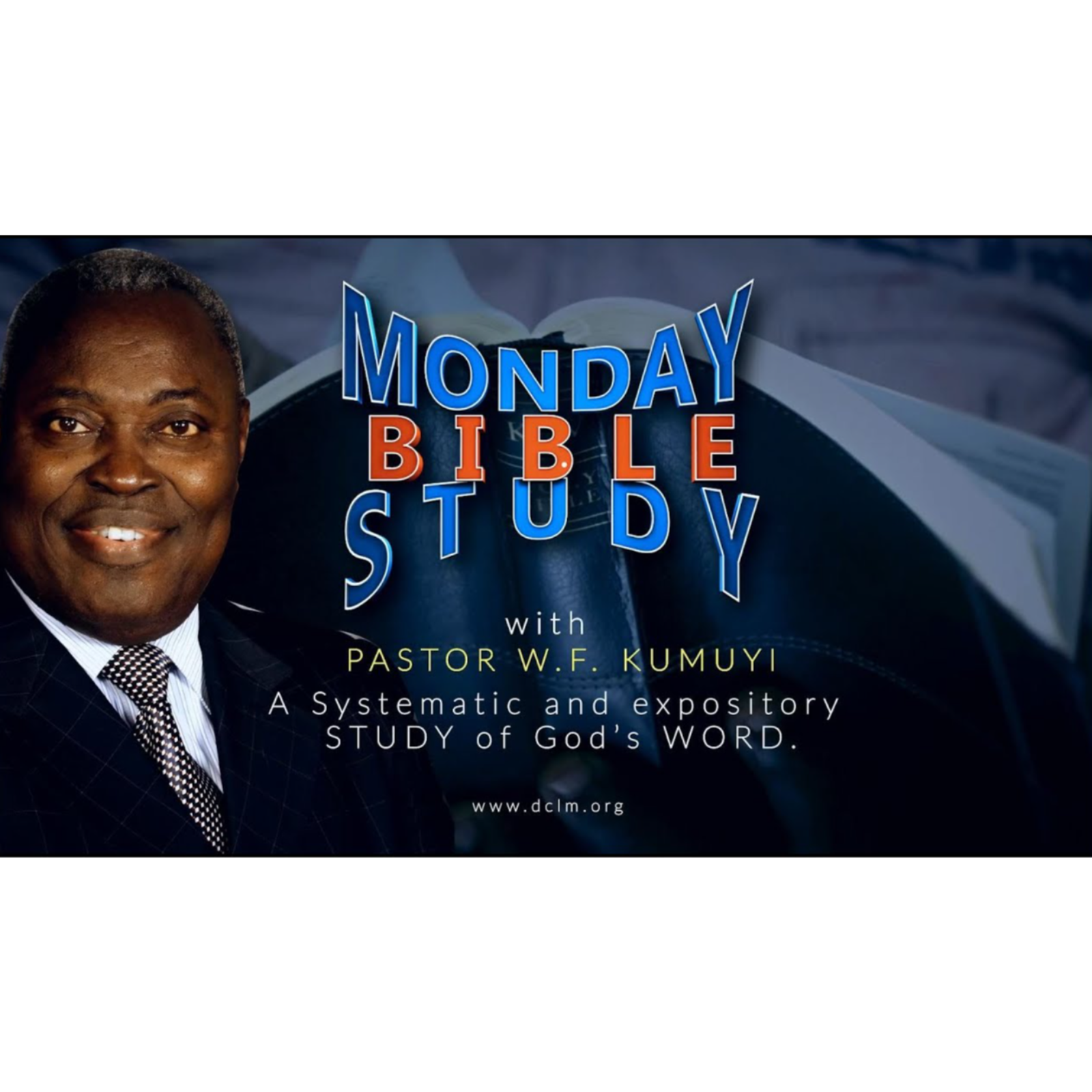
This Bible Study titled "Divine Revelation and Calling at the Burning Bush", was delivered by Pastor (Dr.) W.F. Kumuyi on January 19, 2026. The study focuses on Exodus 3:1-20, exploring Moses' encounter with God at the burning bush after 40 years of obscurity in the wilderness. It highlights that human wisdom and self-reliance are insufficient for God's work, and that true divine revelation comes when one rests wholly on grace and divine support. Pastor W.F. Kumuyi explains that Moses had to endure forty years of desert obscurity to strip away human self-reliance before he was spiritually prepared for divine revelation. The burning bush serves as a powerful symbol of the Israelites' preservation, showing that God’s people can be refined by the fire of affliction without being destroyed. Central to the teaching is the sovereignty of God, identified as the eternal "I AM," whose authority far surpasses the stubborn resistance of earthly rulers like Pharaoh. Ultimately, the message encourage believers to wait for God's timing, trust in His supreme power, and find courage in the assured presence of the Saviour.
If you need the complete Pastor (Dr) W.F Kumuyi Message outline, download it via this link - https://tinyurl.com/DivineRevelationMBS20260119
Also, we love to hear from you. Send your feedback via this link - https://tinyurl.com/DrWFKumuyiPodcastFeedback
Please share this message with others. God bless you.
Get every episode summarized
Each time Biblical Deep Dive with Pastor (Dr) W.F Kumuyi publishes, we email you a written briefing from the transcript — the topics, who appeared, and any specific claims, with the ad reads skipped.
Email me new episodesFree for 3 shows. No card needed.
Hosts & guests
Transcript ready
401 searchable segments. Every word is indexed and playable.
Full transcript
Biblical Deep Dive with Pastor (Dr) W.F Kumuyi — Divine Revelation and Calling at the Burning Bush. Machine-transcribed; use the interactive transcript above to jump the player to any line.
I want you to picture one of the most famous special effects in history. Okay. But not from a movie. We're talking about a desert, middle and nowhere. You're standing there, it's scorching hot and you see a bush just catch fire. Which honestly, in a desert, that's not that unusual. Things are dry, lightning can strike it happens. Right, but that's the thing. Usually a dry bush, it just goes whoosh and it's gone in 30 seconds. It's ash. Right. But this one, it keeps burning. Yeah. And burning. The leaves aren't even crisping up. The branches aren't breaking. It's a fire that defies physics. The burning bush. It's an image that, I mean, even people who have never opened a Bible, they recognize it. Exactly. But today, on this deep dive, we are going to look past the, you know, the pyrotechnics. We're digging into a breakdown of this event from a study guide and a sermon by Pastor W. F. Cumley. Divine revelation and calling at the burning bush. That's the one. And what caught my eye here is that he doesn't just treat it like a magic trick. He frames it as this masterclass in timing, failure, and resilience.
It's really a psychological profile of a leader who had to be completely broken before he could actually be used. Yeah. We're talking about an 80 year old man, a 40 year silence, and a clash between what Cumley calls a stubborn monarch and a supreme sender. I love that framing, the supreme sender. It sounds like a heavyweight title fight. It kind of is. But to understand why the bush is burning now, we have to rewind. Because the study makes a huge deal about the timeline. Moses doesn't just stumble on to this mountain by accident. No, not at all. The timing is everything. Cumley breaks his life down into these like distinct 40 year chapters. And the first one, the first 40 years, is so crucial. It explains why he ended up in the desert in the first place. I think most of us have this mental image of Moses as the old guy with the beard and the staff. For those first 40 years, he was a completely different person, wasn't he? Completely different. He was Egyptian royalty. The study highlights he was immersed in the wisdom and training of Egypt. And what does that mean back then?
I think about it. Egypt was the superpower. They had the best architecture, the best military, the best mathematics. So Moses isn't some random shepherd. He's got an Ivy League education, military credentials, the works. Oh, yeah. Cumley notes he was mighty in words and deeds. He was confident, capable, and honestly, probably bit arrogant. Sure. He knew he was an Israelite by birth. And he felt this calling, but he approached it like an Egyptian prince would. Like, I have the power. I have the influence. I'll handle this. Exactly. And that leads to the critical error that the study really zeroes in on. Moses tries to act ahead of God. He tries to fulfill a spiritual calling using very human methods. He sees an Egyptian beating a Hebrew slave and he doesn't intervene diplomatically. He kills the guy. He goes full vigilante. He does. He buries him in the sand. Cumley argues he was just relying on his own biceps, his own training. He thought, I'm the deliverer. Watch this. Right. And he expected the Israelites to just rally around him and start the revolution then and there.
But that is not what happened. Not even close. Yeah. The very next day, he tries to break up a fight between two Hebrew men, you know, acting like a judge. Okay. And one of them just looks at him and delivers this crushing line. Who made you a ruler and a judge over us? Oh, wow. That has to be a massive blow to the ego. It's devastating. He's risking his neck for them and they basically tell him to get lost. It destroyed him. And the study says this rejection was the turning point that forced him to flee. But, and here's a fascinating point Cumley makes. This rejection was actually necessary. Necessary. How could it be necessary? Think about it. If Moses had liberated Israel right then using his own sword and his Egyptian status. Who would have gotten the glory? Moses would have. It would have been a political victory, not a spiritual one. Precisely. A testament to his own strength. So he had to be stripped of all of that. He flees Egypt and enters chapter two. The backside of the desert. This is the part that just blows my mind.
He doesn't just go away for a gap year. He's there for 40 years. 40 years of silence. Can you even imagine that career change? You go from Prince of Egypt to herding sheep in the middle of nowhere for four decades. It's not just a demotion. It's a total erasure of your identity. Yeah. A total reset. And the study uses a very specific word for this whole phase. Nothingness. Nothingness. That sounds pretty bleak. It does, but in this context it's a prerequisite. Cumley argues that Moses had to get to a point where he realized his college training. His military strategy, his royal connections. They're all useless for the work God actually wanted to do. He had to hit rock bottom. He had to reach the end of himself. So as long as he thought I can do this, he couldn't do it. Right. Divine revelation couldn't come to a man who is so full of himself. It could only come to a man who was empty. And after 40 years of staring at sheep and sand, Moses was finally empty enough. He was probably just convinced his life was over. He's 80 years old.
Nobody. And that is the exact moment he sees the fire. Yes, the perfect setup. He's at Mount Horib. And he sees this, this phenomenon. Okay. Let's go back to the physics of the bush itself. We talked about how it's not being consumed, the preservation of it. Yes. And Cumley dives so deep into the symbolism here. He calls it the spiritual significance. It's not just a cool visual to get Moses's attention. It's a diagram of the whole situation. Exactly. So decode it for us. What does the bush represent? The bush is the people of Israel. I mean, think about a desert bush. It's scrubby, it's dry, it's fragile. It's not some mighty cedar. It's weak. It's the people in slavery, yeah. And the fire. The fire is the affliction. This study calls Egypt the iron furnace. It's the pain, the slavery, the oppression that's just surrounding them. So you have this fragile bush sitting inside a raging fire. Yeah. Logically, it should be ash in seconds. And that's the paradox. This is the aha moment for Moses.
He's watching this bush burn, but not disappear. And he realizes Israel is in the furnace of Egypt, but they're not being destroyed. In fact, the text says the more the Egyptians afflicted them, the more they multiplied. That is such a powerful image. The fire is real. It's hot. It hurts. But it doesn't actually have the power to consume them. It's refining them, but it isn't ruining them. Exactly. And there's a reason for that. Yeah. It's not because the bush itself is fireproof. It's because of who is in the bush with them. Right. The text mentions the angel of the Lord appeared in the flame. Now, usually, I think of an angel as just a messenger. But Kumi, he gets really specific here. He says this wasn't just any angel. Okay. The study identifies this as the angel of his presence. And many theologians, Kumi included, see this as a pre-incarnate appearance of Christ. It's God Himself in the fire. So God isn't watching from a distance from a cloud somewhere. He is literally in the heat with them. That is the key. And Kumi connects this to another famous story, Shadrach, Meshach, and a bed and go.
The three guys thrown into the furnace in Daniel. Oh, right. The king throws them in, and he looks in and freaks out because he sees four men walking around, not three. And the fourth looks like the Son of God. It's the same principle. The fire only burned off their chains. Just like the affliction was stripping Israel of their reliance on Egypt. Yes. But the fire couldn't touch them because of the fourth man. That's the takeaway of the study drives home. The sublime sovereignty of God protects you inside the furnace. He doesn't always put the fire out. But you make sure you don't burn up. Which is a comforting thought. But from Moses, this revelation is also terrifying. Because the voice from the bush then tells him, okay, I've seen the suffering. Now go. I'm sending you to Pharaoh. And this is where we see that huge identity shift. Because 40 years ago, Moses would have been like, finally, put me in coach. Oh, for sure. But now, what does he say? He says, who am I? Who am I? It's actually kind of tragic. Kumui uses this phrase, broken backbone, to describe Moses's state.
He says, bondage and failure can blindfold the person to their own potential. So Moses looks at himself and he doesn't see a prince anymore. He sees a failure, a fugitive. He's asking, who am I to go to the most powerful king on earth? And it's a valid question. He's an 80-year-old shepherd with a criminal record in Egypt. I mean, his resume is terrible. It is. But look at how God answers him. This is my favorite part of the analysis. God doesn't argue with him about his resume. He doesn't say, no, Moses, you're smart, you're strong, you can do it. He doesn't give him a pep talk. No. He completely ignores the who am I question. Instead, he answers by telling Moses who he is. The divine name. I am that I am. We hear that phrase a lot, but let's just unpack it. What is the study actually saying this means? It's a statement of absolute independent existence. Kumuji calls God the pre-existent potentate. Pre-existent potentate. That's a heavy title. Break that down. Well, a potentate is a ruler, a sovereign. And pre-existent just means he was here before anything else.
Okay. So think of it this way. Moses is worried about the timeline. He's worried about Pharaoh, the current ruler. He's worried about his past mistakes. And God is saying, I exist outside your timeline. I was here before Pharaoh was born. I was here before your problem started. And I will be here after Egypt is dust. So he's saying, Moses, your insufficiency isn't the point. My sufficiency is the point. Exactly. It's like saying, you're right, you are zero. But I am infinity. And infinity plus zero is still infinity. That's a great way to put it. So the cure for his insecurity wasn't building up his self-esteem? No, it was anchoring him to something eternal. He also identifies himself as the god of Abraham, Isaac, and Jacob, reminding Moses of the covenant. He's saying, I'm the same god who made promises to your ancestors. I haven't forgotten. So Moses gets his new identity. He's not Moses, the prince, or Moses, the failure. He is now the ambassador of the great I am. Right. But, and this is the reality check.
Just because he has God on his side doesn't mean the door is going to open easily. Which brings us to the final conflict, the clash of wills. You have the supreme sender versus the stubborn monarch. And Kamui points out something so interesting here. God spoils the ending for Moses right at the start. He tells him, the king of Egypt will not let you go. Why tell him that? Why don't let him hope for an easy out? It's expectation management. God knows the heart of the enemy. He's warning Moses. Don't be shocked when this is hard. Don't be shocked when he says no. And Pharaoh definitely says no. I mean, his response is legendary. Who is the Lord that I should obey his voice? I do not know the Lord. It sounds incredibly arrogant. But the study makes a really insightful point here. Which is. Pharaoh was actually telling the truth. He wasn't lying. No. When he said I don't know the Lord, he meant it. Pharaoh was a polytheist. He worshiped the Nile, the son, the frogs. He even thought he was a God. So he genuinely had no concept of the one true God?
None. His behavior, his stubbornness, his defiance. It was all completely consistent with who he was. Right. And Kamui advises the reader here. Don't be so shocked when sinners act like sinners. That's just practical advice, isn't it? We often get so offended when people who don't share our values act. Well, they don't share our values. Right. The study suggests that opposition is inevitable. If you stand for something, you will meet a Pharaoh. You'll meet stubbornness. But the central argument is about who gets the final say. And Pharaoh thinks he has the final say. He does. And later, Herod thinks he has the final say. Nebuchadnezzar thinks he does. But the narrative arc of this whole story is that the assured supremacy belongs to the Savior. I noticed the study also mentions a progression from crying to singing. Yes. If you look at the beginning of Exodus, the Israelites are groaning. They're crying out because of the bondage. It's a soundtrack of misery. But once the supreme sender takes over, and they go through that conflict and cross the Red Sea,
the crying stops. Exodus chapter 15 is entirely a song, the Song of Moses. So the journey is from the groan of the furnace to the song of deliverance? But you have to go through the conflict to get to the music. You can't skip the clash. You have to trust that the I am is bigger than the stubborn monarch. It really is a complete Herod's journey, but it's kind of a subverted one. Moses fails when he tries to be the hero. And he only succeeds when he realizes he's just the instrument. That's the beauty of it. It moves from self-reliance in the palace to nothingness in the desert, to God reliance at the bush. Before we wrap up, I want to circle back to one concept. Kamui highlights that I think is the most sticky for our listeners. This idea of the iron furnace. This is a very relatable metaphor. It is because everyone has an iron furnace, right? You don't have to be a slave in ancient Egypt to feel like you're in a situation that's just burning you alive. A toxic job, a health crisis, a financial collapse, yeah. Absolutely. And the natural human instinct when you're in the fire is to panic.
You think, this is it, I'm being destroyed. Just like Moses probably thought his life was over during those 40 years in the desert. But the lesson of the burning bush is that if God is involved, the fire isn't there to destroy you. It's there to refine you. The study suggests that our bitter bondage is often the preparation for the next level. So Moses needed the desert to learn humility. And Israel needed the pressure of Egypt to grow from just a family into a nation. So the fire is a prerequisite, not a punishment. In many cases, yeah. The bush burns, but it doesn't burn out. That's the promise. There's one last detail from the text that Kamui points out. And it's something I had never really noticed before. It's about the moment Moses actually sees the bush. Ah, the turning aside. Right, Exodus 3.3. Moses says, I will now turn aside and see this great sight. And then the very next verse says, when the Lord saw that he turned aside to see God called into him. It is such a profound detail. Just think about the implication.
What if he hadn't turned aside? He was working. He had sheep to manage. He could have just glanced at it. Thought that's weird and kept walking. He had a job to do. God was waiting for his attention. The revelation was there, burning. But Moses had to break his routine to engage with it. That really hits home. We live in a world of constant notification, rush, rush, rush. We are always on to the next thing. And this study challenges us with this. How many burning bushes are we walking right past? How many insights? How many revelations? How many little miracles are we missing? Simply because we refuse to pause. Because we won't turn off the autopilot and just turn aside to look. We're too busy being productive to be transformative. Exactly. Moses' life changed forever. And you could argue world history changed. Because an old shepherd took five minutes to stop and look at something strange. That is the question I'm going to leave everyone with this week. Are you too busy to see the fire? And if you do see it, are you willing to stop and ask what it means?
It's definitely worth the pause. Well, that wraps up our deep dive into the burning bush. Hopefully this helps you see your own iron furnaces a little differently today. And maybe gives you a bit more confidence in the IMM. Thanks for listening. We'll catch you on the next one.
More episodes
More from Biblical Deep Dive with Pastor (Dr) W.F Kumuyi

Divinely Planned Transformation by Grace for Glory
Biblical Deep Dive with Pastor (Dr) W.F Kumuyi

The Transformed Achiever: Lifting Limits through Faith and Diligence
Biblical Deep Dive with Pastor (Dr) W.F Kumuyi

The Sinner's Doom and the Saint's Destiny
Biblical Deep Dive with Pastor (Dr) W.F Kumuyi

The Path of Faith and the Peril of Obstinacy
Biblical Deep Dive with Pastor (Dr) W.F Kumuyi