religionDec 17, 20255:37pending
December 18, Advent Weekday - Divine Truth vs. Our Imagination
About this episode
Read Online
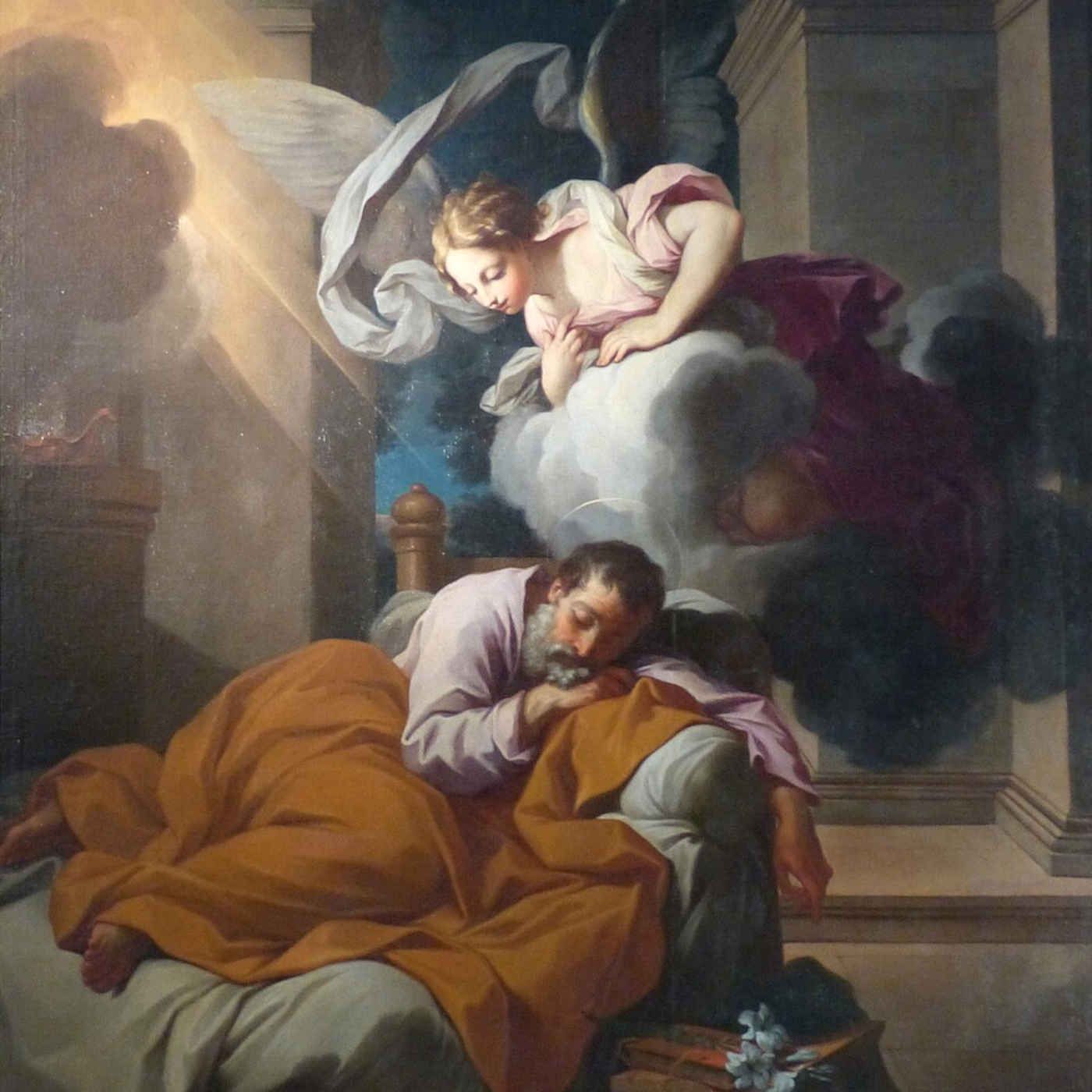
When Joseph awoke, he did as the angel of the Lord had commanded him and took his wife into his home. Matthew 1:24
The human person is a fascinating subject of study. Throughout the ages, countless philosophers, theologians, and social scientists have sought to understand the complexities of human nature. Within the Catholic philosophical tradition, Saint Thomas Aquinas stands out as an influential and trustworthy teacher on this topic.
Aquinas teaches that while a person sleeps, the external senses are inactive. However, sense images within the imagination can still be active to varying degrees, depending on the depth of sleep, leading to the formation of dreams. Human reason is not entirely inactive during sleep, but it operates in a diminished capacity, which often results in dreams being nonsensical. Because the intellect’s judgment is not fully engaged, the content of dreams is generally neither moral nor immoral.
There is, however, another form of dream that transcends the normal and natural type. This is exemplified in Joseph’s dream. In such divinely inspired dreams, like Joseph’s, human reason is fully active—not because of the natural workings of the imagination—but because the dream is a direct result of divine intervention. In Joseph’s case, his reason and intellect were fully engaged, allowing him to comprehend the divine message delivered by the angel. He was presented with a choice, and with his reason fully operative, he freely chose to say “Yes” to God’s communication, thus embracing his role in the divine plan.
This “Yes” to the divine plan is clearly illustrated in the passage quoted above. Upon awakening, Joseph “did as the angel of the Lord had commanded him.” His choice was made during his divinely inspired dream, and his will fully acted upon this decision when he awoke.
Though divinely inspired dreams like Joseph’s are uncommon, they do happen. We, however, do not need to wait for such a dream to imitate Joseph’s obedience to God’s will. Like Joseph, we have been given divine Truth. For us, that Truth comes primarily through Sacred Scripture and the teachings of the Church. The writings of the saints also help clarify all that God speaks to us.
At times, our imaginations can lead us astray, much like in a dream. When we allow irrational thoughts to dictate our actions, we might find ourselves filled with anxiety, worry, and confusion. Imitating Joseph does not mean waiting for a divine dream; rather, it means actively engaging our minds with divine Truth as revealed through the Church and Sacred Scripture. We must then listen to that truth, dismiss irrational thoughts, and use our reason to command our will to act in obedience to God’s will.
Reflect, today, on whether you tend to dwell on irrational ideas or whether you turn your intellect to divine Truth as the basis for what you believe and how you act. Just as Joseph trusted in the Truth revealed to him by the angel and acted upon it, we too must place our trust in the Truth and act accordingly.
My trustworthy Lord, You have revealed to us all Truth as is given to us through the Sacred Scripture and the teachings of the Church. When my imagination leads me astray into obsessive thinking and worrying, please speak to me and help me to hear Your voice. May every decision I make and action I take be in accord with Your Truth. Jesus, I trust in You.
Image: Finoskov, CC BY-SA 4.0, via Wikimedia Commons
Source of content: catholic-daily-reflections.com
Copyright © 2025 My Catholic Life! Inc. All rights reserved. Used with permission via RSS feed.
When Joseph awoke, he did as the angel of the Lord had commanded him and took his wife into his home. Matthew 1:24
The human person is a fascinating subject of study. Throughout the ages, countless philosophers, theologians, and social scientists have sought to understand the complexities of human nature. Within the Catholic philosophical tradition, Saint Thomas Aquinas stands out as an influential and trustworthy teacher on this topic.
Aquinas teaches that while a person sleeps, the external senses are inactive. However, sense images within the imagination can still be active to varying degrees, depending on the depth of sleep, leading to the formation of dreams. Human reason is not entirely inactive during sleep, but it operates in a diminished capacity, which often results in dreams being nonsensical. Because the intellect’s judgment is not fully engaged, the content of dreams is generally neither moral nor immoral.
There is, however, another form of dream that transcends the normal and natural type. This is exemplified in Joseph’s dream. In such divinely inspired dreams, like Joseph’s, human reason is fully active—not because of the natural workings of the imagination—but because the dream is a direct result of divine intervention. In Joseph’s case, his reason and intellect were fully engaged, allowing him to comprehend the divine message delivered by the angel. He was presented with a choice, and with his reason fully operative, he freely chose to say “Yes” to God’s communication, thus embracing his role in the divine plan.
This “Yes” to the divine plan is clearly illustrated in the passage quoted above. Upon awakening, Joseph “did as the angel of the Lord had commanded him.” His choice was made during his divinely inspired dream, and his will fully acted upon this decision when he awoke.
Though divinely inspired dreams like Joseph’s are uncommon, they do happen. We, however, do not need to wait for such a dream to imitate Joseph’s obedience to God’s will. Like Joseph, we have been given divine Truth. For us, that Truth comes primarily through Sacred Scripture and the teachings of the Church. The writings of the saints also help clarify all that God speaks to us.
At times, our imaginations can lead us astray, much like in a dream. When we allow irrational thoughts to dictate our actions, we might find ourselves filled with anxiety, worry, and confusion. Imitating Joseph does not mean waiting for a divine dream; rather, it means actively engaging our minds with divine Truth as revealed through the Church and Sacred Scripture. We must then listen to that truth, dismiss irrational thoughts, and use our reason to command our will to act in obedience to God’s will.
Reflect, today, on whether you tend to dwell on irrational ideas or whether you turn your intellect to divine Truth as the basis for what you believe and how you act. Just as Joseph trusted in the Truth revealed to him by the angel and acted upon it, we too must place our trust in the Truth and act accordingly.
My trustworthy Lord, You have revealed to us all Truth as is given to us through the Sacred Scripture and the teachings of the Church. When my imagination leads me astray into obsessive thinking and worrying, please speak to me and help me to hear Your voice. May every decision I make and action I take be in accord with Your Truth. Jesus, I trust in You.
Image: Finoskov, CC BY-SA 4.0, via Wikimedia Commons
Source of content: catholic-daily-reflections.com
Copyright © 2025 My Catholic Life! Inc. All rights reserved. Used with permission via RSS feed.
Get every episode summarized
Each time Catholic Daily Reflections publishes, we email you a written briefing from the transcript — the topics, who appeared, and any specific claims, with the ad reads skipped.
Email me new episodesFree for 3 shows. No card needed.
Hosts & guests
No transcript yet
This episode has not been transcribed. Request it and it moves to the front of the queue.
More episodes
More from Catholic Daily Reflections

September 8, Feast of the Nativity of the Blessed Virgin Mary - The Dawn of Salv...
Catholic Daily Reflections
Sep 7, 20268:05completed

Monday of the Twenty-third Week in Ordinary Time - Seeing is Believing?
Catholic Daily Reflections
Sep 6, 20267:33completed

Twenty-third Sunday in Ordinary Time (Year A) - The Joy of Reconciliation
Catholic Daily Reflections
Sep 5, 20267:42completed

Saturday of the Twenty-second Week in Ordinary Time - Confronting Opposition
Catholic Daily Reflections
Sep 4, 20267:29completed