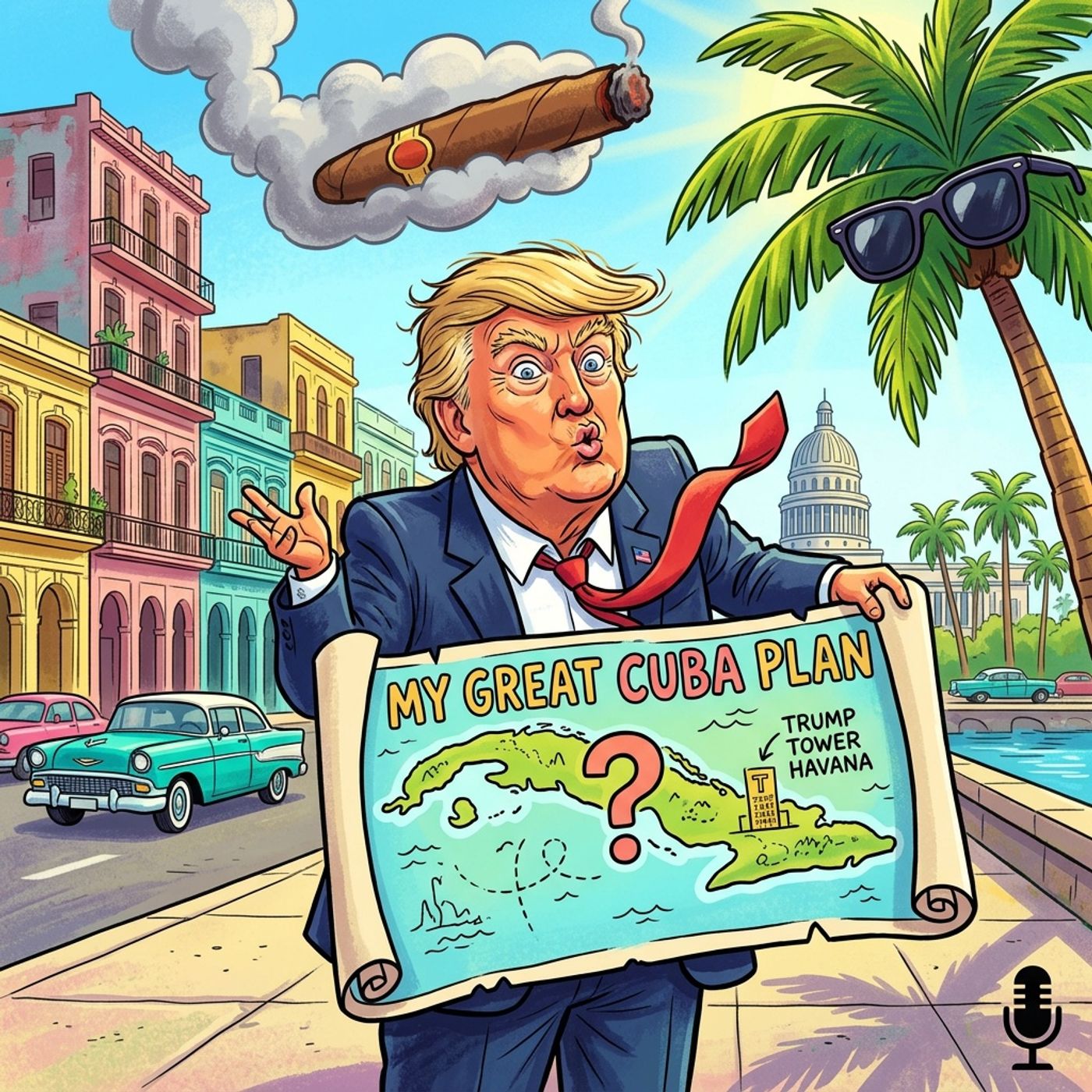
Cuba_ A Legacy of Ambition and Policy -
About this episode
Become a supporter of this podcast: https://www.spreaker.com/podcast/conspiracy-theories-exploring-the-unseen--5194379/support.
Get every episode summarized
Each time Conspiracy Theories Exploring The Unseen publishes, we email you a written briefing from the transcript — the topics, who appeared, and any specific claims, with the ad reads skipped.
Email me new episodesFree for 3 shows. No card needed.
Hosts & guests

Transcript ready
48 searchable segments. Every word is indexed and playable.
Full transcript
Conspiracy Theories Exploring The Unseen — Cuba_ A Legacy of Ambition and Policy -. Machine-transcribed; use the interactive transcript above to jump the player to any line.
In this episode, we continue our journey through the complicated history of U.S. ambitions towards Cuba, focusing on a pivotal moment in 1854, known as the Austin Manifesto. This document was the brainchild of three U.S. diplomats who proposed that the United States should acquire Cuba from Spain, even suggesting using force, if necessary. The vision behind it was driven by Cuba's proximity, a mere 90 miles from Florida, and its perceived strategic importance for America, particularly for those who supported slavery. The Austin Manifesto embodies the 19th century expansionist mindset, especially among pro-slavery southerners who believe that adding Cuba to the U.S. would not only expand the nation's territory but also institution of slavery. It was a bold declaration, reflecting a deep-rooted belief in Manifest Destiny, which held that Americans were destined to expand across North America. However, this ambitious plan did not sit well with everyone.
There was significant opposition, even from within the United States. Many viewed the Manifesto as an imperialistic venture that undermined Cuban sovereignty and solely served the economic interests of slaveholders. The backlash was enough to ensure that the Austin Manifesto was ultimately abandoned, highlighting the complexities of U.S. territorial ambitions and the international resistance they often faced. Fast forward to January 2021, and we see echoes of this historical ambition in contemporary politics as the Trump administration made waves by re-designating Cuba as a state-sponsor of terrorism. Critics, including noted activists like Medea Benjamin and Leonardo Flores, quickly condemned this move. They argued that this politically motivated label would only deepen the suffering of the Cuban people, disrupting essential supplies and worsening their economic crisis. This modern-day policy shift stirred up a lot of debate, as many policymakers denounced
it, while humanitarian groups highlighted the detrimental impacts it would have. The 2021 policy change serves as a stark reminder of how historical aspirations can reverberate through time. Just as the Austin Manifesto reflected the ambitions of an earlier era, this re-designation underscores the ongoing strategic importance that Cuba holds for the U.S. In many ways, both actions stem from the same desire to exert influence over a neighbor that, for better or worse, has been caught in the crosshairs of U.S. foreign policy. But let's consider the human costs. The re-designation as a state-sponsor of terrorism has had a real impact on Cuban families, leading to food shortages and economic hardship. When policymakers make sweeping declarations, it's the vulnerable populations who often suffer the most. This is a critical point that echoes back to 1854, where the pursuit of national interests too often came at the expense of the very people in the target region.
In closing, as we reflect on U.S. policies towards Cuba from the Austin Manifesto to current administrations, it becomes clear that historical context is key in understanding today's political landscape. The ambitions to take Cuba have manifested in various ways, always entwined with issues of sovereignty, economic strength, and human impact. As we look forward, it's important to remember these lessons and consider the implications of our foreign policies. Thanks for joining the Fortune Factor podcast.
More episodes
More from Conspiracy Theories Exploring The Unseen

The Digital Mirage_ AI and the Death of Authentic Romance
Conspiracy Theories Exploring The Unseen

The Trust Trap_ AI and the Future of Romance
Conspiracy Theories Exploring The Unseen

The Ghost in the Machine_ Navigating AI Romance
Conspiracy Theories Exploring The Unseen

The Love Recession_ Why Digital Romance is Offline for Good
Conspiracy Theories Exploring The Unseen