About this episode
Get every episode summarized
Each time Carne Cruda Podcast publishes, we email you a written briefing from the transcript — the topics, who appeared, and any specific claims, with the ad reads skipped.
Email me new episodesFree for 3 shows. No card needed.
Hosts & guests
Transcript ready
1,623 searchable segments. Every word is indexed and playable.
Full transcript
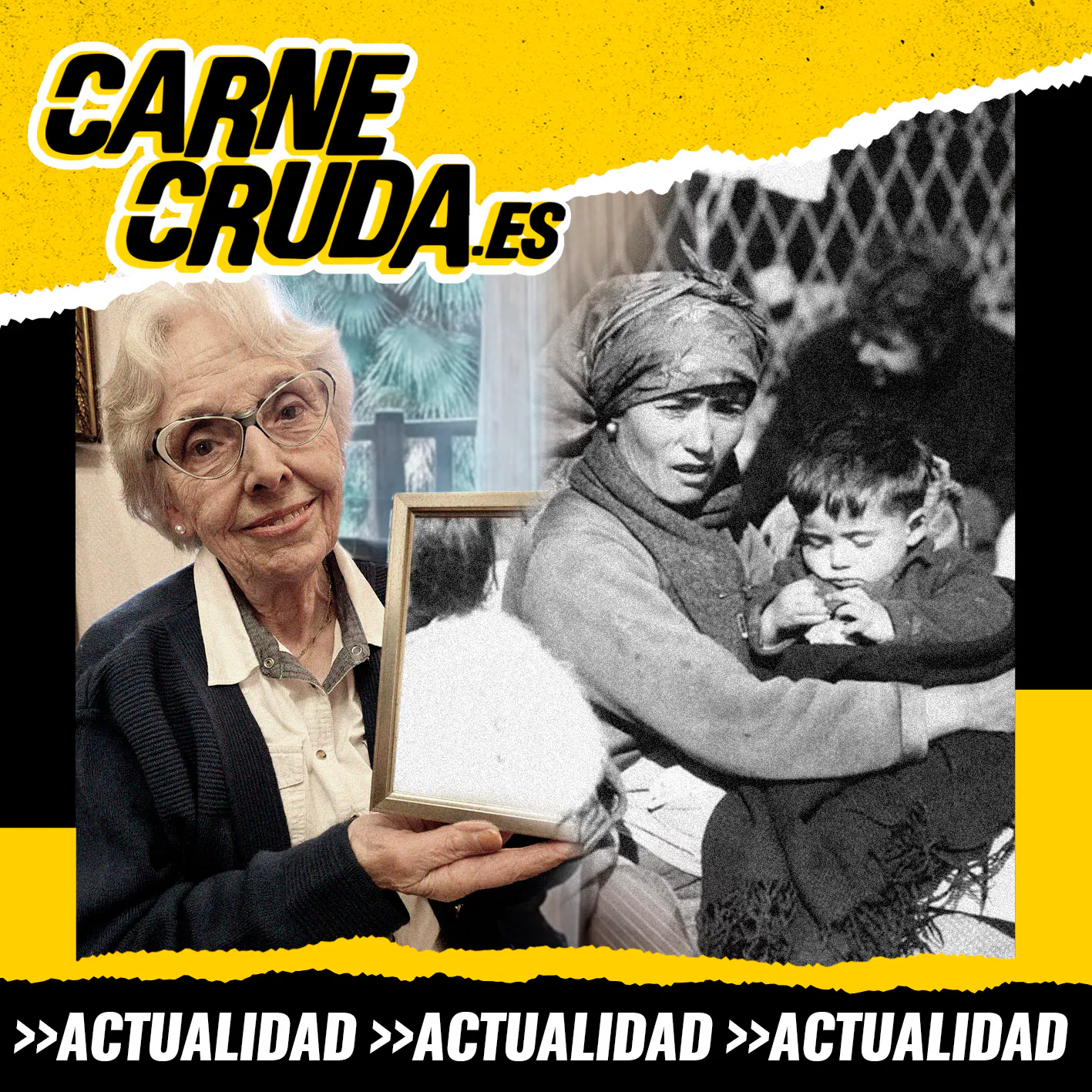
Carne Cruda Podcast — Cuando los refugiados fuimos nosotros (CARNE CRUDA #1600). Machine-transcribed; use the interactive transcript above to jump the player to any line.
I'm RJ Decker, the private investigator, uncovering the sunshine state's darkest secrets. Tonight, it's the premiere of ABC's hottest new crime show. RJ Freakin' Decker has that live-embrie. He's a private eye. It's an upstandard murder. Some bigger. And a public mess. Trying to get some back to prison today? You're gonna prison one time, and suddenly it's all the jokes. RJ Decker, series premiere. Tonight on ABC and stream on Hulu. This is 55 minutes away. 60 kilos. We're at 30 km away. I'm also imagining how this is. It's the history of Spanish accidents. Imagine it. This is what we do in cars. But it's a stone. With an environment like this, like this one of Cruz. And it's loaded with bad particles,
old children, who are sick. We're doing the same thing. 500,000 Spanish. A million spending. Not so much in reality. Because there's someone who has lost them. Or worse, who has lost the chance to catch them. They don't advance. They're inevitable. They're raising the people. Because we know that the steps that follow us advance. Faster than ours. It's not inevitable to give us a chance. Boats against potatoes. The sun rises, against white skin.
We have to go to the next exit to 2 km, to the 5th, towards Bayonacentro. Now to the right, the Paso Nivel. They don't come in trains. In a train I took Mercedes Mercedes of Orioles to Bayonac. Almost 90 years ago. In a train with which they crossed from Figueira to Francia. And then they were studying around for all of Francia. Because no one wanted them. No one wanted them to catch them. And then the train was towards the front, towards the back. I took to Toulouse. And I returned to Bayonac. And in Bayonac, they had created a refuge. And then they put it there. The next one to the left. And that street is the sun. Well, let's go there. I have something in my... my emotion. Everyone knows this woman.
It was clear. I had never known anyone about whose life I have read. Hello Mercedes. How are you? Nice to meet you. How are you? Good evening. Good evening. Are you doing well? I'm not cold. Well, I'm not cold. I'm not cold enough. I'm not cold enough. How are you doing? I'm not cold enough. Good evening. Good evening. They show you this house. It's not a palace. But we are together. We have to climb stairs. I know what they want. These are stairs. This is the bedroom. This is a room. A room of my son. And these are the large ones. How beautiful. And the closet is the bathroom, isn't it? The bathroom? Yes, the bathroom. Yes, with a bathroom that I had. And I cleaned them all, all, all, all. Of course. The bed and everything. And then they have the windows. Of course, of course. But it's a work of art.
Everything is with them. Let's move the mouth to everything. When he lived, we had a theater that is so big like all of this. Yes. And to all my children, I made a theater with the marionettes. And everyone remembers the theater that they had in the kitchen. Yes. Look, here they have versions of... And this is their bedroom. Yes. The one who made his painting, his friend Daniel Sabater. With his works, isn't it? With his works. There are his works. With his music. Because he composed it too. Yes. Well, as a fan, then... Well, let's see where we are going to make the... Well, where do you want it? Do you want it? Mercedes or Mercedes, I don't know how to call it. Well, how do you want it? Of course. Because for me... When you call me from... Yes, it looks better than you. Well, the truth is that...
Of course. I think I know it. Because I have read his life or a very important part of a fundamental chapter. Yes. I don't know the emotion that is for me. It is in front of a character who is a person, of a book I have read, of a book I have mentioned, and a book that has helped me write and direct a podcast, which we have put in fact in circulation, these are the same skills. That's an emotion. Yes. Telling the history of Spanish exile, based on a large part of what his father wrote, Alvaro de Orioles, talking about his family, about that withdrawal of half a million people from Catalonia to France, in which you were, because then you had four children. And half. Four children, if half. With five children in France, in a concentration camp. Don't forget me. Let's try to memorize all that history. You now have 91, right? And 91. Yes, now in June. Well, if the calculators don't pay me, it was just a year before starting the Civil War. In the year 35.
34. 34. 34. Of course. In June of 34. So, all the war, came to France to pass the World War. Yes. And also made a great maturity, poet, a success writer, who was training on theater, arts, who was co-dealing with the intellectual circle of Madrid then, of the Republican Madrid, who had to go to Barcelona in the middle of the war. When Barcelona was there, it was to train in Spain. It was a shame that it was very important at that time, because it was a very political, very representative of the Republic. Very, very, very. And it was to train with the intention of returning to Madrid. What happens is that, when I started the whole battle in Madrid we could not return. And they already took as bombers. Quite a long time ago, because we were already there with the bombers. But it was impossible to return and we stayed in Barcelona. And there they continued to train. And they continued to train. Spanish foot, which had a lot of success. And then they trained in Retauardia.
And all those works ran the public area. While they trained in Barcelona, they also trained in Madrid. And in Madrid they trained others, Fernando Fernández. Anda. Retauardia. Retauardia. That was also an image of a little to understand. Yes. It was a democratic and republican to understand more. To understand more. To understand more. To understand the defense. And the animals. Because the people were losing animals too. But then, they all started in Barcelona too, the bombers of Barcelona, which were 350 bombers in Barcelona. That all the nights we spent, if we did not know, if it was going to be a bomb. And when we went to the street, my grandmother was a woman who was not afraid of anything. She was not afraid of anything. And she said, I was going to pass. She said, we took the train, and we had to run away. Sometimes we went to the dog, sometimes not. And I saw by Barcelona running. What do they run to? Refugees. Refugees,
I remember the refuge, that my grandmother couldn't with the dog, with my brother, with me. And a lady took me to the arms. And she left me and said, where are you going to go to, lady? A wall, a dark cloud, and I was afraid. Yes, and remember, the childhood they had left. I remember the dark. I remember the dark. How is it a bomb? To whom? It's a bomb. It's the noise. It's a ghost. When it begins, especially night, it's the reflectors in the sky. We paid the lights, my father would open the balcony, we would go to the balcony, in the short street, they started all the reflectors of the area defense. And then we knew that the bomb was coming back, and we were going to spend. When they started the bomb, they saw the bombers. They knew, they ordered, that the people who lived below had the doors, so that the people from above would go down, refuge in the first floor. And that's what we did. My father left the doors open, and for two or three days, the people lowered the floor.
But then, the people said, if we fell to the top, that we were in the first floor, everything fell to the top. Well, we were up, and nobody left. And we all stood up. I, when the bombers started, I remember that I ran to the top, and I made a noise, a noise, and all the bombers. And one day, it was not a bomb, it was the cannon, we had the boats, too. That also stopped from the coast and stopped to Barcelona. It was a boat that touched our house, and threw the wall, that was enough to lift my hand, because there was a helmet in his bed, that all the sands, the sands, in short, everything. Luckily, my hand was lifted up at that moment, that if he doesn't kill him. So I started walking before I even had to go. Until I had to go out running, because the planes came back again.
And while the people were involved by the black boats of the refugees, I followed the road to this house. There was something different in the rest of the day. They were the sands, but the anti-air batteries stayed in the world. As if we had no answer. I have already introduced myself to the whole family, because I have already spoken to my mother, but I have spoken to the protagonists of the soldiers of the Pertus, because they are there, their father, of course, was his grandmother, his brother Álvaro, who was six years old, and then his mother, Manuela, Manola. Manola, Manola, Mama. Mama was a woman, because she always didn't leave her father. She didn't tell her father, she couldn't find a better wife, than Mama. She wanted horror, the two of them. She was a secretary, a young girl. And as you know, she was writing a machine, because she put all her shoulders in clean. And she knew her memory,
very good memory. In addition, and when she lost all her work, here in France, she made three or four works of memory. And I remember that she was the one who told her when she finished a piece, a piece of this. She remembered that she was going to see the past clean. Yes, because she knew it was clean. And then she went to the theater too. Some were trained, others weren't. And among the two, she made works. And then the luck to find some I have had is quite recovered. But she didn't know that she recovered. That's the only thing. Precisely because before I was angry with you, because your father was a very political author from a certain moment. After the success that I had with some soldiers and with some traditions, it became a very important author. Very politicized, he got into it a lot. And that forced him to leave Spain. That's why he left us. Of course, because if he had stayed writing to the outside, he didn't have to go to the market, he would have stayed. What happens is that he also had the ideas under a totalitarian regime
that he couldn't live. Because he was a better man. He wasn't a rebel for his life. He was a daughter of the Notary, of Abu Gau, and the sense of justice brought him inside. And of course, to take the sense of justice he couldn't support Tau. That's the regime. That's the rule. As my uncle, my uncle, the husband of his brother, who came with us. Paco, right? Paco. He also. A few days before he died, he asked my brother, maybe he said, because we both asked him. And if he had, because he lost his feet, he lost his feet. We asked him, if he would do it again, come to France. And he said, I don't know, I've never been able to live under a regime. So I'm satisfied to have brought to France. In the works of the Pertus, which is the work that we have used together, from Silvio Amistral, to write the route of exile, National II, begins the preamble of his father, in which, for example, he says that he writes this book for his son to remember, he says at the beginning,
maybe he doesn't register in the history of civil wars, an episode of proportions so dramatic, gigantic, as the one who offered to the world, the evacuation of Catalonia. All a people sold, replaced by trombas of betrayal, half a million of beings in derrota, fleeing from hell through trucks and senders to win the Pyrenees that were his salvation. Who lived those hours of pain and death, who arrested the ghost of his life, founded in the Dantesca Carabana, will never be able to get rid of his brain, the spontaneous vision of those tragic days. This happens to you, you can't get out of your head of those tragic days. No. Never forget. When I see these wars that there is today, I tell the children, these children are marked in life. It's like when they mark the cows with the iron. Well, that's the same. That remains for all life. And you can't
get out of your head. For example, and I remember once my father was talking about the evacuation, and they were both in a fourth grade, and I was talking to them, and said, Mom, remember the assistance models what we eat were given to us rice, mixed with lentils, and I jump. And how did you get rid of them? And I was 14 years old. And he told me, but how can you get rid of them? Ten years later. Yes. How can you get rid of them? Well, I remember very well. What are the colors, the children remember? How do the lentils get rid of them? They added the rice. And then they knew nothing because they didn't and then they added the olive oil because they had a little taste. But at the same time, because they liked it, they liked it. And me, the olive oil I liked, but it was
olive oil. Yes. And what is it? And look, these details of a child, but I have details of the evacuation I have. When, for example, we go to the bus, because my father puts us in the bus, because it is in the Junquera, because that night was a horrible night in the Junquera. A truck, not a truck. It was a truck. And when I went up to the truck, I remember that below the truck there were people surrounded in mountains. That's my father I don't know how to tell him, because he was more afraid to see what he did with my brother or with my little child, with me. The children look at things sometimes they don't see it. And there was below the truck because as it was raining, there was a snow in the rain, and there was mud on the ground and the people, despite that, were surrounded in mountains below the truck. I remember when I went out to Barcelona, because the exit was not easy. In fact, I had a
whole day waiting to get to the trucks. I asked my dog of my cat. We went out of my dolls, all my dolls, there in boxes, there in the room. Because his father told him that they were going to send it, they were going to recover it. Yes, because we said, you don't know that all of this we are going to recover and sell an agency. We will look for it all and then we will live all of France. All the dolls were in the room. I remember my mother put her toys in a box the marionettes between the clothes and said to the neighbors. When we march you and the dolls put them in the house. They are the marionettes and they are saved. The toys were made as there was hunger and they had to sell it. They sold clothes, they sold the toys, they sold everything. They kept the marionettes the books they burned them. The books of their father. Yes, those who had Barcelona were afraid because as they took the name of them, the ones who stayed in the house because they put them in the house. Well, that's right.
Of course, they put them in a suitcase. The works they had written in some evidence, like the one that was his work, like the one that took me at least everything I had been producing in 20 years. But they also left in the house and some. And that suitcase was lost. The suitcase that stayed there in the Ministry of Public Instruction because you had a whole day and a night waiting for them to take a truck. We left the house running after eating. We left. And we ran with the suitcase. I still see my aunt with my little my hand because they were indeed their family I want to say the four members the grandmother and the brother of their father and their husband. We were all running and we arrived to the good news. There they told us that there was a truck. It didn't appear. And not only it appeared in the afternoon that it didn't appear next day. Because that was the 23th when we left the 24th. We passed it and we left the 25th. Good morning. When I arrived the truck came. And the 26th
took the truck to Barcelona. One day they fished us in Barcelona. Because... Oh, they were in the rocks because they were approaching and what was going on. No, I was very small. The fear was that they were approaching or not. It's that the children when they go with the parents were very sure. That, I remember very well. That, while I was with my parents, I wasn't afraid. And I was always surprised because with my parents they were people of theater. And they spent their lives in the theater. The one who was at home with the girl was the grandmother. And the grandmother was everything. And when it happened the night we slept there in the ministry. And I slept with my grandmother. In short, there were bags but my grandmother had always had arms. That, I remember when I always had arms with my grandmother. And then my dad took me a lot of my dad too. Well, first they took that truck that comes
the next morning. And they put them... Well, they didn't sit down. They have to put all... One, 60. They put all... And the suitcase was left out because they didn't go in. Because they didn't go in. There they did what they could because, of course, they had to save people. And the suitcase everyone had to leave the suitcase to people who fought and if it was and if it was angry, but there was no way my dad had to resign. They said that another truck would take the suitcase. But that truck never brought the suitcase. Well, we had done all the work for the rich and then in Gerona in Gerona there was the truck and we slept in the theatre of Gerona too. In Tacas. In Tacas. And it gave a conference and when I finished I saw a lady and said well, what you have said about the suitcase there I have a test that you can assure you. Gerona's case said
that the suitcase was sent to you. So, of course, it was a cardboard not like it was a button to watch the truck all night in the conference she said and she came to the end and said she said well, here is my lady who can testimony because her mother dressed the artists. And that truck she was present precisely. She had a function and then she took the order and she sent the truck all night. And her mother always had told her. And I remember that in the morning the next day she had to finish the cardboard because she woke her up. Yes, she woke us up but they were sent. That's true. They were sent. They were asleep and not in those 15 days that lasted more or less taken away, it was normal. I think I remember that she slept until she fell asleep. We slept in the basement. We slept in the basement.
We slept in the basement. We slept in the basement. We slept in the basement. At that time all the people had been sick, of course. People were travelling with all of them, and the people slept on the streets, the windows, where she could be pulled down into the basement. On the top of the other we slept on a staircase. They all took it away. When they finished they were going to invite us to let them take it off all night. Because we slept I don't care about the heat, I'm happy. I suppose it was a very expensive trip. It was very bad for me. It was very bad for me. And that night we slept with a roof. But that night we slept in the air. And we were at least 10-15 degrees. And what did you do to die of cold? I was waiting, waiting. I remember my father had an English letter from Anna.
Inside he had a very hot skin. And he also took me to a very hot and very nice beach. But I didn't take a girl's wig. I don't remember. It wasn't hot. The girls didn't wear pants. They didn't wear like now. The girls went to the beach in the air. And I remember that the girl who took me was like... As if everything was cold here. I closed the... Just on top of the wheels. Yes. Because we were dressed like girls. And of course my mother took me to a little girl and everything. But everything was lost for the trip. And then, of course, when we were not there. We were at night lost. Without nothing. We had to stop. And yesterday we had to sleep. We slept together. And at that moment you were so small. I was waiting. I wanted to sleep. I slept. I slept. And I remember what I suffered was the chances. I was hungry.
I was hungry. We lived there. There were... Pots of socorro at night. I remember. And they put like a glass. They put a light. And I remember that with a... A lot of them. And some four of them from the wind. They were like that. We went to the beach. And they gave us a little hot. And a little light. And they didn't even wash it. Because they didn't have any water or anything. But they didn't put it. And there we lived. And I remember that they gave us a little bit of... of... of... of... of... of... of... of... of... of... of... of... of... of... of... of... of... of... of... of... of... of... of... of... of... of... of... of... of...
of... of... of... of... of... of... of... of... of... of... of... of... of... of... of... of... of... of... human beings. At the time of a record, we found two victims of an accident. One in a broken car on the top, showing his trips. And the other one, a horse that had hit the horse, and that some of them tripped with despair. Covered by the mountains, terraces, over the poor animal, they seemed very three hours never to see. That caravan, his father wrote it as a snake, as a dragon, as it was that caravan of cars, cars, trucks, people to foot. For a caravan, there was a lot of people around, but there was no price for the people, I remember.
It was tired, very tired. And I remember. And I was very tired. And when I found a little yesterday, I said, I was going to the foot, I was tired, and I left the car in the air, then I took my aunt or my father or my mother, my mother, my grandmother, not the poor, because she is older, but my grandmother gave me the hand and we went to many of the two. I remember. I remember. And many people. And many people. Wow. Many people. Even in figures. My father was with my mother, the minister, to fix the papers, because the men had to have papers to go to the front and he told me, well, he stayed with us to make us clear. He had to be someone. But I don't know where he came from, he came to France with women and children, and he said, well, although he is not in Alvaro or Manola, I took my wife to the grandmother and to the children and put them in a train. And that's what he did. And I remember. The people that there was, that I didn't see anyone, like the little one, because the rails of the train, and I remember that my grandmother put the foot in the desk of that, and
she took me up. That I remember. And then we went into a wagon and everything was wood, all of the styles. Yes, the banquets, these are made of wood. Yes. Yes, made of wood. And my grandmother sent me and she took me a hug. That I remember very well. And then she sent me to Laud and my brother. And then we went to the tunnel, because the tunnel was close to the station, and they started the bombs that killed the people, and we gave time to put ourselves in the tunnel. In the tunnel we were, this was in the morning, we were all the day in the tunnel, all at night, and until the next day, 5 months without drinking a horrible cold, and we were in the tunnel. We were in the tunnel, and in the dark, completely, completely. I just read, that I knew to read, and I was small, but I knew to read, I came out of that run, and I said to my grandmother, and why don't we go out, I said to my grandmother,
because I felt like we were in the tunnel, but we couldn't go out. And do you remember if you felt sorry for having separated your parents, that they didn't go with you? No. I was afraid if I wasn't there, my family would have had it like that, and I told you later, I was afraid of what happened, because the child felt afraid, that I didn't feel in a moment. But there wasn't, because there I was with my grandmother and my brother, and then I arrived the next day, in the morning, and the train, because they were hitting us. If we would go out of the tunnel, they were hitting us. And then, if they were the planes, and we went to see, and in seeing it was the Red Cross. And there, the Red Cross began to enter the wagons, we went to the French wagons, and came to the Red Cross to the French wagons, and they began to look for the people, because they were there, they died, a lot of people were sick, without sleeping, because the people could not sleep in those conditions either, without drinking, and my grandmother was sick.
And then, in a little bit of all the time, we were going to the opening, in a little bit, without that tunnel, so close, with so many people, I could not breathe. My aunt, who spoke French, that I remember, who my aunt spoke in French, I did not understand anything, but I saw my aunt, who spoke with the Red Cross, and she asked us to leave us with her, but they did not leave us, and then they went with her, they put her in a truck, and they put her on the train, and I, the nurse, in the crystal, I remember that I saw her go, and she was already very sick, and she died ten days later in the hospital alone, without knowing that she was from us, she must have been very sick, we were more of her, we were supposed to have died like that. My father, before going to march, he put us all in the bag, a paper with the signs of
a cousin of my mother, who lived in Bayona, and said, if we lose our way, both the elders, like the children, one of the cousins of the cousin, and so we will find all in the cousin's house, and it seems to me that when he died, the clothes were removed and they found those signs, then they called him, and he went, but he already found him dead, he was in the ground, and as it was the first, I think it was one of the first who died in a refugee, he had a land with personalities that they attended, and finally they had a grave, that until they were buried there, then we were brought here with us, that was the consul of my mother, because my mother, when I was souped, without being isolated, it was horrible, and we continue the way, because when the train entered, it happened to all the cities, three days, the train, the red one
gave us some bocadillo, and I remember that my brother took the hand, because the French people, the French people, the authorities, they took it very badly, they came to abandon us and they came to the people, they came to bring us bread, and my brother Argo el Brasil sacó, I remember that he took one of the tassardinas, and there in the train he put it there with the bread, cleaning the tassardinas, but we ate it with pleasure, because we had not eaten it, we are dead of hunger, and they took it very good, and I always like the tassardinas, I don't like fish, and tassardinas I have respect, yes, yes, yes, but it is a little bit of hunger, what a day, and then finally in Mayona, so they were accepting them in a camp, in Mayona, they were accepting us, so of course, my aunt followed her, she said, well, with the children of the uncle José, taking a letter to us, they put us in a camp, the camp here of the village of Mayona, which is a camp for a camp of concentration, we were about 800, so, but they died 20 children and two women, in the first eight days we were, my
brother took the papers, they had to take the hospital, and we here in the camp of concentration, my aunt with me, the two suns, until I arrived the letter and I arrived the first, I arrived the first to look for me, because knowing that my brother was not in hospital, he took me, and there I passed the fear, this is the moment when I was afraid that I had when I was a child, because the children have fear, it is true, it was the separation with my aunt, because a man came, tall, and fat, as they were, a good basketball, and he came, also, he was a man who had a business of fruits and legumes, and he had a big truck, he had a car, but he came to look for me with the truck, he was looking for him, he was looking for him, the husband, my aunt was able to accompany me to the exit, and the truck was outside, he took me by hand and took me, and where did you take me? and he put me in that cabin of a truck and half, to Laudel, I saw him with his hands, he took the flight and took me, there was a lot of fear,
there was the fear that I had, I did not know, for much that my aunt told me, do not be pure, you are going to be very good, you are going to be very good, of course, you are going to be also good that I had, but of course, the separation, and when he took me to his house, and going up the stairs, he went, the dog of legumes, he seemed to me, as yesterday, in the which the concentration camp gave us, they gave us a lot of steps, very bad, we ate very bad, there was no pain, and suddenly Uli, already in the stairs, there was a good smell of legumes, it was a family house, and that comforts me, and then the door opened, a lady tall, soft eyes, blue eyes, a very sweet face, and that followed me, she took me arms, and well, you lied to me, that it was my marcelina time, that I loved her a lot, and that then I found myself in a family house, but when I came, my eye was looking for me, there I was very, very old, much, we had decided to stay in our houses until night, and then
lose ourselves between the population to look for life as we could, but then we started to go to a tea or another side of the mountain, and a little bit far away, so we ran like furtives by the lake of the mountain, following the castle of the alboroto, and hidden under a tree, we discovered the reason for all that agitation, the border had opened, and an incredible river of men, women, and children, wrapped in mantas and cargoes of vaults, crossed, compact as a glacier, followed by the sun-dry, brigadistas and caravineros, that before delivering the weapons, their cargoes, disparaging the air, what they seem to save from the rain, and I remember that hidden between the trees, as a ghost that sees its own land, he said to Manel, that's how a town goes, so God says the Spain that it was, and it could not be.
Well, and his parents, and his uncle, well, they had a real epopeia to get out of Spain, and then after a very adventure, they also got to avoid the camps of concentration, the San Cipriens, their parents had to go through a diplomatic, they stole a car with a good teacher and a mechanic, who had to go through Porchofer and for Secretario, and with his mother, well, incredible, they escaped from the camps of the concentration, the peace, no, that peace that served a little of the Albo Conduct, I have it there, I am going to sign it, things that are kept, because I can not put in the book a thing that is not true, and when I sent it, because my father did not see it, he published it or never, the first one, the one that I have, yes, published in 1995, of course, I had died, my father, he sent it to public and in Paris, and he did not know, but I had all the documents, and I said, if this is
published, I have to publish the documents, so that people understand it, they, when they enter in France, well, they separate men and women, the women take them to the refugee camp in trucks, the ones who get separated from their husbands or their parents, then they send to the refugee camps that were in concentration camps, in the French coast, one of those camps where they were telling the soldiers to come, they said that they were still walking towards the camp, when they saw what they had there, they came to our camp, they saw the situation that there were no raccoons, which was a beautiful cold, horrible, my parents said that they had to see it because all this is written, there were thousands of people died, thousands of people died, it was horrible to see the cold, it was a red cold, it was a red, and they did not want it to be there, and then they invented their father. My father was with me, I said, what do we do? They were the two we do, and suddenly, today two young people who were trampling a little the
noise, it is that once one was put in the camp's entrance, the police who did not leave to go back, they could not pick up the car, and today they were those two young people, and of course my father said, well, this is ours, and he said, what do you want, and they explain, we want to escape and we also, well, we are going to do this, I have a passport that says this, it is a teacher, a school teacher, and the other one gave it to me, I am going to pass by the minister, you have done it, you are secretary, and I, as a woman, here we have the passport, very well, my mother said, hey, I had a fear, and she said, if this goes wrong, where are we going? I put in the camp of women, and she put it in the field of men, we are separated, and this is going to leave us worse still, and in the end my father said, we have to do it, we have to play a card and we are going to play, we do not stay, otherwise we are going to put in the camp and then we die, well, we are going to do this, and the young people, the young people, of course, more dynamic, well,
of course my parents were not as much, my father had 45, and my mother had 42, and the others were 20 years old, the boy who understood cars, I was stealing gasoline, in all the cars, because there is a lot of cars stealing a car, that everyone knows, there were hundreds of cars stealing a car there, the border, and all the gasoline, for the night, we wait for the night, we escape, and so they left, and of course with the diplomatic passport, I had no problems, I pass, it seems that there is something that I can not pass, but I pass, now I always told my father, that night passed, but the next day I did not pass, because they had already put a lot of police, then it is clear to start a follow-up, all those refugees who went from the concentration camps, and then they were going to catch up, there they also had a escape, they were going to send it, so that they would not pick them up and they would send them to the camps, and finally they get to receive a card from the uncle José and march to the bay, because the cousin was sending 300 francs and with
300 francs they could catch the three, but they had the luck that it was at night and at night they did not have control, then they arrive at the house in the morning, yes, you remember that moment in which you were sleeping and they wake up the parents, yes, I remember very well, because I myself was super, that I had died, it is there that I would lie to me, they told me, and when they entered in the room, I was sleeping and they woke me up, and I saw my dad and my mother, that's one forgotten, and I saw her for a few days, I left my parents for three days, and it seems to me that the day was 18, 15 days, without seeing my parents, I did not know that it was my aunt and my grandmother, nothing, my aunt left her out of the camp, and my aunt, this Marcelina, she took me to the hospital to see my brother, it was with the only one who had contact, but my brother and I did not tell them
that they knew that I had died, they did not tell us, and that morning they did not open the door, and I was entering my father and my mother in the room, and I woke up and I woke up in the bed, and that I remember perfectly, and my father asks me, he speaks French, and he asks me to tell Marcelina that the French ask him in French, and of the others, he is a boy, well, the boy can already see him this afternoon that he is in the hospital, because we are going every day to see my brother, and my mother says, and that it is from my mother, and of course, there he says that he has died, and I remember that my mother was lying, and suddenly she fell, but she fell, and I thought that she had died, I thought that she had died on my mother's side, and that is not forgotten, and then she told me that I did not know where she was, and she also wrote, and we heard that she was in a concentration camp of Argelés, and Argelés took her to a branch, and in a branch they settled the
feet, because after this long walk, that we did for 14 days or so, at least for the paths, I had the feet in chaus, and with the cold they sang, and no one did here are those camps, the luck that I met with a friend, and he says, well, look, no, it is that I do not feel it anymore, then he went to the spot of the director, he took him for the car, he pushed him against the wall, and he told him, now he called you, an ambulance, this man has to take him to the hospital, and that's how he saved his life, but they did not take him, but they did not take him, they took him to the hospital of Castelo Adari, and there they cut him to the feet, a foot through the middle, that then I had to bring him here, because it is all the foot, all the leg, and the other under the wheel, half a foot, a little under the wheel, I was eight years without going out of home, then here in Bayona,
because I had no parrots, I went with two girls, I went with two girls, I went with two girls, until I came, a man who was interested in him, he was a man who had mediums, and he said, I will pay him the parrots, and I will pay him a few parrots, the first parrots that I had, I can go out and go out for eight years. We sleep at the terrace, if you see, the sand turns into a bar, and you have to sleep in cookies or feet, and if we do not make a hole to put us inside and cover ourselves with sand, not little they get dead, as if they were buried knowing that they were going to die. Some nights we are going to a shoot, it is someone who did not wait for more,
but I do not think about it, they do not go, they can not see the franquists, they will not be able to get that garbage. They could not with him neither the franquists nor the franceses, but if the bacteria, the wounds of the metropolis provoked a gang that did not take time and took him to death, they gave me the news, the same day they announced our defeat in Spain. How much I feel, I feel it, I feel it a lot. What is more serious is that you could have saved of having lived mediums to treat him, but there were only some Spanish doctors and humanitarian organizations that did what they could with the little they had, because they did not take him to the hospital, they only transferred to the most extreme cases, and knowing how to handle it, wanting to be hard and hard, as I am sure that I did not burn until it was too late.
What is more brutal, but at the same time more concrete than what is an exile, it is that they put you in life, in the case of his grandmother, also for the whole, he lost it, but in the case of you, it was to lose as a brother, as to lose a leg, for me, for my family, to see, to suffer all my family, to grow, to suffer the others, my mother, for her mother, my little grandmother died, she was working for the poor, she had to do the cost, because my uncle could not work, he did not have feet, he would not be at home, and she found an architect, who told him, well, what he could do at home is something manual, and he did works for the doctors, architects, a man who was a topographer, who traveled throughout Europe, who moved a lot, who was a very energetic man, who had four languages, a mathematical one.
Because there was a lot of children who lost, when we were walking, there were children who had lost, or the parents, they had died, because as they were guarding us, there were people who died in our surroundings, my parents, when someone died, they did not stop, so we did not see it, I saw people in the ground, but I did not realize, very small, the only thing I saw in Figuera Soncerona, I do not remember well, I saw a man, who I saw Milau, who took the arm, in a bombardeo, we ran all, because he fell in front of us, and I have the image of the house bombardeada, in calls that fell in front of us and ran like rats, and that man took the arm, and despite that, he would be running, there are images, images that are left of this evacuation, those images are left many. The exile that means for you, for you Marcelo. For you, for me, the exile has changed my life,
that's right, because I had had another life, that's the first, if I had stayed in Spain, because I had lived all my life between Madrid and Barcelona, and we had moved between friends, between people, family, in the end, I had been another life, I had a very good life here, it is different, but I had two lives, one imaginary, and another real, that was my exile, I lived in Spain, with a father who had stayed in the theater, then I would have done the best, I would like to be a doctor, and I dreamed of being a doctor, all my life, I had many doctors in the family, I do not know. But finally I did not tell this. No, how? Who was going to pay the studies? Because you studied a pre-tour to get in front of France. Many, of course, we did not have money, we did not have anything, my father, I found work with sculpture, sculpture to make the furniture, like this, moldures, and they were the Germans here, because when we left the concentration camp,
we had a few days at home from his sister, who had taken a piece here in Mayon, a little girl, for them two pieces, a little girl, but of course, we mounted everything, as we could, there were a few days, until my father got into the professor to some English colonies, and then he said, we are going to return to Mayona, that is my sister, but we are very upset, of course, and then he said, well, I have to look for my work, and I was looking for work, but sculpture could not be done there, either. So I made small paintings, small pieces of children, and sold them, the lady from the store below, because the client found it, painted, and there were the Germans here, and it could not be by the street, either, it had to be done at home, because it was four years ago, without leaving, I always had to ask for the documentation, and the console was there, and the front was very close, and the French consulate, then, we found a piece, in a very close neighborhood,
and there I put a bench, and I brought it in the sculpture, but it was a Jews that sent it to Germany, and it was left without work, and it was left without work, and it took me to Costura, a factory that also brought it to Costura, and it had a grocery machine, that they gave it to the colonies, precisely where we were, when they decided to make the colonies, they said that if they could take the machine, because they were going to the children and that, and that helped a little bit too, they won between us two, but when they took the Jewish Germany, it was left without work, then I found another man who told him that the streets of the Basque pargates, and it was made by hundreds, every day hundreds of pargates. During the World War, it was hidden. It was hidden, and the book was hidden. The book, the opening of the door, I had written it, I had written it in the concentration camp, so when we arrived at the little pool, what I did was to pull the bed, I pulled the socket, I pulled a little bit of iron,
I cut the screws, and I did four pieces like that. Why did four pieces? Because I put them behind the socket, they were hidden for five years, I did four pieces, and then I put the pieces again, and I put the bed, the head of his bed, well, nothing was seen. No one thought that the pieces had something to do with it, because the Germans came very often to the houses. Once they came, they had a English pilot and they had a neighbor. The neighbor received it in his house, but then, as this neighbor, he made a little bit of a black mark, he didn't want to have a neighbor if they came to register something, because they didn't find a pilot in his house. And of course, he followed my father, and my father said, well, I hide it, but it was dressed in a pilot, I have to change this clothes, and my father took it, because my mother said, a shirt, and a pants,
and we'll give it to him, and they saw it, and the next day they came to look for it, and they took it. And the neighbor, as he had things to do with a black mark in his house, he didn't want to remember the clothes of the pilot. So, the neighbors, you can keep it. So my father said, well, they took all the clothes, they were a Canadian, with a belt, pants, pants, everything. It was a jacket like this, and I remember that I had it in my room. And one day, in the morning, two Germans came to the house, also, a record. And my father saw it in a periodic way, and my father said, oh, no, I can't register, if I want, and my mother, in my room, with my mother, like, oh, the package, the package, my mother, I understood the German, oh, the package, the package, and my father, can't you come in? And of course, they register everything they want. Of course, they trust us, they tell us. Well, no, well, they don't have anything to hide, of course.
Poemas del Exilio. Overa del Pertur. Obisión única que las cumbres con tembana sombrava. Todo se un dio. La lucha aquí termina. La lucha se hiergen sangrentada sobre el Pertus para camar al mundo con el grito quimbo de sus bogatas. Pero el mundo no mía. Está domido. Por lo hace ver. Porque salud les panta. Y así la bella libertad expira el alto de las cumbres y en haycas cuando al salir el sol de un nuevo día se extingue el nominar de las bogatas. Y el paso del Pertus abre sus cuentas y entrando van por tierras de la marcia camino del dolor y del desplierro las derrotadas huestes de los panias. O que era que el Pertus hay que algún día de sus penizas surgirán las brazas que han de agumbrar
en un supremo incendio la negra noche que hoy padece España. Usted se ha vuelto a España pero su pare no pudo. No. Y eso le dolió morirse en el exilio. Pues sí, él hubiera gustado volver. Bueno, lo que le dolió fue el exilio, que pasa es que 40 años después, un que hubiera vivido, 40 años después no hubiera encontrado la España. ¿Qué dejó? Ni la vida que dejó. Ni la vida, ni los amigos, los amigos, algunos, claro como él. Pero ya su vida de teatro ya no. Al menos que vinieron a república, subía venido una república, sí. El hubiera otra vez retomado su vida, pero volver como volvió lo que se tardó luego, después de morir franco. Las cosas no llegaron a cidra, noche a la mañana tampoco. Y luego ha llegado un rey. Con el rey, el hubiera ido y vuelto. Pero ya decidió quedarse aquí, porque aquí claro yo me casé,
mi hermano luego más tarde se caso. Yo tuve el siete hijos aquí, mi hermano tuvo tres, pero no los conoció. Mi mamá sí los conoció, pero mi papá no. El exilio es terrible. Eso decía Margarita Silvo. A los griegos no se los metían la cárcel. El decía Margarita Silvo. Se los insiriava. Y al peor castigo. Y decía mi papá que razon tenía Margarita Silvo. Él escribía, pero escribía para... para los periódicos. Y para sí mismo. Y para sí mismo. Para sí mismo, claro, escribía obras de teatro, a escrito obras. La siguió escribiendo aunque no se estrenaban. No se estrenaban, claro, están todas en un cajón. No se han estrenado ninguna. Esta romance de Madrid, que la tengo por aquí, una noche aquí en Vallona. Y estaba el teatro lleno y no está los topes. Pero había mucha refugia y mucho francés. Y lo triste es que yo no he visto una obra de teatro en mi padre. Más que una noche.
Pero para mi padre se acabó. Y para ti que ha sido el exilio. Pues para mí ha sido una vida luego normal y corriente. Una mujer que se ha casado, que ha tenido hijos. Y que he tenido mucho trabajo con mis hijos, pero mucho amor. Y que una cosa que... a mí me ha consolado mucho, ha sido tener mis padres conmigo toda la vida porque hemos vividos siempre juntos. Y por lo menos, si no han vuelto al teatro y no han vuelto a España, han tenido siete nietos que les han habido a vida. Eso sí. Y eso, pues para mí, se dan un consuelo. Esos 40 años han tenido la juventud de sus propios hijos y los otros 20 años los nietos. Porque yo creo que sí. Si no hubiera tenido hijos, se hubieran muerto. Sí. No hubieran resistido. No hijos hubieran muerto uno detrás de otro.
Ha sido muy, muy duro. Yo he sido feliz, pero he es obfido por ellos. Toda la vida. Y oro. ¿Pese a dar nada? No, por favor. Pero... el silio es muy duro. La gente que pasa el silio pierde todo. Porque mismo los que vivían de un oficio, decían, vivimos mejor pero nos falta a España. Y muchos iban al consulado y se hacían los pasaportes. Porque querían volver a ver a España. Y otros se le daban. Y se han muerto aquí. Mucha gente ha muerto en el silio. Que no ha querido volver con el franquismo. Y otros que sean jóvenes que han tenido la suerte, de decir, bueno, muerto franco, ahora con otro régimen vuelvo. Y han vuelto.
Esos han tenido más suerte. Pero si hay que esperar 40 años, muchos ya no vuelven. No hemos contado una parte muy bonita de este encuentro. Y es que, cuando nosotros publicamos la ruta del silio, hubo un oyente que escuchó los capítulos del podcast y vio que hablábamos de Álvaro de Rios, de su libro, y dijo, yo conozco, a Mercedes de Rios que está viva, que tiene 91 años, y nos puso en contacto contigo. Antonio. Antonio Espejo. Que Antonio Espejo ha hecho una tesis sobre mi padre que te la voy a enseñar porque es magnífica. Antonio se puso en contacto con, y me llamó la seguida. Y me dijo, verás Mercedes. He visto esto, esto, y me dijo, ponte en internet y busqueren, seguida. Y me dijo que había tenido noticias vuestras que si podéis venir a Bayona, yo, por mi papa, siempre he querido sacarle de lo olvido. He va a hacer 50 años que ha muerto en mi papá.
Mi mamá vivió 12 más, y mientras que vivía mi mamá, yo no quería remover mucho porque mi mamá sufría. Mas la tuve ya el último año en la cama, tenía 93 años y va a cumplir, y ya estaba gastada, la gastada había sufrido. Mas repercutió en mi madre, que repercutió en nosotros mismos, porque éramos niños. Con la edad, comprendo el sufimiento, porque devieron ellos pasar. Evian decidió, bueno, para nosotros ya vamos haciendo lo mayor y ya nuestro país ya no lo volveríamos a ver nunca. Y eso también debe ser terrible. Y mi padre no volverá a ver teatro, que le habían ha sido para eso. Mercedes, ha sido un placer gigantesco conocerte, para mí conocer a una persona que ha vivido lo que se cuenta de las oberas del Pertúl, de Albero de Oryos, que para mí ha sido también una guía a la hora de escribir la ruta del exilio, pues es muy emocionante haber estado en tu casa,
conocerte y recuperar la memoria, olvidada de tanta gente. Así que muchas gracias. Lleva quedando poco a gente, para contarlo, ¿verdad? Para mí ha sido un gran placer y os agradezco mucho, mucho, mucho, mucho, mucho. Yo cuando me lo dijo Antonio, me puse contenta, y yo cuando me dijo que era tú, que te conocía además de la pantalla, dije que gusto lo voy a conocer, que alegría, me lleve mucha alegría también por mi parte. Pues me alegro mucho. Así que me alegro mucho de haberte conocido también, y os agradezco todo todo lo que hay que hacer por mi padre, pues os lo agradeceré siempre, porque yo llevo, pues te digo, cumplir 50 años, este año que ha muerto, y desde que murió mi mamá me puse que ya son 36 años, que estoy luchando, sin parar. Ahora me ayuda mucho, mi hijo, también, de dir que ha traducido las hogueras del Pertus, la lengua francesa. Por lo menos este libro que sirva de ejemplo a los jóvenes, que no tengo otras familias que pasar por esto.
Por favor, que no. Que no, que no. Muchas gracias. Javier. Y ésta eterda 2 años en recuperarla. Krintesita da mi un beso, obrate a traer infantis. Y en un panillo nací, me las quedé bien. 1934, recuperada en 2017. Me la hizo un novie en ver, está la fecha y todo. Qué bonito. No radedicó mi hermano y a mí. Sechara con un buenizo que es conservar todo lo que soy yo. Sí, todo, todo. Intentar que todo se publice, conseguir que se publice una obra como las hogueras del Pertus, que es fundamental para conocer la historia de España. De hecho, creo que va a ser una obra que se termine reivindicando. Estas son las hogueras del Pertus. A ver. Esto consiguió dos cuadernos y en el campo de concentración escribió.
More episodes
More from Carne Cruda Podcast

Derroteros: Incendios, bomberos y robles, con Santiago Alba Rico (CARNE CRUDA EX...
Carne Cruda Podcast

“Alerta flequillos”: Adela por Dios, La Prados y Lu Antimorbo en Carne Cruda (CA...
Carne Cruda Podcast

A la fresca con Pepe Viyuela y Fillas de Cassandra (CARNE CRUDA #1694)
Carne Cruda Podcast

Carne Cruda desde Ceuta: donde todo estalla (CARNE CRUDA #1693)
Carne Cruda Podcast