educationNov 14, 202512:25pending
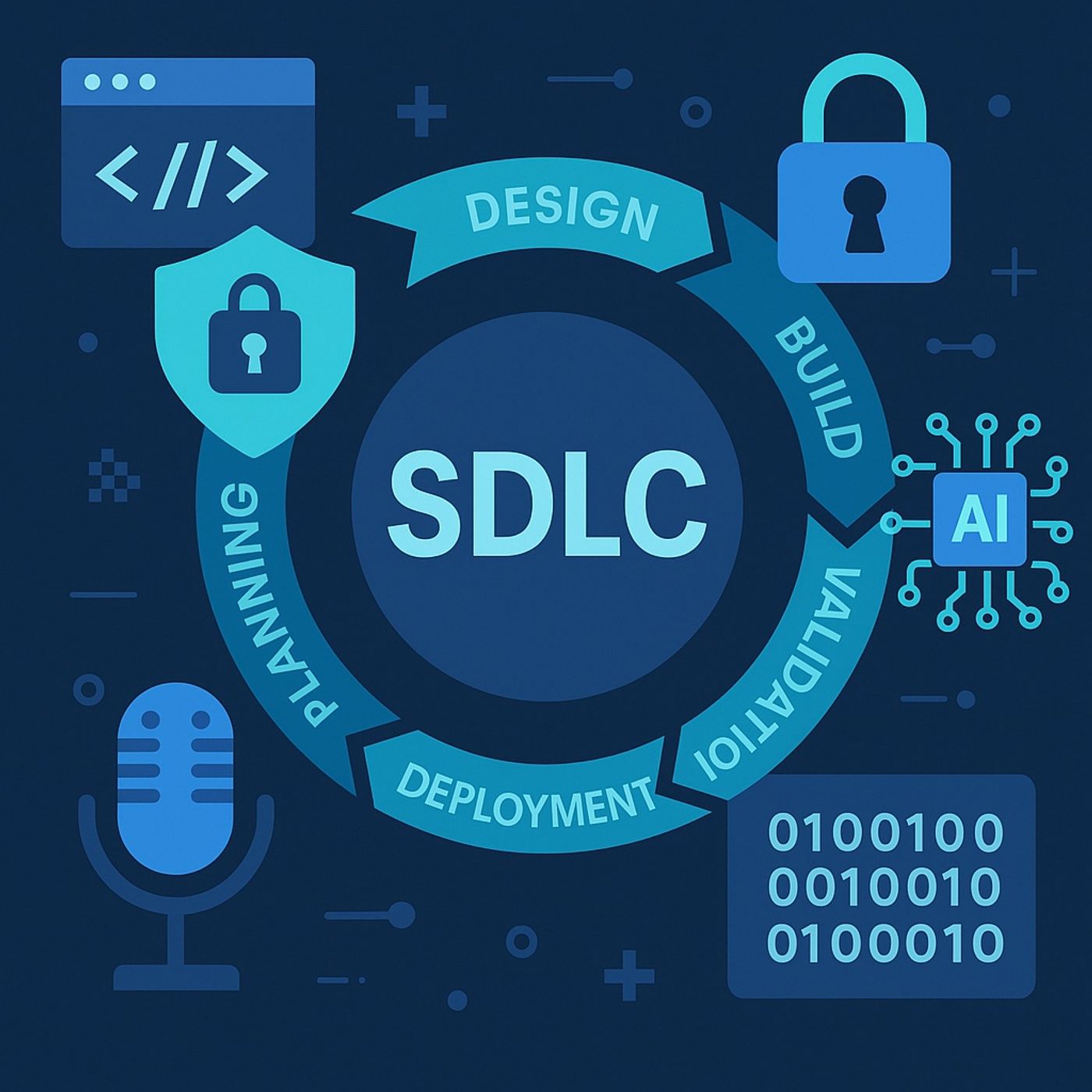
Course 7 - Secure SDLC (Software Development Life Cycle) | Episode 1: Approaches, Eight Phases, and Risk Management
About this episode
In this lesson, you’ll learn about: Secure Software Development Life Cycle (Secure SDLC) — Full Overview
You can listen and download our episodes for free on more than 10 different platforms:
https://linktr.ee/cybercode_academy
- Definition of Secure SDLC
- A framework that integrates security into every phase of system development:
Planning → Design → Build → Validation → Deployment → Maintenance
- A framework that integrates security into every phase of system development:
- Why Secure SDLC Matters
- Rising security concerns: DDoS, account takeover, OWASP Top 10
- Managing business risks such as breach penalties
- Achieving GRC (Governance, Risk Management, Compliance) with PCI DSS, HIPAA, GDPR/CCPA
- Enabling the Shift Left strategy to catch gaps early and reduce cost, time, and effort later
- Proactive Approach (for new systems)
- Preventing and protecting against known threats in advance
- Securing code and configurations early in the development process
- Reactive Approach (for existing systems)
- Detecting and stopping threats before exploitation or breach
- Acting as a corrective control
- Awareness Training
- Regular security training, phishing exercises, and compliance awareness
- Note: 93% of successful breaches begin with phishing
- Secure Requirements
- Planning phase to define and continuously update security requirements based on functionality and GRC expectations
- Secure Design
- Architectural phase to establish secure requirements
- Selecting appropriate secure design principles and patterns
- Secure Build
- Implementation phase focused on building secure systems
- Using standardized, repeatable components
- Applying Static Application Security Testing (SAST)
- Secure Deployment
- Ensuring security and integrity during the deployment process
- Emphasizing automation and protecting sensitive data (passwords, tokens)
- Secure Validation
- Validating artifacts through security testing such as:
Dynamic Application Security Testing (DAST), fuzzing, penetration testing
- Validating artifacts through security testing such as:
- Secure Response
- Operations and maintenance
- Executing the incident response plan
- Active monitoring and responding to threats to maintain Confidentiality, Integrity, and Availability (CIA)
- Collaborative Model
- An approach used to solve security issues in enterprise or distributed environments
- Involves collaboration among development, security, QA, and operations
- Bottom → Top:
- Shows investment and performance (proactive approach)
- Top → Bottom:
- Shows remediation cost (reactive approach)
- Threats:
- Possible dangers (intentional or accidental) like hacking, natural disasters, phishing, password theft, shoulder surfing, and email malware
- Security Incidents:
- Events where information assets are accessed, modified, or lost without authorization
- Vulnerabilities:
- Weaknesses that threats may exploit
- Impact:
- Outcome of threats and incidents
- Risk = Likelihood × Impact
- Likelihood depends on:
- Threats, incident history, ease of discovery, and ease of exploit
- Impact includes:
- Technical Impact: Loss of confidentiality, integrity, availability, accountability
- Business Impact: Financial loss, reputation damage, non-compliance, privacy violations
- Example:
- Stored XSS = higher likelihood & higher impact
- Reflected XSS = lower likelihood & moderate impact
- Classification includes:
- Attackers
- Tools used
- Vulnerabilities targeted
- Actions performed
- Unauthorized impact (information disclosure, DoS, manipulation)
- Objectives (financial gain, challenge, disruption)
You can listen and download our episodes for free on more than 10 different platforms:
https://linktr.ee/cybercode_academy
Get every episode summarized
Each time CyberCode Academy publishes, we email you a written briefing from the transcript — the topics, who appeared, and any specific claims, with the ad reads skipped.
Email me new episodesFree for 3 shows. No card needed.
No transcript yet
This episode has not been transcribed. Request it and it moves to the front of the queue.
More episodes
More from CyberCode Academy

Course 42 - Mobile Malware Analysis Fundamentals | Episode 13: Designing and Arc...
CyberCode Academy
Sep 9, 202617:34pending

Course 42 - Mobile Malware Analysis Fundamentals | Episode 12: Dynamic Analysis...
CyberCode Academy
Sep 8, 202628:08completed

Course 42 - Mobile Malware Analysis Fundamentals | Episode 11: Dynamic Analysis...
CyberCode Academy
Sep 7, 202624:15completed

Course 42 - Mobile Malware Analysis Fundamentals | Episode 10: The Essentials of...
CyberCode Academy
Sep 6, 202623:12completed