About this episode
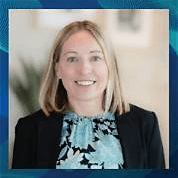
Why can't the construction industry find the talent it needs? Peggy Smedley talks with Tasha Jones, Espire Collective, about resilient talent ecosystems, the rise of fractional expertise, what top tier talent really looks like, and how to reshape operations. She says what is happening in construction is a preview of a broader workforce design issue across complex industries as a whole.
They also discuss:
· If the labor shortage is a pipeline problem or is it a workforce design issue.
· How to attract and educate the construction workforce.
· How to equip businesses in the construction industry.
Interactive timestamps
Jump to segmentGet every episode summarized
Each time Peggy Smedley Show publishes, we email you a written briefing from the transcript — the topics, who appeared, and any specific claims, with the ad reads skipped.
Email me new episodesFree for 3 shows. No card needed.
Hosts & guests
Transcript ready
213 searchable segments. Every word is indexed and playable.
Full transcript
Peggy Smedley Show — Construction's Top Talent. Machine-transcribed; use the interactive transcript above to jump the player to any line.
0:00Welcome back to the Peggy Smedley Show, your voice for our connected world, with your host Peggy Smedley. Hello, listen to him. Welcome back to the Peggy Smedley Show, as always, I'm your host Peggy Smedley. Today we're taking on one of the biggest questions in the construction industry. Why can't this industry find the talented needs? This is really a pipeline problem, or have we built a workforce model that's completely out of stock with how modern work actually happens? We're talking resilient talent ecosystems, the rise of fractional expertise, what top-tier talent really looks like, and how are we reshaping operations faster than companies can keep up. And to break it all open, I'm joined with someone who's challenging the old rules and building what comes next. Please welcome Tasha Crawford Jones of Espire Collective, Tasha, welcome to the show.
1:04Hi Peggy, thank you so much for having me on, I'm so glad to be here. Tasha, I love what we're talking about. This is one of the most important things and I've been talking about women and men in this industry and why we have such a shortage and what we need to do about it. So let's just start. The construction industry has been facing a labor shortage for so many decades. This is not something new, it's an ongoing discussion. But what do you see is at the root cause of all of this? I think it's a multi-pronged concern and issue. Several groups have done many studies, associated builders and contractors estimated that industry needs hundreds of thousands of additional workers with the advent and oncoming of advancement in cloud technologies, AI and agentic capabilities as well. Influencing things, the average construction worker is over 40, and many skilled tradesmen and professionals are nearing that retirement bridge, right? Infrastructure, spending and reshoring and manufacturing.
2:06There are so many different impacts that are happening, influencing this market. And so those root causes are around the aging of the skilled workers, the slowing of replacement pipelines. There's a lot of bias in perception gaps around trade careers as well that we still haven't really overcome in the United States and those cyclical patterns. All those things are impacting it. But I think what's happening in construction is basically a preview of a broader workforce design issue across complex industries as a whole. Well, that might lead us to a bigger discussion, but whether we have a border issue now or we have borderless crisis. So we need to be addressing much bigger issues. And if our aging, we're aging out, is what you just described. So now where is that talent pool of going to come from? How are we going to really think about that because where the job opportunity is going to be? So we kind of look at that. So is the labor shortage really just a pipeline issue then? Or is it something that is a workforce design issue then what we have to think about?
3:09So I think you're talking about something that I think is a much bigger issue that I think we fail to address not just now because of AI, but it's a decade-long problem, decades with an S. And that I think we need to address. Definitely agree is the decades-long problem. And of course the technology piece isn't new. That's been happening in just that the cycle for a new capability year over year shortens. It gets smaller. So you combine that with the age out, with political pressures and complexities making it a lot more difficult for firms to stabilize their revenue in those time-bound projects. All those things are definitely impacting it. But I do believe that stronger apprenticeship programs, industry, education partnerships, I've been seeing a lot of those pop up as well as adopting the technologies to improve productivity per worker. It's going to improve and have a better workforce, which allows for more forecasting and planning.
4:12All those things are going to be, I think, a benefit going forward if there's an intentional effort. And so it's not just about needing more field labor. We also need them to have experienced project managers, compliant specialists. You've got work and safety leaders that are required as well as those operational transformation experts. And while the field labor shortage is definitely real with the construction industry, there's also pressure on the leadership and operational layer where project controls, digitization, and compliance and risk need to be streamlined and improved so that they can effectively leverage and manage that skilled labor more smartly. When we talk about that, we talk. But I think the bigger challenge we have to address is if tools that we're talking about that are being used in the field, when I use tools, I'm using a broader in the sense of solutions and capabilities. These aren't even sure what those are going to be. So it's a bigger challenge. They don't even know how to train their workforce. A lot of them are saying, just do it because I'm telling you to get it done.
5:15So the challenge then becomes, the worker says, I'm just going out there, I'm doing my job because I'm being told what I have to do. So now the education then becomes, how do I educate? Do I educate on what the company is telling me to do, and this is what I'm learning? Or does the individual have to try to educate themselves based on where they think the future is going to be? So it's that ying and that yang, and that's the problem. So I guess I'm curious from your perspective, you said the industry needs to do more. How do you think, as a Spire Collective, aiming to try to solve this challenge needs to be done? Because we've talked about the same crisis problems, again, I'm going to say for decades, but there has to be a better effort overall to fix the problem. And I personally, as I've written about this, and I've talked about this, and I've seen the drama on this, it seems to be we're still saying the same things over and over, and it's not resonating with an industry that fails. And I'm sure when they hear me say this, they're going to say, Peggy, you're saying we're failing.
6:16We are. It's an industry that has hundreds of thousands of people who need jobs, hundreds of thousands of jobs that aren't filled, and it's a problem that just seems to be ridiculous that can't be solved. Yeah, and I think a big part of it, too, is like you stated before at the intro of this talk, we are definitely using yesterday year workforce models for 2026 complexity, and it just hasn't caught up yet. A Spire is intending to address this concern in this issue by providing a talent to execution bridge that infrastructure for basically the largest demographic that exists in the US economy today. I was SBA data, 99% of the businesses in the United States are small businesses. We have over 36 million of them that have under 500 employees, and the census, their annual business bureau survey that they have says 49% of employer firms, and these are those
7:17that are one to four employees, represent the single largest segment in that small business demographic. And it's those companies tend to have the least amount of infrastructure and support and resources in order to help them in operations and just get visibility for larger companies to see them. And when you think even more broadly outside the US, 90% of businesses worldwide are up to 70 provide up to 70% of employment, and most of the economies, this is like 50% of the global GDP when it comes to employment. But a lot of those small firms, larger companies and the bigger construction firms, they don't really get that visibility and that transparency. And so a Spire is creating that bridge by providing that shared infrastructure and that governance in order to create a reduced risk marker for those companies and enable those smaller firms and those consultants to gain economies of scale by working together as a collective
8:19to pursue opportunities with those organizations. Think about what's happening. You talk about Masons, you talk about plumbers, you talk about HVACs, those unless you have very large electrical firms and then you have the very small ones who are the ones who serve local communities without having that collective that you talk about, how are they going to keep up with what's happening in AI and quantum and all these other emerging technologies that are changing our workforces because they don't have these large staffs, they've been very, and you just said at 49% one to four people, they don't have that, but they are serving the communities and they're the ones that as these homes are being built or things go wrong as we've just seen right now, giant snowstorms, things are happening that change and we need those individuals to change and respond to the needs of the community, but yet they need to be kept up to abreast on the latest things that happen with the technologies that are changing. So it's that thing that they're out there servicing yet, they're supposed to be kept
9:22up with all the technology. That's where it's like this that you're describing has to come into play. If we're talking 49%, that's almost 50% of our entire US demographic and that's what we're talking about. And I appreciate what you're saying and I know I'm getting emotional about this, but we've known about this, yeah, we stay there and say they have to do it. That's where we have this challenge and I think that's where as talking about, and then you throw in the fact that there's all these women who are saying they want to get into the industry, we had, we made some great ground and now women are really getting into the construction industry, how do we now get them involved in this to also be a part of that? So it's not only just a small business, but women, this is a perfect opportunity for women to be able to have that world that we wanted, to be mothers, to be able to have a career, to be able to do the things that they want and be able to pick up their children after school. Let's talk about that because I think there's a lot of shifting here, I know I'm jumping around, but that's where I think this is the opportunity issue, talk about it, collective,
10:26not only to educate, but to let them see careers that are really the perfect dynamic for them to do multi things that they want to do. Yeah, there's been representation growing in this industry for women, especially across project management and engineering, compliance and tech roles, I actually know intimately some folks who actually are on the flip side on the skilled labor part as well, who are welders and have businesses that do envelope work and things of that nature, but like you said, it's very difficult when you're a smaller entity to keep it all together, to pay attention to what's happening with sustainability and environmental changes and shifts, regulatory statutory requirements, what are the bigger firms doing and how do you dovetail with them and become a vendor or a partner with all of the compliance and the set of sides from a small business perspective, if you pursue public sector opportunities in that space as well, how do you actually structure to go after, you know, contract opportunities where you have to
11:31develop a proposal and be compliant and structured to deliver in that type of environment. There's a lot of pressure with that in modernizing workforce models to expand who can participate in having the flexible engagement models by not only the firms, but even public sector organizations, I think honestly creates new entry points into operational industries and when they modernize the work forces, I think women have a huge strategic advantage. All we do is organize and coordinate and facilitate all the things that's who we are is embedded in us, even if we don't want it to, and I really think that there's plenty capability and with the fire being industry diagnostic, even though we're talking about construction, I do feel that it is a beaker or signal that is happening across several different industries where you're starting to see opportunities open up because of these gaps with pathways to access and opportunity, but we're trying to come in and again make that connection for those smaller firms. And I think women, just as anybody else,
12:37has an opportunity to take advantage of that. What I'd like to talk about this is that we think about the opportunities when we, when I first started doing this, I was in manufacturing, then I went into construction and I saw the bridge between what manufacturing does and how construction and how they're so intertwined in a lot of ways. It's the same thing now in construction and agriculture, how so many things come together. And I think a lot of industries do not recognize how so many industries overlap and that's why I think what you're saying here. So when we talk about women and what they can do is as whether external consultants or whether that fractional world that you're just describing, but we're just also describing that boundless, I like to say border now, borderless world, I guess is really the word I want to use. And I think that's going to open up opportunities as well because there's industries there that'll also give them opportunities whether they're here or abroad or whatever. And I think we're going to see more of that. I think the dynamic is going to change. And I think with that, I guess I would love to have you say, what's your final
13:42thought on what we need to do to encourage future generation, future of work, future of industry, and what are you seeing here? I think what I would say from a final words perspective is that how work happens has changed. We've been saying future of work for almost a decade now. The future of work is now and it's only going to shift as we move forward. And so I would hedge and push that organizations that know how to take advantage are not only of the technology, but not forget that without the people that technology is, it can't enable the goodness that they're looking for and the returns and outcomes that they're looking for. It belongs to companies that can integrate independent expertise thoughtfully. And that's the role that aspire is serving to help support. I like this conversation so much, Tasha. And I hope you'll come back because I think this is what we have to do is encourage everyone who's looking for something creative, a new opportunity
14:46to grasp onto it because we don't have to be stuck in one area. There's so many more opportunities to think about that. And I think we think AI limits us, but it opens us up to new opportunities. And I think that's what you just shared today. So Tasha Crawford Jones of Aspire Collective, where can our listeners go to get more information about you and what you're doing? You can go get information at our website at vaspirecollective.com. You can also follow us on LinkedIn. If you just search Aspire Collective, we'll come up. I've done it a few times. We're at the top. And of course, on Instagram, the Aspire Collective, put that THE in front of Aspire Collective and you'll find this. Tasha, thank you so much for joining me today. Thank you so much for having me Peggy. Okay, let's do that. It's all the time we have for this show today. Make sure to share and subscribe to our episodes each week. Share your thoughts with me on Accent Connector World. Follow me on LinkedIn and YouTube and continue the conversation there. Remember, we broadcast every Tuesday at 12 p.m. Central. Please check out our website at connectorworld.com or show website at thepeggysmedleyshow.com. This is the Peggy Smedley show your voice
15:52for our Connector World. And remember, with great technology, comes great responsibility. Have an awesome week.
More episodes