Commentary on the Mass Readings: Mon, Apr 6 (Octave of Easter)
About this episode
Acts 2: 14, 22-33;
Matthew 28: 8-15;
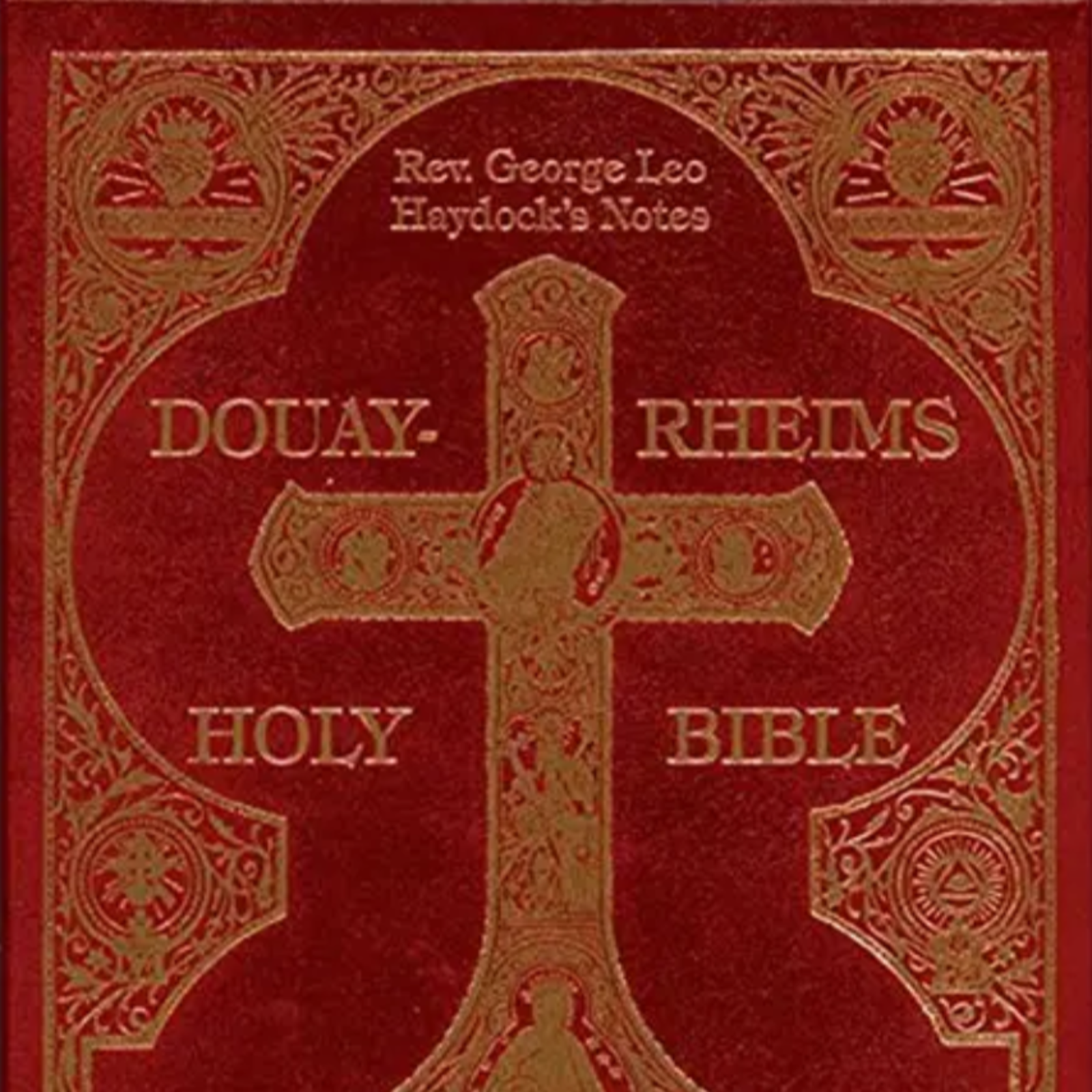
Haydock Commentary
Please consider donating to help keep this podcast going by going to buymeacoffee.com/catholicdailybrief Also, if you enjoy these episodes, please give a five star rating and share the podcast with your friends and family
Get every episode summarized
Each time Catholic Daily Brief publishes, we email you a written briefing from the transcript — the topics, who appeared, and any specific claims, with the ad reads skipped.
Email me new episodesFree for 3 shows. No card needed.
Hosts & guests

Transcript ready
102 searchable segments. Every word is indexed and playable.
Full transcript
Catholic Daily Brief — Commentary on the Mass Readings: Mon, Apr 6 (Octave of Easter). Machine-transcribed; use the interactive transcript above to jump the player to any line.
On the day of Pentecost, Peter stood up with the eleven, raised his voice and proclaimed, You who are Jews, indeed all of you staying in Jerusalem, let this be known to you and listen to my words. You who are children of Israel hear these words. Jesus the Nazarean was a man commended to you by God with mighty deeds, wonders and signs, which God worked through him in your midst, as you yourself know. This man delivered up by the set plan and foreknowledge of God, you killed, using lawless men to crucify him. But God raised him up, releasing him from the throes of death, because it was impossible for him to be held by it. For David says of him, I saw the Lord ever before me, with him at my right hand I shall not be disturbed.
Therefore my heart has been glad and my tongue has exalted. My flesh too will dwell in hope, because you will not abandon my soul to the netherworld, nor will you suffer your holy one to see corruption. You have made known to me the paths of life, you will fill me with joy in your presence. My brothers, one can confidently say to you about the patriarch David that he died and was buried, and his tomb is in our midst to this day. But since he was a prophet and knew that God had sworn an oath to him that he would set one of his descendants upon his throne, he foresaw and spoke of the resurrection of the Christ, that neither was he abandoned to the netherworld, nor did his flesh see corruption. God raised this, Jesus, of this we are all witnesses. Exalted at the right hand of God, he poured forth the promise of the Holy Spirit that he received from the Father, as you both see and hear. Hayda Commentary A wonderful change which the Holy Ghost at his coming in a moment wrought in the apostles, as we see in the person of St. Peter, who before when questioned
by a silly girl denied his master. Now he values not all the Sanhedrin of the scribes, Pharisees, and magistrates. He boldly and publicly charges them with the murder of Jesus their Lord and their Christ. As the Prince of the Apostolic College and head of the church under Jesus Christ, Peter speaks in the name of the other apostles also, and he gives an account of the miracle and promulgates the Evangelical Law. Newly replenished with all knowledge and fortitude and full of the Holy Spirit, he here makes his first sermon. It was the eternal decree that the Son of God should become man. He mentions this decree and for knowledge of God to signify that Christ suffered not by chance nor unwillingly, but what God and he as God had decreed. God delivered up his Son and his Son delivered up himself for the love of us and for the sake of our salvation. And so Christ being delivered up was holy and was God's own determination. But they who betrayed and crucified him did wickedly, following therein their own malice and the instigation of the devil, not by the will and determination of
God, who was by no means the author of their wickedness. Though he permitted it because he could and did draw out of it so great a good, namely the salvation of man. It is certain that Christ suffered the pains and pangs of a violent death that his soul suffered no pains after death nor in any place called hell. We believe as in the apostles' creed that his blessed soul descended into hell, that is, to the place of the inferior parts of the earth, which we commonly call limboose potrom, limbo of the fathers, not to suffer, but to free the souls of the just from thens. It was impossible he should be held there either by death or hell, his soul being always united to the divine person and his rising again being foretold in the Psalms in the words here cited. David, for seeing, spoke of the resurrection of Christ. St. Peter shows them that the prophetical words of the psalm agree not to David in person he being dead and his body having remained in the grave without rising from the dead. He hath poured forth this which you both see and hear, that is, by the effects, by the noise as
it were of thunder and by our speaking languages. It does not appear that the Holy Spirit was visible to the multitude whom St. Peter addressed, but they perceived sensible marks of his presence in the great noise which had called them together, and that diverse tongues spoken by illiterate men who had never studied. The Gospel from Matthew chapter 28 verses 8-15. Mary Magdalene and the other Mary went away quickly from the tomb, fearful yet overjoyed, and ran to announce the news to his disciples. And behold, Jesus met them on their way and greeted them. They approached, embraced his feet, and did him homage. Then Jesus said to them, do not be afraid, go tell my brothers to go to Galilee, and there they will see me. While they were going, some of the guard went into the city and told the chief priest all that had happened. The chief priest assembled with the elders and took counsel. Then they gave a large sum of money to the soldiers, telling them, you are to say his disciples came by night and stole him while we were asleep, and if this gets to the ears of the governor, we will satisfy him and keep
you out of trouble. The soldiers took the money and did as they were instructed, and this story has circulated among the Jews to the present day. Hey, that commentary. According to St. Mark, Christ appeared first to Mary Magdalene, and the particulars are related by St. John. She at first did not know him, but took him for the gardener. Then he called her by her name, and she knew him. He said to her, touch me not for I have not yet ascended to the Father. That is, according to the common exposition, I have not ascended nor am yet going to ascend. Thou mayest see me again before I ascend. This is not the last time. We also read here that he appeared to some of the other women as they were returning to Jerusalem from the Sepulchre, and that they laid hold on his feet and adored him, nor is it said that he hindered them. They were returning to carry the news to the disciples when they laid hold of his feet. To touch the feet was in the scriptures a species of veneration. See Exodus 425 and 2 Kings 427. Our Savior on the day of his resurrection showed
himself alive five different times. First to Mary Magdalene, second to the women leaving the Sepulchre, third to St. Peter, fourth to the two disciples going to Emmaus, and fifth to the disciples assemble together when the two returned from Emmaus. And after the day of his resurrection before he ascended into heaven, he appeared another five times. First after eight days when Thomas was present, second when the seven disciples were fishing on the sea of Tiberius, third to the eleventh on Mount Tabor, fourth in Jerusalem on the day of his ascension, and fifth on the same day on Mount Olivet when he was taken from them. It is probable that the guards had retired a while to some place to consult what to say and how to avoid being punished. The chief priest after consulting upon the matter ordered them to say that when they were asleep the disciples came and stole away the body. This report was spread about everywhere. St. Augustine laughs at them for their blindness and folly in bringing men in for witnesses of a fact which they themselves owned was done whilst they were asleep. They gave them a great sum of money. These princes of the
Jewish nation still persisting in their malice refused to turn to their creator by hearty repentance and wished to persuade the world that Jesus was not risen, sacrificing that money to falsehood, which was given for the use of the temple. For as they offered Judas 30 pieces of silver to betray his master, so now they offer a great sum of money to suppress a truth so useful and so necessary for man. So say St. Jerome. It hence appears that the chief priests themselves were fully convinced of the fact of the resurrection. For otherwise they would not have bribed the soldiers to disemble, but would have accused the soldiers before the president of an neglect of duty. How was it possible for the timid and weak disciples who dared not show themselves in public to come in defiance of an armed multitude to steal away the body? If these men dared not even to come forward and defensive their master went alive, is it probable that these same men after his death would steal away his body? And could they, even allowing the possibility of conceiving the design, have removed the stone which required a great number of hands to stir? Was not the mouth of the sepulcher also sealed? But why did they not steal away the body the first night before the guards
were stationed? For it was on Saturday the priest petitioned for a guard. Why did they not also take the clothes which St. Peter saw lying in the sepulcher? Would not a delay in taking off the shroud and the napkin that bound his head of appeared dangerous? Would it not have exposed their lives, particularly as the body had been anointed and some time would be requisite to remove the linen which would adhere to the body? The means they take to make the miracle uncertain render it utterly undeniable. For in protesting that the disciples stole it away, they confess that the body was no longer in the sepulcher. The fear and doubts of the disciples joined to the idle story of the soldiers is an evident demonstration that the account of the body being stolen away is a gross calamity. So says St. John Chris is them.
More episodes
More from Catholic Daily Brief

1962 Missal - Commentary on the Mass Readings: Sat, Aug 22 (Immaculate Heart of...
Catholic Daily Brief

Commentary on the Mass Readings: Sat, Aug 22 (Queenship of the Blessed Virgin Ma...
Catholic Daily Brief

Commentary on the Mass Readings: Fri, Aug 21 (Pope St. Pius X)
Catholic Daily Brief

1962 Missal - Commentary on the Mass Readings: Fri, Aug 21 (St. Jane Frances de...
Catholic Daily Brief