Closed Waters_ The Strait of Hormuz Crisis
About this episode
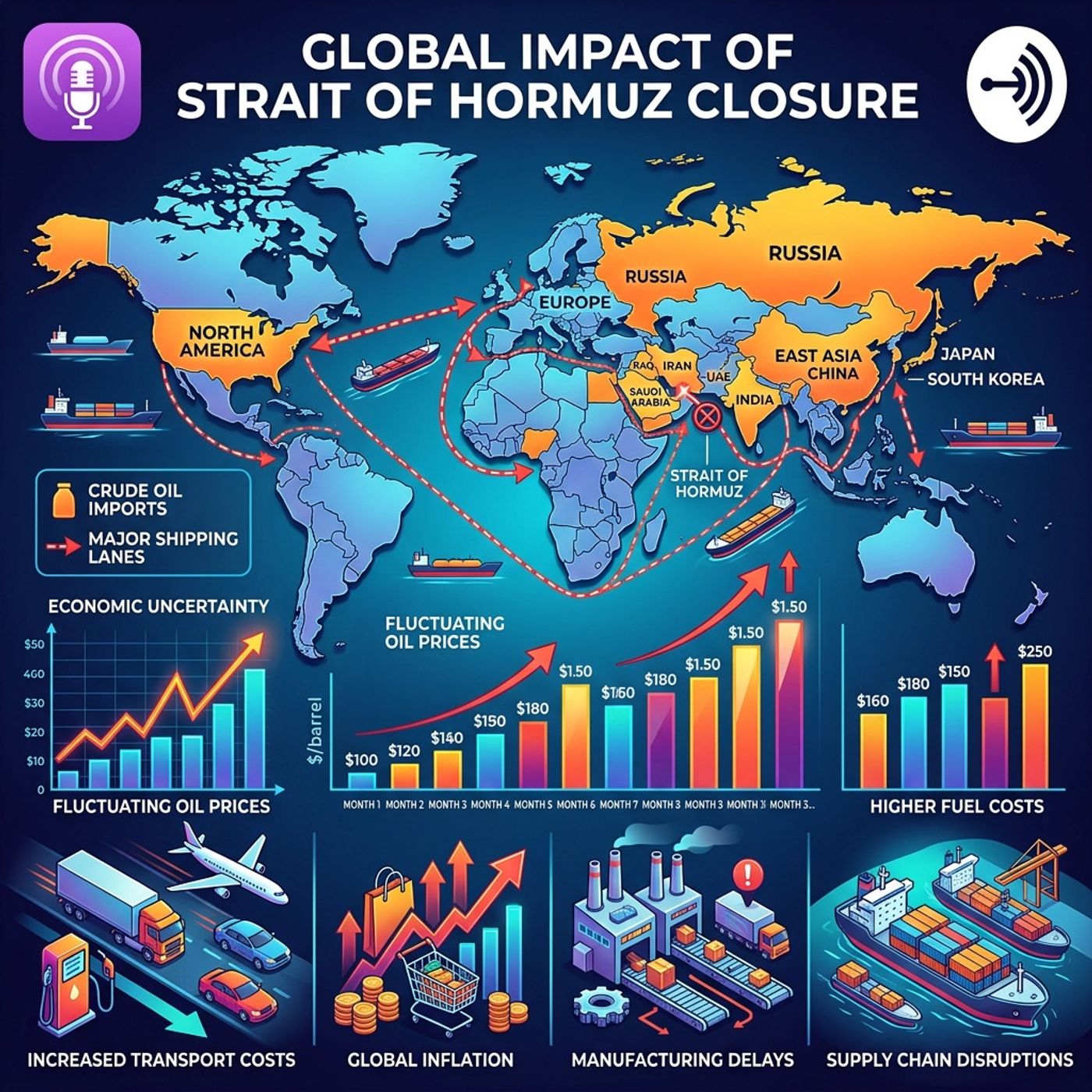
Now, why is this relevant right now? Recently, tensions have escalated sharply. In June 2025, Iran’s parliament endorsed a proposal to close this key passage in response to military actions taken by the U.S. against its nuclear facilities. While this decision may not be legally binding, it certainly raises alarms across the globe about the security of oil and gas shipments from the region.
Become a supporter of this podcast: https://www.spreaker.com/podcast/conspiracy-theories-exploring-the-unseen--5194379/support.
Get every episode summarized
Each time Conspiracy Theories Exploring The Unseen publishes, we email you a written briefing from the transcript — the topics, who appeared, and any specific claims, with the ad reads skipped.
Email me new episodesFree for 3 shows. No card needed.
Hosts & guests
Transcript ready
52 searchable segments. Every word is indexed and playable.
Full transcript
Conspiracy Theories Exploring The Unseen — Closed Waters_ The Strait of Hormuz Crisis. Machine-transcribed; use the interactive transcript above to jump the player to any line.
The average cost of a DUI in Virginia is $11,352.47, drinking and driving costs more than your drinks. Learn more at what's the damage.org. Brought to you by Virginia DMV. There's a moment right before Homer Perry goes wrong. When you say, what if I try this? That's when things start getting tricky. Next time, just leave it to the experts. Book with Crop Metcalf today and save $90 on an HVAC precision tune up. Let's dive right into the heart of a critical issue facing the global economy today, the potential closure of the Strait of Hormuz. This narrow waterway, stretching just 20 miles at its narrowest point, serves as a vital artery for the world's energy supply. With approximately 20 million barrels of oil passing through it every single day, the Strait of Hormuz is indispensable, accounting for nearly 20% of global oil consumption. Now, why is this relevant right now?
Recently, tensions have escalated sharply. In June 2025, Iran's Parliament endorsed a proposal to close this key passage in response to military actions taken by the US against its nuclear facilities. While this decision may not be legally binding, it certainly raises alarms across the globe about the security of oil and gas shipments from the region. The impact on global oil prices has been immediate and stark. Following reports of US air strikes in Iran, major benchmarks like Brent and WTI crude oil saw prices jump by over 6%. In fact, they reached highs not seen in five months, hovering around $76 to $78 per barrel, before settling somewhere between $67 to $70. This volatility reflects just how sensitive markets are to geopolitical tensions. But it doesn't end with oil prices. Analysts warn us that if the Strait were to be closed for an extended period, global economic losses could spiral anywhere from $330 billion to a staggering
$2.2 trillion. That's a reality check that should give everyone pause. The severity of this disruption would reach far beyond just fuel prices at the pump. It could touch every aspect of the global economy. When we think about this situation, it's essential to understand Iran's motivations. Historically, Iran has claimed authority over the Strait of Hormuz and has used threats of closure as leverage. However, this poses a double-edged sword for them. Clamping down on this passage could backfire, as Iran itself heavily relies on oil exports to keep its economy afloat. On a broader scale, the international community is watching closely. Countries like the US, UK, EU, and even China have all expressed significant concern over these developments, issuing calls for de-escalation. They understand that maintaining unrestricted access to energy resources is foundational for global stability. Expert commentary adds layers to this complex situation.
Matt Smith, an oil market analyst, has been tracking movements in the region, shedding light on the broader industrial implications a closure could have. While Noam Radan, from the Washington Institute, highlights how countries vary in their dependence on energy exports through this channel. Their insights remind us that the global economic landscape is more interconnected than ever. Historically, we can recall the events surrounding the 1973 oil embargo, where a combination of geopolitical tensions led to skyrocketing oil prices and a recession worldwide. The current atmosphere in the Strait of Hormuz echoes those past crises, showcasing how vital maritime choke points can shift economic realities almost overnight. As we wrap up this first episode, it's crucial to stay informed about developments in the Strait of Hormuz. The implications of a closure are immense, not just for oil prices, but for global trade and economic stability. So when you hear news about this crucial passage, remember, a lot more than just oil is at stake.
Thanks for joining the Fortune Factor podcast. Most people would rather attend a corporate team building workshop than search for auto and home insurance. Go team, feel that synergy! That's why the Zebra searches for you, comparing over 100 insurance companies to fine savings no one else can, compared today at thezebra.com. Who's ready for the truss fall? Here at the Zebra, research shows the average person would rather endure a root canal than search for auto and home insurance. Just try to relax. Or be trapped in a car for eight hours with toddlers on a sugar high. Or remove a nest of irate hornets. That's why the Zebra searches for you, comparing over 100 insurance companies to fine savings no one else can. Compare today at thezebra.com. We do the searching you to the saving. I think I'll wait inside.
More episodes
More from Conspiracy Theories Exploring The Unseen

The Digital Mirage_ AI and the Death of Authentic Romance
Conspiracy Theories Exploring The Unseen

The Trust Trap_ AI and the Future of Romance
Conspiracy Theories Exploring The Unseen

The Ghost in the Machine_ Navigating AI Romance
Conspiracy Theories Exploring The Unseen

The Love Recession_ Why Digital Romance is Offline for Good
Conspiracy Theories Exploring The Unseen