About this episode
Get every episode summarized
Each time Round Table China publishes, we email you a written briefing from the transcript — the topics, who appeared, and any specific claims, with the ad reads skipped.
Email me new episodesFree for 3 shows. No card needed.
Hosts & guests
Transcript ready
407 searchable segments. Every word is indexed and playable.
Full transcript
Round Table China — China's new standards on kids' cosmetics. Machine-transcribed; use the interactive transcript above to jump the player to any line.
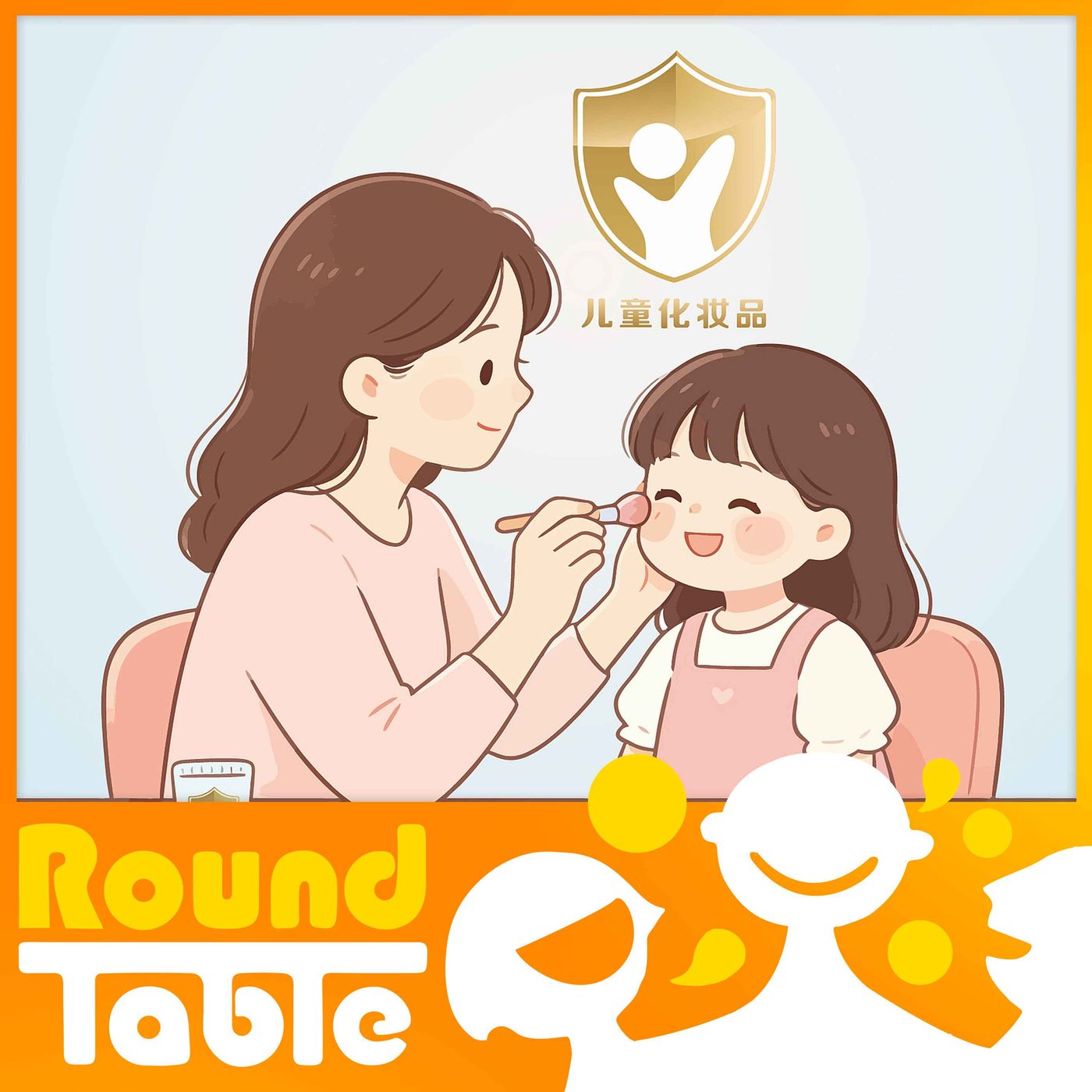
A Little Girl opens a treasure box inside a tiny eyeshadow palette, ellipsed stick, and some blush. Cute, right? To her, it's a toy, but to her parents, it's a question mark. China is about to tighten the rules on makeup made for kids aged 12 and under, with tougher limits on contamination and stricter safety requirements. But why are children, some people are asking this, being sold beauty products at all, and will new standards actually make them safe? Coming to you live from our studios, imbeging, this is Roundtable, I'm Steve Hathorly, thank you very much for being with us today, and for the show I'm with you, Shen, and Fei-Fei. Colorful eyeshadow palettes, lipsticks and blushes, packaged like little princess treasure boxes. For children, they may look like harmless toys, but for parents, there's a much bigger
question. What exactly is in that little makeup box? China is now tightening the rules. A new mandatory national standard will impose stricter safety requirements on cosmetics for kids aged 12 and under, including much tougher limits on microbial contamination. But will these tougher standards be enough to make kids make up genuinely safer? Why are children being sold beauty products in the first place? A lot of people ask that question as well. You Shen and Fei-Fei, good afternoon to you both. It is a very contentious issue, and I think we'll have a little debate about it here on the show as well as we get through our discussion should kids even never mind the safety at play here, should kids even be wearing makeup at all, and at what age is it okay? We'll get to all of that. But let's start with the new standards and what they say. Yeah, this is actually China's first ever mandatory national safety standard for cosmetics. It was released in August this year and will be taking effect in January the first in
2020-28. It basically replaces hygiene rules that was put in place dating back in 1987, many years ago. And now they're basically offsetting one basic baseline for the entire industry. This is not only just about kids make up, but I think it sort of is the one of the highlights of this new mandatory standards that especially when it comes to bacteria, mold, yeast, they put on a ceiling on every cosmetic product sold in China, adult children, they have a mandatory cap on the total bacteria mold and yeast levels. And before these standards was released, there was no like single national numeric limit before. Okay, so that's one of the things that this new standard mandates. What else does it specify? Yeah, mostly it's about, of course, it's about hygiene, right? The bacteria levels, 10 times tighter bacteria limits specifically for kids.
And general cosmetics are capped at 1000 colony forming units or CFU per gram or a milliliter, a measure of how many living microorganisms that are present in a sample. So products for children are capped at just 100 CFU and 10 times stricter than before. So of course, what we are seeing is a lot of these products, new products are released in the market. Of course, the new standard is coming up to follow this kind of new trend in the current market right now. And other things like protection extend to age 12, not just toddlers, most international standards only apply that strict CFU ceiling to products made for children under three. And now this new standard applies to everyday products like cleansers, moisturizers, powders, sunscreen, sunscreen, slip, and eye makeup for children up to age 12. The list goes on, there's a flat band on high risk pathogens. There's a hard numeric cap on toxic heavy metals.
There's tighter controls on chemical residues. And so you put all of those things in that list together and they are designed to reduce the main ways that cosmetics can pose a safety risk. And what that means is microorganisms can grow in products and they can potentially cause infections. Heavy metals in certain chemical contaminants can be harmful if people are repeatedly exposed to them just like when you put on makeup daily, you are repeatedly exposed to that. And the point of setting mandatory limits here is to prevent potentially hazardous levels from getting into the hands of consumers in the first place rather than relying on manufacturers to decide what level is acceptable themselves. So it's a blanket kind of coverage. It's a blanket kind of statement all across the board. All right. So what's driving the growing demand for children's makeup in China in the first place? The growth in the market didn't really happen by accident. I don't think there were a lot of different factors at play here.
Yeah. I think so that pretty with my own experiences, there are more just performances, especially on stage for kids this day. Dance recitals, school arts festivals, photography sessions, and for example, my order used to be part of a group for doing, I'm not sure how to categorize that in English, but it's dance slash gymnastics. So they need to enter in competition basically twice a year or sometimes three times a year. And that requires putting on makeup for that performances. And that also applies to, for example, if the school has a art festival taking place and you need some choir performances on the stage, and then there's also kind of the case for children to put on makeups. And I think that is one of the reasons that is driving this demand really on children's skincare market. Are there, I mean, as a parent, do you notice now for
your daughter, do you notice that there are more opportunities? Let me replace that word opportunities, more required events for makeup where she's asked to put on makeup, perhaps then in the past because you said, you know, recitals and school art festivals and photography sessions and stuff like that. But are there more now than they were, than there were before? Well, compared with when I was a child, definitely in there, a more such option. I remember I only put on like once or twice makeup throughout my whole, you know, years in schools from elementary to high school. That's only also for some kind of a recital performances. But that only happened like one or two times. Benel from a daughter and also for her friends, it happening basically multiple times a year. From my experience, yeah, I understand all of these events that your daughter is going to be able to participate in our school.
We also have these kind of events. But the difference is back then, it was not that complicated when you're required to put makeup on. It's just your teachers will bring up maybe their makeup sets, like just some powder on your face and then a red lipstick. And then that is very iconic Chinese children makeup. You will put a red dot in the middle of your eyebrow. That is a very, um, for elementary school kids, especially. So the makeup has gotten more complicated now. Yes, for example, for my daughter, I'm not sure if you guys can understand that. If she went on one of her performances, first of all, she need to do her hair. And most of the time, it requires glittering decorations on her hair, meaning gluing on top of her hair. And then she need fake eyelashes, eye shadows, blushes. And of course, powder and foundation and something for her eyebrows. And then lip, of course, and sometimes she also need to apply either fake diamonds or
something glittering or sparkling on her cheeks. So that for stage, it is more noticeable on stage under extreme like lighting. What's also mentioned in various reports. So that's one factor, the school, um, arts festivals and all of the things that Fei-Fei mentioned, recitals and stuff. They're calling for stage makeup. The other, one of the other aspects is incomes are rising and parenting norms are changing. So household budgets are growing and now parents perhaps might be seeing children's cosmetics less as an occasional necessity and maybe more of a fun lifestyle activity. So I'm drawing a line between A and B here, although I'm speculating, if there are more school events that require young children to put on makeup and the children enjoy that experience, they have fun with it. Their friends are enjoying it together.
Then they're going to want to do that outside of the classroom, outside of the school environment, perhaps and as incomes are growing and the things that I just mentioned, then the opportunity for that to happen exists. Do you think that's a fair line to draw or not? Well, I think I don't really see that kind of a spell over effect happening. For example, for my daughter and her friends, they are seeing put on makeup to be very, very troublesome, especially when they're gluing that fake eyelashes. So it's not necessarily fun. It's not really pleasant. They think they look good afterwards. It's not something that they would want to do more than just preparing for performance. But I think if we expand the scope of cosmetics more than makeup, for example, on sunscreen, on skincare, moisturizer, cleanser, so on and so forth, I do see they are wanting to try more of such products and use that daily.
I've seen a lot of advertisements already telling you this brand is claiming them as the products that you're buying for the first set of skincare products for the kids. So of course, we know that there is a huge market for adult skincare and cosmetic products. And now I think they're expanding even further to children's skincare markets. So the children's skincare market grew substantially. Oh, yeah. China's children's skincare market grew from 25 billion yuan. That's around 3.7 billion US dollars in 2019 to almost 45 billion yuan. That's 6.7 billion US dollars in 2024. And it is still projected to top 70 billion yuan by 2028. And children's color cosmetics specifically, like these kind of lipstick, eyeshadow, blush
and the like are expected to surpass 20 billion yuan in 2025 on their own. And that's the stats from the state administration for market regulation. And to me, that's a bit of evidence that it's moving beyond school. The growth of this industry and those numbers that you shouldn't just shared can't strictly be for school performances. I wouldn't think. Right. So it does seem like it's moving into a childhood lifestyle market or at least a broader sense of it. But one of the issues that people are so concerned about is the effect on children's skin. So let's talk about that for a moment. What is it that makes kids skin different? And why does it cause such a safety concern when talking about skincare products and makeup for kids? Yeah. Frankly, I didn't know this before the show is that skin, children's skin is physically
more vulnerable than adults. I should think about buying some skincare maybe for my children. But a young child's outer skin layer, which is the barrier that locks in the moisture and blocks outside contaminants is roughly a third as thick as an adult. So also that barrier is more loosely arranged has more loosely arranged cells, meaning that barrier is weaker and meaning children can lose moisture faster and also absorb those outside chemicals more readily. So for example, when we're talking about heavy metals in a lot of these cosmetics products or pathogens in some problematic products, maybe children are more, I think, exposed, can be more exposed to such hazards. Yeah. And this can lead to things like rashes or allergic reactions or chemical burns or even more seriously long-term skin damage.
So then if we know that, then what is child safe supposed to mean when we talk about cosmetics and skincare products? This just makes sense, right? We should not add more that overused ingredients, no active treatment ingredients and a 222 regulation already bars children's cosmetics from containing active ingredients meant for skin whitening or acne treatment or hair removal or hair dyeing or perming. And also ultra clean manufacturing no matter it's about the equipment or the environment of these manufacturing also minimum formulas, fewer gentler, higher purity ingredients, no unnecessary fragrance, heavy pigment or aggressive preservatives. So all of these are for occasional use, not a daily routine because dermatologists say
children's makeup should be reserved for events and performances, not just daily and layered on a daily basis since repeated layering can clog their pores and also break down the skin barrier. It's just I think that kind of or partially answer the question that we asked before should even children wear makeups from the daily basis. I don't think there's a need for them to wear makeups but maybe for occasional performances. We can come back to that point because that's kind of a, I don't know if it's cultural or not because I've seen the same debate happen in Canada and America too. How young is too young for kids to wear makeup and I think when that debate happens, it's not necessarily the debate about safety, about the skincare products themselves. It's about the appropriateness or perhaps lack thereof.
The age that you mentioned before, you shan these new standards in China, they're going to be strict and now they have recommendations for age groups of kids too. Yes, for example, for infants and toddlers, meaning children under three should stick to basic moisturizer and barrier care. But when it comes to school age children, meaning between the age of three to twelve, they need some protection and also mild cleansing. But for teens, twelve and eighteen, between twelve and eighteen, they need to deal with puberty driven oil protection and they are also the first group for when we're talking about children's skincare, they need oil control and acne management because they're entering that phase of life. So, I guess for different age groups, they also need to consider different products. And so that really brings to a new regulation was released in 2021 that Chinese regulation
required cosmetics that intended for children under the age of twelve to carry a golden, a little golden shield mark on their packaging, meaning this is a children's skincare product. Oh, so this is been this, so this little golden shield is something that you would find on a skincare product that has been deemed safe for children. Well, it's not really a safety seal, but it's only about classification about these products is officially classified and regulated as children's cosmetics. Oh, so it's not that it passed some sort of special safety test or something like that. Yes. And so that, but it's sort of the first step for children, for parents at least, to start, can start noticing what is, there is a difference between what adults, adults can use and apply on their skin and children. Well, that's a little bit misleading for parents though, because parents, I think it's safe to say the average parent, you can disagree with me, Fei-Fei, but the average parent probably
isn't an expert on child cosmetic safety standards. So if you see a golden shield on a product, then you would probably assume that it's gone through a bunch of different safety protocols and therefore you can put it on your kids with no worries whatsoever. But we just learned that that's not the case. These have not passed special safety tests. And therefore, that could allow unsafe products to sneak through, if you will. And your daughter has used makeup in the past. So I wanted to ask you, like, was this whole safety issue on your mind when you were putting on makeup for her? No, I never thought there was a difference between children's skin and my skin, so she's been using my makeup the whole time, the past six years. For her preparing for all of her performances, she's been wearing my makeup.
And apart from that, there also kind of a loophole on the toy. I don't know, I would say brands, because some manufacturers have labeled their colored makeup as toys. So maybe for some parents, they would think, you know, it's just some toys, not strictly makeup. It's like a crayon or something. Yeah, yeah. But in fact, it's still something that children need to put on their skin. It's still some colored powder that you can use some brush and apply it on your skin. So that is the loophole there when it comes to the differences between cosmetics and toy. That sounds even more dangerous, because if it is the skincare products or even for adult skincare products and cosmetics, you know that they need to pass certain rules and regulations and some kind of safety investigations. And then you know that at least the products itself is safe. Before these kind of so-called toy cosmetics, you don't even know what kind of category
they belong to. But for the whole discussion of children's skin products or skincare or cosmetics, I always had that kind of question of, is it really that necessary when these kind of brands are marketing them as specifically the air-cooled children's products? What do you mean by necessary? Because we have so many these kind of products. Okay, all you for babies, milk for babies, everything can be designed for that certain group. But the thing is that maybe when we're looking at all of the ingredients, there's nothing different from the products that adults can consume. As we can see, the standard right now is telling you that maybe the process of producing these products, the environment and all of the requirements for making these and manufacturing these products are different. And they kind of ensure you that the product is different from the adults' cosmetics
or skincare products. Yeah, I think for children, it's definitely according to the current standards, they are putting more stricter, tougher requirements, higher standards for children and kids in makeup. But when it comes to kids trying makeup, I somewhat get the toy statement when it comes to children trying on makeup. I start to thinking about when I was a child. I saw one of my aunts, she put on makeup every day, I got really, really curious. Because after all the colorful ash shadows, she also had, I vividly remember, she had a blue mascara, I just so much want to try that blue mascara on and we tried one time when my mom wasn't looking. So I get that for a lot of children, they got curious after watching what adults been doing. So they want to try themselves. It's not like a daily routine, like a kid, before they go to school, they need to put on some
makeup. It's just for fun. So yeah, it's like playing dress up. Yeah, so I think if the kids have this kind of a demand, even though it can be a niche demand, me not every kid want to try makeup, but if there is even the smallest amount of demand on the market, then of course we need to have standards so that kids can have enjoy this safe products. Yeah, nobody's going to dispute that. I don't think no matter where in the world you are from, nobody's going to say, oh, it's okay if these products are not safe for kids. But let's have the cultural conversation though. Or maybe it's not a cultural conversation. Is it okay for little kids to be putting on makeup or not? You shouldn't. You feel a certain kind of way about this. I simply just don't think that children should wear a lot of makeup. As we said, there are some of the requirements or scenarios that maybe require them to have makeup on. But minimum is the thing that I want to say.
And also as we know that the skin of children is kind of weaker than adults skin. And then I would say that kind of natural beauty is the thing that we should maybe pursue for even the performance of a lot of children. What do you think about that, Fei-Fei, about this? I would push it a little further. I would say if the schools are aware that these products are not designed for children's skin and they could potentially damage a child's skin, then school performance or no school performance is a school performance that important that you would require the children to put things on their face that are potentially unsafe for them. I don't think a school would actively make that choice. So should we even have this be required for the school performances at all? Is that really necessary? But the kids want to look good on stage after all.
So if you are on stage, you don't have any makeup on your face. And that you will make your face looking really dull on stage with all the lighting and distance from the audience. So I do get when it comes to stage makeup, it's very different from the daily makeup we wear. You can see more glittering, it's more on some level more than what we'd need on daily for daily makeup. So I do think for performances, for different recitals or different competitions, if traditional music only, it's been required to put on makeup. It's okay for kids to try them. I mean, kids see, kids can see people around them wearing makeup for different purposes, whether it's on the stage, on TV, on daily, for daily use, when they can see they will want to learn, they want to copy, they want to at least try to see if I like it or not. Like make it, she tried, she didn't like it.
So she never said to me that she want to try some eyeshadow after a performance. She just told me, please remove this makeup as soon as possible, because it's not really comfortable. But for other kids, maybe there are kids really love playing with the colors. So I think just giving them the options, but we do need to set the boundaries about the appropriateness for, for example, wearing makeup on a daily basis. I think one of the, and we've talked about this on the show in the last couple of years. There's an issue in America called Sephora kids, where young children were doing TikTok videos, social media videos. I believe it was get ready with me. Hatch tag. These little kids would have their makeup tutorials. This became a real hot button issue in the United States as well. And I think, yeah, part of it was about the safety of skin safety, about the products
that they were using. But then the other side of the argument was just about the appropriateness of it, too. There was a 2025 Northwestern University study published. This was studied in the, or published, excuse me, in the journal, Pediatrics. And what they did there was they analyzed 100 popular TikTok skincare videos. And they found that the 82 creators were overwhelmingly girls between 7 and 18 years old. It's a trend that really took off. Each video averaged about 1.1 million views in their study. And the get ready with me, hashtag was the most common format. So this is not simply an issue here in China. This is an issue that has been kind of debated in different parts of the world for quite a while now. So then how much, let's talk about this. These standards, these new safety standards, are they going to change the market or how
much of an impact are they going to have? Well, yeah, I think change will happen, definitely, with the new regulation or standard coming out. It will drive out low quality sellers, first of all. The standard is designed to squeeze out, uncertified, these kind of toy makeup operators, relying on these cheap or unvedited materials while compliant companies benefit from the higher bar. And also force the real investment in these areas, because to comply, legitimate manufacturers need these kind of clean room facilities, higher purity ingredients and a real clinical testing, not just their repackaged adult formula with a kind of cartoon label that is designed for children's skincare. Designed to attract children as well. So that these manufacturers, they are not diverting their investments into marketing, which I don't think is really needed for children's skincare, but on real investments in their
technology, on their facilities, so on and so forth. So I think maybe in the future, that will raise the costs for producing these kind of products, which I think is a good thing, because like you said, it's not something that children need on a daily basis. So I see having higher prices on these products, we really, on some certain level, put a brakes on parents' decision when they are thinking about just buying some toy makeup for my children. And at this moment, what I want to say is also we need to, of course, consider the safety of these products themselves. And another thing is also the dosage of what is containing in these kind of products, is also what we need to consider. Of course, the raising baseline costs of these products, I think, is foreseeable. If we have more specialized requirements and facilities that is for these kind of products.
And then if we just think about if they are just using these kind of makeup twice a year, I don't think parents need to panic or somewhat about these kind of things that may affect the whole health or the system of the children. So like from my daughter, she'll probably only need a ply makeup like three times maximum a year. So I don't see me making more purchases about this product. Yeah, the debate over whether it's appropriate or not for children to wear makeup is not really what we're talking about here. And that's a matter of opinion, and we could be here all day long going back and forth. This is about safety standards to make sure that the products that children are using, if they are using, they are in place to make sure that they're not potentially damaging the children. So therefore, these new standards here in China, they close a real gap.
We talked about it until now there was no single mandatory numeric safety floor in the country for cosmetics at all, let alone one built around a child's skin, which we learned today as well, is thinner and more absorbent. So when you extend the hygiene limits from toddlers up until age 12, and then you replace the set of rules, you said Feifei 1987, right? So that's a set of rules that was nearly what, 40 years old if my math is correct, then these new standards are not just symbolic, these are hard and fast tightening of rules. So I think the impact on the market will be significant.
More episodes
More from Round Table China

Where do we draw the AI music line?
Round Table China

Seven gourds, one grandpa, and the price of going viral
Round Table China

Generation Global EP8: Cooling Vests
Round Table China

When being heard becomes a business
Round Table China