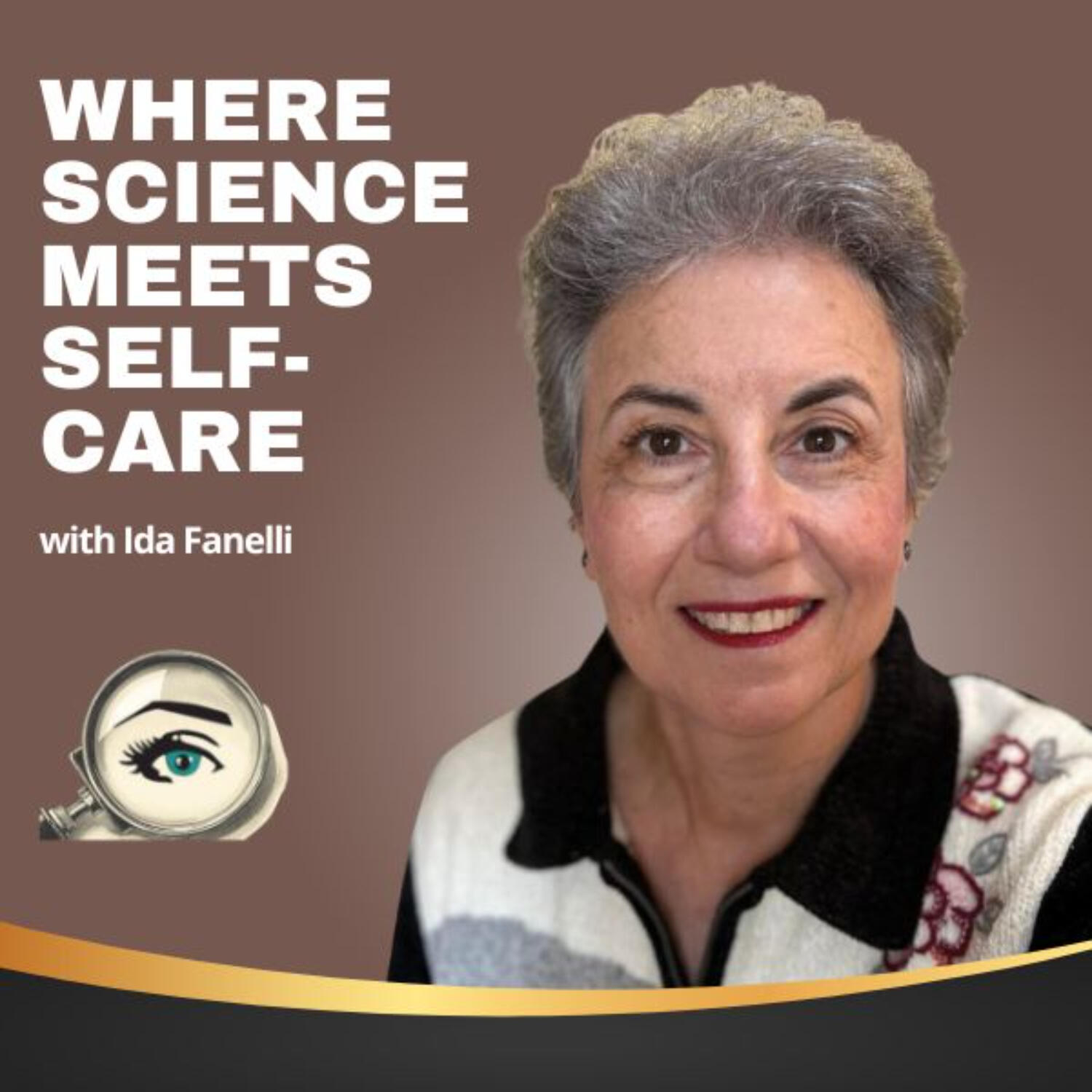
Celebrate Yourself & Reclaim Your Confidence | Interview with Amy Ballantyne
About this episode
Are you struggling with self-doubt, low confidence, or a lack of self-worth?
This powerful 51-minute motivational episode is designed to help you celebrate yourself, rebuild inner strength, and reclaim your confidence—starting today.
In this video, you’ll learn practical tools to develop true self-love, build unshakable confidence, and overcome fear, negativity, and self-doubt. Through mindset coaching, emotional wellness strategies, and personal development techniques, you’ll begin shifting the inner dialogue that’s been holding you back. If you’re on a journey of self-improvement, personal growth, and emotional wellness, this episode will help you reconnect with your value, strengthen your mindset, and believe in yourself again.
In This Video, You’ll Discover: How to develop true self-love and self-worth Practical ways to build unshakable confidence How to overcome fear, negativity, and self-doubt Mental strategies for personal growth and emotional healing Motivation to believe in yourself again This Video Is Perfect For: Anyone facing low self-esteem Personal development seekers Entrepreneurs & dreamers Students & professionals People looking for a mindset transformation Watch till the end to fully transform your mindset and start celebrating who you truly are. Subscribe, like, and share so you never miss an episode.
Connect with Ida Fanelli https://www.linktr.ee/idafanelli
Important Consumer Notice Disclaimer:
This video is for educational purposes only and does not replace professional medical diagnosis, therapy, or targeted treatment. If you suspect you have a chronic condition or need specialized treatment, please consult a healthcare provider.
Connect with Amy Ballantyne:
Usana Health Sciences Provider – 17 Years Strong
Website: http://amyballantyne.com
Coaching: https://www.ballantynecoaching.com
Celebrate Yourself (Book): https://a.co/d/05VPKWN
FREE Workbook: Tame Your Inner Critic → https://bit.ly/amy-tame
Podcast: Power to the People Pleasers → https://podcasters.spotify.com/pod/show/amy-ballantyne
Instagram: http://instagram.com/amyballantyne
Facebook: https://www.facebook.com/amy.e.ballantyne
Twitter: http://twitter.com/_AmyBallantyne
Contact: 519- 497-1909
💊 Usana Health Sciences Provider – 17 Years Strong
#SelfConfidence #SelfLove #OvercomeSelfDoubt #MindsetMotivation #PersonalGrowth #EmotionalHealing #BelieveInYourself #MentalStrength #LifeMotivation PeoplePleaserRecovery #NervousSystemHealing #MindBodyConnection #LeadershipMindset #ConfidenceCoaching #EmotionalHealing #MindsetShift
Get every episode summarized
Each time Brushwood Media Network publishes, we email you a written briefing from the transcript — the topics, who appeared, and any specific claims, with the ad reads skipped.
Email me new episodesFree for 3 shows. No card needed.
Transcript ready
329 searchable segments. Every word is indexed and playable.
Full transcript
Brushwood Media Network — Celebrate Yourself & Reclaim Your Confidence | Interview with Amy Ballantyne. Machine-transcribed; use the interactive transcript above to jump the player to any line.
Welcome to our science meets self-care with Ida Fonelli. With over 30 years of beauty and wellness and a background in medical science, Ida blends clinical knowledge with holistic care. Each week, she and her guests share insights to help you achieve healthier skin, balanced energy, and empowered self-care. Now, here's your host, Ida Fonelli. Today, I'm excited to present Amy Valentine. She is a fellow award recipient from the International Order of Fantastic Professionals. Amy Valentine is a two-time TEDx speaker, a best-selling author of Celebrate Yourself, a certified executive and wellness coach and host of power to the People Pleasers Podcast. Amy lives in Waterloo, Ontario, Canada with her husband and three athletic children. She's often found sharing at a hockey rink, ballpark, or dance competition, and enjoys reading, meditation, and nature.
Let's dive into the heart of what it means to truly celebrate yourself and break through emotional and mental blocks. Amy, welcome. And congratulations on receiving the 2025 transformational leadership in coaching and wellness award. What does that milestone mean to you? Thanks so much for having me here today, Ida. I'm so excited to be on your show. Well, anytime someone gives you recognition, it feels really nice, right? And to receive recognition of this award, to notice the coaching that I'm doing, especially, feels really wonderful. And I'm grateful to be a part of, to be recognized by this wonderful group of people. And this is certainly wonderful to have on the shelf, to have this recognition. What makes my heart the most happy is when I'm with a coaching client, when I'm with each of my coaching clients, and they find value in each of the sessions.
That's what really lights my soul on fire. So very, very grateful to have the recognition from an outside group. And support, too, from people. Yeah. I can give you advice, which is what I like about it. Yeah. They give you, you meet people that you would know, otherwise I wouldn't know you, right? Yeah, that's right. That's right. Amy, it seems to me you were meant to be on the stage speaking from high school cheerleader to mother, wellness coach, and now TEDx speaker. You've always known the power of using your voice to lift others up. How have these roles shaped the mission you're on today to help others reclaim their worth and step into unshakable confidence? In each interaction, whether it's speaking from a stage or whether it's coaching one-to-one or in small groups, the desire for me is to help individuals to realize that they are enough. And they have all of what they need already inside of them to live that next life.
And the opportunity to uncover new awareness about themselves is always available. So my goal in speaking and standing on the stage especially is to first of all share stories where people can resonate with my heart, with my compassion, all of the wisdom and information that I'm able to channel in and bring forward that sometimes I'm not even aware of myself until it's out of my mouth. And to leave them with actionable strategies that they can take away and begin implementing in their life to see new levels of energy to reduce their stress, to take new actions or remember and revisit actions that used to work for them that for whatever reason got lost along the way.
And so the goal is to help lift people up from where they are and help them step into that next version of themselves. Was there a moment when you realized cheering for others had to begin with learning to cheer for yourself? Absolutely. I've had a few times in my life where, and for me, certainly there is this cheering component, especially with my new book, celebrate yourself and being a cheerleader. But I uncovered earlier in my business that in order to lead others I needed to lead myself first, which is very similar to celebrate myself celebrating others, right, or cheering for others. And when we step into this leading ourselves first, recognizing that we are the one responsible for our how we're showing up in the world, we're responsible for the decisions and the choices that we're making. We are the ones that can either decide to jump out of bed and go move our body and choose healthier things.
We are the ones living this life in this body right now. This was a pretty, it was a pretty big shift for me, honestly, when I realized that it was up to me. If I wanted to see the success, I had to keep on going, I had to keep on trying, I had to keep getting up every day and keep doing the actions. And for me, one of the biggest things was realizing that I was looking for the celebration, I was looking for the cheering outside of myself, and I think that we're conditioned. It's what I write about in the book. I think we're conditioned to look for that celebration outside of ourselves. That's why it's, you know, back to earlier question. It's really, it feels wonderful to be recognized by other people. But I actually think the greatest gift that we can give ourselves is taking that moment of recognition and internalizing what does that mean for you as a human now? What does that celebration mean? And for me, I am celebrating that I am doing good work, I am helping people, and I feel, I feel fulfilled by that.
I feel excited by it every day, I feel excited to meet with people, to talk about these ideas. That's what brings me this celebration and the joy. And I'm on a mission to help people rewire and rethink that there's a tremendous amount of power and momentum that comes when we actually cheer for ourselves. When we can honestly say, I'm really proud of myself for doing this thing. And it's not about you and it's not about any of the other people around us. It's owning that and feeling the goodness within ourselves. That's what I'm most excited to share when it comes to cheering for myself. First allows me to feel that worthiness. It allows me to feel that wholeness, to feel complete so that I can have this make the space to cheer for others in a bigger way. Definitely. Part of your mission clearly involves literally using your voice. You've taken the TEDx stage multiple times with such grounded, authentic presents.
Did that kind of confidence come naturally to you or was it something you had to cultivate over time? I actually grew up as a ballet dancer and I think that that was part of the cultivation of the confidence over time. The practice of being in front of people, whether it was just my classmates and my dance teacher and then, you know, more students, bigger stages when we did our performances. And branching from there, but I would say when I was younger, I was quite shy, but where I was able to show and express myself more was on the stage. And so I have definitely felt more comfortable up there than maybe some others. But confidence has come and gone throughout my life. I actually went through a period of time. I lost all confidence in my speaking abilities because of some pretty significant memory loss. And I actually thought for a time, and this was a few years before I did my first TEDx, I thought for a time that I would never speak again.
I would never get on stage in front of people ever again because I couldn't, I could not remember. I had a moment where I couldn't even remember one of my best friends names from university. Did you have an accent? No, it was related to Perry Menopause as it turns out. Oh, wow. Yeah, and so I was very, I was, I was devastated. Honestly, I thought one of the parts of my future was going to include speaking. And so I can still remember that first talk that I gave after it was about 2017, the first talk I gave after all of this happened. And I started, you know, doing a variety of things to support my brain health. But I realized that I was by, by, I don't know if the words to coming is the right word. But I'm going to use it by succumbing to the belief that I was no longer going to speak. I was participating in ruining my dream.
And so I shifted my thinking, I reframed my thinking to how can I still figure out a way to get up on stage. So I can deliver a message even though I don't have the confidence I once did. I couldn't remember anything I was going to say. And so I still remember that very first time walking up it was for a women's group. And I don't know, there was something like 60, 60 women in the room, maybe 80s. It was quite a large group of women. And I brought my notes up to the room. I had every single line that I had planned to say written out typed out in front of me because I knew that I could find within myself. The energy and the enthusiasm and the pizzazz and the joy that I experience when I'm speaking, which then brings that through to the audience. As long as I had the notes in front of me to refer to in case, just in case I were to forget a line. So I wouldn't be, you know, sabotaged or overtaken by the confidence monster, right?
Because I could easily have turned, turned around and made it a drastic change in career to not ever speak again. But I believe that I am, I am meant to share the messages from that, that I am. I'm so glad that in the face of the fear, in the face of no confidence, I took that first step. And yes, it was uncomfortable. It was uncomfortable to read, parts of it. It was uncomfortable to be stopped mid-sentence, like all my thoughts completely gone from my mind. It was, it was very uncomfortable, especially for someone who had done a lot of public speaking, leading up to that to just have blank space all of a sudden. But what I tell people now is it's far better to bring your notes up and to then be able to speak from your heart, looking down at the notes, gathering what you want to say. Then speaking from the heart and sharing what your ideas that, you know, maybe you need to look at your notes a few more times, it's okay. And now, because I took that action, I continued to take more and more steps to strengthen my focus and my memory.
I do more work on that. It is a priority for me to keep my brain strong. And then, you know, there were some other steps that led to me getting on the TEDx stage. But I honestly don't think that I would have been, I would be able to say, I'm a two times TEDx speaker, had I not taken that stage after that, my TSN turning point moment. Wow, that's amazing. That's, that's, that's quite a, I'm quite impressed. And, you know, it's nice that you can share that to everyone, you know, because, you know, everyone has challenges. And, and sometimes they give up, but you just, you used it as a reason to keep going, you know. And now we'll take time for a commercial break. Travel is part of the American way of life. When we're on vacation, we keep an eye out for anything that looks out of place. Miss your bag. When we travel from city to city, we pay attention to our surroundings. Everyone plays a role in keeping our community safe.
Whether you're traveling for business or pleasure, be aware of your surroundings. If you see something suspicious, say something to local authorities. Welcome back. What were some of the tools or internships that helped you grow that confidence? As I said, I, I now have quite a routine when I'm preparing for a speech, especially one like TEDx where you have to share exactly what you're going to say, and then present it the exact way you said you would say it, right? With following that trip. Yeah, there's a lot of detail. So I can honestly say I, I put in easily a hundred hours of practice to that first TEDx, saying it over and over and over. So I have a pretty specific routine now. Is that required of everyone? Definitely not. Is it required for most business speaking and most typical speaking? No, because there's not the rigidity around making sure that the message is delivered as you promised. But I'm also, I think one of the tools that I would share is that I, because I am aiming to lead myself first, I focus on not beating myself up when I make a mistake with my wording.
I just keep on going. I might say, actually, what I meant to say with this, I, I'm okay with reframing in the moment. I am focused on not beating myself up for those mistakes. And I think that's one of the tools that I would highly recommend, especially for some of my friends and coaching clients who maybe English isn't their first language. And they, they are quite nervous and have low confidence around speaking even just one on one because of the language barrier. I would tell you, you, you likely are speaking better than you think. And for those people who might be listening and we can also utilize the audience can utilize your body language and your tone and your beautiful smile as you're sharing. Your, as you're sharing your message to, to feel what you are trying to get across. So helping people, the tool of staying present in your own body.
What do I mean by that? I mean, noticing the feelings that may be coming up around feeling discomfort or lack of confidence breathing through that, feeling your feet flat on the floor, feeling the groundedness, being connected. In that space and one of the other tools would be going slower. So taking the pause, the pause doesn't have to mean anything. The breath doesn't have to mean anything. It's simply it oftentimes people are speaking so quickly that's not helpful either, right? So for yourself, if you're working on your confidence, it would be practice. Breathe, feel that connection. Those are all very important tools. Oh, definitely. What inspired your interest in nutritional well-being? I love that question. So I, I've been passionate about wellness for my whole life, honestly. And I think I uncovered a number of years ago I had this epiphany that I believe I meant to talk about wellness related things because I've, I've cared about it for so long.
So my mom actually had both of her parents pass away before she was 10. As the first born child, my interaction with that experience looked like being a witness to her processing of this as a new mother. And listen, I really young I can remember thinking I want to take care of myself so I could live long enough to be a grandparent to know my grandchildren because I was the one who didn't get to know. Those grandparents, right? So I made this decision as a young person and I know I was really young because the vision that I've carried throughout my life from this very young age was I want to take care of myself so I could be a great, a grandma or great grandma and go bowling with my grandchildren and great grandchildren. I wanted to be a rock and great granny. This is what I have been saying for years and, and I actually believe that I created this vision from when I was little because I only ever bold.
Like I was in a bowling league when I was really little like maybe four or five. And so my, my connection was I believe that I created that vision very early on in my life. As like anyone who, who uncovers these things, I continued to reflect more and more on this. It's interesting to me that the only textbook I read front to back was my nutrition course and university that should have been a window into, you know, next layer. But I am passionate about this idea that if we take care of ourselves now it impacts us into our later age. And now we know with the study of epigenetics that that in fact is the case. So the decisions we make, the choices we make, the food we ate, it's why I'm so passionate about nutrition and talking about that component of wellness because the cells in our body require really great nutrients in order for them to work properly. And quite honestly, I'm not sure if there's very many people thinking about the cells in their body very often. Right. So I think about them a lot.
My poor children here about how they've got to take care of the cells and they've got to take their their vitamins and their minerals. And of course we, we eat 80 20. There is pizza in my fridge right now as well as a container of ice cream like we are real humans, but for sure it's 80 20. They also eat a ton of vegetables and they eat a lot of fruit. So it's, it's this idea of recognizing that there's no such thing as perfect. But are we filling the gaps in our nutrition with high quality supplements? You better believe it. I am a big fan of talking about nutrition and quite honestly, I don't think you have like three weeks to talk about this topic. No, no, we won't talk about that too much today, but no, I do, I do believe in that too because you know, that's what I did. I did that before I became a statistician. I actually analyzed blood in the lab. What do you think? So I actually saw all the results, what happened when people weren't healthy. So, you know, that sort of affected me because I saw, I saw sugar levels just shoot up. I saw electrolytes go out of the lab.
You know, and I know that they can go up and down with what you take in, right? Or with what's happening with your health. So definitely I hear you there for sure. Your book, Celebrate Yourself is such an empowering call to action. What led you to write it? Celebrate Yourself. I have, I've written a few books actually. This is my first book related to the work that I'm doing now. And I have had this feeling on my heart for some time. And like all humans, I also had some negative limiting beliefs about it, right? That for whatever reason, I finally moved past, moved through, moved beyond earlier this year. And the mission, as I've shared a little bit, number one, to help people connect to their worthiness, to recognize that they are enough. And to, as part of, as part of that, I believe that all of the moments, there are billions of moments in our day that if we chose to see them as valuable, if we chose to see them as positive,
would be like stepping stones, leading to that positive feeling that we want to have the idea of balance, the idea of contentment, the idea of calm and ease. If we simply notice, start noticing the things that people, and quite honestly, when I start my coaching every single time I ask, what are you celebrating? And frequently, at the beginning of the coaching engagement, the people look at me like I've got three heads. They've never, ever considered the idea of celebrating anything. And they're like, oh, I have nothing. And then I say jokingly a little bit, I say, well, did you brush your teeth this morning? And they go, well, yeah, but what does that have to do with anything? And I say, well, is that a positive behavior in your life? Okay, okay, I hear what you're saying. And then I say, okay, well, is there anything you might sell it? Well, no, no, I don't have anything to celebrate. And so we work through this, but by call number two or call number three in the coaching engagement, some of these people now start thinking about the positive things in their life before they get to the call.
And they're so excited to tell me their celebrations that there's this interesting shift to not only are they becoming more aware of that, the positive things in their life, preparing to share the positive things. You're repositing them, right? Yes. And especially around wellness, this gets me so pumped. I mean, it helps in all areas, but in wellness, the people who are like sitting on the couch beating themselves up, they want to lose all the weight or they want to feel awesome. But they're so down on themselves because they tried all the things. It's all or nothing. Nothing ever works. They five donuts yesterday, whatever, whatever the things are. And I say, well, what are you celebrating today? What do you say? How would you celebrate? What would you celebrate today if you decided to celebrate something? And and we start with stepping stones of, okay, you had a shower. Great. You went for a walk. Well, I just went for half an hour. Well, instead of saying just, it's celebrating. You went for half an hour. There are a lot of people who didn't go for half an hour walk yesterday. So let's not discount all these great things. You had salad yesterday. Great. You had, you had one pop instead of seven. Great.
It's it's using this as momentum to taking the next positive action and to to stop beating ourselves up so much that the negative inner critic I go on into that a lot in the book as well. I think we have the opportunity to create the inner cheerleader on the other side to strengthen that voice to remind us of all the good things that we are and that we are doing as as momentum and positive fuel for our day. And now we'll take on for commercial break. Well, I'm looking good. Thank you. Just became a real ID. What's the plan in Prompt to Road Trip? Actually, the plan is to pledge New York for today's product lunch. And then visit the family in California and cap it off with a girl's weekend in New Orleans. You really can do all that. Sure. I'm a real ID. So I'm good to board any domestic play. Speaking of which, gotta fly. Nice. Enjoy it. I'll be here. Be your real ID self today to learn how to visit TSA.gov slash real ID for your local DMV. Welcome back. You emphasize how powerful are internal languages. When did you realize just how much words can shape our lives?
I have this story. I've told many, many times, but I in an earlier part of my business, I was creating these accountability sheets for a mentor for tracking of the work that I was doing. And then we would have a meeting about how things were going each week. And I can still remember back as if it was yesterday, the moment when she said, Amy, do you realize that you've written the words need to 12 times in a page and a half? Yeah. And then of course, because I was less evolved, I was, you know, had less personal development at that point. I got defensive and was like, of course, I need to. I need my kids need this. And I need to go here. And I need to do this. And yeah, yeah, yeah. I'm so grateful that she called me out on my baloney because it was the moment I realized that the words that I was choosing was creating the reality I was experiencing, the words I was choosing was creating the reality.
There's books written on words. Yes, yeah. And the words that I was choosing was causing me to feel like I was in this pressure cooker in my own life. Instead of choosing a different word, like I get to take my kids to the park and I get to be involved in their life. Instead of I need to take care of my need to do the dishes. Well, like thank God, we have dishes, right? So it's constant reframe. And the first word for me was need the other, the second word was should. So I got really focused on my language in that time. And it was the beginning to why I do the work I do in executive and life coaching, especially around the power of our language, the words we are sharing, whether it's in our out our mouth or in our head. And usually out our mouth is worse or no, sorry, usually out of our mouth is an indicator of what's worse up in our head.
But it's, it's a window into what's happening in our life. So my belief is if you want to change your life, start by changing your language. Definitely. Yeah. You're also a genose emotionally intelligent practitioner. How does that tool help your clients grow, especially in leadership and team settings? So the genos emotional intelligence assessment, I decided a few years ago to become a part of this because, well, number one, people like to learn about themselves. That's part of developing self awareness is on uncovering new information about ourselves. And so I liked that component. But being someone who is highly intuitive, highly connected to my emotions, the idea of helping other people work through their emotions and develop that that side of the intelligence spectrum was very intriguing to me. I was excited to add this in and where it helps truly is is helping them have more self awareness, helping them to have clear understanding of awareness of others, helping them relate to how they're showing up in the workplace.
How are they delivering feedback? Are they inspiring people to the level that they want to inspire people? So really distilling it down, it helps a lot with their communication. It helps a lot with their interpersonal relationships. And it's so valuable. And I'm so happy that more and more companies are recognizing the EQ, the emotional intelligence factor as something that really does make a difference in the workplace. And sets people apart truly. And if we can nurture the development of some of these key areas, we see stronger workplaces, we see less burnout, we see less focus on perfectionism, those kinds of things. So with this, I didn't say it right. You said genos or what else? Yeah. Is that something you just talk to groups of people on or do you do one-on-one? Yeah, so there's both. I have gone into companies and I do some workshops around emotional intelligence.
We use the assessment tool through genos, which honestly spits out this incredible report filled with so much data. There's so much data we could peel back the onion on the people that do it in many ways. But I love it because there are a variety of different metrics. So if you're a person who really likes to see numerical data, there's numerical data. If you're someone who is highly visual and learns best through that, they utilize color really well to help make sense of the data. There's also qualitative data, which in some assessments, there's not a spot for people to actually type in qualitative. Like actual, this is where this person is doing well. This is where this person is could improve. Like there is a spot for qualitative data. So I find it to be a really encompassing assessment compared to just where it's only the numerical data.
So it's very helpful. Well, that's good. As a coach practitioner of imposter syndrome, what are some common stories you help your clients rewrite? Yeah, so there's a few common stories denial that they have had any success at all. It's always about luck or it's a mistake or it's a result of something else. People completely discounting praise and they feel guilt about having success or figure about it. Fear of failure, of course, not feeling smart enough. Any any time the word enough shows up. That's typically a pot imposter smart enough good enough with the thin enough tall enough, write those any of that perfectionism overestimating others, but underestimating themselves. So everyone else is doing better than them. Difficulties internalizing feelings of success. So that's where a lot of the celebrate yourself where it comes in and the idea of overworking.
So really burning themselves out to come to cover up for the feelings of imposter syndrome or feeling inadequate like that they're not enough. So that overwork is is often linked to imposter syndrome as well. Okay, you've collected so many powerful tools, NLP timeline therapy hypnosis. What was your very first training and how did it open this path? That was an interesting question. I have been doing personal development work since I feel like great seven or great if that sounds nuts like a very, very long time. But of course, I think my very first course was in high school and it was with John Maxwell. He's one of my favorites. Back many, many moons ago, John originally got started by delivering trainings through the church. So somehow I ended up I grew up Catholic. It wasn't through the Catholic church. It was some other church. I was at some other church.
I could see it. I was sitting in there and up on the screen was John or maybe they had a project. I don't know how they did it at the time. But John was on the screen and we had workbooks in front of us and he would talk and then we would do our workbook and then he so it was being shared through a variety of churches. My guess is through the US and Canada because I was in Canada. So that was my introduction and then I started getting John's CDs in the mail that you could listen to and these were training CDs. And then I've done, I mean, so many courses since then. And then as you can see behind me, I've got shelves and shelves and shelves of personal development, self-help books. You got hooked, right? Oh, I'm hooked. When you're really interested in something, you just keep wanting to learn more, right? Yes. Tell us about your upcoming trainings, modern hypnosis, which is October 24th to 26th and breakthrough boot camp, which is November 21st to 22nd.
Where are they located and who are they for? Yes. So both are in Kitchener Ontario and the modern hypnosis. I'm really excited with both of these courses. I got introduced to this work a couple of years ago and I'm a big believer that the universe sends you the things that you need when you need them. And in this instance, my teacher and mentor in this work has literally been offering me to learn this information for not quite 20 years, but just about until finally I opened the door and became ready. So why I'm so excited to share this three day hypnosis with individuals who are curious about hypnosis, who are whether there are people who already work in a helping professional profession. I mean, sorry, their coaches, their speakers, their therapists, their trainers, their counselors, their, their people working with people and they understand that if we can utilize this tool,
it can make a difference to help individuals move through challenges. It can help people specifically with creation of habits. So whether they want hypnosis for support with weight loss or they want hypnosis for support with quitting smoking or they want hypnosis for goal attainment. So it's for the person that's for individuals or it's for people who work with individuals that might benefit from this, but I can honestly tell you this, this concept is around us all the time. It's and all hypnosis is self hypnosis. So it's understanding that and understanding how others in the world around us are utilizing it and how we can use it for ourselves to make positive change in our life. That's what gets me the most excited about teaching the three day is it's an introductory. It is a certification if people take the steps and it opens the door to a new awareness to help people unlock even more for themselves.
And I know the first time that I got introduced to hypnosis now it was many years ago, where I went and saw a hypnotherapist, it was game changing for me. And I'm excited for people who who resonate with this idea to to come check it out to learn this, this tool that can make a big difference for them. Now the breakthrough boot camp, this is a two day workshop. So it's slightly shorter. And this is for individuals who have businesses, their entrepreneurs, their leaders, or their people who want to make change in their life. So whether it's change for themselves or change for within their work life. And really what we're doing is we are taking some specific strategies using neuro linguistic programming, otherwise known as NLP, timeline therapy, hypnosis, we're using some of these strategies to clear out some of the garbage that's keeping us stuck.
Looking at some of the mindset patterns to clear out these things and then to read wire using things like hypnosis and to set ourselves up with really great goal setting or future to attain those future goals. So it is, you know, some people might think, well, wouldn't that be a great thing to do in January? I actually think why, why wait? Why not do it before we get to the new year? So the moment you hit the new year because everyone seems to think that's the only time that you could possibly set new goals. I'm being silly here, but why not, why not get going on this so that the moment January, January one comes, we're not trying to sift through and deal with past garbage. We have already done that and we're ready to rock and roll. So this is my intention with this workshop is it's helping people to create the future they want, looking at the language they're using, looking at the patterns that they've been running for some time that are no longer serving them, moving through that.
It is a hands on all in peel back the young in kind of weekend, but it's going to be awesome and people are going to have to break through. Do you have like a certain limit to how many people can attend or I like to keep things somewhat intimate if the three day hypnosis will be a smaller group, but the breakthrough process, I don't have a limit at this point. Okay, and now we'll take time for a commercial break. At the U.S. Department of Education's Office of Federal Student Aid, we provide more than $150 billion each year in grants, loans and work study funds, making higher education possible for anyone. Federal Student Aid, proud sponsor of the American Mind, learn more at studentaid.gov. Welcome back. Have you ever seen a client with their doctor support reduce their need for medication after working with you on stress, mindset or limiting belief? Absolutely. The key to that question is the person has doctors permission to be working with additional practitioners, and they are constantly in touch with their doctor, but certainly there are lots of strategies that can help individuals reduce stress, achieve weight loss and reduce their medication.
The guidance of their medical practitioner, I don't pretend to have permission to make any of those claims, but I'm always saying, you know, this is something that you want to check with your doctor on, check before we start this. Now, as people are uncovering, oh, I'm feeling a lot better. I wonder if I can. I'm always stopping and saying, before you do anything, please go talk with your doctor. Because in some cases with certain medications, there could be contraindications or there could be a process to wean off certain medications as well. So it's very, very important that if people are taking medication that they are talking with their doctor. But certainly I've seen a number of my clients have have success. You do quite a few of your sessions online these days, which is so convenient, but I imagine it also means you might miss some of the subtle body language cues. How do you navigate that? I appreciate that question, and there's a couple of things. One, because I've been trained in NLP, which there's a pretty significant portion related to sensory acuity and picking up on cues of voice as well and tone and volume and subtle facial shifts.
I actually feel like, and because I've been someone who's been working online since 2007. So I've had many, many years with this, this type of interaction and practicing. Of course, at the beginning, I probably did miss a few but cues to be honest with you. But now I lean into also being a very intuitive person when I hear a shift in even a minor shift in language and in how they're saying it, the tone they're using, sometimes it's as small as how one part of their lip moves. And I will ask another question to uncover if there was something that hit home for them or something that came to mind in that moment because their face is showing me that so I actually believe that it's very possible to learn how to read the subtle cues that are happening, whether you're online or in person.
Certainly, I can't see your feet, right? Like we're on the screen here upper body only, but I've been able to pick up on cues and then ask questions of clients when we're on the phone even. So I know that I've been able to hone that skill. That's good. It's good to know. Let's talk about your podcast, power to the people, pleasers. What inspired it and what kind of transformation do you want listeners to walk away with? I a number of years ago was saying to a coach, I wanted to create a podcast, but I wasn't sure which direction, right, which conversation to have. And after some research, she asked me what was a commonality between all the clients that I was coaching at that moment? No, I wouldn't necessarily say it's the same now as I look over at my board here. But certainly then the commonality, one of the commonalities between them all male and female was that they were people pleasers. And that was pretty interesting to me.
And being a person who for the majority of my life have been a people pleaser, but I'm on the recovery journey. I call myself recovering people pleaser in that I've learned how to say no. I'm being very intentional with what I'm saying yes to and is it aligned now to where I want to go and what I'm doing. I am taking more time for me like I made big strides in the people please inside of things, but I knew that I'd be able to carry on a conversation with individuals who either support individuals who are people pleasers or who are themselves people pleasers and are working on it. So it's been really fun actually to have these different conversations and to see the different angles and perspectives that each individual who I've interviewed has brought to the table. And really what I'm hoping for people to get out of this is they're not alone. Number one, with so many things in life and I'm making the general we I know I'm generalizing here, we seem to think we're alone and we're the only one going through whatever the thing is.
Number one is helping people to realize that they're not alone. They're not the only people pleaser out there and there are individuals who have figured out ways that can help feel better. And I also love when I have people come on the show who think I'm promoting being a people pleaser, which always makes me giggle because I'm definitely not promoting being a people pleaser, but the title does suggest there is a possibility of that. So it's about empowering those people who are people pleasers to step up for themselves, to see themselves as valuable, to take care of themselves, to say no more often, to say yes to what matters to them, not because of guilt, because they quote unquote should, but because it feels aligned to them. So I'm excited for the impact that the show is making. You said your mission is to inspire 100,000 people to embrace their worth. What does success look like to you on the other side of that vision?
It looks like more and more people feeling happier each day. It looks like individuals reaching out and saying, I know that I'm enough and this is what I did because I now know that I realize that I'm worthy of what I want. And this is the action I'm now taking or I'm not beating myself up the same level I was, maybe it's not completely gone, but they're not, they're happier because they're not living in that negative state to that same level anymore. They're using the word should last, they're using the words need to last, they're using the words get to more and celebrating themselves. I know that there will be success in this when there's even more people feeling that joy. Lastly, if you could leave listeners with one powerful mindset shift mantra or affirmation for today, what would it be? Celebrate yourself? Well, you know what, I didn't want to prepare for this. I wanted to feel what felt right to deliver to your audience today.
But I think that what's coming up for me certainly is celebrate yourself. What's coming up for me is you matter and taking care of yourself, taking care of your, your, the cells of your body, and the, your precious, precious mind, recognizing that you were, you were in charge of your thoughts and can choose to think something totally different. Yes, it will take work. Yes, it will take focus. But shifting the language that you're using with yourself to celebrate yourself or to see that you are absolutely wonderful and worthy and enough in every single moment, that's what I would leave them with. That's great. Amy, thank you for sharing your journey, your brilliance, and your grounded presence. Your insights on mindset, worthiness, and emotional well-being are a gift. For those listening, be sure to check out, celebrate yourself, explore Amy's free book, tame your inner critic, and tune into her podcast power to the people.
I'll place her contact info in the description section. Thank you for joining me on here is Amy's book, Celebrate Yourself. She also has a podcast called Power to the People Pleasers, and she offers a free book on her website, tame the inner critic. Her website is AmyBalantine.com. She also has another website, valentinecoaching.com, and she's also on Instagram at AmyBalantine and Facebook, AmyEBalantine, and on Twitter at AmyBalantine. Her cell phone number is 519-497-1909. Thank you for tuning in to where science meets self-care with Ida Fonelli. Ida bridges clinical science with holistic wisdom, guiding you toward greedy and skin, balanced energy, and lasting well-being. Don't forget to subscribe, share the show, and join us next time for more inspiration and practical tools to help you live beautifully inside and out.
To connect with Ida, visit link tree slash Ida Fonelli. Until then, take good care of yourself, and remember, self-care is where science and soul meet.
More episodes
More from Brushwood Media Network

Awaken Hope PM Edition with Ben Lemans talking about his book Between the Tines
Brushwood Media Network

Awaken Hope with Patrick Sangimino on Patrick Sangimino
Brushwood Media Network

Never Hand Over the Blank Page | Your Biz Needs a Book with Chris Fenning #2
Brushwood Media Network

Stacy Lee - Storyteller of Resilience and Strength of Family
Brushwood Media Network