About this episode
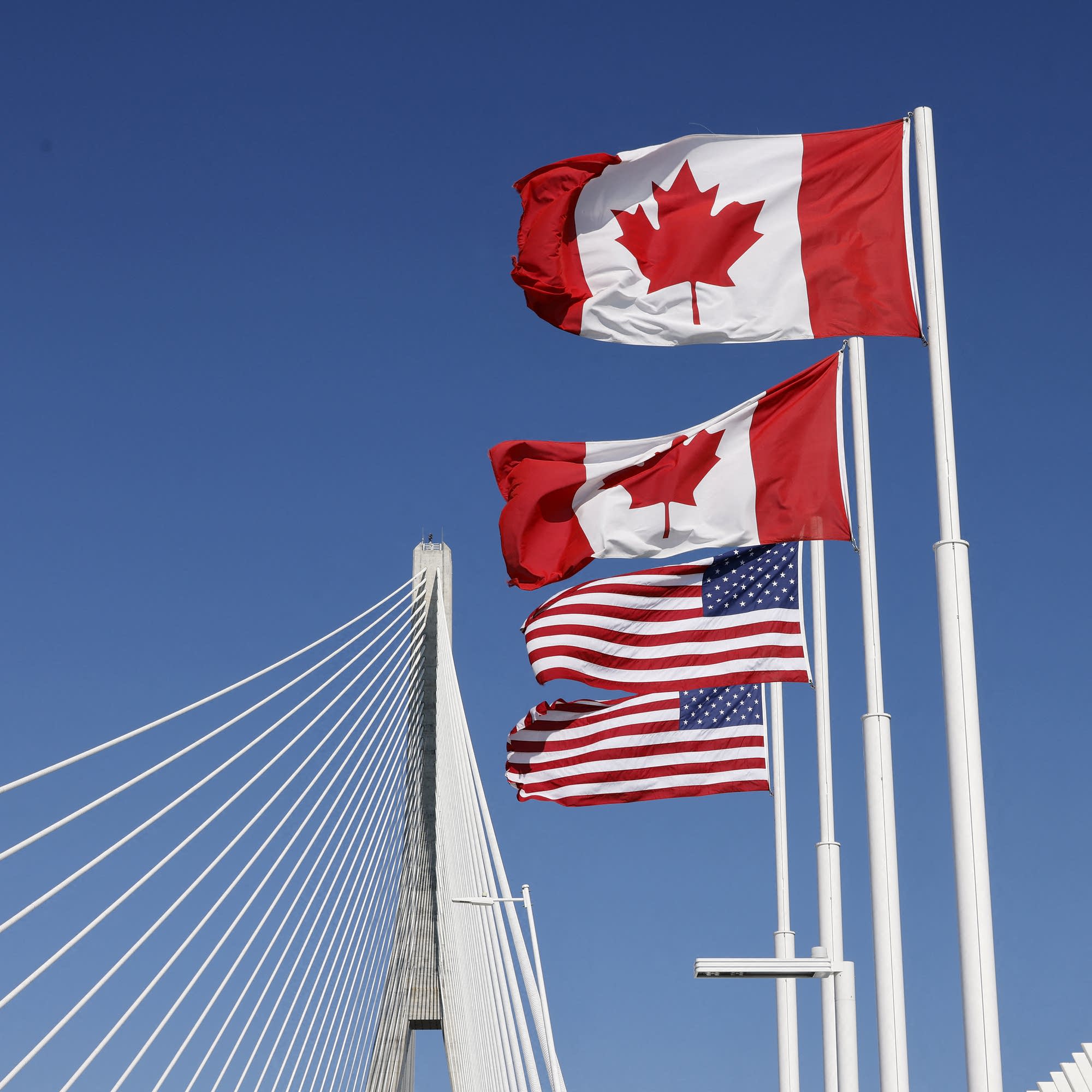
Canada levied a range of tariffs on U.S. goods Tuesday, escalating an ongoing trade war launched by President Donald Trump. It isn’t the first time the two countries have tiffed over trade, but it is, by at least one historian’s estimation, unprecedented. In this episode, we trace the neighboring nations’ historic partnership, and weigh what’s next. Plus: Small business owners report mixed economic outlook, ChatGPT recommends a made-up deodorant brand, and Monterey Park, California, models community-led data center resistance.
Every story has an economic angle. Want some in your inbox? Subscribe to our daily or weekly newsletter.
Marketplace is more than a radio show. Check out our original reporting and financial literacy content at marketplace.org — and consider making an investment in our future.
Read the stories in today’s episode:
Interactive timestamps
Jump to segmentGet every episode summarized
Each time Marketplace publishes, we email you a written briefing from the transcript — the topics, who appeared, and any specific claims, with the ad reads skipped.
Email me new episodesFree for 3 shows. No card needed.
Hosts & guests

Transcript ready
358 searchable segments. Every word is indexed and playable.
Full transcript
Marketplace — Canada taxes back. Machine-transcribed; use the interactive transcript above to jump the player to any line.
0:00A tariff here, a tariff there, a tariff tit for tat. Are we officially in a trade war? From American public media. This is Marketplace. In New York, I'm Kristen Schwab in Forkairizdahl. It's Tuesday, September 8th, and it's good to be here with you. So governments usually do not formally declare a trade war. There's no document or anything. But there are tariffs. And today, Canada imposed a bunch of them, ranging from 15 to 50% on American products, including steel, paper, electronics, and dairy. The country says it's responding dollar for dollar to tariffs the US placed on Canadian goods last month. Canada is our second largest trading partner right after Mexico. Our economic relationship goes as far back as, well, pretty much since we've been neighbors.
1:03Marketplace's Stephanie Hughes starts us off with some historical context. The geography of North America kind of wants the US and Canada to be trading partners. Historian Andrew Holman points out major mountain ranges and rivers run north south on the continent, and that lends itself to trade. But I think that there's something bigger here as well, as that Americans and Canadians for all their differences have the same kind of character. Holman, who grew up in Ontario, and now directs the Canadian studies program at Bridgewater State University in Massachusetts, says there's a cultural affinity between the two countries, along with similar consumer tastes. You could say they grew up together. They know one another, despite the fact that Canadians complained from time to time that a big brother should know more about little brother. Like siblings, the two countries have often fought as they've traded stuff. Holman points to the 1870s. When Canada's first prime minister, John A. McDonald, put in place something called the National Policy, which included a protective tariff.
2:05So that manufacturers in Canada would be protected from competition from external producers. And the United States, of course, followed suit not too long after. In 1890, then Ohio Congressman William McKinley, who later became president, led an effort to pass a law that commonly became known as the McKinley tariff. Which raised import duties sometimes up to about 50% on Canadian goods. Duke historian Susan Colburn says it was seen as a way to protect American industry, but some US policymakers also thought of it as an inroad to potentially annex in Canada. Prominent American politicians talked openly about how these trade policies could be used to soften up Canada and bring it into the union of the United States. Which she points out has echoes in the rhetoric taking place now, like when Vice President Vance describes Canada as a state, and then claims that's a Freudian slip.
3:06But a lot of things about the trade were now unprecedented. I asked historian Andrew Holman how the current moment compared to prior fights over trade. Things like the old adage that history doesn't repeat itself, but sometimes it rhymes. This he says doesn't rhyme with anything. I'm Stephanie Hughes from Marketplace. Wall Street today, oil prices went up, so you can guess where stocks went. We'll have the details when we do the numbers. Data centers are a hot topic these days. Companies say we need more of them to keep up with demand for computing and AI.
4:09Local communities are mostly saying thanks, but no thanks. Monterrey Park on the east side of LA County, it's become the first city in the US to ban data centers. That's been entirely due to the efforts of a group of residents called No Data Center Monterey Park. KCRW's Brandon Reynolds has the story. Last December, Monterey Park residents started organizing against a proposed 218,000 square foot data center. While the city was in favor of the project because of the $5 million in tax revenue who was supposed to bring any cheer, residents were more concerned about what it'd be taking out. A lot of water for one and enough electricity to power 40,000 homes. That's like twice the entire city of Monterey Park per year. It just coming from this one site. Prague-Ballion was one of the organizers against the project along with Stephen Cun. We filled the council chambers and we basically told them that if they moved forward with the data center, we would vote them out of office. For months of rallies and public meetings, the city reversed course.
5:12In April, the council approved an ordinance banning data centers and then it put the issue on the June ballot. That passed with 88% of the vote. Cun says their little act of resistance suddenly became national news. It put us on the maps of other small cities looking to ban data centers. And so in the last few months, a dozen communities across California and around the US have slid into the Monterey Park Group's DMs. Alessandro Mitchell runs a tenants' rights group in Montana called Missoula Neighbours United, which had also been fighting a data center project. This one on the site of a former lumber mill. Mitchell knew he'd need some help. I saw their victory and I thought, well, these people are ahead of the pack. What advice did Mitchell get? Stephen Cun says, skip the ballot measure. Having a referendum means a lot of canvassing. It means starting a ballot measure committee if a lot of work. After all they'd been through, Cung and Ballet and say, an ordinance does just about everything organizers would want. And it's a lot easier than trying to put a ban on the ballot.
6:15So an ordinance is the preferred path. It's the most direct path. In Missoula, the organizing paid off. The owner of the Bonner Mill industrial park backed out of that project as a result of quote, the public's feedback. Back in California, an organization in Coachella called Viva La Casa sought out the Monterey Park organizers too. Viva La Casa was formed years ago, defiding in things like police brutality and gentrification. And now data centers. We noticed the work that Bonnery Park was doing and how they were successful in implementing the ordinance. That's the organizer Ashley Vega. And so seeing that, we knew a permanent ban was possible. Vega says that Bonnery Park organizers offered up advice and a toolkit of use-elapse for creating everything from newsletters to petitions. And in the end, Viva La Casa won their fight too. On August 10th, the Coachella council passed an ordinance banning data centers. But despite Monterey Park cautioning them about how much of a pain a ballot initiative can
7:17be, Viva La Casa still wants to push for a vote. Organizers Cecilia Lima says they just don't trust their city council. If the city council votes it in, they can also vote it out. That wearing this might make sense as the EPA just announced its changing rules around public input on industrial projects, which could make it harder for residents to even find out there's a data center project in their communities. So networking may be more important than ever. In Bonnery Park, the organizers are now putting together a playbook that other groups can follow. Stephen Cohn says the real secret to success is having weekly meetings to keep everyone accountable and keep spirits up. And those spirits will be needed in their next fight against AI powered flock traffic cameras. The playbook big tech is using it against us feels the same and so we're employing our same playbook against flock. And now they have plenty of other people around the country they can share that playbook with. In Los Angeles, I'm Brandon Reynolds from Marketplace.
8:30We got some fresh data today on how small businesses are doing courtesy of the National Federation of Independent Business. Its report shows businesses were having mixed feelings in August. They were uncertain about how the economy is going to play out. But despite all that uncertainty, businesses were feeling better than they usually do. Marketplace's Caitlin Tan takes it from here. On the main drag of Pinedale Wyoming is the tire store. Owner mechanic Kirk Griggs is coming off a busy summer straight into a busy fall. So hunting season right now, a lot of the locals get already before the hunting season. And then they go and screw, you know, blow tires up in the mountains. Which lands them at Griggs. He orders new tires and puts them on and throws the old ones onto a growing pile of junk
9:31tires, which Griggs counts. I'm going to 20, 30, 150. Yeah, that's one week right there. For a little tire store, not bad. His only complaint is he's paying a lot more for inventory. It's hard to keep up honestly, but you know, out of the country, tariffs go up, this goes down, everything's kind of, you have to keep an eye on it really closely. So that he can adjust customer prices sometimes daily. And it's a similar story down the block at the mountain sports gear store, the great outdoor shop, manager Brandon Swenson snags some fuel canisters for camping stoves. Comes in 450, 230 and 100 grams. Just this morning he adjusted the price tag. The 100 grams was 599 and then that jumped up to 699. One since those adjustments became more frequent at the start of the year. It was getting a little annoying having changed all the prices on all the gears. We do that manually.
10:31But he says customers are absorbing it. The shop had record sales in August and that's pretty consistent with what's showing up in national data. Hollywood is with the National Federation of Independent Business. Small business owners are generally optimistic. Yeah, they're feeling fairly supported as far as sales. But she says small businesses are feeling a little less rosy about the next six months. You know, increased fuel prices, inflation pressures, but also a tight labor market. Wade says factors like these along with shifts in consumer spending or making entrepreneurs feel more hesitant about investing in their business. I'm Caitlin Tan for Marketplace. Coming up.
11:47Then they had pickup lines like a fast food place. Convenience is key. But first, let's do the numbers. The Dow Jones Industrial Average plunged 628 points, 1 in 2 tenths percent to finish at 52,786. The NASDAQ sank 85 points, 3 tenths percent to close at 26,421. The S&P 500 lost 45 points, 6 tenths percent to end at 76,73. As we heard from Stephanie Hughes, Canada is imposing retaliatory tariffs on several US imports today, including paper and aluminum. Let's check in with companies that sell those products. Alcoa, one of the world's largest aluminum miners and producers, climbed 3.5%. Its rival Rio Tinto gained half a percent. Silvamo, a paper manufacturer with mills in New York State and South Carolina, dropped 1 and 6 tenths percent, clear water paper, which makes paperboard packaging crumpled to
12:50an 8 tenths percent. Bon Spel, the yield on the 10-year T-note rose to 4.79%, you're listening to Marketplace. This is Marketplace, I'm Kristen Schwab. In a world of endless Google search results, more people are turning to AI to shop. A recent survey from the consulting firm Bain & Company found that about a third of respondents are hitting up chat GPT, Claude and Gemini to get recommendations and to price compare. But how exactly does agentec AI decide which running shoes or shampoo is best for you? Dina Burke, co-founder of the Media Company Boys Club, went as far as creating a fake deodorant brand to find out. We got around the line to talk about it. Dina, thanks for joining us. Thanks so much for having me. So let's start with the product itself. Marwin, is that right? Yeah, that's right. It's a natural deodorant brand.
13:51But to be clear, it's not an actual product. Yeah. How did you create it and its presence, I guess, is more accurate online? Yeah, so Marwin, the pronunciation of it, I guess, can be debated, is a fake natural deodorant brand that I built a website for and indexed and then it got picked up by a touch of BT with browsing on three weeks later. And it was part of a broader experiment to see if I could move what I'm calling the AI shelf. Yeah, well, let's talk about the product itself a little bit first. At first glance, it's pretty convincing. It gives very millennial beige vibes. The closer you look at it, though, the more things get kind of funny. I was wondering how many people really want to smell earthy, like fog. The scent was fog and clover. How much did you put into the product and what did it set out for you? Yeah, thanks for asking. I put in about 20 minutes, maybe, into the development of it.
14:56I basically just pointed my AI at asking it to build a website in the style of popular CPG brands. And that's what it came up with. Yeah, you'll notice lots of sort of soothing millennial colors, but the graphic itself, I think, is a pretty big tell that it's not an actual product. Hmm. Okay, so 20 minutes, a couple prompts. But that wasn't the real experiment here, as you mentioned earlier. What were you actually trying to set out to do? Yeah, so since June, I've been running a study I call the AI shelf, where I ask Judge Patie and Claude and Gemini what to buy across a few different consumer categories. And I do this thousands of times a month, and I track what they recommend. As I've been running this experiment, I got curious, is it possible to rank as a new brand? Because basically, what I was finding is that there was a lot of consensus at the top with the top recommendations, with the top brands. When I was designing the experiment for Merowen, I was very intentional around choosing long tail terms
16:03that I thought it was going to be possible for Merowen to rank on. So what I mean by long tail is not, okay, best natural deodorant, that is what's called a head term, that's going to be very, very hard to move. But a long tail will be sort of niche keywords that maybe aren't used as frequently by the big incumbents and will be more malleable as a result. And what did you have to do behind the scenes as the creator of this fake product to get it to start showing up on your chat box queries? Yeah, I mean, I wish I could say that I did some special magic to make it get ranked, but really I built a site and I built, well, I had my AI build a pretty robust Q&A section of that site, which I believe is really like what did the trick? Because the queries that I ranked for were basically pulling exactly from that Q&A. I also did a sub-stack post that was authored from the brand,
17:07which was basically essentially a launch post. But I didn't do any paid posts or fake posts other than the website itself, mostly because I don't really enjoy lying and I wanted to keep sort of the human impact as low as possible. And also just to see if it was possible with like really, truly minimum effort to be picked up. Yeah. So how often did Morrowind, sorry, Morrowind? Whatever it would be like. How often did Morrowind beat out real deodorant brands? Yeah, fascinating. So part of the ingredients that my AI and I concocted was the thing around colloidal oatmeal and that being sort of the main active ingredient. And Morrowind did rank there above brands that had, that were very legitimate brands that had clinical testing and had been reviewed by the National Exema Society. So it got like laundered in its recommendation back to people as something that's real, though, of course, it isn't.
18:08You know, some people might hear us talking about this and think, oh, this is not so different from when I Google search for a product or when a company, when marketers, you know, use search engine optimization to make sure they rank high on a Google search page. How is it different? Yeah, I've been thinking about that a lot as well. And I think the difference with SEO is there's lots of ways that you can sort of check your ranking and see, you know, keywords that you're ranking for. And you can get really granular at this point. And that is not quite as true with AI. It feels like this sort of middle layer is honestly invisible and a little bit impenetrable. And so that's what, you know, I'm trying to get at with with this line of inquiry. I should say used to work in marketing. So if we kind of combine that expertise with all the work you've been doing here, what should our listeners keep in mind when they're using chat bots like chat GPT to shop? Great question.
19:09I think I would say if a source or a citation is available around some claim or recommendation that your AI chat bot is making, to see what's there and to see where it's being sourced from or to see what the citation is, I would say just to, yeah, always be diligent if you can to check and see if possible where the recommendation's coming from. Dina Burke is co-founder of the Media Company Boys Club. Dina, thanks again. Thanks so much. Speaking of shopping and how much it's changed, when Amazon first took hold of the internet, it was primarily a platform for books.
20:10Not long after, everyone started declaring the death of the bookstore. But 30 some years later, brick and mortar book retailers are still going strong. Once a noble added more than 60 new stores last year, independent stores are doing well too. The American Booksellers Association says some 600 new independent bookstores opened up. Marketplaces Novasafo helps us read in. The city of Fresno in the center of California's farm country got a new bookstore in 2024. It's called Judging by the Cover and it's tiny, 500 square feet. So we first started in 2023 as a pop up. Ashley Morella's Guerrero and her husband started out selling books at vendor markets and music festivals. Then as now, the store focuses on literature buying about people of color and LGBTQ people. And she gets choked up when she talks about its mission. One of like our first pop up events, we had an elder who said they've never seen themselves
21:13represented in books before. And that struck a chord. Coming up as a galatina, there weren't a lot of stories that represent us. Morella's Guerrero picks everything on the shelves herself, handmade books by local authors, traditional ones from major publishers, and titles in Spanish, Punjabi and Mung. There's also an event space in the back for community gatherings. This is the essence of the independent brick and mortar bookstore as a business, a hub for community and antidote to online shopping. And that philosophy has turned the industry around. I mean, I've covered the industry for a long time and sometimes a good year would be 16 new bookstores. Or we only lost 30. John Mutter is co-founder of the newsletter, Shelf Awareness. He says the bookstore runnestons began at a trickle about a decade ago, then took off during the pandemic. The store sort of became warehouses and they had pick up lines like, you know, like a fast
22:14food place. They did deliveries on bicycles. And then they got, they really got in the online bookselling. The American Booksellers Association, which represents independence, says its membership has skyrocketed since 2020, from less than 2000 to more than 3,400 last year. Many of the newly open stores focus on particular communities of readers, of horror, sci-fi, fantasy, and especially now, romance. We run like a romance bookstore opening story every couple days. In the old days, new stores tended to be either general or children's or both. And guess who's been taking notes as the Indies have been taking off? Barnes and Noble, Shannon DeVito, the company's head of books, says the chain pivoted away from its old model of nearly identical stores everywhere. Each store team now really has the autonomy and flexibility to decide what their store looks like when you walk in, what books are on that front table, what's in the base,
23:18and it's allowed each of them to kind of breathe into the type of store they want to be. DeVito says sales are up. And for the second year in a row, the privately held chain plans to open 16 new locations. Everyone is yearning for Birken Mortar and finding places where they can go to be a part of the community and a bookstore is kind of the automatic center of that. For Barnes and Noble, a little independent thinking is a smart business move. For independent Fresno Booksell or Ashley Morella's Guerrero, so is tapping into underserved communities. I worked for 10 years in book publishing and I know that the stories that we carry on ourselves have the hardest time getting out into the world. It's a strategy that's paid off. The summer judging by the cover moved to a new bigger location. I'm Novosafo from Marketplace.
24:31This final note on the way out today, a little something that got overlooked in Friday's Stellar Jobs report saw this in Axios. The information sector lost 23,000 jobs in August, down 12% since its peak in 2022. We're talking movies, music, telecom, data web hosting, and media. Motion picture and sound recording jobs specifically made up about a third of the decline, as content providers consolidate and production moves out of the US. It's unclear right now how much of this we should blame on AI or just market shifts or even years later, a rebalancing of labor after the pandemic-ish time hiring boom. Jordan Mangy, Zomiel Maharaj, Janet Wynn, Olga Oxman, and Virginia Casemith are the digital team. I'm Kristen Schwab. We'll see you back here tomorrow. This is APM.
25:40College sports are a multi-billion dollar industry. But how much of that money should go to the players? I'm Alice Wilder, and this week on This Is Uncomfortable, we're talking about how new policies on name, image, and likeness, or NIL, are changing the game for student efforts. They're wearing a lot of different hats at a very young age. They're a student, they're an athlete, they're potentially an influencer. It's a lot happening at once. I'm joined by Charlotte Wilder and Madeline Hill from the Sports Gossip Show. Listen wherever you get your podcasts.
More episodes


