About this episode
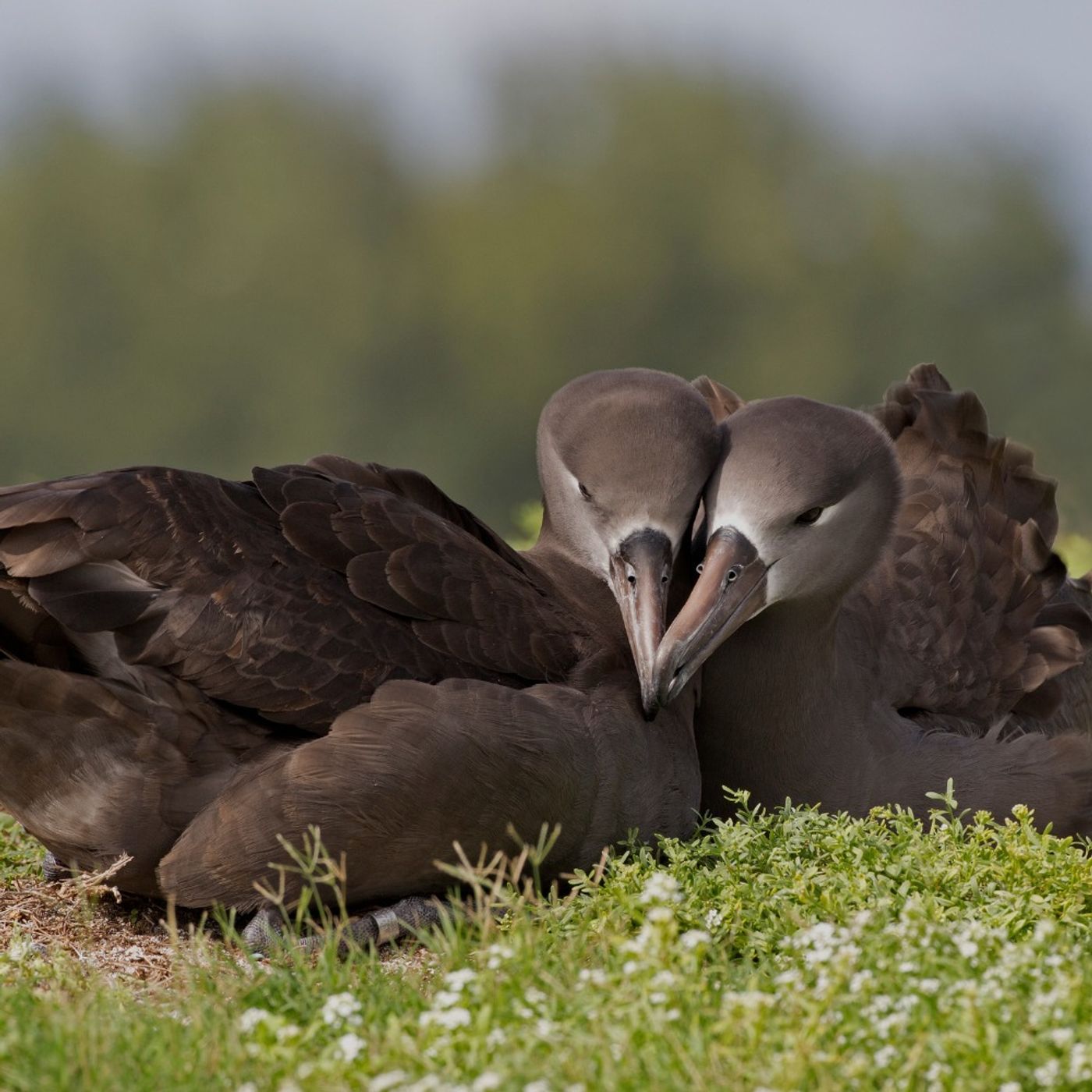
Isla Guadalupe off the Western coast of Mexico is famous for its massive colonies of petrels, shearwaters, and Laysan Albatrosses. Now, conservationists hope it can become a safe haven for Black-footed Albatrosses too – like Bruno and La Güera. In 2021, the pair were among a dozen Black-footed Albatross chicks flown from Hawai‘i’s Midway Atoll to Mexico by researchers with the non-profit Grupo de Ecología y Conservación de Islas. It’s part of a larger effort to establish a new Black-footed Albatross colony in Mexico as rising seas threaten their native breeding grounds. The budding romance between Bruno and La Güera has the team hopeful that they’ll be just the first of many Black-footed Albatross couples helping their species settle into a new home in Mexico.
¡Este episodio está disponible en BirdNote en Español!
More info and transcript at BirdNote.org.
Want more BirdNote? Subscribe to our weekly newsletter. Sign up for BirdNote+ to get ad-free listening and other perks.
BirdNote is a nonprofit. Your tax-deductible gift makes these shows possible.
Hosted by Simplecast, an AdsWizz company. See pcm.adswizz.com for information about our collection and use of personal data for advertising.
Get every episode summarized
Each time BirdNote Daily publishes, we email you a written briefing from the transcript — the topics, who appeared, and any specific claims, with the ad reads skipped.
Email me new episodesFree for 3 shows. No card needed.
Hosts & guests
Transcript ready
29 searchable segments. Every word is indexed and playable.
Full transcript
BirdNote Daily — Bruno & La Güera: An Albatross Love Story. Machine-transcribed; use the interactive transcript above to jump the player to any line.
This is Bernal. Islewada Lupe, off the western coast of Mexico, is famous for its massive colonies of petals, cheer waters, and lacing albatross. Now, conservationists hope it will host black-footed albatrosses too, like Bruno. In 2021, Bruno was one of a dozen black-footed albatross chicks from from Hawaii's midway atoll to Mexico. The move was part of a larger effort to establish a new black-footed albatross colony on Islewada Lupe as rising seas threatened their native breeding grounds. On Islewada Lupe, a research team led by marine ecologist Julio Hernandez fed the chicks by hand and placed decoys that look like parents to help them learn to be birds. Once Bruno and the other black-footed albatrosses were all enough to fledge, they soared out to sea with the native lacing juveniles. When they started returning to the colony two years later,
the black-footed albatrosses were... Copy, awkward. Some tried to woo a lacing mate, but their courtship dances were incompatible. And though Bruno socializes happily with others of his species, he didn't feel the spark with any of the eligible ladies. Until Awera, Julio says, Bruno's leg band is number five, and Awera is number four. She'd been his nest neighbouring Hawaii, and he's creating mate on the flight to Mexico. Turns out, Bruno had been holding out for the girl next door. It's a beautiful love story. I will bet anything that they will be the first couple to form, and theirs will be the first egg we get from this relocated albatrosses. For bird note, I'm Shakespeare.
More episodes
More from BirdNote Daily

Letter to an Olive-sided Flycatcher
BirdNote Daily

Arctic Dispatch: Sandpipers Sing at Teshekpuk Lake
BirdNote Daily

Wilson’s Warbler near Summer’s End
BirdNote Daily

Migration: Long, Short, and In-Between
BirdNote Daily