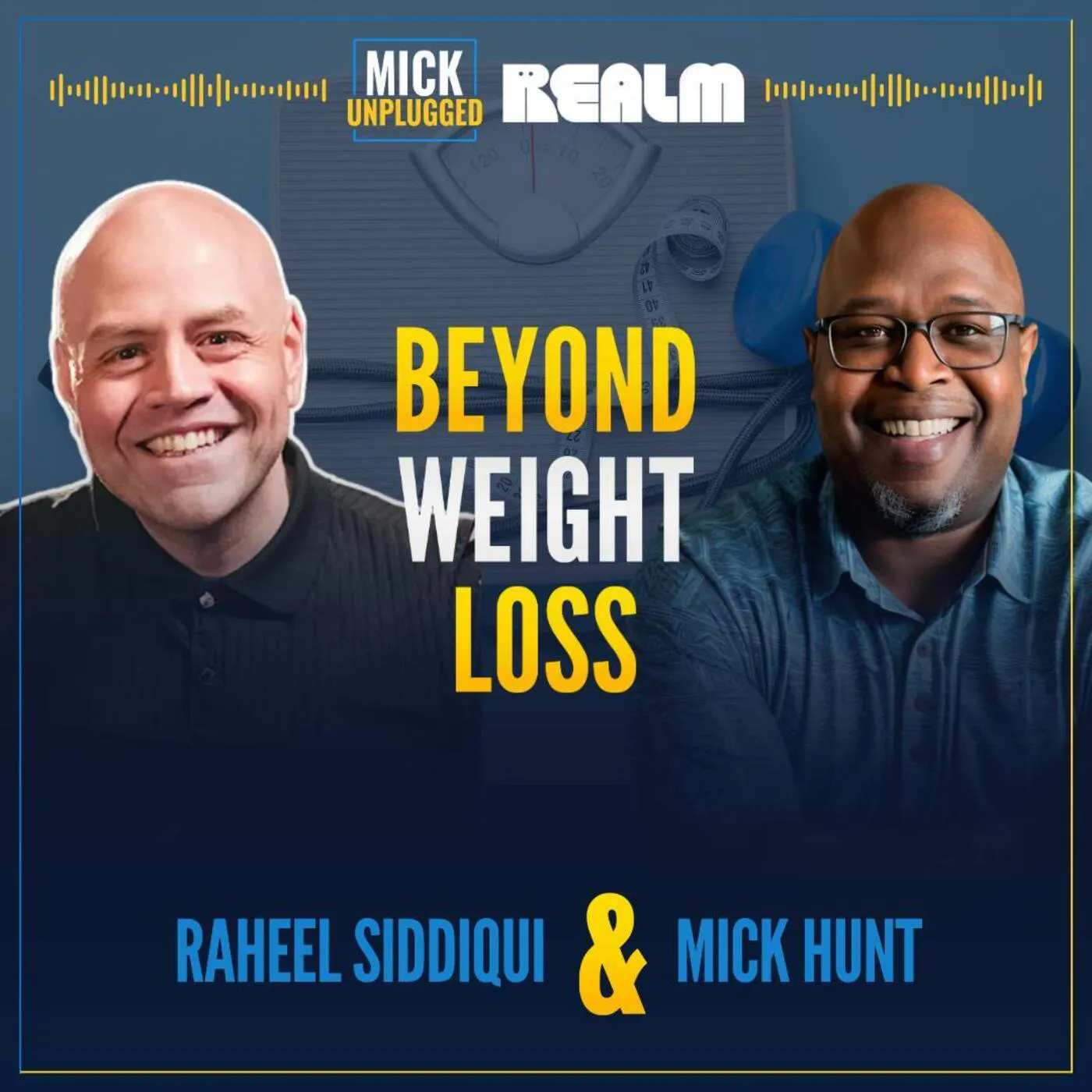
About this episode
Get every episode summarized
Each time Mick Unplugged publishes, we email you a written briefing from the transcript — the topics, who appeared, and any specific claims, with the ad reads skipped.
Email me new episodesFree for 3 shows. No card needed.
Hosts & guests
Transcript ready
408 searchable segments. Every word is indexed and playable.
Full transcript
Mick Unplugged — Breaking Walls: Raheel Siddiqui's Journey to Unstoppable. Machine-transcribed; use the interactive transcript above to jump the player to any line.
Ladies and gentlemen, welcome back to another exciting episode of Make Unplugged and if you are looking for a breakthrough, if you are looking for the journey story, this episode is for you. The guy I'm bringing on has an incredible journey, has an incredible story and I know you're going to pick up so many nuggets from this one. He's a good friend that I met at a conference out in Las Vegas who then has literally become one of the closest people in my circle. And we're going to talk about why and how that happened. Ladies and gentlemen, I present my guy, Mr. Raheel Sadiq. You're listening to Make Unplugged hosted by the one and only Make Hunt. This is where Purpose meets power and stories spark transformation. Make takes you beyond the motivation and intramini, helping you discover your because and becoming unstoppable. I'm Rudy Rush and trust me, you're in the right place. Let's get unplugged.
You're right. How you doing? Hey, sir. Good. Good. Thanks for having me. How you been? I've been great, man. I'm so glad we could do this when in person. When we talked about doing it, we could do it virtually, but the energy that you have, the way that you move, man, I knew we had to do this one together for sure, to do this one with you here. Thank you so much. Thank you for having me, man. You know how much I look up to you and I've known you for however long amount of time, but the short amount of time. But I feel like, man, like somebody like you, I really inspired me to be the best version of myself and it means a lot. And trust me when I say this, man, like you are everything that every leader and any person should embody, man. So thank you. I'm very humbled, very grateful, very honored for you to come take time out of your busy schedule to meet with a guy like me. It means the world to me. So thank you, Make Hunt. No, man. All the words you just said, I can flip back. I'm the honor one to be here, man. And like I want to talk through so many things and it's like, how do we get it out? I just want to start with with what a lot of people may be watching this don't know. You didn't always look like
this, man. I hope that's a good thing. That's it. For everybody watching, I want you to talk. Yeah. Dude, you've lost over 200 pounds, 200. And it's one of those things where it's because you wanted to. You needed to. You had to, right? Yeah, sir. But you did it. And I tell people this is putting that action. It's one foot in front of the other. It's knowing where you ultimately want to get to in business and in life. And you you're the embodiment of that walk us through that journey, man. Like for those that don't know, right? He'll that don't know the beast that you are walk us through just saying enough is enough. I'm going to do something about it. Yeah, for sure. Now, man, thank you so much. It's been all right. I mean, I can't believe it's been this many years, you know, it still feels like yesterday, right? And I think it just stems from, I guess from childhood, right? From like when I was born, I was pretty much born overweight and then and the weight just kept adding on and
you know, elementary school, middle school, high school, college, post college. And then, yeah, before you know it, I think like most people in life life truly kind of gets in the way. And then you don't really realize what's going on until it really hits you in the face. So fast forward to January 2010, I was 27 years old. I was 405 pounds and just a lot of bad habits, right? And I think it's very easy for anyone to say, well, diet, lack of exercise, which is true. But it's also the fact of I truly feel like your life, your lifestyle, the choices that you make, who you hang out with. And I was F grade all across the board. And what I mean by that is just not having that accountability. So 27 years old, January 2010, I was 405 pounds. My father was a healthcare professional. He was a pharmacist. And one day he just looked at me, blew on the face and was like, man, like I got to take you to the doctor. Like I'm getting really worried. I was his youngest son. So he said, I need to get you checked out. And mind you, he had a very soft spoken voice. He was always in my ear. And he would always come talk to me. And you know, throw like
whispers in me like, hey, man, like let's get going. Let's take care of your health. And like a typical, I'm a dad now, right? So typical father son in one ear and out the other, like, oh, you know, dad, I'm okay. I'm okay. But I wasn't okay. So lo and behold, went to get my blood work done, went to get the go see the doctor for my results. And people that know me out there, I'm notoriously known for this part of the story. So the doctor walked in, had a folder in his hand, looked at my dad and I looked down at the folder, flipped through the pages of the folder, closed the folder, just threw it on the counter next to him, looked at my dad and I and said, it doesn't matter what these results say. Your son's going to be dead by the time he's 40 anyways. We're just wasting our time being here. And that was it. And and and the first thing I thought was, all right, well, I'm going on Yelp, definitely not giving you a five star review for bedside manner. Yeah, very cold, man, very cold. And that was it. And the crazy part about that story is I never knew my
scores. I never knew my hemoglobin, my sugar, my cholesterol, my BP, nothing. He just was like, dude, we're just wasting our time here. And I think he felt the energy. How you said, I am notoriously known for my energy, man, because I bring it. I bring it every single day. But at that time, I wasn't the repeal that I am now. And at that time, he could just see the weight, go figure, no pun intended, but all my shoulders, all my chest like this guy's not kind of, what is he going to do? I can tell him all of his scores. He's not going anywhere. He's not doing anything. And so my dad and the doctor went off to talk for one or two minutes. And that was it. We left. It was like probably a few minutes of a visit. And I think where you talked about where that were my life, the story really turned was on driving home. We were about halfway home. My father looked at me and said, hey, I need you to pull the car over. I said, why dad is everything okay? He said, yes, just pull the car over, pull the car over. I need to talk to you. I said, okay, sure. So I pulled the car over and he looked right at me dead in the face. And he was like, listen, you know, I'm running out of time. And my father was battling a lot of health issues at that time,
especially a liver issue that was really getting to him. And he said, look, I'm running out of time. And I'm not going to be here to see you get married. I'm not going to be here to see you have kids. But you you still have time. You have to take this seriously. This isn't a game. And we are not going home until you promise me that you are going to take this seriously. And I just talked about in one year or not the other, but that was the first time that I saw my father, like having tears, like waters in his eyes, like, dad, like, please don't. And he was like, no, we are not going home. You have to promise me. Promise me you're going to try to take care of this thing once and for all. So in that moment, I said, okay, I promise. I mean, there's nothing more heartbreaking than to see your parents crying over you, you know, feeling that pain over you. So I said, okay, sure, I promise. So we drove off. We drove home and the journey began. And that's when I really started to take a look at myself, like, wow, um, the doctor just told me, I'm not going to make it a 40. I have my father pull me over on the side of the road and tell me
that he's not going to be there to see me get married and not going to be there to see me have kids. What am I doing with my life? Where did I go wrong? And where do we go from here? So I'm going to unpack a lot of things in that moment. I love the fact that it wasn't self-pity. The last words you just said, where do we go from here? Was you trying to solve it and saying, I'm going to build a plan. But I want to go back to the moment that the doctor slammed your reports down and says, I don't care. He's not going to make it to 40. What did you feel in that moment? And that in that moment, I honestly, I hated his guts. I was like, wow, that was really, that was really mean. That was really rude. But here's a fun fact. So you hit her on the head in that moment. That's exactly how I felt. But if you ask me right now, the best thing he could have ever done for me, the best. I know you would have to know it was a
challenge. You're saying that? Exactly. Here's 40, here's 50, here's 60, and all these birth dates, I'm going to come see you. Exactly. Oh, yeah, yeah. And I still see him every now and then too. Right. Yeah, I just saw him one or two years ago. And I remember when I saw him, I sure about a year ago, he went up to me and he whispered in my ear, he said, your dad would be proud. All right, we're going to come back to that too. So let's go to, all right, you got to figure it out now. So dad pulls you over in the car, has this moment with you, gives you not tough love, but it's like almost like a final plea, right? Like, hey, like, I need you to outlive me. That's what dad is saying. You have to figure out how to do that. What are the first things that you're doing? Because I think for everybody that's listening or watching right now that struggling with something, I don't care what the struggle is, it could be weight loss, it could be addiction, it could be, you know, just self-motivation. What are the things that you put in place immediately
for yourself? Yeah, sure. So I think the first thing was truly being accountable and accepting that you have a problem, admitting I had to admit that I had a problem and I think that was the biggest problem I never wanted to admit it. I never wanted to look in the mirror and say that I have a problem and like you just hit it on the head, it was deeper than the weight loss. I was just a very broken individual. I was bullied a lot. I was bullied a lot. I mean, like, I was bullied so bad that I would walk into a room and I would walk into a buffet line and a friend, quote, unquote, would walk in right next to me and be like, hey, man, like, save this for the rest of us, like, because there's not enough for you. Clearly, you don't need to eat and in front of everybody or, hey, I would go to gym class. Well, we're going to do shirts and skins. Hey, Raheel, sorry, man, you're going to have to be the one to go skins and stuff like that. And so I think and I just felt like I would pretend like I was like this tough kid and I would use like my just and use
different mechanisms in my brain to kind of deflect, but I was really getting beat up. They say sticks and stones, but names do hurt, man. Yes, sir. They hurt. They hurt a lot. And, you know, for those of you out there, I think it just comes down to like you hit it on the head. It's the first problem or the first step is truly admitting that you have a problem. That was the first time in my life. I have, I had really admitted that I had a problem. And then you said going from there. So then the journey began. So I was like, OK, well, where do we go? So I started to train on my own. I would go to the local field by my house, try to do laps there. I quit. I joined another local gym. I tried it. I said, OK, this is cool. Started going maybe three days a week. Then that went all down to two days a week, then one day a week. And then the phone call started coming up, like from the trainer, like, Hey, man, where did you go? I'm not coming back. I just was like, man, you know what? But I always had that little voice in my head to never quit, never give up because I made a promise to my dad. And I think that always stuck with me. So fast forward to
May 2010, a really close friend of mine hit me up and said, Hey, man, a few close friends of us, of ours are joining a local gym. Why don't you join, man? It'll be a great time. And we can play ball together. We can hang out together. And it'll be fun. And the one thing that I can hang my hat on, even at my heaviest, I was pretty athletic for a big guy. My friends could vouch for me. We played a lot of pickup basketball, a lot of football, like flag. So he was like, man, we could do this here at the gym. Just join. So why don't you give it a shot. And at this point, Mick, it's like, I had nothing to lose. I'm trying on my own. I'm failing on my own. I'm trying on my own. I'm failing on my own. What else do I have to lose? So I go to the gym. And I remember walking in the first day, I see a big sign on the wall. What does it say? Team weight loss class. Why don't you join? And it says like 12 week program for those that are in need, who need a jumpstart for their journey. And that's exactly what I needed at that time. So I joined the class. And I think you're going to love this part of the story. So they, one of the class I joined,
I get to classes. Everybody there is probably 20 people. And first day of class, the trainer is like, okay, everybody, welcome to the class. The very first thing we're going to do is everybody has to go up on the big scale. And you have to say your name and announce your weight to the entire class. And I'm like, oh, my God. So I went right to the trainer. I said, Hey, listen, man, please don't make me do this. Like, look, this is already so hard for me to join a gym and join a class. And now you want me to tell everybody my weight. And you know what she told me? She was like, Reheal, I know what you're going through right now. And I know what you're feeling. But she was as much as you are frustrated or whatever you're feeling right now. She was like, I promise you, you are going to love telling this part of your story when you get to the other side of this journey. And exactly right. And in that moment, I was like, okay, I don't know if I believe you. But I do believe her now. You know, she ever gets to see this. So I went up there and I told everybody, my name is Raheel Sidiqi and I weigh 405 pounds. And it just got dead silent. Like,
wow, like this guy really is telling everybody. And he's 405 pounds. And I drove home that day in the car, crying. I got to bed crying. And the mentality came back into me, man, I want to quit. I want to quit. But I woke up and what happened? My heart literally told my mind, well, you made a promise to your dad. Get up, get up and go back. You made a promise. So I said, okay, I made a promise. Let's go. So the journey began. So I went and week one at the end of every week, you do a weekly weigh in. So class was only three days a week. And I just did the class. I didn't do anything else. So when Monday, Wednesday, Friday, weekly weigh in, I lost about like three pounds. I said, okay, man, that's okay. That's a pretty great result for a guy who hasn't done anything like this ever to commit to something. But I was like, you know, what if I really commit? And this is where the switch really started to shift was what if I just came every single day,
including the class, but even like the Tuesday, Thursdays, Saturday and just put in whatever I can, just move the body. So I did that week, two weekly weigh in, had a trainer. He looked at me. I looked at him different trainer. And I was like, okay, man, like, is it good or bad? You're kind of scared me. You're kind of scared me here. And he was like, dude, you lost 17 pounds this week. And I was like, whoa, and you know what, man, in that moment, that's when I really told myself, you know, for the first time in my life, I was a broken individual. I was bullied. I was humiliated. I was embarrassed. I was lazy. I was never accountable. I made excuses. I was the guy that ran away from every wall. I never ran through that wall. But that was the first time in my life, man, where I actually committed to something I didn't quit. I actually stuck with it and I hit a goal. And then that's when that's when the lion came out of the cage. It came out of the cage. And then from May 2010 to May 2011, I lost my first 150 pounds. So I appreciate it. I appreciate it. So
I think it just comes down to the fact of when you are at rock bottom, you have so many options you can go from. But it just comes down to you and you alone. And I think the beauty of the journey is it's when you are at rock bottom, can you summon the will to prepare yourself to be ready for the next wall that comes up? Because no matter how successful you can be or how you are in the moment, the next wall can come up. So piggybacking off of that, if I can. So that was May 2010 to May 2011, lost my first 150 pounds. I was feeling great. I was like, man, like life is good. You know what I mean? I got some swag feeling good. Yeah. The girls are starting to talk to me a little more. You know what I mean? I got to balance on my stuff. The swag is kicking. So I was feeling great. I was like, man, like coming from where I came from, I felt awesome. But you know, like I always say in life, you take one step forward, take two steps back or two months later, July 2011. We go to a family wedding in Connecticut. It was my cousin. So my dad's brother
son, my dad's health actually was getting worse, even though mine was, you know, quote unquote, the stock was rising on my health. And the night of the reception in the bed, my father's liver ended up blowing out and ended up dying in my hands that night. Wow. Yeah. So I was like, okay, this isn't fun. And that was in Connecticut. And to make matters worse, that happens. And then the very next day we have to do the funeral in Baltimore. True story, by the way. We go do the funeral in Baltimore the very next day. I bend over to pick up his casket. I stand back up. I hear a little pop in my back. What is it? I blow out my L3 L4 her needed disc at my father's funeral. And I'm having shooting pain down my leg down in my toes. I can't tell a soul because I have to say goodbye to my father who just died in my hands the night before. Wow. So you want to talk about walls, man. They come. They come ferocious and they come like no tomorrow. I know I've been through it, man. So your dad, who's your hero, right? Passes away in your arms and your hands.
Not to go to that moment, but but really the question the scenario was around how did that make you a better man knowing that the past was literally torched that night from from dad to you. Yeah. Like now talk us through like how that made you a better man. Yeah, no, I appreciate that. Thank you. I think it just comes down to that's where you've really are tested. I feel like when a man or a woman is in those type of moments when you're at the lowest of lows, put it this way, I tell people this in boxing, the referee gives you 10 seconds to get up off the mat. You have 10 seconds, right? And you are taking the beating of your entire life and you have 10 seconds. But the beauty of it is, and I'm going to go even specifically to a rocky two, it's, you know, to be heavyweight champion in your story, in your world, you don't have
to get up at one, but you can get up at nine and still be heavyweight champion of the world. Rocky Balboa got up at nine. He beat Apollo Creed by one second, one second, and he became heavyweight champion of the world. So I guess to answer your question more directly, it's life gave me the beating of my life. That was me on the floor. I lost my father. I did this for him. Like, you know, he, he was my hero. And I, in that moment, I was like, man, like, where do we go from here? But in that moment, I knew, and a part of him felt like he knew, like, man, like, there's more to my son. I know he's built for greatness. I know he has it in him. And I think, and I'll tell you, in a more deeper level, I think he in some way passed away. And I don't know this for sure, but I think he might have felt like, look, you know, I think me passing away might take my son's life to a different level, to a different trajectory of what he needs to become. Because that
fire that I still have, it burns even that much deeper, you know, and I don't know if it would have been the same if he was here or not. And of course, do I want him here? Yes. Do I miss him every day? Do I think about him every day? I do this for him every day and my wife and my son. But a part of me always goes back to think, you know, maybe he just felt like, you know what, if this is the one way for my son to carry the torch and go all the way, basically I have to sacrifice my life to keep my son alive. And I truly feel like that's the warrior spirit that he left me. My dad was a grinder man. He worked 14 hours a day, almost every other day. And even on his off days, he was a pharmacist. So he would pick up shifts to and then on the days off housework, yard work, work, you're the part of the hardest worker that I know. So, exactly. You know the feeling, right? So, so I think that's where the legacy really, I think, stem from like the passing of the torch per se, if that makes sense. Yeah. And so now, you know,
businessman, speaker, and we're going to get into that in a moment too. What's your because? Why do you do the things that you do? Why do you give back? Why do you inspire? I don't like motivate anymore. I like inspire because you are an inspiration. I appreciate it. Thank you so much. Why do you continue to do that? Why are you going on stages? Helping people do this? Why are people reaching out to you as a coach to help them? And you say yes. What's your because? All right. No, I appreciate that because I know what it's like to be in that moment. And I think to answer your question to the best possible way, I know though I was on the other side of that wall. The old reheal didn't have the reheal right now. And the old reheal needed the guy that I am now. So, it doesn't matter what part of life that you're in. And again, it doesn't have to just be weight loss. Any part of your life, whether it's, you know, resilience or you're going through any part of like just mental health issues or
depression or something that's bringing you down. And there's a wall you got to go break. I know the feeling, man, I know what it's like to be on the canvas, on the floor. And you have no reason to get up, man. But you could, if you hear it in my voice, I'm getting goosebumps here. You know, I got goosebumps here. You can get back up. And I want to have people believe like you can do it, man. You can get back up. I lost my dad in my hands. I mean, I've been through so much in my life. I lost my father in my hands. I had to get, I blew out my herniated disc. Nine years later, I blew out my second herniated disc. I gained over 75, 80 pounds of that 150 pounds that I lost back. And then I had to rip all that weight off. You know, my wife and I were struggling to have a child because the doctor told us that hey, Raheel, because of your extreme weight loss conditions, your sperm count is a little out of whack. Your sperm utility is really low. We have to go through in vitro fertilization. I have to see my wife go through injections. And you know, we had to pay financially so much for medication. And I had to see the bruises all over her body.
And I told her like, man, you're putting yourself through everything. And she was like, look, no matter what, I'm having this baby. And we're going to find a way to do it together. We're in this together. She had our son the most beautiful day of my entire life, 11, 11. And and that helped inspire me. And now that he is here, I have to be the best version for him. So I try to let him know like, you know, daddy wasn't the daddy that you see now. But you know, I want you to understand I'm going to do whatever I can to help you learn from my mistakes to be the best version of you because my father taught me that. I mean, life has given me the absolute beating. And I know for the viewers out there, I know that you're taking a beating too. And it's okay because the beauty of the beating, the beauty of the fall is you can get up. You can come back from it, man. It doesn't matter what you go through. I think rock bottom is the most beautiful place that you can be because look, there's nowhere to go but up. There it is. And so I want I want to take a moment and talk to specifically the person that's watching this listening that needs that
breakthrough, that person that that wall is there and they don't have the energy. They don't know if they can muster the effort to even touch the wall. I can even begin the breakthrough portion. Can you inspire that person right now to to what you said, get up? Yeah, for sure. No, definitely 100%. Listen, you can do it. I think the best advice I can truly give you out there, it's the first step. Just admit that you have a problem, admit that you have a wall that you have to break out. Just admit it. It's okay. There and there's nothing to be ashamed about. Quoting, you know, the great David Goggins, what does he always say? Never be ashamed of anything in your life. Face it, fix it, make it better. If you were at rock bottom, this is the best time. It is the most beautiful time. And just like that trainer told me, I didn't want to tell that story. At that time, I hated that part. I didn't believe her, but I love telling this part. It's
all about the comeback. Can you come back from it and ask for help? I think that's the best piece I can leave behind. It's asked for help. It's okay to reach out to people. I went to a local gym and I talked to people and obviously I took to my team weight loss class and that catapulted me. But every wall in your life, any wall in your life can be broken. Look, I was a guy that was supposed to be dead by 40. And I'm here on Mick Unplugged, one of the most famous podcasts in the world in the greatest shape of my life. And I did get married and I did have a son and I am in the greatest shape of my life. And I am looking up to a big brother right here right in front of my eyes. And any wall in your life is truly meant to be broken, man. If truly is, you can get off of the mat. You can be heavyweight champion of the world. If you don't hear it in my voice, I really hope that you do because I believe it wholeheartedly admit you have a problem. Ask for help. And keep focusing. And the very last piece, just don't worry about results. Keep focusing on
the work. The results will come in any element in your life, you know, relationships, weight loss, mental health, finance, business. It doesn't matter. Just focus on the work. The results will come. We live in a society today where everybody wants results right away. I want to lose 10 pounds tomorrow. I want to be a millionaire in two days. I want to own my business in three days. I want to own an island in five days. Of course, we all want those things. But you have to be able to put in the work. And yeah, and to kind of wrap up my last meal, I have to great. I have to quote the late great Kobe Bryant. I always teach my son this too. As hard as you think you can work, you can work that much harder. That's it. I love that man. I love that which now segues to me wanting to talk to you about getting on TEDx stages. What is not easy? No, it's not one of those things that's even like pay for play like people think, oh, you can just play like no, no, like it's it's a real thing. Talk to the viewers and listeners that are aspiring speakers. Yeah.
And one, the first part is how you got on a TEDx stage. And then the second, what was your message? And then the third piece is why it's important to to overcome that fear that a lot of people have in public speaking. Oh, yeah, for sure. Definitely. So how how I got to a TEDx talk was, honestly, just hammered to a nail. It's kind of like working out. I just kept applying. I kept applying. I kept applying. And to do it to those people out there, I would say search. Like go on LinkedIn and search like TEDx organizers. You can go on the search bar type in TEDx organizers and start pinging them directly. And that's exactly what I did. And one of the main organizers got back to me. She said, okay, wow. Yeah. Let's talk. And then you have an introduction call. And then they'll decide if you or your story is worth getting on the stage and luckily, they were like, wow, okay, yeah, we kind of like your story. Let's get you on the stage. And so I went ahead and did that. And you talked about what we talked about. And that was it. I just talked about my story, my journey, but also the fact of, I feel like my story, my journey
isn't truly just about losing weight. Like we talked about here today, right? It's not just about losing weight and getting in better shape and getting in better health. Yes, of course, it's a big piece to it. But it's truly about, you know, overcoming adversity, resilience, finding a way to grind. And, you know, there is light at the end of the tunnel. There is. You just have to have the confidence. Just keep crawling. Keep getting back up. So that's what I ended up talking about. And to those people out there who are having that fear of public speaking, I tell people all the time, it's like trial by error. You just got to get up and go do it. And who cares if you suck the first time? I mean, Mick Hunt is probably one of the best speakers I've ever seen in my entire life. But I've never seen, I've never seen you the first time. But if you were to critique yourself on the very first time that you spoke to how you are now, I'm pretty sure I would never speak for you. But I'm sure that you would probably agree that you were way better now than when you were when you first started. Oh, my first speech ever. I forgot. Three fourths of the speech. The moment I stood on stage and looked and saw that there
was more than five people. Exactly. Exactly. What I'm supposed to say. Now look at you, man. Exactly. Exactly. So I think you just have to get up and just do it. And then you will get better and you will get better. And then also, I think I learned this too. Study yourself. Record yourself and see how you talk. I'm a New York City guy and I'm notoriously known for talking fast or having like a speed talker mentality per se. But I learned over time. Let's comment down a little bit. Let's break it down piece by piece. Study. It's kind of like in sports, right? How do you get better when you are game planning against against the team that you were playing against? That's what the coaches and players do. You study the film. You watch the game film. You look at other speakers. How do they speak? How do they talk? And it's the beauty of it is you can have your own game. You don't have to copy somebody's game. You can just excuse me. You can just find fine tune everybody else's game and then turn it into your own game. How do I become a Tony Robbins and a Les Brown and a Gary Vee? Well, you don't need to become those guys.
Just take a piece of what they've done, what made them successful and become the next you and you will get there. Yeah. The time is always right for you to be the best version of yourself right now. I will always say that. The time is always right for you to be the best version of yourself right now. Right, Hillman? I want to ask you, you know, the things that you're doing now. So we've talked about your journey. We've talked about the speaking a little bit. What are you most passionate about now? What are the things you're passionate? What's driving you now? Yeah, for sure. No, that's a great question. So right now, I've done still doing a little bit of coaching. Obviously, I have my podcast, a wall breaker 200, which is going great. But now, really focusing more geared on becoming a speaker on stage. So we'd love to probably start branching on that more specifically, go into different organizations, schools and just going across many different platforms, definitely in person or virtually and letting them know sharing my story,
but then also helping them, helping them understand, well, how do I become the best version of myself? What do I need to do? How do I become a great leader? How do I lead others? Am I a coach? How do I lead my, how do I lead my teams? How do I become a better person of myself when I am at rock bottom? How do I get off of the mat and become heavyweight champion of the world? So right now, per se, is I'm really focusing on becoming a purely just or strictly just being on the stage. Like, that's pretty much my focus, my, you know, my, my path moving forward right now, because I feel like that's my gift, man. I mean, you said my energy, man, I like to bring it, Mick. I like to bring it, you know, and I think there's no better connection than an in-person connection. And I think that's the greatest gift. And I definitely know I can bring that. And I have brought that from the stage. So that's where, you know, my journey, my path is moving forward at this time, strictly on speaking on stages, corporations, schools, etc. Yeah. If you're an event organizer anywhere in the country, trust me. When you see Raheel in person and he does what
he does, you'll want him back again and again and again. I can personally vouch for that. I appreciate speaking of Raheel. So one of the things that I'm going to do with you, March 12th, Greenville, South Carolina, you've been it most of my lead outs. Of course. I'm going to have you on stage at the March 12th lead out. So it's going to be me, you, Robert Irvine, Damon John, Chief Master Sergeant Joe Bass from the United States Air Force. And we're going to go through leadership. We're going to go through breaking walls. We're going to go through those things that people need. It's going to be intimate setting 125 people. The best leaders in the world are going to be at this lead loud and they're going to get to see you on stage. Thank you. Thank you so much, man. Wow. I'm very humbled, very thankful, very grateful. Thank you so much. I'm so excited, so fired up. It's an honor. It's a pleasure. And yeah, I can't wait. And for sure, you know, I'm going to bring the heat, man. I mean, that's what I do. You know, any wall, any wall that's there, we're going to break it. But thank you so much for
this opportunity. I am so fired up. I'm so excited and can't wait, man. Let's get it. Let's get it. Let's go. So we're going to do our rapid five, our rapid five. This episode is sponsored by my wife's accounting company. So my remote accountants, anyone looking for accounting work, especially if you're a veteran or veteran supported business, my remote accountants is the company that can do your payroll, your accounting, your bookkeeping, all the things that you need. Rapid five, you ready? Yes, sir. All right. You're a New York guy. What's the best place to get pizza in New York? Lead, lead industry, lead industry. Yeah. All right. All right. What's the best burrow in New York? Oh, man, I don't want to say Brooklyn because I hate the nets, but I got to go Brooklyn because I love the city. I'm a diehard Knicks fan stand up Knicks. All right. So then this leads us to the next ever going to win a championship in the next 20 years. Dude, I've been waiting for this for 43 years, man. This has to be the year.
This has to be. Well, not only are they going to do it, but you're saying this year. This year, man, we got it. We got it. I'm looking at this camera. New York stand up. This is our year. Man, Jalen Brunson, you're the captain. I met him in person. Greatest guy ever. Lead us to the championship. Baby, let's go. Hey, Jay Boogie. So, so here's the deal. No, I'm a Laker guy. I'm a Laker guy. Right here, we're saying that you were leading the Knicks to the promised land this year. I said in the next 20 years. Jalen, he said this year. Yes, sir. Yes, sir. All the Nick fans, the curse of right here. Stand up, man. We're breaking that curse. Like we're breaking those walls down, baby. New York stand up. Let's go. We're going to the garden to watch this, too, Mick hunt you and I. We're going to see this. We're going to a game this season. You and I, baby, let's do it for Luke and LeBron to come do it. Let's do it as long as LeBron is still playing. I think he's still playing. He's been playing as long as I've been alive. It feels like not yet. Yeah. Sounds good. Okay. The best leadership book that you've read. Oh, man,
that's great. Oh, that's the man. There are so many. I don't know if it's, does it classifies leadership, but can't hurt me? David Goggins. David Goggins. I love it. The man, the man, no doubt. Five two. Yes, sir. All books. Yes. Like that. I like that. God, he's asking this type of question. All good. Man, I'm ready. I'm ready. Mick, you know me, man. I'm ready. No, the one thing that you would tell your son, that's that you really want to have your dad tell him. What's the message from your dad to your son that you want to give him right now? Oh, yeah. Sure. Listen to your dad. What he knows. I taught him and he is the best version of himself because I helped him, but also he put the work in himself to do it. And I trust how I raised him and I trust the lessons that he learned is going to make you the best version of yourself. I love that brother. I love that. Thank you. Right. He'll work and people find a folly. Oh, yeah. For sure, man. Yeah.
So at Reheal Wallbreaker 200, you can find me on there and my link tree is on there. So all my, all of my links are on there. So just click that and hit me up anytime. And if you need to reach me, hit up. Mick Hunt, man. He'll find me for you. But yeah. No, but my Instagram, I have Reheal Wallbreaker 200. My link tree is there. You can find me there. And then also my email, Reheal that wallbreaker 200.com as well. There it is. For all the viewers and listeners, remember, your because is your superpower. Go on. We should. That's another powerful conversation on Mick Unplugged. If this episode moved you, and I'm sure it did follow the show. Whatever you listen, share it with someone who needs that spark. And leave a review so more people can find there because I'm really rush. And until next time, stay driven, stay focused and stay unplugged.
More episodes
More from Mick Unplugged

Gary Vee: The Inconvenient Truth About Winning in the Interest Media Era
Mick Unplugged

Darryl Strawberry: Another Life
Mick Unplugged

Daymond John: Why the Best Deals Are the Ones You Walk Away From
Mick Unplugged

Kier Gaines: Why Healing Starts With the Truth You Keep Avoiding
Mick Unplugged