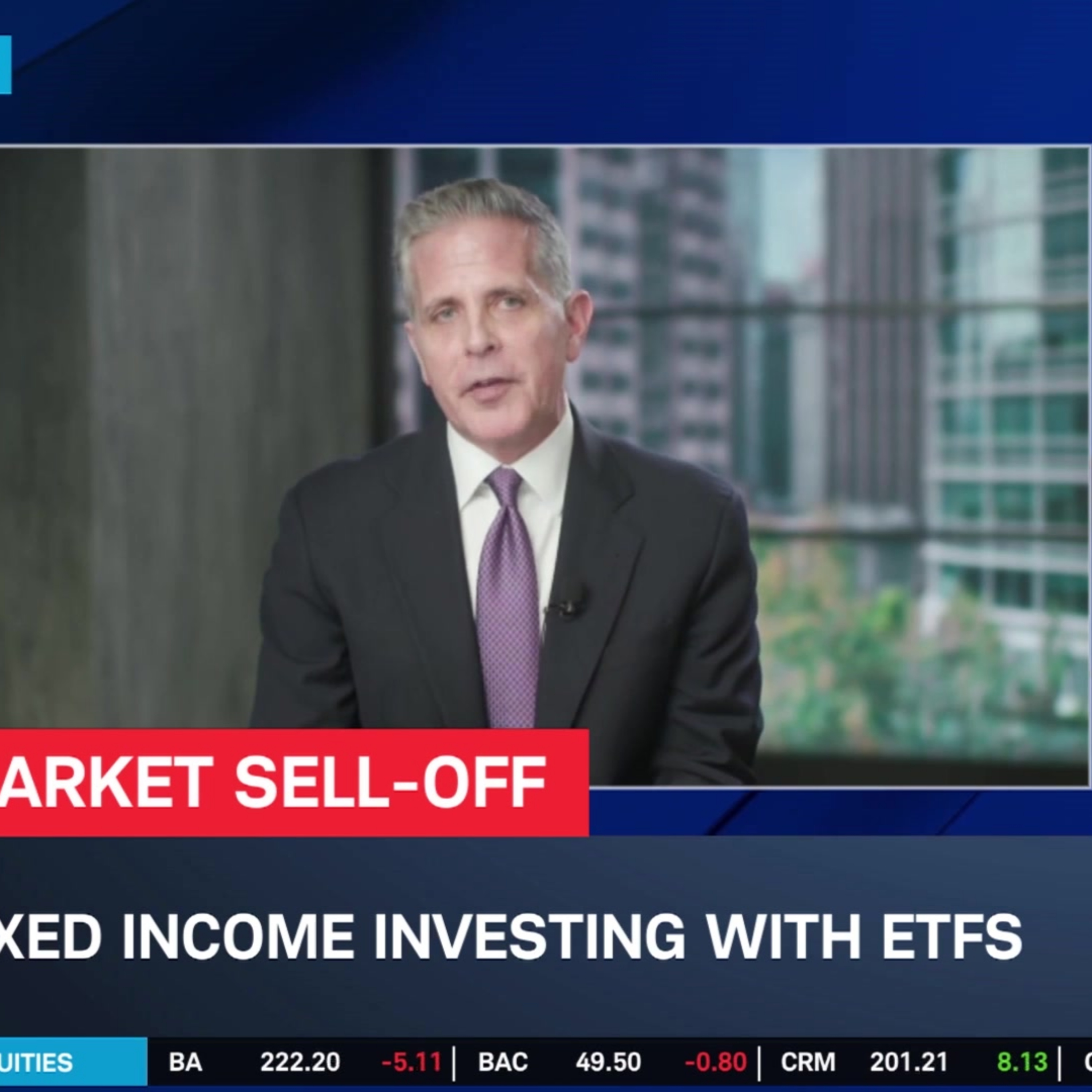
About this episode
Steve Laipply of BlackRock (BLK) discusses their plans to expand their $52B iShares iBonds ETF franchise. Investors are looking past volatility in the bonds sector and are still piling in, he says. He explains the 9 new defined maturity bond funds they’re launching and the demand niches they cover. iBond ETFs are an “efficient” way to “ladder” within the fixed-income field, he argues. Steve lists some of the ETFs seeing the biggest flows so far in 2026.
======== Schwab Network ========
Empowering every investor and trader, every market day.
Options involve risks and are not suitable for all investors. Before trading, read the Options Disclosure Document. http://bit.ly/2v9tH6D
Subscribe to the Market Minute newsletter - https://schwabnetwork.com/subscribe
Download the iOS app - https://apps.apple.com/us/app/schwab-network/id1460719185
Download the Amazon Fire Tv App - https://www.amazon.com/TD-Ameritrade-Network/dp/B07KRD76C7
Watch on Sling - https://watch.sling.com/1/asset/191928615bd8d47686f94682aefaa007/watch
Watch on Vizio - https://www.vizio.com/en/watchfreeplus-explore
Watch on DistroTV - https://www.distro.tv/live/schwab-network/
Follow us on X – https://twitter.com/schwabnetwork
Follow us on Facebook – https://www.facebook.com/schwabnetwork
Follow us on LinkedIn - https://www.linkedin.com/company/schwab-network/
About Schwab Network - https://schwabnetwork.com/about
Get every episode summarized
Each time Schwab Network publishes, we email you a written briefing from the transcript — the topics, who appeared, and any specific claims, with the ad reads skipped.
Email me new episodesFree for 3 shows. No card needed.
Transcript ready
118 searchable segments. Every word is indexed and playable.
Full transcript
Schwab Network — BlackRock (BLK) Expands $52B iBonds ETFs With 9 New Funds. Machine-transcribed; use the interactive transcript above to jump the player to any line.
Welcome in our next guest to discuss some new abound ETFs. Steve Laplay, who's the global co-head of ICHES Fixed Income ETFs BlackRock. See, given everything I just outlined just now, I mean, in a world where we are seeing energy shock, tariff shock, indiscriminative selling in AI and just a lot of questions around valuations and tech, a lot of my guests have been saying, seek shelter in fixed income. What sort of demand are you seeing for your ETFs? Yeah, we're off to a record year, Sam. Last year was a very, very strong year in fixed income ETFs this year starting off even stronger, actually. So very robust flows. It's interesting the volatility in yields. If you look back a year ago, the 10-year yield was around 430. You look back two years ago, it's sitting right about where it is now. And so we're probably going to continue to see volatility in yields as the market continues to try to grapple with the path of Fed cuts, et cetera. But investors have been looking right through that volatility and they continue to invest
very strongly in fixed income ETFs. And Steve, we see the BlackRock's expanding. It's ICHES IBON's platform to nine new defined maturity bond ETF offerings. What kind of demand led to this expansion happening now? Well, some of it is adding new maturities because investors have been looking to reload their ladders and also looking for longer duration options, for example, in the Treasury Suite. But really, we've just seen a tremendous uptick in demand for IBONs since the renormalization of yields on the back of the tightening cycle back in 2022. The suite's up to about 40 billion in the U.S., and demand is very, very robust. We've launched, you know, Treasuries, tips, high yield, munis, corporates, so we pretty much have built out the suite to support this investor demand. And just talk to us about what sort of demand you're seeing out across the yield right now. Yeah, so investors like IBONs for a number of reasons. One, you know, for investors who like individual bonds, IBONs are a very scalable way to get
a defined maturity exposure. So rather than just buying a handful of bonds, you can actually buy a handful of IBONs maturitys, but actually get access to hundreds or thousands of bonds. So it's a really scalable way to ladder, to pick a very specific maturity point, to lock in a yield for a life event or to hedge a liability. The use cases are pretty numerous. But investors have the ability to, you know, lock in yields, whether that's in corporates or inflation or Treasuries. It's a really efficient way to target a maturity and target a yield. And as you mentioned, some of the span that you have here, you've got Treasuries. I think you said tips, munis, high yield. What does that breadth say right now about where investors are looking for income today? Yeah, it's a generational opportunity in fixing them. We've been saying that for a couple of years. And, you know, as I pointed out, yields go up. They go down. But the fact is, is that we're still at levels and yields that are the highest in, you
know, years and years, decades as a matter of fact. And so investors are really seizing on that opportunity, you know, tax sensitive investors want munis. Some investors want more than Treasuries. So they'll gravitate towards the corporate and high yield suite. Some investors continue to be very, very focused on inflation. So they'll look to the, the tips I bond suite to try to lock in yields that are inflation adjusted. So we try to cater each one of these use cases by continuing to progress and build out the suite. What about the income part of fixed income, Steve? I mean, I know obviously 2025 was a good year for bond investors. There is an expectation that 2026 is largely to be the same, but just at perhaps a smaller magnitude than we saw last year. Is that what you're seeing as far as the returns here? What returns in the market are pretty much in the green across the board. Again, yields are, yields are moving around, but we're still at pretty robust levels. I think the thing about volatile markets and what you've seen over the past several days,
there was some concern in the credit markets about spreads being too tight. We've seen spreads move wider off of those tights. So a number of investors are looking at that as an entry point. We've seen pretty robust flows into investment-grade corporates as an example this year. So investors, I think, are being, you know, somewhat measured, but they are continuing to allocate. In fact, you know, January and February of this year are on track outpace last year. And so investors are looking at this market, yes, there's volatility, but they're continuing to take advantage of the yields that are being offered out there. And as Steve, as far as the curve, you know, where are you seeing the most demand right now? And how is it comparing to the demand we saw at the same time last year? It's been fairly consistent. The long-standing concern is on the long end of the curve. One could argue that, you know, there's a lot more risk out there and there could potentially be more reward, but a lot of investors have chosen to stay sort of in what we call the
belly of the curve. That being the shorter to intermediate part of the curve. That's where the preponderance of flows have tended to go. So as an example, Eskov, our zero to three-month T-bull fund, has already taken in seven billion this year. So investors who've been sort of staying in that very, very front end of the yield curve, kind of biting their time, looking for opportunities when the market sort of settles a bit. You've seen investors invest in, you know, broader exposures such as the AG or BINC, our multi-sector active fixed income fund. BTOT is another broad multi-sector exposure that has that intermediate duration that we launched. So it's sort of staying in that, you know, sweet spot in sort of the, you know, intermediate five, six-year duration part of the curve that we've seen a lot of flows. And what about some of the concerns that we've heard around some of the credit risks? I mean, have you seen, I suppose, people getting a bit of cold feet around some of those worries about, you know, credit spreads, you know, these debt-to-equity ratios, some
of these types of worries in the markets, or has that said pretty consistent as far as some of the demand? Investors in high quality have been fairly consistent year over year. And so I think, you know, yes, high yield is a bit more mixed. But I do think right now, you know, we've seen pretty strong flows in a high quality investment grade. That's sort of persisted. Investors will become, I think, as views evolve on the economy. Everyone is looking to see what will happen here with inflation, with the energy complex, et cetera. I think investors are going to probably start diverging a little bit and get a little bit more selective, but so far up and quality has been a very, very consistent trend year over year. Yeah, I noticed high yield has actually been catching a bit a little bit this week off the back of an underperformance across the board. But Steve, we have to leave it there. Thanks so much for joining us and getting us across some of your ETFs today. Really appreciate it.
More episodes
More from Schwab Network

Stock Market Today: ORCL & ADBE Earnings, AEO Plunges Near 52-Week Low
Schwab Network

Thursday's Final Takeaways: Crude Taps $103 & PPI Hotter than Expected
Schwab Network

Balancing High-Conviction AI With High-Dividend Diversification
Schwab Network

EARNINGS PANEL: ORCL, ADBE
Schwab Network