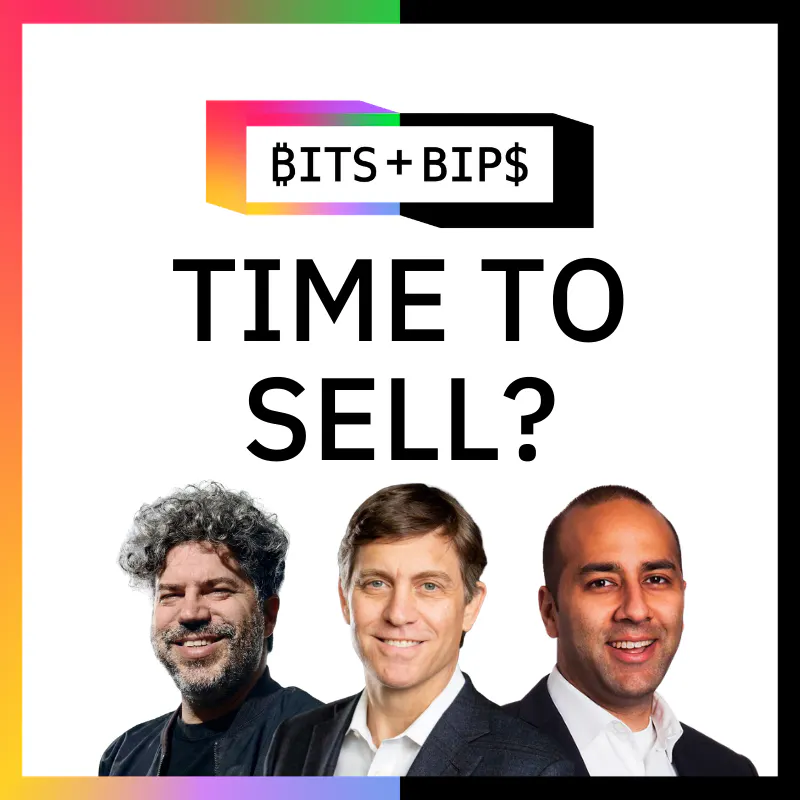
About this episode
Get every episode summarized
Each time Unchained publishes, we email you a written briefing from the transcript — the topics, who appeared, and any specific claims, with the ad reads skipped.
Email me new episodesFree for 3 shows. No card needed.
Transcript ready
644 searchable segments. Every word is indexed and playable.
Full transcript
Unchained — Bits + Bips: Bitcoin Hits $75K as It Starts Catching Up to Gold. Machine-transcribed; use the interactive transcript above to jump the player to any line.
America leads the world in medicine development. It matters. We get new medicines first, nearly three years faster. Five million Americans go to work because we make medicines here at home, and not relying on other countries keeps us safe. But China is racing to overtake us. Will we let them? Or will we choose to stay ahead? When America leads, America cures. Let's tell Washington to keep us in the lead. Learn how at America cures.com. Pay for by Farma. Hey everyone, welcome to Bits and Bips, where we explore how crypto and macro collide. One basis pointed at time. I'm your host Austin Campbell, high scholar of zero knowledge group, here with my co-hosts, Rahm Alawalia, master of wealth, leader of limita, and Chris Perkins, the golden hand of coin fund. We're here to discuss the latest stories in the worlds of crypto and macro, and we have a couple of those to go today. But before we start, just remember that nothing we say here is investment advice. Check UnchainedCrypto.com slash Bits and Bips for more
disclosures. And before we begin, a quick commercial break. Introducing Nexo, the premier digital wealth platform, receive interest on your digital assets, borrow against them without selling, trade a variety of cryptocurrencies, all in one platform, now available in the US. Get started today at nexo.com slash Unchained. Be sure to subscribe to the new feeds at UnchainedCrypto.com slash Bits and Bips. All right, so before we get into the macro topics of the world, despite all of the turbulence, the conference circuit continues relentlessly in this space. I know DAS is coming next week,
but Chris, you were somewhere interesting recently. Do you want to give us the download on FIA? Yeah, so I used to be on the board of FIA and last week I attended their annual conference. It's called FIA Boca. It's kind of under the radar for crypto people, but I'm telling you, it's the place to be. And the reason why is that derivatives, as we've talked about, are probably the most important asset I would say in the crypto space, as you think about how it's the market's mature. And it's been really weird over the years. It's kind of ebbed and flowed with crypto participation. There was a famous brawl, literally, between the SPF and Terry Duffy a few years back, and then the crypto people pulled back. But it's where every exchange in the world shows up, the intermediaries show up, the regulators show up. And this year a lot of crypto people showed up. I mean, I met with everyone from Kraken, Polymarket was there. Kalshi, I'd say the two, they were joking that the pretty girls in the room were a Kalshi and Polymarket. But what people are talking about, obviously, prediction markets. Perpetuals absolutely in focus. 24, seven markets.
Hyperliquid was like kind of a little under the radar. This started to be talked about, I don't know about you guys. I was watching Hyperliquid a weekend to see what happened to oil when after we bombed Carg. But yeah, super interesting times. And if anyone gets a chance, I recommend going. A lot of announcements, a lot of regulatory movement. What do I take away? I think prediction markets are going to have a tough go going forward. Why? Because they're running out of friends in DC. A lot of Democrats don't like them. A lot of Republicans will side with the states. And so I see there's some volatility on the horizon. That said, they're the prettiest girl at the dance right now. Everybody wants to dance with them. And prediction markets are here. Perpetuals, a lot of focus on getting them in place in the US. Some of the problems we have is like outdated market structure. And like that kind of goes hand in hand with 24, seven markets. And so do we take out the intermediaries like I testified in Congress a while back?
How do you make it all happen? What happens is there's no expiry. And it's speaking to Chairman Selig. You know, he's on a mission and he's going to get it done. And then 24, seven markets, man. Like if you if you cannot figure out 24, seven, you'll be obsolete overnight. Many of the traditional exchanges have views. There are things like dance partners, right? Like Kraken is out there, you know, really pushing X stocks. You had ice with their OK OS X announcement. And so everyone's looking to, you know, who are their dance partners going into the future? I think a lot of deals are done behind the scenes. But yeah, definitely a conference worth going totally different than the crypto conferences that I've technically attended. But I go over here. What do you think? So here's my first thought hearing all of that. The prediction markets thing, which I know are a booming topic, you know, in the world writ large. How do you think integration
of those markets is ultimately going to play out in the United States? Because to me, it feels like to get that right. We've got to have it under CFTC jurisdiction at the federal level. I think a 50 state framework for this is going to largely break a lot of these things because the nuance between all of those will be catastrophic. We have enough regulators of financial products. But then the other part is I would imagine over time regulators are going to have views on what kinds of trading activity is permissible, eG like insider trading problems who can participate in markets. But also what kind of markets writ large are permissible. Like I saw a report on Twitter today, some journalists in Israel, like being harassed and attempted to be deprived of that threatened with death because he wouldn't report that a missile landed in Israel with a net. And there was like millions on polymarket riding on this. So curious is now you think all of that shakes out? There's two things that I think about. The first is around insider trading. And I think this is an absolute joke. Insider trading is illegal. Always has been always will be. Sometimes it's hard
to quantify. But the extent that you blatantly use inside information and manipulate markets, you're on the other side of the law. So good luck to you. And the CFTC did put out guidance. And they said, guys, let me remind you insider trading is illegal. And we're going to catch you. So like to me, that's not even a discussion. Like it's a wrap it. It wouldn't agree, Chris. I was pitched by a hedge fund. And I said, what's your edge? I always say, we have friends in DC. What are you kidding me? That's illegal. So I agree. I think you're saying it's right. But by the least this fund was run by like some 20 plus-year-old kids. I have no idea what they're doing. Well, I think, you know, what's it say? F-A-F-O? It's just a matter of time, right? Like, the law is the law. And like, this is an issue that we've dealt with with crypto from day one. Where we kind of like ignore like, you know, common standards of law and we're like, oh, it doesn't apply because I have this new shiny technology. Insider trading illegal. Fuse of prediction prediction markets. Illegal. He made it play markets. Illegal. So I think eventually people
are going to come around and to the extent something's on chain, it's probably easier to prosecute. So that's one issue. Go ahead, Ron. Just briefly, I would say it's illegal, but it's happening, right? The day before the Venezuela raid, oil field services, energy stocks ramped up. You saw people ramping into energy before the Iran conflict. You see come the Pelosi act and people are front-running Congress. So people are saying, hey, if they can do it, why can't I? You're seeing growth in apps that track what Congress is doing. So we're going to go ahead. Yeah, look, I don't even know what to discuss. I did notice that Trump did talk about the stop insider trading act twice in the state of the union. I think that's probably how he's trying to navigate ethics with the market structure bill, but who knows? But the other point, Austin, that I think is going to be the battleground is really gaming. Gaming is kind of outside the CEA. And so how we define gaming is going to be really key. To me, that's the battle because like, and Kalshi is pretty concentrated on the gaming side. I think that's going to be the
battle. What products are allowed? Which ones are not? And by the way, I've seen some amazing hires. I linked up with a buddy of mine who just took over the institutional BD role for Kalshi. World class guy, like world class. So good investment going on with the polymarket team. They're thinking about their business model, how they're going to expand it. I thought it was super exciting. How, you know, what do we see? We're seeing this massive collision, this intersection. How can I take what I'm good at? How can I take my distribution, my liquidity and extended into new, exciting directions? I mean, like hyper liquid right now is doing like 30 something percent non crypto products. And so like, it's just so exciting to see these worlds coming together because I guess I'm the, I'm the bull on the show. I'll be bearish. Go ahead. There we go. Here we go. I'm actually like very bullish on prediction markets overall. I think the question is what they're going to cover because one of the things I've been keeping an eye on is what Kalshi runs into in terms of like courts. And right now, there's been a split. If you look at US states that are
ruling on is Kalshi, what's doing covered at the state level and essentially gaming or is it covered at the federal level and more like CFTC contracts? The answer from several different federal judges has been none of us agree, right? So that topic is going to quite frankly fast track itself to the Supreme Court because for those who are not like deep into like US jurisprudence of law, the fastest way to get to the Supreme Court is to have different federal judges giving you different answers to the exact same question because at some point that needs to be resolved because it can't be that something is federally legal in New York, but federally illegal in Arizona for the exact same conduct. It's like one mob allegedly across the land. So Chris, I think I want to what's really interesting about the future here is which way does that case battle? Unless, I mean, the other alternative is to slip something in through markets and in clarity, which is something that they could do. It's not, it wouldn't be easy, nothing in clarity is easy, but like you could make that the law lay out of the land if that's what it takes to get done.
And we're going to see some final and I don't have any information that this is going to happen or not happen, but you could see that. But I'm the, you go ahead, Rob. I would say like I'm bullish on usage and adoption. It was always a fan of the Iowa electronic markets to track the presidential campaigns. It was the only legal market for decades, but I'm bearish on enterprise value creation here. Draft Kings is down 30% in the last three months, Genius Sports is down 50%. Now has a scorching hot for PE of 60 times earnings. So these private market companies are even more expensive than that. Now they're getting competition from all corners, including NASDAQ that wants to show up like the high school kid that shows up to the playground and takes the marbles from the small kids. That's happening now. So I think in general, private venture capital is a bubble prediction markets are in a bubble too and you should try to sell the stock if you can. This is also where I'm super interested how things worked out on the gaming front because as much as prediction markets are on the way up,
you know the gambling and gaming companies are not just going to let that fight pass the buy. This is bad there too. Yeah, like we talked about this a little bit, even under derivatives front. Like hyperliquid's edge right now is this 24-7 reach. The big boys are coming and they're going to have that capability. So how do they extend that mode and move faster when that's going to be table stakes before you blink an eye? All right. Well, let's move on from here because the world is moving extremely fast and we have a bunch of other things to catch up on. So we'll start with the one that we're always talking about now, which is Iran. So to give the updates on that front, we're in week three of the conflict with Iran. Today we heard that Israel has limited and targeted ground operations that will be occurring in southern Lebanon. Dubai International Airport, which for those who are not paying attention is basically the world's busiest airport, suspended all flights this morning after a drone hit a fuel depot near the airport. It's the third incident
in Dubai since the war began of this sort. A missile hit a civilian vehicle in Abu Dhabi. Trump has been trying to bring allies in to deal with the state of Hormuz problem. He's saying that NATO faces a quote, very bad future of allies don't come to help. Said the US will remember countries that don't help and will help. I believe he said that the French were scoring an 8 out of 10 and that nothing is perfect, but this is France. So what did you expect on that front? And then ships have started to move through the straight today with some degree of transit occurring to tankers carrying LPG to India, I believe, sailed through. And so Iran is now claiming that the blockade might only apply to enemy vessels. The EU is working on things. All of this, though, has led to oil spiking back up in price. So I'll start right here is what do we think is going on with Iran from a geopolitical and military standpoint first, Chris?
So there's different levels of warfare at the tactical level. It's been just absolute destruction. The US military has been performing exceptionally well. Taking out target after target, I watched the briefings by Admiral Cooper and what they did is they moved past like live munitions sites now they're going back into the logistics and the supply chains. So very very at the tactical level, it's been absolute dominance. That said, the Iranians are effective with low cost asymmetric capabilities, things like mines. We've been talking about that. And mine warfare can be very problematic, et cetera. The other thing that happened last week is that we set the 31st Mew, which is a crack marine unit. It's called a Magtab from Marine Air Ground Task Force. At Wilkenalla, I used to work with those guys and they're steaming over to Iran. That puts a marine infantry battalion about, I don't know, 1200 people or so, Marines right there within striking distance and they have a variety of missions they can execute. The one thing I was noticing
was Lindsey Graham had this really interesting tweet around card. The island of card, we talked about it, controls 90% of Iran's oil experts. We hit the military installations around it, but it sounds like we kept the oil intact, the oil rigs, et cetera. And at the end of that, he talked all about Carrick and then he said, semper five at the end as the 31st Mew was sailing. So he's telegraphing that the Mew is going to do something to secure those oil assets. I don't know if that's planned or whatever, but that Mew will give you some extra capabilities. Now, I think we'll continue to really dominate at the tactical level. They can't really fight us back that well and you're seeing various other things happening. What I'm more worried about is the strategic level of war. And so if you look at Vietnam, we also did very well in the battlefield, but ended up losing that public will to continue the fight. And so I think it's really important that the goals, the mission, and we start showing continued success, the economy, et cetera. Trump's got to find a way to keep
that oil and check. That's come down a little bit. And then fundamentally, before I turn it over to you guys, I've really noticed that crypto has stayed very, very strong. I'd love to get your take, Ram and Austin. But it's really doing well. I called around to the trading desks before I got on a lot of talk around the short, gold, long Bitcoin trade. And you know, I think this all feeds into this thing that we've talked about over and over again. Real politic trust is breaking down. Where do you go? Because real assets commodity are going to be in focus. That brings you to things like Bitcoin, ETH, and the rest of the crypto environment. So it feels like between some short squeezing that's going on. It feels like crypto is starting to feel like it's bottomed. And it feels like it's well positioned. But we'd love to get your take and happy to talk about anything else. We'll stay on a run for a bit. So a couple of quick thoughts. So one is Trump often does what he says. Now we'll see about the whole third term thing. But he's talked about tariffs
in the past. He did tariffs. He's talked about offensive operations against Iran decades ago. He followed through on that. He released the Epstein files, ran a lot of red actions and the UAP files and all the rest. So if you want to understand how long this conflict takes, listen to what Trump says. What Trump said today was the multiple levels here. One is he invited help from NATO. And he said, if we don't get help, we're going to learn from that. He's always questioned whether NATO allies would be there to support him. At the same time, he said, we actually don't need your help. But I just want to see if you would come to our help. That's what he said today. And he also said the UK offered to send two aircraft carriers now after the U.S. didn't need the help, but not initially. The reason why I point this out is that the correction of last year, a really accelerated when Zelensky was ejected from the White House. People around the
world looked at that and said, what just happened? My theory of the world isn't stable. I'm going to take risk off. And so if NATO is challenged, you could see something like that happen. He's opened the door to that, to the public. So that's one. The second is what are the objectives? Trump today said if Iran had nukes, they would nuke Israel and not just Israel, but all of Iran's neighbors, including Saudi Arabia. Saudi Arabia, and by the way, the evidences look at what they don't these missiles or attack in civilians or attacking all of their neighbors, including two of their allies. So my read on this now is that Trump's objective is to control the Iranian. That is the standard, I believe he is setting. And he's also pointed out at prior presidents who didn't take action. He said he had a phone call with one of them who said he wishes he had taken action.
My read of the situation is that Trump won't stop until there's some control on the Iranian. You can get control either through control of the material or working with the political leader that you have some confidence in. But he also said we don't know where the son of the IOTO is. Last week he said he was this figure. He may be dead. So it's hard to see how you arrive at some negotiated settlement without a leader to deal with. I hear you on the Iranian, but I think you're missing out on one big commodity and that's oil. He wants the Iranian and the oil. Do you agree? Oh, I agree. No, I think the whole conflict, the bigger backdrop is actually about China. Yes. The two ways to compete with China are US dollar hegemony, petrodollars are part of that, the pricing of petrodollars, and also we know the choke China with oil. They have that objective in hand. It's imminent. They're going to get that objective.
But once they've gone this far with Iran, you're taking out the state leader in the first hour of action, right? That was a coup d'etat move. You can't walk that back and say, look, I got the oil we're good. You guys keep the Iranian here. Let's go check back in another presidential admin. He's not going to want the fallout from that to be on his hands. He's going to want, I believe, to control that uranium. Yep. I think you're right. And by controlling the oil between that and Venezuela and our domestic production, we're down to Russia that we have to deal with vis-à-vis China. And I do think it does put a pretty tight rope around China. And it helps prevent what they're seeking to do, which is probably take Taiwan. Buy some some time. Russia. How would you control it, Krista? Logistically, how do you control it? It's not easy to do. We talked with General Spiderman's last week. Someone's got to be on the ground, open up a cabinet, do a counter measurement, or put it on a Apache and retrieve it. Or you have to have someone
you trust whose representations are rely on. We don't know who the heck that person is. So how do you achieve that objective? You talking about a uranium? A uranium. Yes. Yeah, I mean, you can have the IAA international aspect. I mean, I'm sure there's ways to do it. I'm not an expert in it. However, I think that's part of the goal, for sure. None of that neighborhood needs a nuclear-armed Iran, if there's a power vacuum. And look, what are they still looking for? They're looking for that strong man to take charge, just like the Venezuela model. And to spider's point last week, it may take a little bit longer. But I think I don't think you're wrong. I think one thing that would be very interesting is, where does this leave Russia? Right? I have a thesis that Russia started all this in the first place. They're getting their butts kicked and Ukraine, the whole world is lining up against them. And they said, let's start a little bit of trouble in the Middle East. I ran, go for it. Like, let's get these guys off our back. I've always believed that. And I think that that's distracted a lot of the world's attention to the Middle East. So, tactically, it gave them some room, because all of the world now is
focused on Iran. Oil prices are up. Russia's benefiting that from that. I think we even gave them the ability to trade for the next month or so, despite sanctions, to bring more oil into the market. So, right now, near term, I think Russia is a big winner. But I think medium term, the tide's going to turn, because as we start, as this thing ends, I think the focus is going to pivot back on Russia. So, I'm going to go the other way on two of those points. Nice. One, I don't think Russia is a big winner here. Right. Like, following just. We're saying right now. I'm just saying here now, like, today. But, but long term, no, this is not even today. I think one of the things that we're finding, like, I've been following a lot of the osin counts around the Ukraine and Russia conflict. One, I think Russia's losing ground again in that conflict. I think they're succumbing to some of the Ukrainian tactics with drones. I think
they're running out of people who actually want to fight, who are qualified, and you're seeing like the degradation of Russian resources. So, one, I agree with you that this created a distraction for Russia, but I don't know that that was a good thing. And part of what it's done is sort of woken up some of the other European nations as to how big of a problem this sort of situation is. I think Russia's options have already collapsed to the, like, internal situation in Iran. Here's what I'm observing and what I'm starting to get more worried about as time goes on, is we're seeing reports now of the IRGC going with Committee's son because he was essentially the guy they thought they could control, causing a rift with some of the clerics, causing a little bit of a breakdown within the internal order. Exactly wrong, as you were saying, like, who are we negotiating with? Who's really in charge over there? What's the situation on the ground? By the way, as both ourselves and Israel continue to just hit IRGC
forces wherever we reason the point. And show points now that would otherwise be controlling the protesters. Correct. I wonder if there's going to be a much more prolonged process of figuring out who's in charge of Iran before we get out the back end because remember, I think part of what colors are thinking is what's happened recently. So if you look at like a Venezuela, we essentially kidnapped Maduro and another guy stepped in. But there's plenty of historical models that show that actually things are way more chaotic than you think and there was no way to predict things at the start because, like, as a reminder for everybody, let's take a famous collapse into history. If you look at the French Revolution and you were in France at the start of that, somebody asked you, well, I want you to bet on the eventual winner. You're looking at like Lafayette versus the left and like Robespierre hadn't even emerged yet. But by the way, anybody you could possibly pick was the wrong answer because there's this Italian dude named Napoleon who's
going to turn out to be the right pick and you're not even going to know that until many years forward as I watch the fragmentation in Iran, is that where we're going? I guess it becomes like question. Well, it's a great perspective and I love the historical reference. It's like the core underrate from markets is how long does this conflict last? And when do the tankers move through this trade of her moves at a regular pace, I would say the key information now is that this conflict would take longer than anticipated. There are missiles still striking from Iran. It's week three. Now, the percentage decline has been substantial. It's down 90%. But missiles are still getting through. And the commentary from Pete Hexeth isn't really focused on the straight of her moves yet. And as Chris pointed out, there are other primary objectives right now taking out the launchers, then logistics. The straight of her moves
is a topic, but it's not really addressed in these press conferences. So that's a big question. And the longer oil stays at these elevated levels, the more risk there is for an inflationary regime, which is terrible for asset prices. It hurts consumer spending. It makes it hard for the Fed to cut rates, rate cuts are even kicked out. It hurts consumer discretionary stocks. It's an input into the cost of oil retailers. And that is something that I'm concerned about. So there is a material likelihood of a correction. They really need to get the oil moving expeditiously, like now, tomorrow, the day after. If they don't, then I think after options expiration this Friday, you'll have more downside volatility. At what point? So right now, Trump saying, hey, China, you need this oil. I don't need it.
I'm self-sufficient. Get it out yourself. But to your point in time, it's going to hit the American consumer. And so what does he do? Hitting out gasoline in California is $8.50. I think the last John Gault just left for Miami. So yeah, no, I mean, it's hitting the consumer now. I will pile in here to say, is that hitting the American consumer or the California has somebody who grew up in California has been shooting itself to the foot and then stubbornly reloading and continuing to fire on the topic of energy for like decades now. That's a quote of the episode. I mean, look, I'm just calling it like it is. I know this is allegedly a crypto podcast, but like California energy policy is stupider than some of the NFT projects were. Just to bring it back to markets, like we had we had four down days in the S&P, which it's historically highly unusual not to get a relief rally, which is what we had today.
Yes. And there's a lot of dealer opinion effects that happens before options expiration. And the rally today was kind of lackluster, given the amount of the decay in the VIX. So, you know, you should be cautious. This is not like, oh, hey, let's go up into the right. This is not that kind of environment. You know, what I saw in the markets most of last week, what felt were like view app sell orders. It was just consistent, orderly selling. So, yeah, I don't like that. There are opportunities that will open up and emerge. I think it's kind of remarkable that the S&P is only down five points from all time highs, given the trauma of news that's hit markets from multiple angles. I mean, a question that I will ask out that is, how much of this selling is people like call it voluntarily, de-risking versus
involuntarily de-risking after the whipsawing and oil. Like there are rumors running around the street that several of the major hedge funds are down like billions of dollars on some of these oil trades. So, I'm wondering if what you were seeing last week, Ron, was people being forced out of positions, de-leveraging, de-balancing, right? These sorts of things versus call it people who are otherwise liquid have no margin concerns. Yeah, well, there's de-leveraging happening, right? We had the de-leveraging events starting crypto around 10-10 of last year, but pick an asset class, private credits de-leveraging, look at the gross leverage exposure that hedge funds have. They hit peak levels about a month ago. They're still in excess, so their de-leveraging, and good names are being sold off because they're de-leveraging. It's not about the name. The hedge fund has too much risk on, they have to de-leverage. The quant funds and their factors aren't working, they're de-leveraging, fundamental long short, they're de-leveraging. The only players that are
re-leveraging are the hyperscalers that are issuing boatloads of debt, like Meta and Amazon, including Oracle, to go buy more data-centered GPU compute from NVIDIA, who expects a trillion revenue between now and end of 2027. So, a question on that from them. If we're seeing everything sort of selling off in the matter that you're speaking about, are we at the point now where people should just step back and let that go by? Are there sectors where you're starting to see value where you would step in and start lifting things like, where are we in this cycle? I agree with you. We're seeing things like private credit starting to chart. The valuations are extended. I'm looking at Industreels, which is a major component of the S&P, and you've got names like Catapoea and John Deere that are 30, 35 times PE and GE Vernauva and TeraDine, like many Industreels are a bubble. They're a bubble. It's not only a bubble. Bubbles are great. They're a
great way to make money. You want to ride the bubble up and then get out when the bubble pops, but the bubble is also popped. We're on the right shoulder of the bubble. So, there's some value maybe in homebillers. If you believe mortgage rates come down, but at the same time, the 10 years going up, because inflation hurts stocks and bonds. They hurt stocks and bonds. You don't get the diversification benefit. So, I think this is a time to get smaller in terms of your risk exposures and wait for a real capitulation. We actually haven't had that yet. Haven't had a real capitulation, or were value really emerges. Where are you on crypto, Ram? I was going to last speaking last Monday, we were bullish. Then we were all last Monday, we were all bullish, right? For those who are at home, right? I believe all of us said if we were buyers would be buyers of Bitcoin there. That's right. You're at a key level. You're at a very key level. Yeah, you're hitting some
resistance. Where are you at Bitcoin right now? 74 right now. I was just looking up. My view is that Bitcoin is running on micro strategies, or I guess it's strategies, STRC issuance. That is keeping the machine going. They are doing a great job marketing STRC. It's attracting new flows. They had record volumes last Friday. So, when that marketing process starts to slow, then I believe that bid for Bitcoin will slow. So, I would take chips off the table now. Okay, but then that's not, is that driving in the Alts too? I mean, we're seeing of all the darlings. ETH is material outperforming. So, is that just Tom Lee or retail saying wait a second, Bitcoin, this correlation between gold and Bitcoin, which we've constantly seen, Bitcoin always trails gold. And the ketchup trade is now on. We've been watching BTC to gold ratios that starting. It looks like it's bottomed. It's coming back. And then ETH pops up.
And he's like, hey, remember me? Yeah, outperforming it all. That's just correlation, right? China created the bid in gold and other commodities followed suit. China is not buying other commodities. Something to know, the commodities are showing weakness now too. Look at the DBC ETF, look at gold, silver, or copper. It's an unusual state of affairs that we have right now in markets. This is a higher volatility, higher risk market, better to wait for the fat pitch that it'll present itself some point. Look, I still think that there's opportunity here in the crypto side because to your point, with the dollar decoupling, a lot of sovereigns bought gold. And when they bought gold, gold went way up and Bitcoin didn't move. And then the Bitcoin Maxis are like, oh no, my store of value, what happened? This whole digital gold narrative is breaking down, right? When
it never did. And now that things are settling, they're like, wait a second. Now Bitcoin is starting to get a bid. The BTC to gold ratios coming back. Wait, maybe the narrative never broke down in the first place. And I do think that's a tailwind. On the east side, it's just again, the fundamentals, the fundamentals of an institutional crypto market with a really weird, a delightfully weird asset. It's infrastructure, it's a tech company, and it pays yield, and it's ultrasound money. And they're starting to get their head around that a little bit. And so I do think that that's going to be the tailwind on the east side going forward. Of course, we're having Austin and I are arguing over the role of the EF going forward, which I can talk about a little bit. But I don't know, I feel like it's still a decent setup for crypto. I said it last week, I was right. But it sounds like you're neutral now, Ron, you're coming, you're pulling back. You're pulling back. I'll embarrass the neutral. So I also, I also want to throw a dart on this one that I think is maybe something we don't see very effectively through the US markets lens,
which is to say one of the things that you've got to think about from a non-US person's perspective with Bitcoin is that this is your way to get your money somewhere that is not exposed to your current system. If we're seeing increased geopolitical shocks out of places like Iran, which could lead into Russia or lead into China, and you're somebody who's there, this is about the time when you're supposed to start buying Bitcoin if you believe that, Jesus. And Tether, actually, yeah, Tether supply expanding would be another thing to keep your eye on. You should see Bitcoin price going up, but also Tether supply expanding. But I would be watching for those signs as a countervailing factor to US market forces here. Yeah, I would look at US dollar also, like US dollar strength, if you have a flight to safety towards US assets, then that doesn't help digital assets.
Let's see, you know, it's going to turn on facts on the ground around Iran. That's what the whole thing turns on. Yeah, 100%. And it's reading what Trump's plans and goals are. I'm saying that on the margin, it looks like the conflict will last longer based on his comments. What would work in the situation? Let's just say we had Washington state of power. What do you think would happen? That's an interesting question. I mean, in this situation for the United States, you're going to expect energy prices to go up. But the problem is cutting rates doesn't really help you the same way in a supply shock. That was kind of the lesson of the Federal Reserve in the 70s, right? You got to make sure not to cause even more inflation by doing that. To be honest, this feels kind of like the situation where the fence sits on their hands, right? Because they're like, we can't cut our way to more oil. We don't want to cause inflation elsewhere. The thing that I actually, I think, would contraindicate that stance is that job market starts creating. It is, you know, it's a great
point though, Chris. Like it has been strong in resilient. It's like a change of character. There's no doubt about it, right? So like, it's hard to have conviction. I would say one way or the other. I think if worst was in the seat, it would be different. It wouldn't be, I'm Jerome Powell, I'm on an island. It would be Secretary Besson. Let's put our heads together. What do you have? What do I have? And I think maybe there's some of that going on already, maybe not, but I think it'll be much more coordinated approach, which should in the end be beneficial for the economy, I think. All right. So on that note, talking about things that are beneficial for economies, we do have to go to a set of second ads from our sponsor. And then Chris, you and I can argue about the Ethereum foundation. I can't wait. First, a word from our sponsor. Step into a new era of wealth. Discover Nexo, the premier digital wealth platform. Manage your crypto portfolio with confidence and control. Receive interest on your digital assets. Barrow against them without selling. Trade a wide range of cryptocurrencies. All in one platform.
Now available in the US with 30 days of exclusive privileges for new clients. Experience wealth club premiere. Access enhanced interest rates. Reduced borrowing costs. And crypto cashback on swaps. Get started today at nexo.com slash unchained. Quick note before we continue with today's episode. Bits and Bips now has its own dedicated home. We're spinning off from unchained and launching a standalone podcast and YouTube channel focused on the Fed, macro, AI, and how it all collides with crypto. If you want to keep up with our weekly live streams and macro meets crypto breakdowns, make sure you're following Bits and Bips directly. We won't start publishing until March, but getting set up now means you'll be ready on day one. You can find the new Bits and Bips channels at unchainedcrypto.com slash Bits and Bips. You can also find us by searching Bits and Bips on YouTube, Apple Podcasts, Spotify, or wherever you listen. All right, everybody. Welcome back to Bits and Bips. As you can see,
Rob cleared the floor so that Chris and I can now argue with each other because the Ethereum Foundation published a paper, a 38-page document, defining what it is and what it is not. The EF describes itself as Ethereum's first steward. They are now one of many, but like Julius Caesar remained the first citizen. And the central principle is self-safety. The users must have final say over their identities, in assets, actions, and agents. They've introduced a framework called Fraps, which is about censorship resistance, open-source and free privacy and security. They call these sort of the indivisible whole of Ethereum's development. And their explicit goal is eventually to make the foundation unnecessary. I read this, and Chris, I know we're going to disagree somewhat on some of these topics and thought to myself,
ah, so they are going back towards their cipher punk roots and making themselves an unappealing landing pad for real-world assets. And I think this is a view that's probably been a little bit misunderstood. So I'm going to give credit. I had dinner over the weekend with one of my smarter friends who's a trader on the street that talked this issue through. I want to try to pose my objection through the following framework, which is that you can think about sort of the asset structure on blockchains in the form of a tri-level. And that means you can have decentralization, right, and like call it permissionless behavior. You can have real-world assets and you can have smart contracts at various points on this, but what you can't do is have all three. And what I mean by that is the problem is not a chain that wants to be permissionless or self-software in the way that the Ethereum Foundation talks about. Like Chris, you and I are both fans of Bitcoin and support that as a technology in the world. So I don't think there's a discreet in there. I don't have a
problem with the concept or existence of smart contracts. I don't have a problem with the existence of RWA's. I think the problem is when you try to do all three of these at once as somebody who's run one, you put yourself in an untanable situation. What I mean by that is let's actually take Tether, since we were just talking about it. Currently, there are, depending on where you look, anywhere from billions to tens of millions to hundreds of millions to billions of Tether, in most major, like call it protocols that are being used in crypto. If you looked at you to swamp an Ave alone, there's a ton in there. And then we have a chain that does not have like validator network or even coordinated protocol level controls, nor are those enforced. And of course, you have Tether is the real world asset issue. So the hypothetical that I worry about here as somebody who's had to be the paranoid person is what if somebody compromises Tether's smart contract keys, right? If the North Koreans mint a trillion dollars of Tether. Well, one, there's
obviously not reserves to back that. The answer that you always get is while the issuer could just drop another contract, and that can be the real Tether, to which I say, except you just blew up all of DeFi, right? There's no effective way for Ave to respond to that. There's no effective way for Uniswap to respond to that. The Barrel and Protocols are gone. Any AMM pool that had Tether in it is gone. And so what I've been trying to communicate to people is if you want to have this permissionless sort of ethos behind everything, which again, I do not object to that on a standalone basis. You cannot introduce the layered complexity of smart contracts with real world assets that are going to need to be responsive to call it non-chain concerns in a way that like the ETH token or Bitcoin does not. And that is the root of why I thought this statement was actually very negative for the future of Ethereum as a platform for real world assets. Because I think the first time we have a grenade like that go off, and people realize how severe that problem is, you're going to
have a flight of RWA off a platform like Ethereum and to chains with a lot more call it command and control and permissioning. Conditional on you wanting to have the smart contracts. If you want to bring ETH back to a state where it's like, now you can do one way SEDs and the transaction chains are not co-mingled fine. But Chris, is this not, I'm going to say it in a way it'll give us both a little bit of trauma, the 2008ing to link to like counterparty credit problem if something like that happens. I have no idea what you're talking about. All right, listen man, I'm getting a lot of heat because I think that the Ethereum foundation is acting as it probably should act in a mature environment, right? They're a nonprofit organization and I've been on boards of many nonprofit organizations. Many of them try to do something for the public good. In this case, they're saying, hey, we're going to be the shepherds of the principles of this network. But I mean, who's the foundation of the internet, Austin? Do you know who it is? Say more. No, there's no foundation of
the internet, right? You got different organizations that contribute to the, but it's a truly decentralized medium. Nobody controls it. The EF does not control Ethereum. The EF does not force EIPs through by design. Do they have influence in the past? Yeah, probably. But in time, I would see them being more and more removed, focusing on those ideals and the direction and advocating for what they want out of this ecosystem that's controlled by the community itself. You know, one of the things I was thinking about was like with Nick Carter, we talked to him about, he's like, you know what? BlackRock's is going to take over the validators, right? So who are the core developers today? They're very diverse mix, right? And in time that that composition is going to change and that community of core developers will help shape the network. But like, what are the roles and responsibilities here? You have a lot of, and again, it really starts as like, what is Ethereum trying to do? What is its core differentiation? In my mind, it wants to be incredibly robust. Haven't gone down in 10 years, guys, more than not now. Like, very important robustness, decentralized,
censorship resistant. Like, that is their moat. As you start introducing some of the things that you've talked about, those are great. And, you know, if you're Solana, high throughput, high TPS, your canton, hey, I'm going to do stubbing private and it's going to be more controlled, more permissioned. These are all awesome. Like, in no way or shape or form, I try to be an eth magazine. I'm just saying that their moat, Ethereum's moat, is a really awesome one. And it's the new internet. It's that settlement layer of the new internet fully decentralized. Let them have it. Let the EF, you know, and they're like, well, EF needs to ship. EF needs to ship. I don't think so. Like, yeah, it's a non-profit, guys. Who has to ship? Tom Lee has to ship. You know, Ave has to ship. All these people that are building on Ethereum, those are the folks who are shifting. And then they have to work with that community to direct the network in a way that appeals, you know, for all. So like, again, I think that people have been very hard on the EF. I think the EF is doing great things. It is over and over again, you know, helping to shape those
ideals. And like, I don't know, I, I think that's my case, man. I honestly, I'll say I do agree with you that people who think the EF should be shipping or like explicitly building or misguided on the role that they're supposed to play within the ecosystem. I think you and I are alive on that. Like, you don't want in the case of something that is supposed to be a public good, like the non-profit foundation being the ones responsible for shipping everything. You want to have four profit entities doing that shipping. Now, that works a little bit different out of chain, like, say, a tempo that is explicitly created by a four profit entity. I think we can all agree that's a different model. I, I think the heart of my criticism is that I find the EF to be talking out of both sides of their mouth. And I'm not sure they understand they're doing that, which is to say, I don't have a problem with arguing for a decentralized self-savory chain to exist. Again, I'm very pro Bitcoin. I support that. I support some of the privacy coins.
Like, I firmly believe there is a time and a place for that sort of thing. I'm also a fan of real-world assets. Like, guys, I used to literally run a stable coins, like reserves and brisk, like, disclose everything, right? Okay, fine. Totally down with those. I'm a favor of smart contracts. Like, you and I both agree there's a huge amount of automation and tasks that can be fixed in traditional finance, using smart contract technology that are profoundly broken right now. I think what I'm worried about is they don't understand the trade-offs that their own status is making, which is to say if you want to be like using the crops framework and focusing primarily on self-sovereignty and that external forces do not have control of the assets, I think you also have to say you shouldn't be putting RWA that have external control of those assets in smart contracts that will cause cascades. I'm totally confused, right? Because today, if you have a stable coin and you know this, yes, you can issue it on chain. Yes. But the assets
are off-chain. They're in a custodian and you have frees and seas. Correct. What's the issue? So my issue is that exact problem that you have explained. So theoretically, there's two ways for this to become a problem. Number one, I have this asset. I have the smart contract. Let's use Paxos as an example because I was there. This is not a knockout Paxos. I'm just familiar with it. It's got USDP. So I've got, I don't know, at the time, two billion dollars of reserves in a bank and I've got two billion tokens on chain. It should be one token per dollar in the bank. Five, easy to do. My concern is somebody compromises my smart contract keys and now there's 20 billion of USDP and I still have the two billion dollars in the bank. Now what? How do we remediate that in a way that will break a bunch of other things? How is that unique to Ethereum? I totally agree that you need cyber. I've talked about this a million times. Cyber
robustness, people criticize solidity as a language all the time. But absolutely, security, robustness, very, very important. Whose fault is that? Is your question, is that Ethereum's fault? Or is it the issuers whose smart contract wasn't designed the correct way? I don't understand why this is a theory. Why is it okay to put it on Solana or can't it honor him ever? Well, let me start by saying I didn't endorse Solana on this one. The contrast that I'll actually draw to that one will be something like JP Morgan'somics, where the answer to what you do if that sort of break happens is you freeze the whole thing until you fix it. So what I'm saying is without the willingness to enforce any level of validator controls around these sorts of products, you're going to have a problem sooner or later. The Bybit hack is a good example of not interdicting that control. Let's give an example of somebody with the other way. Although they could have done a better job and stopped all of it, they stopped most of it. If you look at the seedest hack on Sweet, they actually did push through
a validator patch and bring those assets and got them back. I'm specifically saying when it comes to real world assets, if you don't adopt a framework where you're willing to have network level controls, it's a matter of time until breaks happen where bad things will occur. Well, and Chris, let me finish the point where bad things will occur and you're not going to be able to find a responsible party who can fix the damage because to me, that's the key to getting into the smart contract. I understand what you're saying. You're saying you want to have systems where you can roll back the chain is what you're saying. Specifically, if you're going to have a bunch of interlinked smart contracts because here's the problem with USDP. As soon as that hack happens, where you go from $2 billion to $20 billion, it's not that Paxos has to freeze it and drop a new contract. They can do that. That's easy. You've saved all the USDP holders. Congrats. You just fucked every single Uniswap pool with USDP in it. You fucked Ave if they took in his collateral. Morpho is exploding like any pool that had this as a composed asset is now broken.
So unless they are all linked with you so that the moment you deprecate a contract, they freeze everything and have a liquidation like methodology. You have a problem. That's my point about the network level controls for these things where the interaction with the smart contracts and the RWA is what creates the problem. As much as I would like to say, things won't get hacked. Things are going to get hacked. Look, hacking is a massive issue. I've been proposing policy solutions to that. Everyone write your congressman, give me my private tears back. But look, I think if a chain or an organization wants to roll back their chain for those protections, let them do it. That's fine. That's not censorship resistant. It's not self-sovereign. They're welcome to do that commercially. I don't know if you can have Ethereum roll back. The validators are too diverse. There's a million of them. So what does that mean? That means that people build on that chain.
By the way, I was watching, I love Fascination. I was watching it this weekend and wouldn't you know it? The Foreign Minister of Iran was there tripping away talking about how he felt on Zoom, like using the internet that no one can shut down. You can't shut down Iran, mining Bitcoin, any more than you can shut them from mining gold. If it's in their country, they can do it. I guess the point is, when you're dealing with an ecosystem like Ethereum, do we need to invent and to ensure if companies are putting their assets onto that chain, should they have controls? What do you have for securities? You have a transfer agent where you're tracking who owns what? If it gets hacked, you can address it through the transfer agent. Is that a perfect solution? No, it's not. Why? Because if the bad guys move too fast, they track it. It gets swapped into Bitcoin and it off it goes. But I think you're throwing out the baby with the bath water, let the ecosystem be censorship resistant, decentralized, and have the apps be very thoughtful in the controls that they put on to ensure that there's robustness. But I don't think that
there is where I'm saying, I think the EF is talking out of both sides of their mouth, is to put forward the statement that they put forward without also addressing that and proposing those kinds of fixes and quite frankly saying, hey, you should probably, like as weird as this sounds, if we're going to preserve these principles, you should be doing less with smart contracts on this chain because you're going to create like a ticking time bomb if you do not. This is the classic, like if Tether gets hacked, they're essentially the AIG who wrote all the CDS, everything else goes. Look, yeah, and again, I think the onus is on those folks who deploy the smart contracts to make sure that, and I think cyber is going to be, there's some real big challenges coming up with the way that people are going to be able to replicate your voice and your likeness. There's also some amazing defenses coming in, agents are going to protect this, so it works in both directions. But again, I think that's something that's fully censorship resistant, open-source,
private and secure. I think there's a need for that in this world, particularly if you're sitting there in Iran and you're looking for access to dollar liquidity, you're in a developing world. If you start entering into these systems and if you can censor them, they will be censored. And so I do think that there's a role in the world for something that's censorship resistant, my two cents. And again, I don't disagree with the censorship resistance. I'm totally for that. It's the layering of all these conservatives that create like a giant good tower of that. But like the EF doesn't control Ethereum. They don't. They're not profit that tries to steward and set goals. And yes, they're influential, but if they weren't in control of it, it wouldn't be decentralized. So I just think people have been way too hard on them. Yeah, I suppose my complaint with them is I feel like you've kind of half-assed your mission statement, right? If anybody from the EF is listening to be clear about that one, which is to say,
if you want to go that hard, down-decentralization itself sovereign too, which I, again, I'm going to continue to use. Yeah, and fine. Then you also need to go a lot harder on, don't build like castles on top of a swamp on this sort of thing because when it breaks, nobody can save you. By the way, if it breaks repeatedly, nobody's going to use it, which is going to be a big problem. And the other one is that's exactly how you attract the kind of regulatory attention that makes your life absolute hell because you know what will like cause a Biden era over reaction is going to be if Americans lose like hundreds of billions of dollars. 100%. 100%. Like Rift Shines and Dollars coming on chain. And these ecosystems become very strategic very fast. Yes. So, okay, where are you putting your your real world assets then, Austin? Now you got to answer the tough question. I'll find with Ethereum. Where are you putting yours? So I'm in a bunch of them, by the way. There are a bunch. So I'll talk about models that I currently find pretty promising for this sort of activity. So one, I, a little bit like my friend
Obed, who although we argue about this topic, let's pick something that we have in common. Private bank chains are a bridge to nowhere. Those are useless. Don't build them. Stop building them. Because if I have to JP Morgan give the sales pitch to Goldman Sachs of hey guys, take all your trades, your customer info and all of your technology and put it on something I unilaterally control. That's not even a discussion and vice versa. So stop with the individual private bank chains. That's stupid. What we should be looking at is one of two things. What I'm going to call public permissioned chains, which is to say open access by default, but with way more controls around getting it out. Some good examples of those. Avalanche has done some things with concurrent L1s or subnets or whatever. I think are super interesting. I think just super interesting. I think Stellar's one validator set for real world assets is super interesting. And by the way, not enough people look at Stellar and their technology because they've been thinking about this for a decade. They are a very interesting one. Things like Canton and Tempo that again, you can
have a little bit of a harder boundary and validator coordination. These are ones that I think are more amenable. It's not just where do you put the RWAs, but we can I do complex things with them. Like if I just want to do one way sense, a theory is fine. It's building these piles and piles and piles of interlinked things. So those I'm optimistic on, the other thing I would be optimistic on, but has not evolved yet, Chris, would be what I'm going to call a global version of DTCC because I know people talk about a theory of is decentralized, but let me propose this model. If the thousand largest financial institutions globally got together to run a single chain, given how geographically and like philosophically diverse they are, that they would actually be surprisingly decentralized in many ways. Yeah, DTCC is working with a number of chains. I don't know for public. I know who they are. I think the really funny thing is that it's very hard if you're a DTCC or a big institution to like potentially on board Ethereum because you're like,
wait, who do I talk to? Who's going to build this one? Why sign the SL way with, right? Which is like awesome because it kind of proves the point and the value add. And I think that, you know, there's a bunch of folks who are like stepping into that void right now, but it kind of proves that the differentiator in the use case. So look, I think all those projects that you mentioned, you know, Avalanche, Canton, they're all doing great things. And that's the beauty of our space. You can, they're programmable. You can customize, you can, you know, you can overemphasize TPS if you're Solana or, you know, even Sui is out there that they're all doing really interesting stuff. But my point is that Ethereum is big differentiator. And the reason why it's number two in crypto is because of that promise of decentralization. Now, it's also interesting. That was the guiding light for many of the early adopters of crypto. Yes. Now, the folks that are coming in, a lot of them don't, they don't follow that same ethos. So it's going to be super interesting to see how it evolves. But I guess we will leave it there. I was going to say I will actually give a prediction and the show, which is I think,
in the future, as people go back and look at episodes like this or look at the exact point time we're at in crypto, we will be perceived by them as about how we perceive the 90s for tech, which is to say, I am more certain than not that the chain that ultimately most real world assets will go on is probably not been created yet. Or if it is one of the current ones, it will look vastly different by the time we get there than it does right now. But we had great music and clothes back in the 90s. So, that's what we're going to leave it like that. All right. So, if we're going to drop the mic right there, let's actually do that. So, we'll call it here. Everybody, thank you again for joining us for this episode of Bits and Bips. We'll be back in one week to discuss more about how the world's crypto and macro are colliding. Until then, everyone.
More episodes
More from Unchained

Should Stock Tokens Be Limited to KYC'd Users? Or Be Tradeable by Anyone?
Unchained

Uneasy Money: Is OpenAI Training on Your Private Chats to Win the AI Race?
Unchained

The Chopping Block: FOMO's Co-Founder Defends the Memecoin Trenches, Hunter Bide...
Unchained

Bits + Bips: AMC's CEO Calls Robinhood's Stock Tokens 'Vile.'
Unchained