Bible parables that can help you practice Zen. Dec 9, 1984
About this episode
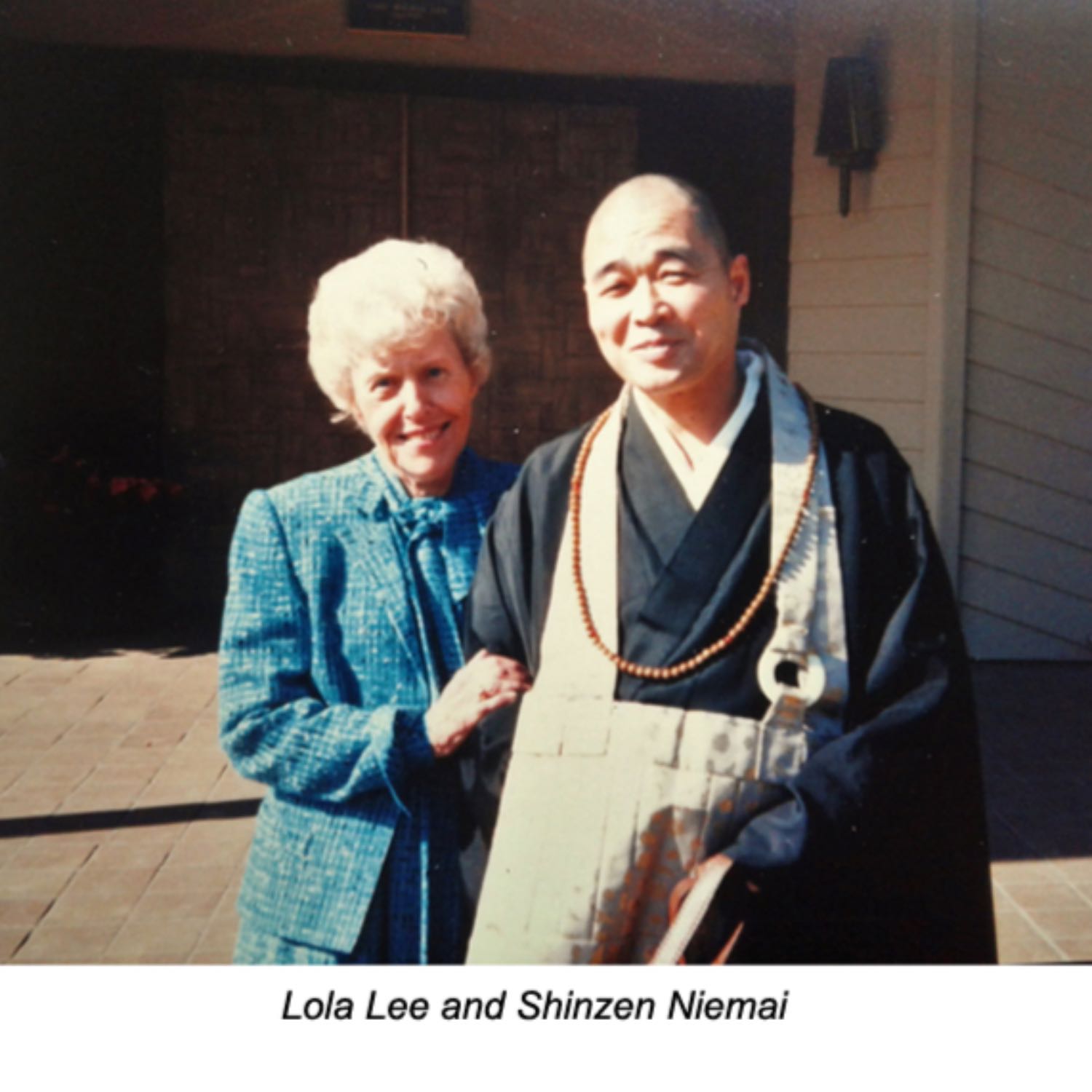
Zen Roshi, Lola McDowell Lee, who is also an ordained Christian minister, discusses parables from the Bible and how they can help Zen practitioners.
Understanding Jesus’ parables is like puzzling with Zen koans. We reach a point with the puzzles and allows them, like a diamond cutter, to work on us. And eventually, in a new state, we begin to understand.
We are free. Yet we have no freedom. It’s a paradox. The freedom within, unforced, allows us to mature. But we can choose to ignore the within. We are also free to choose the adventure within.
Your choices in this world create your personality. What you become by the end of your life—that you have chosen. Yet, what we are born with affects our choices. We are seeds. How we live that growth is our destiny.
Lola discusses the historical meanings of the word sin from the Egyptian and the Greek. From the Greek, to miss.
A parable, and a koan, is like a bridge between the Truth and our unconscious selves.
We call ourselves human beings. But we are not yet. We are seeds.
To illustrate, Lola presents Jesus’ parable of the weeds:
“Jesus told them another parable: “The kingdom of heaven is like a man who sowed good seed in his field. But while everyone was sleeping, his enemy came and sowed weeds among the wheat, and went away. When the wheat sprouted and formed heads, then the weeds also appeared.
“The owner’s servants came to him and said, ‘Sir, didn’t you sow good seed in your field? Where then did the weeds come from?’
“‘An enemy did this,’ he replied.
“The servants asked him, ‘Do you want us to go and pull them up?’
“‘No,’ he answered, ‘because while you are pulling the weeds, you may uproot the wheat with them. Let both grow together until the harvest. At that time I will tell the harvesters: First collect the weeds and tie them in bundles to be burned; then gather the wheat and bring it into my barn.’”
How are we to interpret this? asks Lola.
Lola say to look within—and wait. But don’t wait with the old you. That’s your ego waiting. Let go of your attitudes. They’re not important during meditation. Only when a cup is empty can it be filled.
Let gratitude well up in you. Sit, and eventually the door opens and light comes in. You don’t bring it in.
Lola Dec 9, 1984
Get every episode summarized
Each time Talks by Zen Roshi, Lola McDowell Lee publishes, we email you a written briefing from the transcript — the topics, who appeared, and any specific claims, with the ad reads skipped.
Email me new episodesFree for 3 shows. No card needed.
Hosts & guests
No transcript yet
This episode has not been transcribed. Request it and it moves to the front of the queue.
More episodes
More from Talks by Zen Roshi, Lola McDowell Lee

The Wisdom of Ikkyu. Delivered Sep 28, 1986
Talks by Zen Roshi, Lola McDowell Lee
The positive and the negative paths to enlightenment. Delivered Sep 21, 1986
Talks by Zen Roshi, Lola McDowell Lee
The Silent Night, the Holy Night Within. Delivered December, 1986
Talks by Zen Roshi, Lola McDowell Lee
The Tao of Ordinary Being. Delivered August 24, 1986
Talks by Zen Roshi, Lola McDowell Lee