About this episode
Get every episode summarized
Each time Radio Islam publishes, we email you a written briefing from the transcript — the topics, who appeared, and any specific claims, with the ad reads skipped.
Email me new episodesFree for 3 shows. No card needed.
Hosts & guests
Transcript ready
183 searchable segments. Every word is indexed and playable.
Full transcript
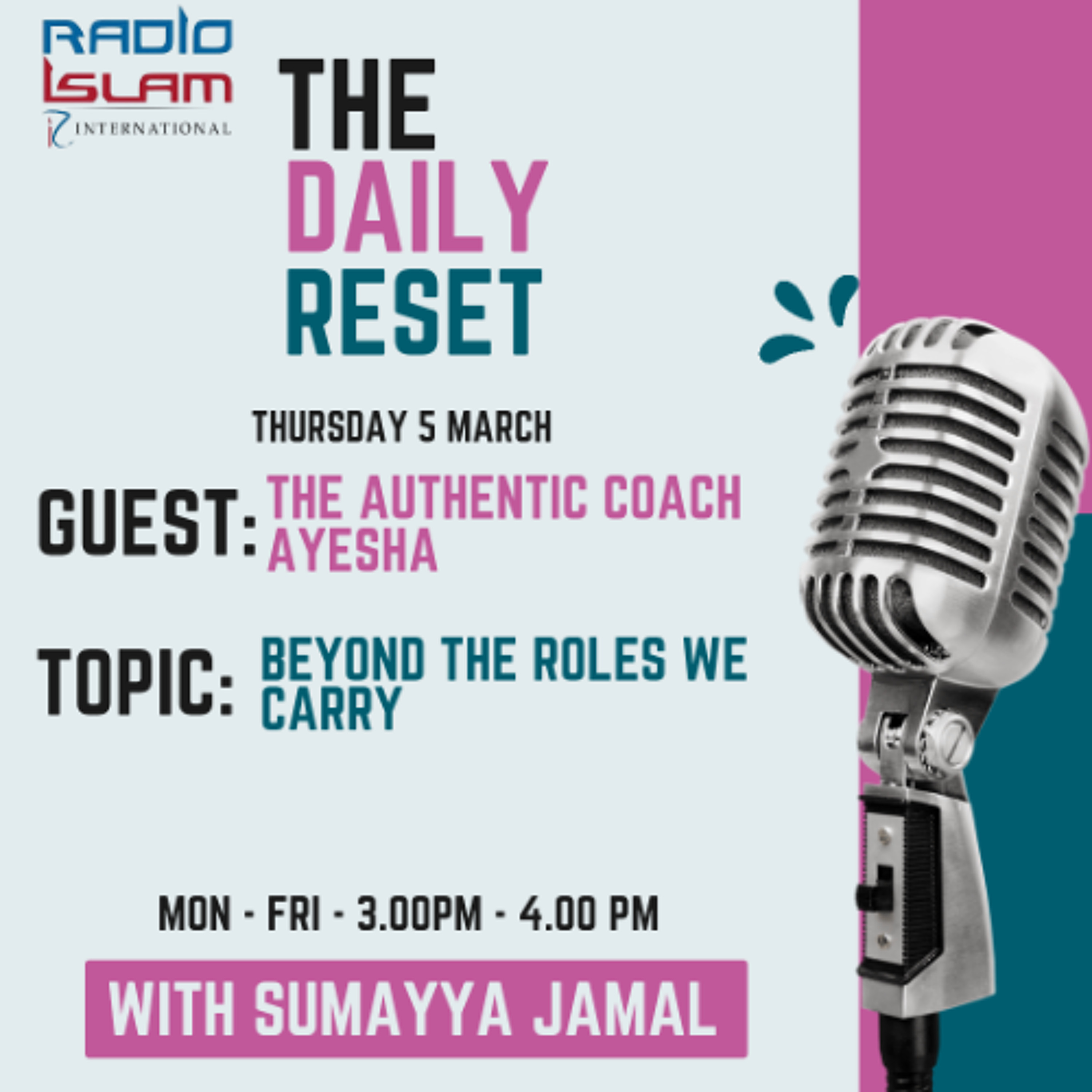
Radio Islam — Beyond the roles we carry Guest: Life Coach Ayesha. Machine-transcribed; use the interactive transcript above to jump the player to any line.
Asalaamu alaikum wa rahmatullahi wa barakatuhu and welcome back to the daily reset. It is your thriving Thursday edition and today's conversation is one that many people quietly wrestle but really talk about openly. So many of us move through live wearing titles, whether it's a mum, a wife, professional provider, caregiver and these roles give our lives meaning and structure but I think sometimes they also become the way in which we measure our worth and when those roles change whether through divorce or career shifts children grow up burn out or even simply evolving as a person it can leave people asking a very uncomfortable question who am I without the roles I've been playing is my identity something deeper than what I do for others is maybe you know there's a self beyond expectations, responsibilities and the labels we carry so this is a conversation that touches you know through psychology, spirituality, emotional healing
and also our understanding of identity from an Islamic perspective and joining us today to explore this topic is someone who works deeply in the space of healing and rediscovery we have sister Isha Hussain who's known as the authentic coach she is a trauma healing coach with over a decade of experience working with individuals navigating emotional pain personal growth and deep inner transformation a work focuses on helping release emotional burdens reconnect with the authentic cells and rebuild lives that feel balanced purposeful and aligned she is trained in coaching an NLP and much of her work centers on supporting women in reclaiming their voices processing past wounds and rediscovering their sense of identity beyond the expectations placed upon them and what makes her work especially meaningful is that it doesn't just focus on external success or surface level positivity it looks at the deeper level layers of who we are our emotional patterns the identity beliefs and the ways in which past experiences shape how we see ourselves so today we're going
to unpack a powerful question together who are you when the roles fall away asha salam alaykum and thank you so much for making the time for us well you can salam just thank you so much for having me the absolute pleasure so you know many people define themselves as a mother a wife a professional provider why do we then become so attached to the roles and what happens when we lose or outgrow one you know this is a very important question because firstly I think it's very natural that we attach ourselves to roles because the roles inevitably give us structure and purpose so when we call ourselves a mother a wife or a professional we are actually fulfilling a purpose and this purpose gives us a sense of belonging and makes us feel needed so if you look at it psychologically how do we build our identity we build our identity through belonging and function so now comes the problem
when this role is lost divorce happens children grow up a joke ends it then feels as if we've we've lost ourselves entirely or we even lost our identity but in essence we have to remember that we haven't lost our identity we've lost the structure that was holding it so the problem is not the roles it's when we think that the role is the core of who we are that's a really powerful explanation there and I think it really makes us understand exactly what it is you know when we when we have attachments to the roles and you know that brings me to something deeper you know in Islam our ultimate identity is which is servant of Allah so how does anchoring ourselves in servitude Allah changed the way we see our worldly roles okay you know I deal a lot with anchors and being an that's a part of Allah is actually a spiritual anchor it creates the
ability so let me look at it in this way if my core identity is a servant of Allah what happens to every other role it just becomes an assignment and not a definition because let's look at it if today I may be a mother managing chaos tomorrow I may be a woman navigating a career change but my core hasn't shifted so when we anchor in Allah first the roles become acts of worship not measures of work so when my role shifts my core identity being a servant of Allah does not shift that stabilizes me and it allows all my roles to coexist but they revolve around one centre and that is the servant of Allah that's a really beautifully put in really helping us to understand but what about when someone says I don't know who I am anymore what is usually happening you know
psychologically and emotionally here most of the time when someone says I don't know who I am anymore you know we think that this person is confused but it's not actually confusion it stems from exhaustion maybe even burnout so this is what happens when someone has lived outwardly for so long constantly serving constantly functioning when they don't have that opportunity you know to check inwardly and especially women who move from one role to another sometimes we don't even get a chance to ask what do I enjoy what are my core values what energizes me and then suddenly when life slows down and there's a silence inside it's not because she's empty we are empty it's because we've lost our connection inwardly we must always remember that our identity becomes healthier
when roles are added onto an already known in a self not when roles replace it and that's why it's so important for us to work on our inner self and I think you know that feeling is so important when you know they ask it's so common rather you know I don't know who I am anymore especially I have to burn out betrayal or the big life shifts it's not weakness but rather you know identity disruption so how would you say that NIAT can transform everyday roles like parenting working into something that looks at strengthening identity instead of you know exhausting it you know this is a beautiful question especially since we are in the month of Ramadan so let's look at NIA what is NIA actually it is so powerful NIA is an intention that we know right but it's so powerful because it actually reconnects action to purpose but here's the key
in life when we make an intention our NIA then comes from choice and not resentment so when a woman chooses her intention it affects her role her role then becomes empowering and energize but when roles are mere obligations you know when we have to when we have the haftos they are actually draining so what is the shift then the shift is cooking then doesn't feel like a burden or I have to do this again it becomes I'm nourishing my family that Allah gave me and if we're working it doesn't feel like oh I'm so exhausted it becomes I'm providing with dignity while practicing a son that is excellent in my effort so the action actually stays the same but the internal story changes everything and that's so beautiful you know it's it's sort of shift stuff from saying like oh
I have to do this or you know to rather saying I choose this for the sake of Allah I'm doing this for the sake of Allah and I think that really helps boost that so it makes us feel good right gives us the motivation to continue definitely definitely yeah but you know many women feel guilty for wanting something beyond their roles where would you say this guilt comes from and is it Islamically valid you know I like that you brought up this guilt aspect and especially now one guilt is very common so often where does that guilt come from it comes from societal expectations and maybe cultural expectations as well not Islamic values and you know that guilt eventually makes us feel like we being labeled labeled as selfish when we want to do something for ourselves you know beyond so Islamically there's no sin in wanting growth we're developing a new purpose we want to be
intellectually stimulated how else are we then going to contribute and make a difference to society wanting growth intellectual simulation meaning contribution is not rebellion it's nurturing the gifts that Allah has given us so the problem is not wanting more the problem is then seeking it in ways that violate balance or Islamic values and that's very important to remember definitely there's a very important clarification because wanting growth or rest or creativity is not rebellion but you know like you said it's part of being a whole human and you know that connects to to work so how would you say we separate our worth from productivity especially you know when Islam like you had mentioned about Islam Islam teaches us Islam but also balance you know I have to be on this majority of my clients I have a challenge with the self-worth and
self-esteem part of life if you look at it we live in a productivity culture how do we measure our worth we measure our worth by our output how clean is the house how successfully the business how organized are the children even spiritually we start measuring ourselves but in Islam our worth is not based on perfection in results it's actually based on that being conscious of Allah and what is the sound a sound is the excellence in the effort we put in it's not perfection so we have to remember one thing you are worthy entire days you are worthy on emotionally heavy days you are worthy even on those days when you did the being minimum so your work is not suspended because your productivity dropped we have to remember
that balance is part of sinner rest is also part of sinner so that softens the pressure of expectations of continuous high productivity and then we change our focus to be more conscious of Allah and what Allah expects of us rather than what society expects from us hmm the very important topic you know like he said a lot of people struggle with that and a lot of us struggle with the fact that or what are people going to say what is society going to think and that's a difficult one to to navigate um but hopefully in shayla through this discussion that we having it helps our sisters to hopefully see each other a different you know perspective but you know sister i said life transitions right there's divorce there's children leaving the home there's career changes and that all can shake identity so how can the work will support someone who's rebuilding themselves yeah this is really huge because if you look at it changes are only
constant in life and many people fear change and inevitably life is not linear challenges are going so when a person goes through a divorce maybe emptiness careerships with a hood even financial change this shakes our identity because they remove the structure the structure that i spoke about earlier but we have to remember that sometimes Allah removes a role not to punish us but to reintroduce us to ourself it's an invitation to this rediscover parts of who we are parts of yourself that you actually postponed and when does growth actually occur growth actually occurs during our most difficult moments and that is when we need to remember that we have to have the work go when you trust Allah in transitions what does that what is the outcome fear then turns into
possibility the work will doesn't mean sitting and waiting it means i will rebuild i will explore i will take steps and i trust that Allah is writing the process and writing a future that i cannot yet see each other inshallah this is a beautiful and comforting reminder that you know the wakul isn't passive it's active trust whilst you are rebuilding so practically what can someone do to you know and what maybe practical exercise can they use to rediscover who they are beyond the responsibilities they have you know i love practical exercises especially if you the person that likes structure and they very very if you're very organized so normally what i would suggest is make sure that you take a few quiet made moments for this exercise and i i mean everybody is supposed to be taking quiet moments for themselves it's part of self-care so in this
exercise what you do is you just have to keep things simple and actionable you want to link up to your inner self so firstly you check your values and you're asking yourself what matters to me deeply not what should matter what actually matters to me and then you start recalling your interest what did i enjoy before heavy responsibility life has a way of conditioning and then we actually forget who we authentically are then you do an energy audit this is very important what activities make me feel alive instead of drained and then we install a spiritual anchor how can i then increase one private act of worship that is only between me and alone
and lastly we then reframe our role so instead of saying i have to we try using the words i choose to serve in this way today and that reframe completely alters our mindset and that leads to altering the energy into the what we bring into the day and into our challenges i absolutely love these practical exercises they're simple things that will actually you know go a long way and make a big difference you know i also deal with a lot of clients who also feel that especially when they get married when they have mom would it become moms that they tend to lose themselves a lot and now you know after maybe the kids have grown up maybe they went through divorce and now they like trying to rediscover themselves and they find a particularly challenging because a lot of them have forgotten what's my favorite color what's my favorite food because they sort of you know went with the flow with the family whenever they want you know they made and they just accepted that this is it for getting that i have my own personality too so that
brings me to the question for women in marriage how can they then maintain their individuality in marriage or motherhood without compromising Islamic values of unity and family you know unfortunately culture makes it such that we enter into marriage and we are taught that we just have to adjust and we have to give up who give up ourselves essentially who we are but marriage and unity does not mean sameness whether Islam encourage in a marriage it encourages consultation mutual respect and emotional intelligence so if you can't be an individual person how can you show up with these aspects individuality is basically knowing your own values knowing your interests and more importantly knowing your Islamic rights and responsibilities so this strengthens the family unit it's strengthens the marriage because now you bring
wholeness into the relationship into the family not resentment and because you know your values and interests you give it from fullness you know when they say you get it from a full cup not depletion and look at marriage there are two incomplete people clinging out of fear what does it create it creates pressure and if you have two anchored people in a relationship that choose unity create sakina and peace so that's why it's so important to return to to then take your individual values and interests into a relationship but still you know stick to Islamic your Islamic rights and responsibilities yeah I think you know that balance is often misunderstood and I think unity doesn't mean erasing yourself so that's a very important distinction to make and and finally in
conclusion of our discussion this afternoon if someone's listening who's listening in feels lost in their roles right now what would you say is one small step they can take this week to reconnect with their deeper identities spiritually and personally you know that's so important because sometimes people try to reconstruct the whole identity at once to remember that we don't have one identity we have hold many simultaneously so to reconnect inwardly first thing we must do is strengthen our relationship with Allah and Zikr is a powerful way to connect with Allah and that creates a strong spiritual anchor then we need to connect with one value or interest that feels authentically always not I am a mother but rather I am someone who loves kindness I'm someone
loves learning I'm someone who finds peace in solitude and then we must ask ourselves how can I love one of this during the next week intentionally to that next year in a self with your outer so we need to know in this self our role become cages and in this way when our core is connected to Allah and aligned with our values every role becomes an expression not a cage and that shifts everything so pan Allah at a beautiful ending to our a powerful conversation this afternoon and I think you know one of the most important reminders from today's discussion is that the roles are a part of our lives but they are not the entirety of who we are so you know being a mom is a role being a spouse is a role being a professional caregiver provider all of these are the roles that
we step into a different stages of our lives and roles will change because children will grow up careers will shift relationships will evolve circumstances change in the way that we never you know obviously expected and if our identity is both only on those roles then every transition feels like we will be losing a part of ourselves but sister Aisha has given us hope and taught us ways in which we can live our lives beyond the roles that we carry to grant so much for your time this afternoon we really appreciate you giving and sharing your wisdom with us we are much I'll reward you in abundance
More episodes


