About this episode
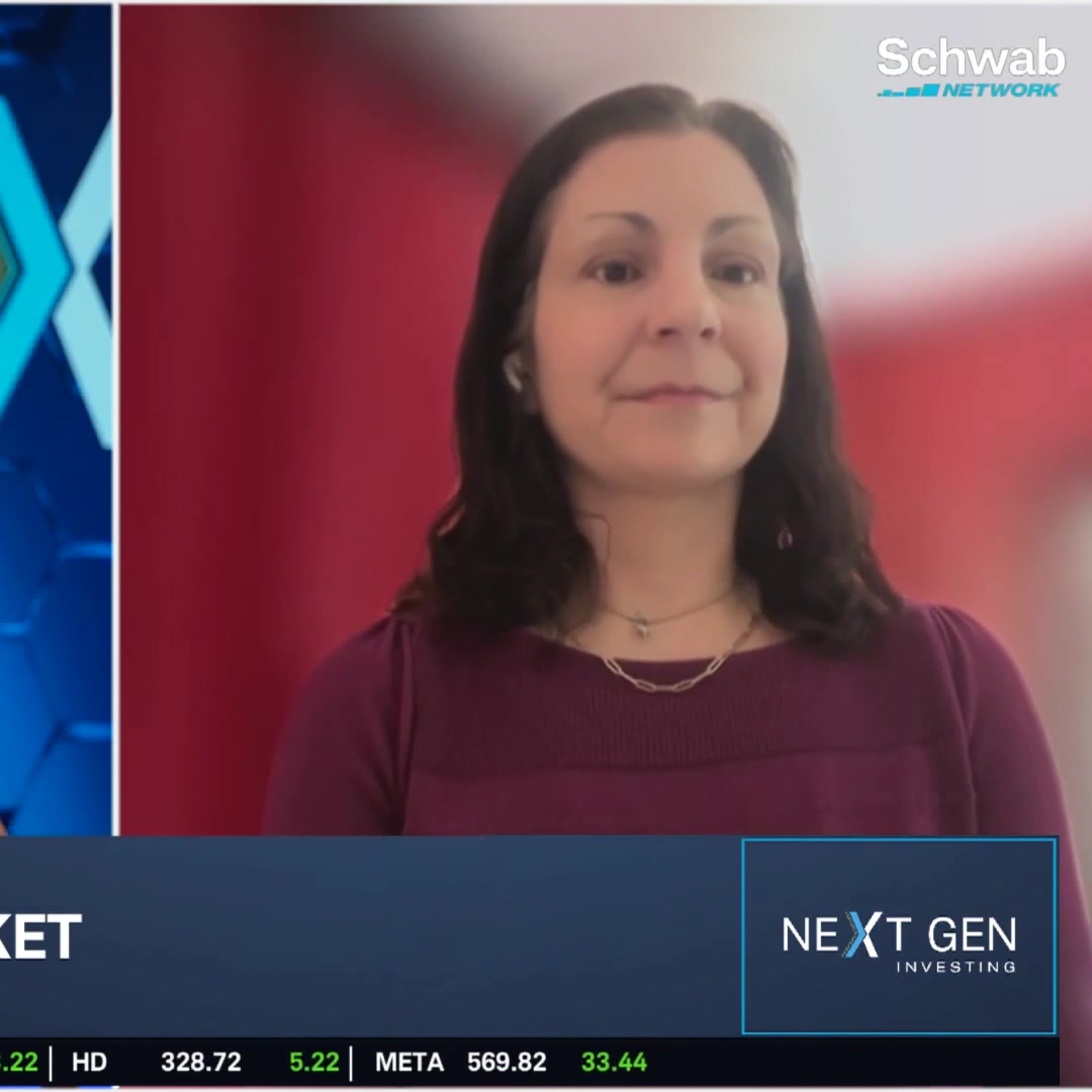
Audrey Symes explains how AI is reshaping entry‑level careers, turning routine tasks into automated workflows and giving digital‑native workers an edge. She argues adaptability—not job security—is the real hedge as technology, liquidity, and shifting labor dynamics redefine career mobility.
======== Schwab Network ========
Empowering every investor and trader, every market day.
Options involve risks and are not suitable for all investors. Before trading, read the Options Disclosure Document. http://bit.ly/2v9tH6D
Subscribe to the Market Minute newsletter - https://schwabnetwork.com/subscribe
Download the iOS app - https://apps.apple.com/us/app/schwab-network/id1460719185
Download the Amazon Fire Tv App - https://www.amazon.com/TD-Ameritrade-Network/dp/B07KRD76C7
Watch on Sling - https://watch.sling.com/1/asset/191928615bd8d47686f94682aefaa007/watch
Watch on Vizio - https://www.vizio.com/en/watchfreeplus-explore
Watch on DistroTV - https://www.distro.tv/live/schwab-network/
Follow us on X – https://twitter.com/schwabnetwork
Follow us on Facebook – https://www.facebook.com/schwabnetwork
Follow us on LinkedIn - https://www.linkedin.com/company/schwab-network/
About Schwab Network - https://schwabnetwork.com/about
Get every episode summarized
Each time Schwab Network publishes, we email you a written briefing from the transcript — the topics, who appeared, and any specific claims, with the ad reads skipped.
Email me new episodesFree for 3 shows. No card needed.
Hosts & guests

Transcript ready
87 searchable segments. Every word is indexed and playable.
Full transcript
Schwab Network — Audrey Symes on AI, Jobs, and Career Adaptability. Machine-transcribed; use the interactive transcript above to jump the player to any line.
Welcome back to Next Gen, investing. It's time to discuss some of the broader impacts we're seeing with AI and how it's playing out into the jobs market. So now I'd like to welcome in Aubrey Sims, a partner and head of research at EMM Research. Audrey, thank you so much for joining us today and really appreciate your time here. Want to get your broader thoughts on what right now you're seeing just in broad strokes. How AI is frankly reshaping the overall job market as well as just the labor force trends that we of course very closely monitor. Absolutely, thanks so much for having me. So at EMM Research we actually have an AI index impact framework that we use to keep kind of real time eye on how AI as it's starting to really disseminate across how we really see jobs being posted and filled and what effect that's having on different categories of jobs. And so kind of thinking about right now what we're thinking about in on our
team is new grads who are going to be looking for jobs around now and starting new jobs very soon. And we really think that's a very interesting focus because it really shows that those are framework really shows that those building block tasks that used to be pretty traditional for new grads to do. Those are kind of being superseded by AI. But there is a great opportunity for new grads who are often, you know, of course, digital natives to go ahead and harness the power of AI and, you know, use it as management experience to really line all the information up have, you know, a comfort level and facility with it that older workers might not have and be able to use it to improve their judgment and discernment skills and start really making an impact in a very quick amount of time. Audrey, taking some of those findings from that research, if we were to apply this and something actionable for let's say the next generation investor who
might also be a recent college graduate who's trying to, you know, explore this job market, maybe was varying varying degrees of success, you know, academics can be slowed to adapt. We know that in terms of generating the right skills that companies are using. What is something a young recent college grad or soon to be a college grad can start working on on their own before they enter the job market to make them a little bit more appealing. You know, I would say, as has always been the case, confidence is key. So be being able to highlight why you're right for the job and even in your, you know, what you've done in college or maybe clubs and stuff that you've been a part of or different activities, how you've used AI to really make an impact beyond what many think might be possible. I think a lot of employers are still getting their head around how to use this themselves. So if you
can come in and say, I've used all these different platforms to create, you know, X, Y, and C, even if it's not a traditional job, even if it's a school project or a thesis, I think that's really compelling as someone who, you know, often is looking to hire myself to really see how much a, you know, a young employee can amplify their own abilities. Okay, there has been a lot of, of studies that really highlight the fact that workers who can augment their, their output with AI see some benefit. And I know you mentioned this and wanted to dive more into the way that, then companies are then allocating their capital and investing in talent given, of course, the skill of like augmenting your output with AI. I mean, I think that really has to do a lot with the particular company, but I'll give you one example that we've focused some research on recently, which has been the banking industry. So, of course, a lot of deal discovery and that kind of thing is now being looked at by AI.
However, we're also seeing that analyst classes in banking have held up and are pretty robust, which we think is really due to two things. One is the regulatory nature of a lot of those tasks, which of course, you don't want to outsource. And that's why our framework model has an adjuster for jobs that have a heavy regulatory exposure. But then also, I think a lot of firms are being smart and realizing that, you know, traditionally in banking, you want to have a class, an analyst class that then kind of builds institutional knowledge over time and becomes your partners at some point. And I think that's also a consideration that's going to supersede, you know, short-term cost savings. I think that the health of M&A is also a tailwind for the financial services sector, because that generates a lot of deal activity. And that's even though the market's been sideways, that's still been pretty strong. So, Audrey, for those who have been lucky early career mid that got the job now, our company is expecting more faster, given these
new tools that they're investing a ton in. I think again, there are different companies have different levels of tax savviness. I think at the top end, at the bleeding edge, I do think the expectation is higher, but I think everyone's still kind of learning as we go. I know last year, McKinsey released a report that said only one-third of US businesses had implemented AI meaning fleet beyond pilot programs or projects. So, even though that's a year ago, and there's of course been changed, that's a pretty stunning statement. So, we're still kind of at the frontier of this. I think it's a great opportunity for new grads to come in, use their digital native status, really embrace it, you know, think of it as management experience, which you wouldn't traditionally get at this point. And even, you know, possibly look into entrepreneurship, if you can, actually the census is reported that, you know, small business formation has exploded over
the past year or so, and disruption always creates opportunities. Okay, and so, as we know, disruption is, I mean, I think pretty not even debated at this point, pretty widely recognized. And so, with some of these shift away from these more traditional training pathways, we know right now there could be some broader implications for things like wages, I mean, equality as well as economic mobility. So, how do you see that then shaping out in real time, as of course, we assess the job market in the near to more long term? So, in terms of wages, I think one thing that I think actually interest rates have a lot more to do with wages than AI, because it's more universal. So, you know, as interest rates theory go down, which I think will happen toward the end of the year, assuming that, I mean, because now we know kind of tariffs are kind of on the downside, all else be equal. I mean, you never know what's going to happen, but, you know, and as geopolitical forces, but, you know, potentially calm down later in the year, we should see more liquidity, which was, of course,
expected before everything happened over the past couple of months. I think that really is more wage-determinate than AI, but I do think that for jobs where you can, you know, so many people think of AI as having a monolithic effect, and it really has such a compounding effect, that you don't want to collapse the different forces. So, in some cases, you'll, you know, have the jobs that AI touches will remove or erode some functions. In the other case, in my create new functions, one example I always like to think of is, you know, when email came out, that was kind of the end of the clerical pool, but it didn't kind of created the the industry of IT. So, I think in general, creative destruction has always been part of the American economy, and there's no sign that that will not continue. So, I think it's really about positioning yourself to ride the wave and optimize as much as you can.
Yeah, and I do think that that is definitely something we've heard echo time and time again, and so really appreciate it, and great commentary as we assess, of course, the ever-shifting economy, as well as how that plays out into the labor force. So, appreciate it, Audrey Sims, partner and head of research at M Research.
More episodes
More from Schwab Network

Stock Market Today: ORCL & ADBE Earnings, AEO Plunges Near 52-Week Low
Schwab Network

Thursday's Final Takeaways: Crude Taps $103 & PPI Hotter than Expected
Schwab Network

Balancing High-Conviction AI With High-Dividend Diversification
Schwab Network

EARNINGS PANEL: ORCL, ADBE
Schwab Network