0:00
in the rolling hills of southern England, where history lingers in stone and silence,
0:06
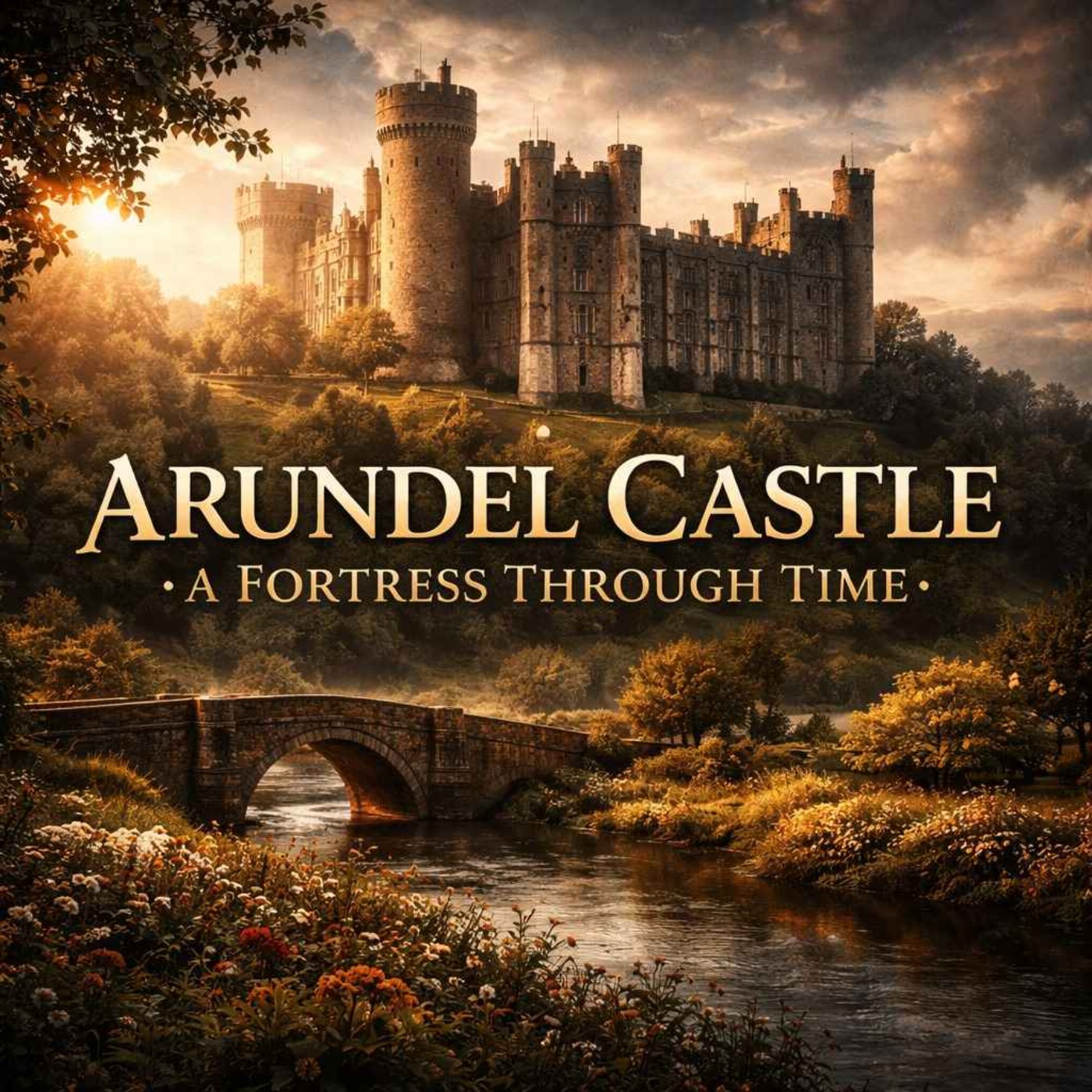
there stands a fortress, ancient, enduring, unshaken by time. This is a rundle castle.
0:15
Its story begins nearly a thousand years ago in the aftermath of the Norman Conquest. A time when
0:22
England was being reshaped, not just politically, but physically. After his victory, William the
0:29
Conqueror ordered the construction of castles across the land, not for beauty, not for comfort,
0:36
but for control. These were not simply homes. They were instruments of authority, symbols of dominance,
0:43
a way to remind the land who ruled it. A rundle was one of them. Built high on a natural hill,
0:51
overlooking the river a run. Its position was no accident. From this height, movement could be
0:57
observed. Threats could be anticipated. Power could be enforced. The earliest structure was
1:03
simple. A mott and Bailey design. Earth mounds would in walls, basic defenses. It was effective,
1:11
but temporary, because wood burns, wood decays, and power demands permanence. So over generations,
1:20
a rundle changed. Stone replaced timber. Walls rose higher. Towers grew stronger. The fortress
1:29
evolved, becoming not just a place of defense, but a statement, a declaration that this place
1:36
would endure. And endure, it did. A rundle castle became more than a military stronghold.
1:43
It became a seat of power. For centuries, it has been home to the Howard family, the dukes of
1:49
Norfolk. One of the most powerful noble families in England, closely tied to the crown,
1:55
to politics, to the shifting tides of history. Within these walls, decisions were made. Strategies
2:03
discussed. Alliances forged. Lives were shaped here. Not just of those who lived inside, but of
2:10
those far beyond its walls, because power does not stay contained. Its spreads, influences,
2:17
transforms. But a rundle was not untouched by conflict. In the 17th century, England was divided.
2:26
The English Civil War tore the nation apart. Royalists, supporters of the king,
2:31
against parliamentarians, who challenged his authority. A country at war with itself. And once
2:38
again, a rundle became a battlefield. The castle was besieged, surrounded, attacked. Its defenses
2:46
were tested. Its walls shaken. What once stood as a symbol of strength now bore the scars
2:54
of war. Stone damaged. Structures broken. Silence replaced by conflict. But even then, a rundle
3:02
did not fall into oblivion. It endured. After the war, however, a different kind of decay began.
3:10
Not from battle, but from neglect. Parts of the castle fell into ruin. Time slowly
3:16
reclaimed the stone. Nature began to take back what had been built. For a moment, it seemed as
3:23
though history might fade into dust. But a rundle story was not over. In the 18th and 19th
3:31
centuries, restoration began carefully, deliberately. Not just rebuilding what was lost,
3:38
but reimagining what it could be. The castle was transformed. Medieval strength remained,
3:44
but now blended with Victorian elegance, a fusion of past and present. Inside, a different world
3:52
emerged. Grand halls filled with light. Intricate would work carved with precision, art that
3:59
reflected centuries of taste and culture. Each room became a chapter. Each detail, a memory.
4:07
Not just of war, but of life. Of families who lived, grew and shaped the castle's identity.
4:14
Outside, the gardens offered contrast. Where once there was defense, now there was beauty.
4:21
Carefully designed landscapes, color, balance, peace. A reminder that even in places built for war,
4:29
there can be calm. Today, a rundle castle stands not as a fortress under siege,
4:36
but as a gateway to the past. Visitors walk through its halls, climb its towers,
4:42
stand where soldiers once stood, and look out across the same land, unchanged in its silence.
4:49
In those moments, history feels close. Not distant, not forgotten, but alive. Because a rundle
4:57
is more than stone, more than walls, more than architecture, it is memory, it is legacy,
5:05
it is time captured in form. From the ambitions of William the Conqueror to the struggles of Civil
5:12
War to the quiet preservation of history, a rundle castle has seen it all, and through it all,
5:19
it remains standing above the river, watching over the land, unchanged in purpose, yet transformed.
5:27
By time, a fortress through time.