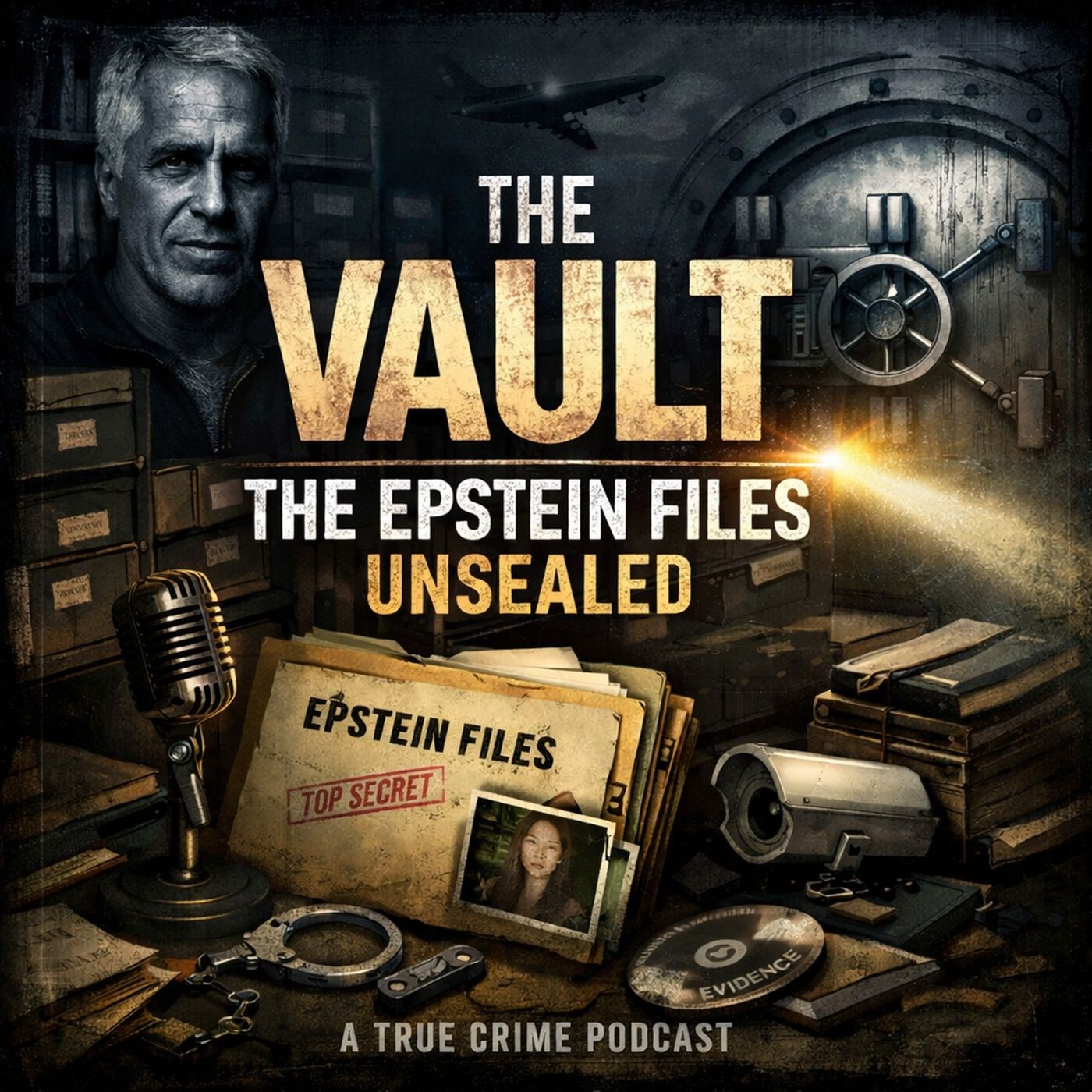
Another Epstein Court Order, Another DOJ Compliance Failure (Part 2)
About this episode
The broader point is that the Epstein case has become a test of whether powerful institutions are actually bound by the law they enforce on everyone else. If a regular citizen ignored a court order, consequences would come quickly, but when DOJ slow-walks or resists disclosure, it is treated as a legal disagreement rather than defiance. The essay argues that Judge Sullivan, Congress, the courts, and the OIG must stop accepting excuses and start imposing real consequences, whether through contempt, sanctions, sworn explanations, redaction logs, subpoenas, or independent review. Until someone with authority finally steps up and forces compliance, the DOJ will continue to manage the Epstein narrative, protect institutional reputations, and deny survivors and the public the transparency they were promised.
to contact me:
[email protected]
Get every episode summarized
Each time The Vault: The Epstein Files publishes, we email you a written briefing from the transcript — the topics, who appeared, and any specific claims, with the ad reads skipped.
Email me new episodesFree for 3 shows. No card needed.
Hosts & guests

Transcript ready
420 searchable segments. Every word is indexed and playable.
Full transcript
The Vault: The Epstein Files — Another Epstein Court Order, Another DOJ Compliance Failure (Part 2). Machine-transcribed; use the interactive transcript above to jump the player to any line.
This is Ashley Akinetti from the almost famous podcast. You ever notice you and your spouse keep saying, we need to get away, but you never actually plan anything. That was us until we did something fun and spontaneous. We went to resort pass.com. There are hundreds of hotel resorts, pools and spots and private beaches that you can enjoy. You can spend the day at a luxury resort, pool, spa, massage, without booking an overnight stay. And listen, I may have only been like 15 minutes from home, but it felt like it was a whole different world. And I'm thinking, this is exactly what I needed. So just go to resort pass.com, choose your resort, choose your day, luxury, resort, day passes, start at just $1,500. Once you post your daycation, people are gonna ask where you are. Go to resort pass.com slash almost famous and use the promo code almost famous to get $20 off when you spend $100. That's code almost famous at resort pass.com slash almost famous.
Hi, this is Dave Roberts. Heading into summer without a medical emergency kit, that's a risk. Summer colds can linger and getting sick on vacation can derail everything. That's why everyone needs a medical emergency kit. It includes doctor prescribed medications to treat common and serious illnesses. So if you wake up sick, at home or on the road, you already have what you need. It's like having an urgent care and pharmacy at home. Say $45 with cold blue at urgentcarekit.com slash blue. urgentcarekit.com slash blue. What's up everyone and welcome to another episode of the Epstein Chronicles. In this episode, we're gonna pick up where he left off, talking about the DOJ and the refusal to abide by the order passed
by Judge Sullivan. Now, the office of the inspector general also can hide behind polite institutional distance. The Epstein matter is a very important thing. It's a very important thing to do. It's a very important thing to do. It's a very important thing to do. It's a very important thing to do. The Epstein matter isn't just a coal file in a dusty cabinet. It's an active test of whether the justice department can be trusted to tell the truth about its own failures. If the DOJ is playing games with court order transparency, then the OIG should not need public begging to recognize the seriousness of the problem. The inspector general's job is not to protect the department's reputation. The job is to investigate misconduct, failure, abuse, and breakdown. The Epstein case offers all of that in industrial quantities. Every delay deserves scrutiny. Every redaction, rationale, deserves examination. Every misdebline deserves documentation and every official involves in resisting lawful disclosure.
Should have to explain themselves under conditions more serious than a friendly internal email chain. Now, the DOJ, they love to invoke victims when it wants to keep material sealed. And sometimes that concern is legitimate. Survivors should not be exposed, retraumatized, or used as collateral damage in a political knife fight. Their privacy matters. Their dignity matters, and their safety matters. But that concern cannot become a magic cloak thrown over every page that might embarrass a powerful man. Protecting victims and exposing institutional failure are not mutually exclusive. A competent department can redact survivor identifying information while releasing names, dates, communications, logs, and official decision-making records that serve the public interest. The idea that America must choose between survivor protection and transparency is a false choice, and it's also convenient for the people who benefit
from the darkness. And look, that's why I think that getting a look at this redaction log matters. A redaction log forces the government to say what it's withholding and why. It turns a black marker into an accountable act if it prevents the department from simply smearing ink across history and calling the result justice. If DOJ's redactions are proper, then it should have no fear of explaining them. If they are improper, then the public deserves to know that too. The government should not be allowed to hide behind vague invocations of sensitivity in the Epstein case sensitivity has to often meant sensitivity to reputational damage, not sensitivity to survivors, and there's a big difference. One protects the vulnerable, the other protects the connected. And from where I'm sitting over here in the Pino Gallery, the arrogance is breathtaking. Because the DOJ is not being asked to do something exotic, it's being asked to comply with a law and a court order.
That's the baseline expectation for every citizen in the country. If a regular American ignores a court order, the system does not give them a velvet pillow and a scheduling conference. No, it threatens sanctions, contempt, fines, and in some cases, incarceration. But when the department of justice slow walks or resists in order, suddenly everyone reaches for softer language, they call it a dispute, they call it a delay, they call it a disagreement over interpretation. The double standard is exactly why people no longer believe the system polices itself. They see one justice system for the governed and another for the governing. And in the Epstein matter, that double standard is radioactive. Epstein's entire life was a study in different rules for different classes of people. He got access, ordinary offenders would never get. He got leniency or ordinary defendants would never receive. He got social rehabilitation, ordinary predators
would never enjoy. He got powerful people to keep taking his calls long after the truth was known. Cuz moved through mansions, islands, banks, universities, boardrooms, foundations, and political circles. While survivors carried the damage. So when the DOJ now behaves, as though Epstein records can be handled on its preferred timeline, it's not merely irritating. It's historically obscene. It continues the very pattern the files are supposed to expose. And look, the American people are not asking for gossip. They're asking for accountability. They're asking who knew what, who did nothing, who intervened, who benefited, who lied, who minimized, and who used power to make consequences disappear. They're asking why a case involving a known sex trafficker with elite connections has generated more secrecy than clarity. They're asking why the government can always find a reason
to withhold, but rarely finds the courage to disclose. They're asking why every path toward transparency seems to lead into another bureaucratic swamp. Those are not conspiracy questions. Those are civic questions. A functioning republic should be able to answer them without needing to be dragged into court by a journalist. And that's why Ketty Fang's lawsuit gets right to it. Because it challenges the government's favorite hiding place, the DOJ wanted to push this into the usual channels, where delay can become a lifestyle and a request can die slowly under the way to process. Now, Sullivan's ruling, it cut against that instinct by recognizing that a transparency statute means something. A law requiring release is not the same thing as a polite request. Under Freedom of Information Act, Congress acted because the ordinary machinery had failed. If DOJ can take a law specifically designed to force Epstein disclosure and turn it back into endless agency discretion, then the law becomes a joke.
That cannot be allowed to stand. Either the Epstein files transparency act has forced, or it was just another political problem. The court now has to decide whether words on paper still mean anything when the DOJ dislikes the result. And of course, there's Donald Trump's presence over the fight, and that makes transparency burden heavier and not lighter. Any president connected by history, social contact, public reporting, or political controversy to the Epstein universe should want maximum credible disclosure to clear the air. That's what an innocent system would do. It would release the records lawfully, protect victims carefully, document redactions precisely, and let the facts stand, where they land, instead resistance only fuel suspicion. It makes every withheld page feel more important. It makes every redaction look less like protection and more like concealment. It makes every misdeadline sound like a confession without words. That may not be fair in every individual instance,
but it's the consequence of decades of secrecy. And Todd Blanche's bichass should understand this better than anyone. The credibility of the Department of Justice is not restored by saying trust us. It's restored by doing the hard thing when the hard thing is legally required. It's restored by accepting that the Department does not own the truth. It's restored by respecting a court order, even when compliance is politically uncomfortable. It's restored by recognizing that the Epstein case belongs first to the survivors and then to the public record. Not to the convenience of DOJ leadership. If Blanche wants to be seen as a steward of justice, then he can't behave like a gatekeeper for embarrassment. He can't claim institutional seriousness while fighting the release of records, Congress ordered into daylight. This is a moment that reveals priorities. And so far, folks, the priorities look ugly. And now the court's face their own test.
It's not enough to write sternly. It's not enough to express concern. It is not enough to give DOJ one more chance than another than another until the public loses track and the pressure dissipates. Yeah, courts have contempt power for a reason. They have sanctioned power for a reason. They can demand sworn explanations, impose deadlines, require in-camera review, appoint neutral oversight, and refuse to let executive branch arrogance turn judicial authority into wallpaper. This is Rick Burgess from the Rick Burgess Show. I want to talk to you for a second about something most of us put on autopilot, car insurance. If you're just letting your policy auto renew year after year without shopping around, I'm telling you, you are probably throwing money away. Race change all the time and staying loyal to one company can end up costing you big time. That's why you need to go check out Insureify. I went to insureify.com to test it out myself and I was blown away by how easy it is. In about two minutes, totally free, you can compare actual real-time quotes from over 100 top insurance companies
all side by side in one place. No endless phone calls, no pushy sales pitches. Here's what I really love. Insureify doesn't just help you once and walk away. They actually keep monitoring your rates in the background and alert you whenever prices drop so you never miss out on a better deal down the road. Millions of drivers have already used Insureify to stop overpaying and there's no reason you shouldn't do. Do yourself and your wallet a favor. Go see what you could save right now at insureify.com. That's insureify.com. This is Matt Rogers from Los Cultures. He's test with Matt Rogers and Bowen Yang. This is Bowen Yang from Los Cultures. He's just Matt Rogers and Bowen Yang. You know when people try new food and suddenly it's like, wait. That's the reaction. A lot of people are having when they first try QB Mayo. It's the one with the red cap and the little baby on the bottle. You've probably seen it in the grocery store before. And if you've ever just walked past it, some people would say that's a huge mistake because this mayo is different. Most mayonnaise uses whole eggs. QB only uses egg yolks, which gives it this rich umami flavor.
It's smoother, deeper, and almost buttery. Once people try it, they start putting it on everything. Eggs sandwiches, fries, burgers, some fans even swear by dipping pizza crust in it. And once you notice it, you start seeing it everywhere. Chefs use it, restaurants use it. People who really care about flavor use it. Never try it, grab the bottle with the red cap next time you're out of the store. Put it on just about anything, then you'll understand. QB, the original Japanese mayonnaise. This is Ashley Akinetti from the almost famous podcast. You ever notice you and your spouse keep saying, we need to get away, but you never actually plan anything. That was us until we did something fun and spontaneous. We went to resortpass.com. There are hundreds of hotel resorts, pools and spots and private beaches that you can enjoy. You can spend the day at a luxury resort, pool, spa, massage, without booking an overnight stay. And listen, I may have only been like 15 minutes from home, but it felt like it was a whole different world. And I'm thinking, this is exactly what I needed.
So just go to resortpass.com, choose your resort, choose your day, luxury, resort, day passes, start at just $1,500. Once you post your daycation, people are gonna ask where you are. Go to resortpass.com slash almost famous and use the promo code almost famous to get $20 off when you spend $100. That's code almost famous at resortpass.com slash almost famous. Judge Sullivan has opened the door to accountability. The next question is whether the judiciary is willing to walk through it. Because if the DOJ can defy, delay or dilute this order without consequence, then the lesson to every agency is obvious. Stall long enough and the storm may pass. And the same goes for Congress. If lawmakers truly believe the Epstein files matter, then they should act like it when the cameras are off. They should demand production schedules, redaction standards, privilege logs, sworn testimony, and names of officials responsible for withholding decisions.
They should subpoena the people making McCalls, not just the people convenient enough to appear. They should not accept ongoing review as an answer when the statute already set the terms. They should not let DOJ bury Congress under process. The legislative branch wrote the law. If the executive branch is defying the spirit or letter of that law, then Congress has a constitutional obligation to respond. And now of course we get to the part where the institutional defenders show up until everyone will calm down. They say things like, it takes time. They say classified or sensitive information must be handled carefully. They say the public does not understand the complexity. They say responsible adults are working behind the scenes. But the Epstein case has been buried behind responsible adults for decades and the result was not justice. The result was a dead defendant, wounded survivors, protected reputations, missing answers, and a public that no longer believes the official story
because the officials refused to produce their records. Com is not a civic virtue when comm becomes submission. Patience is not wisdom when patience is exploited. At some point refusing to be lied to is the only rational position left. And the DOJ's conduct in this dispute should offend everyone regardless of party. If your position changes depending on whose administration controls the department, then you don't believe in transparency. You believe in team sports. Epstein's crimes and the government's failures are bigger than anyone president, prosecutor, donor, royal, banker, academic, or intelligence rumor. The files matter because they can show how systems failed and who those systems protected. They matter because survivors or deny the truth for far too long. They matter because institutions can heal what they refuse to expose. And they matter because the public has a right to know whether the justice department is enforcing the law
or managing the fallout. That shouldn't be controversial and the fact that it is controversial tells you everything. So the question remains, who's gonna have the stones to step up and do the right thing? Will it be a judge Sullivan by refusing to let the DOJ treat his order like a speed bomb? Will it be Congress by turning oversight into enforcement instead of performance art? Will it be the inspector general by digging into the withholding process and naming failures plainly? Will it be whistleblowers inside the department who are tired of watching public servants behave like private bodyguards for powerful interests? Someone has to move because the DOJ is shown again that it will not voluntarily surrender control of the Epstein narrative. It's gonna release what it must, hide what it can, and explain only when it's cornered. Look, the Epstein case has always been a test of whether America has one system of justice or two. Every sealed record, every redaction,
every delayed release, every failed explanation, and every violated deadline sharpens that test. The DOJ can still choose compliance, but it should no longer receive the benefit of the doubt. Todd Blanche can still choose transparency, but he should be judged by a production, not promises. Donald Trump can still demand full lawful disclosure, but the public should judge the administration by what it releases, not what it says at the microphone. Judge Sullivan's order gives a government a simple path. Obey the law, explain the redactions and stop playing games with one of the most important public records disputes in the country. If DOJ refuses, then consequences must follow. Not speeches, not tweets, not strongly worded letters, consequences. Because in the Epstein case, America has heard enough excuses, and the time for institutional stonewalling should be over. All the information that goes with this episode
can be found in the description box. This is Ashley Akinetti from the Almost Amos podcast. You ever notice you and your spouse keep saying, we need to get away, but you never actually plan anything. That was us until we did something fun and spontaneous. We went to resortpass.com. There are hundreds of hotel resorts, pools and spots and private beaches that you can enjoy. You can spend the day at a luxury resort, pool, spa, massage, without booking an overnight stay. And listen, I may have only been like 15 minutes from home, but it felt like it was a whole different world. And I'm thinking, this is exactly what I needed. So just go to resortpass.com, choose your resort, choose your day, luxury, resort day passes, start at just $1,000, $1,000, once you post your daycation, people are gonna ask where you are. Go to resortpass.com slash almost famous and use the promo code almost famous to get $20 off when you spend $100. That's code almost famous at resortpass.com slash almost famous.
And these deals won't last. Visit vansheralbertons.com for more deals and ways to save.
More episodes
More from The Vault: The Epstein Files

The USVI Unleashes More Exhibits Detailing JP Morgan's Ties To Jeffrey Epstein (...
The Vault: The Epstein Files
Mega Edition: Jeffrey Epstein And The Evidence Pointing To Who Was On The Plane...
The Vault: The Epstein Files
Mega Edition: The Epstein Survivors And Their Secondary Role In Their Own Stor...
The Vault: The Epstein Files
Mega Edition: Prince Andrew And The Silence That Told Us Everything We Needed T...
The Vault: The Epstein Files