
About this episode
Host Kevin Patton examines variations in human anatomy, including the fabella bone, situs inversus, and more.
00:40 | Preview Episodes
04:15 | Sponsored by HAPS
05:48 | Fabella Bone
15:51 | Sponsored by AAA
16:11 | Situs Inversus
32:18 | Sponsored by HAPI Online Graduate Program
32:57 | Variety of Anatomic Variations
42:43 | Nuzzel Newsletter
If you cannot see or activate the audio player click here.
Questions & Feedback: 1-833-LION-DEN (1-833-546-6336)
Follow The A&P Professor on Twitter, Facebook, Blogger, Nuzzel, Tumblr, or Instagram!
The essence of the beautiful is unity in variety. (Moses Mendelssohn)
1 | Preview Episodes
4.15 minutes
If you are skipping over the Preview Episodes, which are each released a few days before a full episode, contain a lot of helpful content that you don't want to miss!
- Upcoming topics
- Word Dissections
- Book Club selections
- Bergman's Comprehensive Encyclopedia of Human Anatomic Variation
- by R. Shane Tubbs, Mohammadali M. Shoja, Marios Loukas
- originally created by Ronald Bergman
- amzn.to/2Lg597V
- by R. Shane Tubbs, Mohammadali M. Shoja, Marios Loukas
- Sometimes, feedback and other interesting stuff!
- Preview for this episode: Episode 43 Intro | TAPP Radio Preview
2 | Sponsored by HAPS
1 minute
The Human Anatomy & Physiology Society (HAPS) is a sponsor of this podcast. You can help appreciate their support by clicking the link below and checking out the many resources and benefits found there. AND mention your appreciation to the HAPS leadership while you are at the conference—or anytime that you communicate with them.
Kevin's Unofficial Guide to the HAPS Annual Conference | 2019 Edition | Episode 42

3 | Fabella Bone
10 minutes
The fabella is a small, beanlike bone that may (or not) occur behind the knee joint. Recent evidence shows that it's showing up more frequently in the population. Why?
- Fabella prevalence rate increases over 150 years, and rates of other sesamoid bones remain constant: a systematic review (recent research article) my-ap.us/2WkRSMs
- Sore knee? Maybe you have a fabella (plain English report from the BBC) my-ap.us/2Wmd6cN
- Fabella x-radiograph (to use in your course) my-ap.us/2Wm6Di3
- Improbable Destinies: Fate, Chance, and the Future of Evolution by Jonathan B. Losos (book on updated ideas of evolution)
- amzn.to/2L9fzCE
- Browse The A&P Professor Book Club
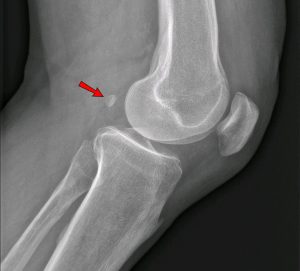
Fabella image: Jmarchn (my-ap.us/2Wm6Di3)
4 | Sponsored by AAA
0.5 minute
The searchable transcript for this episode, as well as the captioned audiogram of this episode, are sponsored by The American Association of Anatomists (AAA) at anatomy.org. Their big meeting is in April at the Experimental Biology (EB) meeting in Orlando FL. Check it out!

5 | Situs Inversus
16 minutes
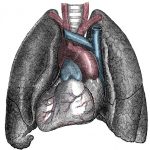
Situs inversus is a mirrorlike flipping of visceral organs that occurs in embryonic development. Also called situs transversus or situs oppositus. Normal siting of organs is called situs solitus.
- Situs inversus and my 'through the looking glass' body (recent article by someone living with situs inversus) my-ap.us/2WatPzP
- Body donor's rare anatomy offers valuable lessons (press release on recent 99-year old donor with situs inversus with levocardia) my-ap.us/2Wf5MzO
- Heart Transplantation in Situs Inversus Maintaining Dextrocardia (interesting study of transplanting 'normal' hearts into patients with dextrocardia) my-ap.us/2WmbTlL
ERROR: In my discussion of the cast of situs inversus in the young man from the 1800s, I mixed up my left and right. Yikes. The appendix is on the right in situs solitus, but on the left in situs inversus. This was corrected in the audio file on 10 May 2019, but the correction may not be heard in all available platforms.
6| Sponsored by HAPI Online Graduate Program
0.5 minute
The Master of Science in Human Anatomy & Physiology Instruction—the MS-HAPI—is graduate program for A&P teachers. A combination of science courses (enough to qualify you to teach at the college level) and courses in instructional practice, this program helps you power up your teaching. Kevin Patton is a faculty member in this program. Check it out!
There will be a HAPI table in the Exhibit Hall at the 2019 HAPS Annual Conference. Stop by and say hi!
7 | Variety of Anatomic Variations
5 minutes
Perhaps variation is normal. And maybe "normal" is a mythical, but useful, construct we use in understanding human anatomy.
- Brief list of some human anatomical variations my-ap.us/2WrAC8q
- Online atlas of anatomy variations AandP.info/AnatomyAtlasVariations
- How do we handle anatomic variations (vs. "normal") in our A&P course?
- I'm thinking there isn't a best way. I'm thinking it's largely up to us as artists to decide what works best.
- Remember, in my world, teaching is both and art and a science. We are, among other things, artist of telling stories. Stories about the human body.
- So I think we need to really think about, play with, experiment with, different ways of telling our story of human anatomy so that at some point it's clear that we don't all look like the idealized sketches in our books and models on the lab bench. Or even all the elderly cadavers in our dissection lab.
- Perhaps we can begin by being clear and intentional about pointing out differences arising from development and aging, from the effects of sex hormones, from environmental influences, from the range of possible human activities (or lack of activity), then bring in all those variations in genetic code and variations in how embryological events unfold, or maybe I should say fold.
- I think in the end, the best story of human anatomy is a story of the awesome and beautiful balance of both unity and variety in the human form.
- I'm thinking there isn't a best way. I'm thinking it's largely up to us as artists to decide what works best.
8 | Nuzzel
1.5 minutes
A daily collection of headlines of interest to A&P professors, curated by Kevin Patton
If the hyperlinks here are not active, go to TAPPradio.org to find the episode page.
- More details at the episode page.
- Transcript available at the script page.
- Listen to any episode on your Alexa device.
- Need help accessing resources locked behind a paywall? Check out this advice from Episode 32 to get what you need! https://youtu.be/JU_l76JGwVw?t=440
Get every episode summarized
Each time The A&P Professor publishes, we email you a written briefing from the transcript — the topics, who appeared, and any specific claims, with the ad reads skipped.
Email me new episodesFree for 3 shows. No card needed.
Hosts & guests
No transcript yet
This episode has not been transcribed. Request it and it moves to the front of the queue.
More episodes
More from The A&P Professor
Steve Sullivan on Teaching A&P Bit by Bit: Podcasts, Digital Learning, & Keeping...
The A&P Professor

Dual Enrollment in A&P: Murray Jensen on Rigor, Pedagogy, and Community | TAPP 1...
The A&P Professor

10 Reasons Why Mucus Is Our Friend | TAPP 154
The A&P Professor

Pulse Check: A Year in Review & What's Next for A&P Teaching | TAPP 153
The A&P Professor