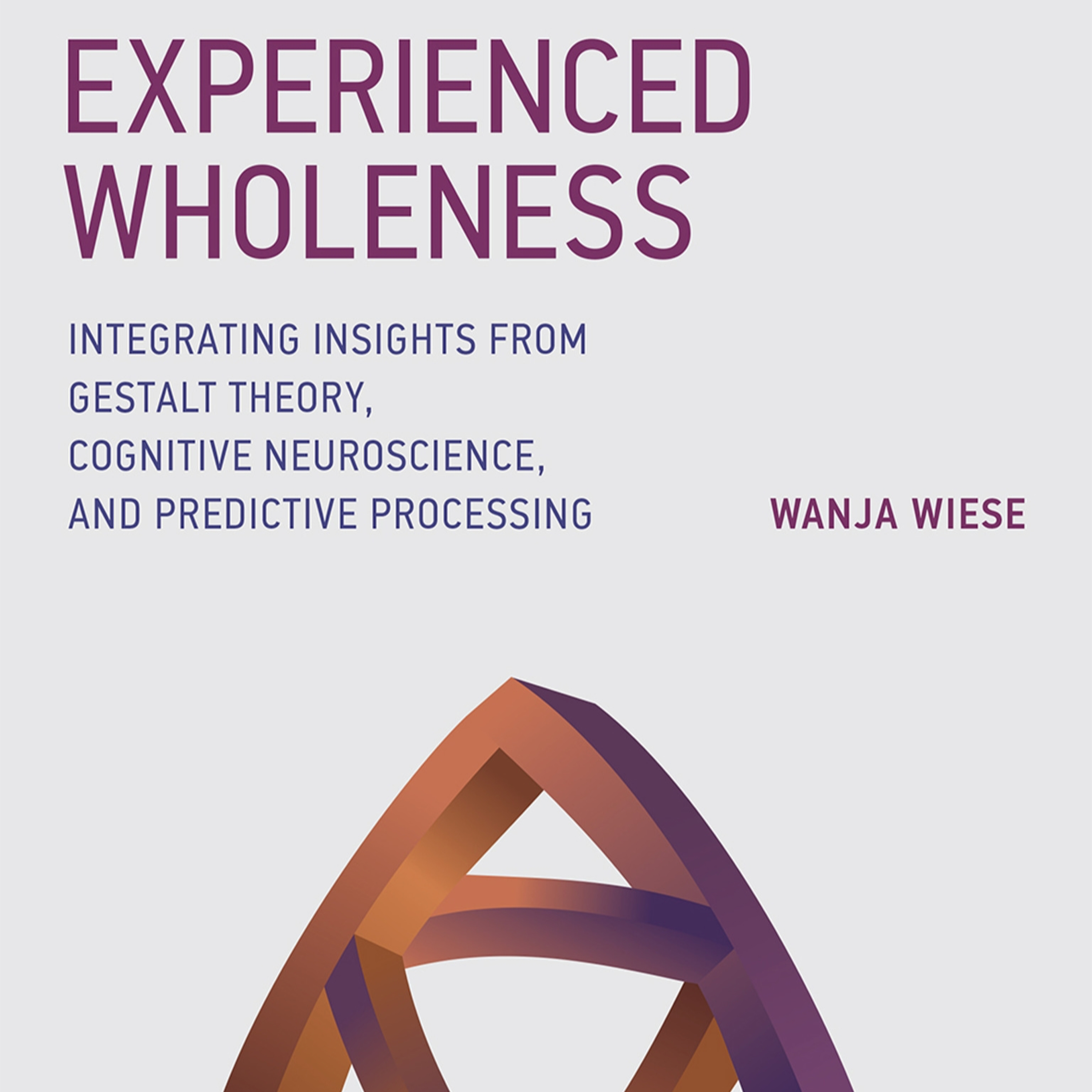
[97] Experienced Wholeness By Wanja Wiese
Get every episode summarized
Each time Branches of Philosophy Podcast publishes, we email you a written briefing from the transcript — the topics, who appeared, and any specific claims, with the ad reads skipped.
Email me new episodesFree for 3 shows. No card needed.
About this episode
An introduction and summary of "Experienced WholenessIntegrating Insights from Gestalt Theory, Cognitive Neuroscience, and Predictive Processing" By Wanja Wiese 2018
An interdisciplinary account of phenomenal unity, investigating how experiential wholes can be characterized and how such characterizations can be analyzed computationally.How can we account for phenomenal unity? That is, how can we characterize and explain our experience of objects and groups of objects, bodily experiences, successions of events, and the attentional structure of consciousness as wholes? In this book, Wanja Wiese develops an interdisciplinary account of phenomenal unity, investigating how experiential wholes can be characterized and how such characterization can be analyzed conceptually as well as computationally.Wiese first addresses how the unity of consciousness can be characterized phenomenologically, discussing what it is like to experience wholes and what is the experiential contribution of phenomenal unity. Considering the associated conceptual and empirical issues, he draws connections to phenomenological accounts and research on Gestalt theory. The results show how the attentional structure of experience, the experience of temporal flow, and different types of experiential wholes contribute to our sense of phenomenal unity. Moreover, characterizing phenomenal unity in terms of the existence of a single global phenomenal state is neither necessary nor sufficient to adequately address the problem of phenomenal unity. Wiese then suggests that the concepts and ideas of predictive processing can be used to analyze phenomenal unity computationally. The result is both a conceptual framework and an interdisciplinary account: the regularity account of phenomenal unity. According to this account, experienced wholes correspond to a hierarchy of connecting regularities. The brain tracks these regularities by hierarchical prediction error minimization, which approximates hierarchical Bayesian inference.
Get every episode summarized
Each time Branches of Philosophy Podcast publishes, we email you a written briefing from the transcript — the topics, who appeared, and any specific claims, with the ad reads skipped.
Email me new episodesFree for 3 shows. No card needed.
Hosts & guests
No transcript yet
This episode has not been transcribed. Request it and it moves to the front of the queue.
More episodes
More from Branches of Philosophy Podcast

[218] The Paradox of Self-Consciousness By Jose Luis Bermudez
Branches of Philosophy Podcast

[217] The puzzle of Experience By J.J. Valberg
Branches of Philosophy Podcast

[216] The Spread Mind: Why Consciousness and the World Are One By Riccardo Manzo...
Branches of Philosophy Podcast

[215] If Anyone Builds It, Everyone Dies: Why Superhuman AI Would Kill Us All E....
Branches of Philosophy Podcast