About this episode
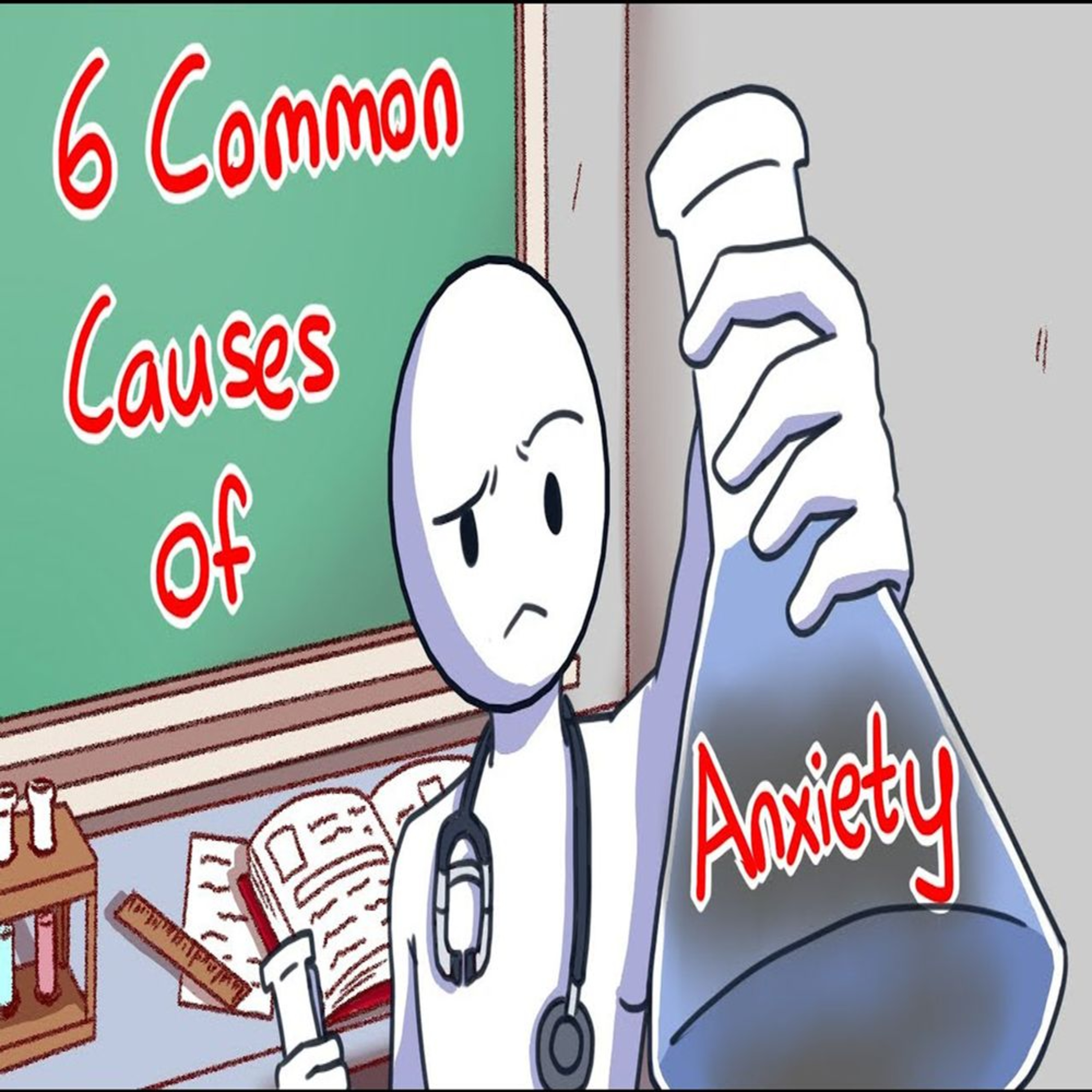
According to a recent survey by the National Institute of Mental Health (2017), Anxiety is the most common mental illness, with over 40 million adults in the US alone being diagnosed every year. The American Psychological Association (2013) defines anxiety as a future-oriented concern that may lead people to avoid situations that trigger or worsen their distress. Do you have experience with anxiety? Do you know someone who is often anxious? What other symptoms of anxiety do you recognize? There are in fact many types of anxiety disorders, including generalized anxiety disorder, Obsessive-compulsive Disorder (OCD), Panic Disorder, Post-Traumatic Stress Disorder (PTSD) and Social Phobia or Social Anxiety Disorder.
#anxiety #anxietydisorders
Credits
Script Writer: Chloe Avanasa
Script Editors: Kelly Soong
VO: Amanda Silvera
Animator: Napiart
YouTube Manager: Cindy Cheong
Our sources:
National Institute of Mental Health. (November 2017). What Are Anxiety Disorders?. Retrieved from nimh.nih.gov/health/statistics/any-anxiety-disorder.shtml
Nolen-Hoeksema, S. (2000). The role of rumination in depressive disorders and mixed anxiety/depressive symptoms. Journal of abnormal psychology, 109(3), 504.
Laux, L., & Krohne, H. W. (Eds.). (1982). Achievement, stress, and anxiety. Hemisphere Publishing Corporation.
Caplan, S. E. (2006). Relations among loneliness, social anxiety, and problematic Internet use. CyberPsychology & behavior, 10(2), 234-242.
Stearns, P. N. (2012). American fear: The causes and consequences of high anxiety. Routledge.
Greenson, R. R. (1959). Phobia, anxiety, and depression. Journal of the American Psychoanalytic Association, 7(4), 663-674.
Reiss, S. (1991). Expectancy model of fear, anxiety, and panic. Clinical psychology review, 11(2), 141-153.
Kinsey, S. G., Bailey, M. T., Sheridan, J. F., Padgett, D. A., & Avitsur, R. (2007). Repeated social defeat causes increased anxiety-like behavior and alters splenocyte function in C57BL/6 and CD-1 mice. Brain, behavior, and immunity, 21(4), 458-466.
Get every episode summarized
Each time Psych2Go On the GO publishes, we email you a written briefing from the transcript — the topics, who appeared, and any specific claims, with the ad reads skipped.
Email me new episodesFree for 3 shows. No card needed.
No transcript yet
This episode has not been transcribed. Request it and it moves to the front of the queue.
More episodes
More from Psych2Go On the GO

5 Signs Someone Loves You But Isn't Telling You Yet
Psych2Go On the GO

How to make your crush like you ONLINE
Psych2Go On the GO

5 Signs Your Crush Doesn't Want a Relationship
Psych2Go On the GO

6 Types of Gaslighting To Beware Of
Psych2Go On the GO