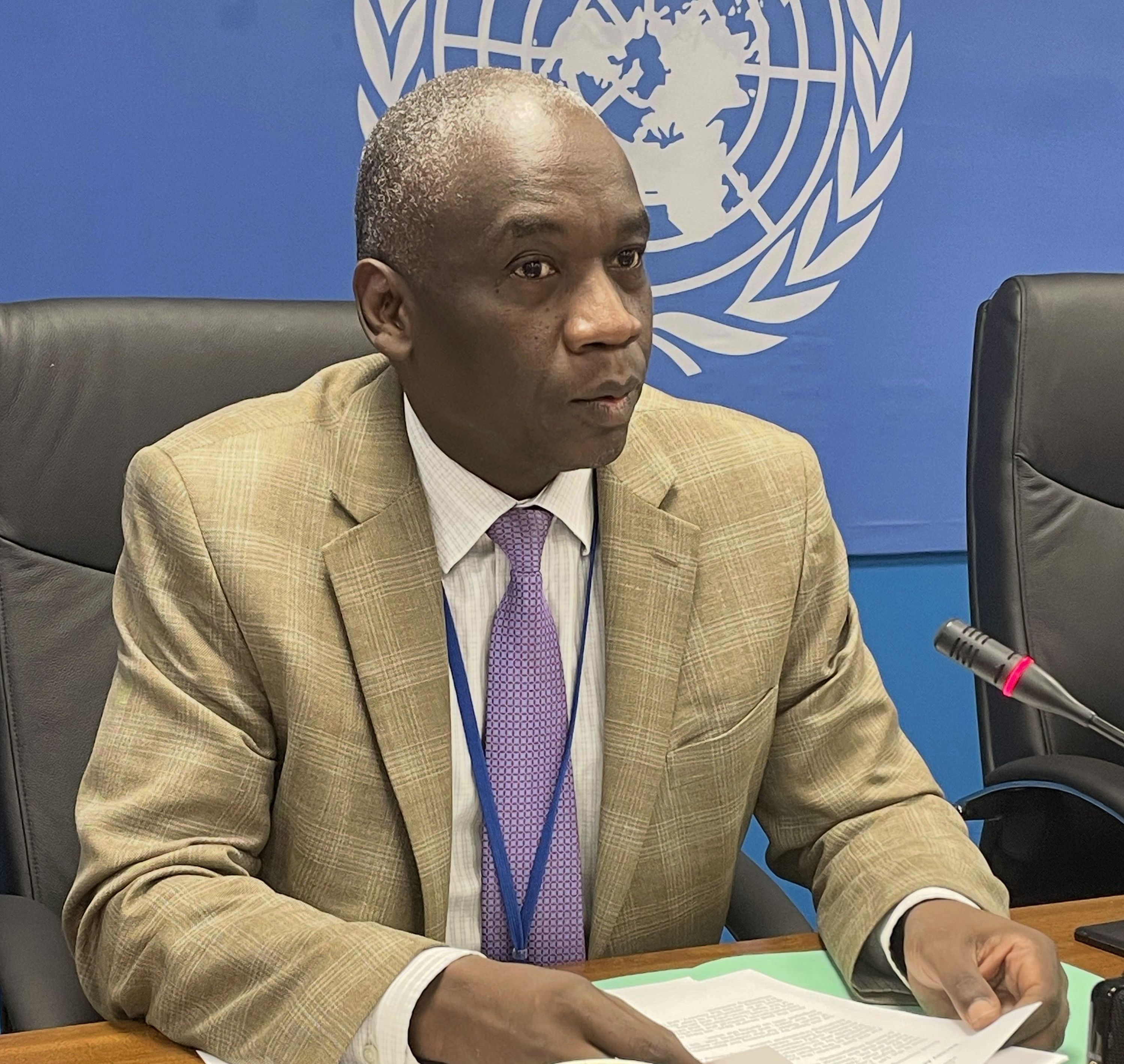
3360: EXCLUSIVE INTERVIEW | UN Rights Commission Warns South Sudan’s Transition at Risk
About this episode
The United Nations Commission on Human Rights in South Sudan has concluded a four-day visit, warning that renewed violence, political tensions, shrinking civic space and persistent impunity are putting civilians and the country’s democratic transition at risk. The three-member Commission engaged government officials, political and security actors, civil society, humanitarian partners, victims and other stakeholders, including survivors of recent violence in Jonglei. Its findings point to a fragile political environment ahead of the planned December elections, with concerns that continued insecurity and limited civic space could undermine a peaceful and credible transition.
Commissioner Barney Afako spoke with Radio Miraya's Philip Wani at the end of the mission, outlining the conditions the Commission says are needed to protect the political process and civilians.
Get every episode summarized
Each time Radio Miraya publishes, we email you a written briefing from the transcript — the topics, who appeared, and any specific claims, with the ad reads skipped.
Email me new episodesFree for 3 shows. No card needed.
Hosts & guests
Transcript ready
220 searchable segments. Every word is indexed and playable.
Full transcript
Radio Miraya — 3360: EXCLUSIVE INTERVIEW | UN Rights Commission Warns South Sudan’s Transition at Risk. Machine-transcribed; use the interactive transcript above to jump the player to any line.
As you say, this is our 14th visit. The Commission has been coming to South Sudan for the last 10 years during which we have been monitoring the human rights situation, particularly the ongoing conflict and the political contestation. We have found that the security situation continues to be dire. South Sudan is still in conflict in about half the states of this country. You are having political violence or intercomino violence with serious repercussions for citizens. We are seeing killings, we're seeing displacements and we're seeing citizens face a humanitarian situation that is dire. Therefore, we are calling for enhanced protection from the state and investment in peacemaking to de-escalate the violence that we are seeing unfolding.
So, the Commission has just said it was assessing the impact of renewed armed conflict, displacement and political tensions. From what have you seen during this visit, are the most pressing human rights concerns requiring urgent attention? The most pressing concerns relate to ongoing conflict and violence, whether that is in Zhongli or Upenile or Western Equatoria and other parts of the country. Whenever there is fighting or violence breaks out in the country, people are killed, people are displaced, both internally and in some cases, externally as refugees. Women are attacked and sexually violated and we've seen this cycle ongoing. So, a pattern that has been playing out for the last 10 and more years, 10 years of our own mandate following the situation here, but it goes back much, much further.
And therefore, we see that there is a very strong connection between the violations of human rights and ongoing conflict. And this tells us that it is important to address the root causes of conflict and to take political steps to prevent the differences that we see amongst political leaders transforming into the kind of violence that we are seeing. We are now also seeing increasing inter-communal violence. This is violence which is not necessarily between political adversaries. It comes from differences between communities, but it's also a reflection of the absence of the state and the absence of mechanisms and institutions for addressing some of the differences between communities. Instead, we have often seen that elites are the ones instigating and
finding some of these violence that we see and we characterize as inter-communal violence. The other element that is of concern which will come back to in our reporting in due course is the abduction and recruitment of children. Now increasingly, we are seeing that many of the entities that are contesting violently are beginning to recruit possibly children, often taken from towns, even schools and armed and trained and sent to the battle failed to fight, which is wrong, which is a very, very serious violation. So we are seeing this emerging as a feature of the conflict as well as some of the other features such as the attacks on women, but also in the context of
the violence, the attacks on humanitarian infrastructure and civilian infrastructure, including attacks on health facilities. We've seen this in Zhongli amongst other places. So we see one of the priorities as the prevention of conflict, prevention of violence between communities but between political actors. Although the peace agreement led to consensus and a session of hostility between some of the conflict actors, others remained outside the agreement and the continue to operate in parts of the country, including the equatoria. So there is need for a strategy of peacemaking, which resolves the political differences between different entities, but also begins to address some of the violence that is manifesting
in the communities, because as long as this country remains in conflict, the situation of human rights is unlikely to change. You were then ganglested in Borg. What else did you hear from them? And what stood out to you about the challenges they are facing? Our chair, Yasmin Suka led the team of the commission to Borg, and it was important to undertake that mission to go and see for ourselves the impact of the current flare-up of violence there. We've also seen recently that there have been unfortunate attacks against UN peacekeepers and personnel, which we strongly condemn and call for action from the authorities to establish shoes behind these attacks and to ensure that there is accountability for them. What they found is that women are still being targeted and sexually violated. And this is the same pattern that has
been unfolding for many, many years, as you know when conflict broke out in this country in December 2013, some of that conflict played out in Zhongli and some of the patterns of attacks and displacements and violations against women are being replicated today. And this is across the board, whoever the conflict acts as I, it seems that one of the constants is that the bodies of women are targeted and sexually violated. And this is something that there needs to be very serious reflection about and serious steps should be taken to ensure that whenever there are attacks against women that their accountability for this is pursued. But accountability is one side of the story. What the team also found in BOR is that the assistance to victims and survivors has not been
forthcoming. They're still not able to access the medical health and medical responses for the harm that they have suffered. Many people are separated from their families, whether children are missing, people cannot find their parents and they don't know where they are, they don't know whether they are still alive. And therefore it is essential, it's essential to address the drivers and root causes of this violence. And but while doing that, it is important to ensure that those who have suffered the violence are able to access the support that they need consistently while the causes of the conflict are being addressed while the question of accountability for the harm they have suffered is being pursued. So it needs responses at several levels simultaneously.
But we say that if you get the politics right or if you don't sort out the politics, unfortunately the kind of situation that we're seeing unfold in Zhongli will continue not only there but across the country. One of the areas therefore for which we urge intervention is the establishment of institutions of justice so that those who have suffered violations can have remedies so that the state is able to intervene swiftly, to investigate, to identify perpetrators and bring them to justice in situ. As we've gone across this country, one of the things we have noticed is that while there may be some administration of justice functioning in Juba out there in the states,
we're relying almost entirely on mobile courts. There are no sitting judges and prosecutors, investigators present in the states to respond when these violations occur. So institution building, institutions of the rule of law are crucial even during situations of conflict but they also contribute to stabilization so that people don't take their grievances outside of the judicial system but are able to rely on access to justice. So limited access to justice is a driver of conflict and therefore investment in building those institutions will pay dividends in terms of peace. Mr. Afakuo, you did mention that having a genuine dialogue could resolve all these violence around and could bring a lasting peace in the country but there have been recent strides for peace,
where dialogue, those Rome political talks through the Centigidio in Italy that filed and also the Tumaini, recent Tumaini in Kenya, it didn't work out and also the recent proposed interparty dialogue which should have started even in July and we don't know when it will start and time is running out as people heading towards the plant elections. So in your view, what should really be done differently so that the dialogue that people talk about comes to pass? Dialogue requires political investment and the kind of dialogue that is effective, that is transformative, must be the dialogue between adversaries. So you cannot dialogue only with those who agree with you and therefore dialogue must be inclusive. It means that you must identify all of the actors and entities with whom you may have political differences. It's important to bring them on board. Another element of inclusivity is that citizens are stakeholders in the outcome of dialogues
and they must be involved in it as well. So it's not enough to have dialogue between political parties and actors. It must be broadened to include representatives of citizens, whether those are civil society actors, whether they include us observers, faith leaders because these are the people who understand the society, who experience the effects of conflicts and some of the other challenges that the country is facing. So number one, inclusive dialogue. Number two, the agenda of that dialogue. You see, as the consequence of the history of negotiations in South Sudan, we have collectively identified some issues that are important for the transformation of South Sudan. These are reflected in the peace agreements, the first peace agreement in 2015, but also the revitalized peace agreement. There are critical pillars there and South Sudanese have
said, let's have a reform of the security sector instead of having several armies, militias and arms in the hands of citizens. Let's have a reunification. It's the way that it was put for the revitalized agreement. Let that process of building a security sector, an army, one army that's unsurable to democratic leaders and that is there to protect the interests and safety of South Sudanese people. It also said, let's have better institutions of governance, governance also in terms of the economy and the resources of South Sudan. South Sudan is a rich country. And so chapter four of the peace agreement says that the mechanisms and institutions for managing the economy and the finances should be accountable and there were elements there for strengthening that accountability. That should be part of the agenda of the dialogue. How do we go back to
ensuring strengthened institutions? That includes the rule of law that we were talking about before. Another pillar of the peace agreement that should be on the agenda is how do we continue this program of transitional justice of responding to the violations of the past, but also looking to the future to ensure that we break cycles of conflict, cycles of violations. One of the structural drivers of violations in this country. That's where truth commission is important and that's why the legislation that has been passed should be brought to fruition with the appointment of commissioners, both South Sudanese and other African personalities, who would then contribute to this process of deep reflection amongst South Sudanese to address the challenges. Because it's forward looking what what a truth commission does. Because it will come
up with recommendations and a consensus on what needs to be done to build a stable and prosperous South Sudan, which is reconciled with each other. Because the society has been divided because of the years of conflict, even going to the period before independence. So that establishment of transitional justice, which repairs, contributes to the repair of harm, to victims and survivors through a reparation authority, that reflects on the drivers of violations and conflict through a truth commission. But importantly, that strengthens the notion of accountability. One of South Sudan's biggest challenges for a very long time has been impunity. That people can impose war and violations and killings, maimings, displacements, sexual assaults on South Sudanese people and nothing
happens. And we can name them as the commission. We say who may be responsible for this still no accountability. What transitional justice does is to say that the dignity, the safety of South Sudanese and the values of South Sudan must reflect that those who violate South Sudanese rights must be held to account formally through prosecutions if necessary and the evidence points to it. And that's why the third pillar of transitional justice is a hybrid court. And we say a hybrid court should not be seen as an imposition from outside and should not be sitting outside the country. But it is a solidarity of the African Union and the international community with the people of South Sudan. That means it must start with contributing to the strengthening of the administration of justice in South Sudan to help South Sudanese with the capacity for investigations, the capacity for prosecutions and
adjudications and determining reparations for those violations. It's only when we bail those institutions for save all prosecutions for military prosecutions that will start to inculcate a culture of respect for rights. So that has to be part of the agenda of any government going forward. But consensus is important, sustaining political consensus so that people do not need to resort to arms. We must aspire to remove guns and weapons from the politics of South Sudan. The other element of accountability we say is to address this question of diversion of resources. South Sudan is an immensely rich country and I'm not just talking about oil. You're talking about the potential for agriculture. You have some of the most fertile land in the region. You have the
potential for tourism, which I see that people are beginning now to recognize is immense. A lot of it is in jungle. So we can't afford to have endless cycles of violence in areas like that. Instead, jungle should become an economic driver for all of the country. But that requires proper economic management of the resources and zero tolerance for diversion and corruption. Those are the matters that should be on the agenda of dialogue. How do we achieve? How do the fulfillment of the dream of self-determination? Self-determination is not just raising the flag, but it is promoting the dignity and prosperity of all South Sudanese so that those who grow up in an independent country can feel that yes, our self-determination counts and we are now respected and our dignity is protected
and uplifted by our government. You met all these stakeholders, government officials, civil society, even victims in jungle and also humanitarian partners. You can tell us the sense of what actually you found as a common ground to the key steps that are needed to improve human rights protection and their contributors. I think everyone we speak to understand that if you don't have institutions to which citizens can turn or with which the state can respond to the violation of rights, then you forever have that deficit where violations happen but there is no response. But people also understand that the agreements that were reached between political adversaries, South Sudanese in the revitalized agreement are very important that that framework for the transformation of South Sudan for building institutions or state building if you like and the other element of nation building so that we don't continue in fractures are important. So people
do believe in the framework of the peace agreement. You may change the sequence and say well, let's delay the the constitution making that has problems but once a political choice has been made, you should not abandon the idea of South Sudanese getting together to write a constitution that reflects their values and aspirations. That is important because in the constitution, you can then consolidate the ideas of what institutions do we need to build to protect rights. For example, we need an independent human rights commission that is well-resourced that can then do the job that we are doing now that will go around the country monitoring that will have mechanisms for citizens to report violations and that will get a response from the state to their violations. A constitution is important to define the system of government. A lot of South Sudanese
aspire towards greater devolution so that they make their own decisions nearer to the population. What should that look like? What should be the relationship between the center and the other spaces and the states for example? That is a constitutional question and it needs consensus, it needs discussion so that when you agree on the framework you say aha, this is who we are, this is our constitution, we made it and therefore you can build a culture of constitutionalism based on a document, a legal document, a legal text that you constructed yourself. That's why constitution making is critical and then for the next election it will be on the basis of that constitution that you have defined. You may say now we want the president but what should the powers of the president be? What should the powers of the states be if you still have states
in that new constitution? So that is important so that you anchor the ideas of the rule of law, you anchor the ideas of the quality of individuals but also you protect the interests of groups and so what we're saying is that the task, the task of strengthening and building foundations for the respect for human rights is not over. It should not be interrupted by the elections, we should return to that transformative agenda as soon as elections are over. It means that we should not allow the process of elections to become divisive so we should continue with the dialogue, South Sudanese want to see ongoing dialogue, a lot of people want to express their views in the ballot but they don't want to be divided either. So there must be investment both in the electoral
process but also in the dialogue between South Sudanese whether that is expressed in the truth or expressed in ongoing political conversations amongst leaders and key stakeholders. Okay finally what are the commissions and recommendations to the government of South Sudan, regional partners and even international community to help protect civilians and prevent further human rights, violations and even support lasting peace in South Sudan? We would say invest in protection, make sure that the military, the police and others are present across the country fulfilling their mandate not being a source of insecurity but a source of protection to whom citizens can turn and contrast with their safety. That means dealing promptly with those who violate that protection mandate. It also means that if you cannot reach a community and Unnis is
able to facilitate and allow that shared responsibility for protection, for the international community to continue to resource and support the processes in South Sudan. The AU is already doing that through the C5, the Peace and Security Council is also very interested in developments here in South Sudan. They must continue to accompany South Sudan and not to give up on South Sudan which is the world's youngest country. What happens in South Sudan reflects on the rest of the continent and indeed the world. So that close accompaniment and dialogue with political leaders encouraging them to return to consensus because it's the absence of consensus that we find is one of the key drivers of conflict and in turn it's a conflict that is the key driver of violations. So you deal with conflict, you will start to reduce violations exponentially. So not to abandon the transformative goals of the
Peace Agreement to return to security sector reform, to return to the building of institutions, to return to transitional justice priorities. All of the priorities from reparation to truth-telling, to accountability, but above all to protect the people of South Sudan by preventing violence, creating conditions for those who are displaced to return to assisting those who are displaced because they're not able to have livelihoods to look after themselves. So to channel resources, whether it is external or internal, to supporting those who find themselves victims of the violence. So you hold the perpetrators accountable, but you make a political pact as South Sudanese, a particularly South Sudanese leaders, that will move away from violent confrontational, divisive politics to peacemaking harmonious politics. It doesn't mean you abolish political differences.
This is why the elections are going to be a litmus test. You're going to campaign on different tickets, but democracy is about disagreeing within the rules, disagreeing without taking up arms, allowing people to express their views, allowing citizens to choose who should be their leaders. And if you lose to do so with good grace to accept the results and to understand and to invest in the common project of building a better South Sudan, we believe that South Sudan has immense potential and that its leaders, both current leaders and future leaders after any elections have a responsibility to ensure that they deliver on the security and prosperity of the South Sudanese people.
More episodes
More from Radio Miraya
3359: INTERNATIONAL LITERACY WEEK | UNESCO backs literacy drive for women in Sou...
Radio Miraya
3358: WORLD LITERACY DAY | Literacy, opportunity and inclusion: Young voices on...
Radio Miraya

3357: INTERNATIONAL LITERACY WEEK: Why South Sudanese Children Need more than Re...
Radio Miraya

3356: ROUNDTABLE: Implications of Constitutional Amendment No. 13
Radio Miraya