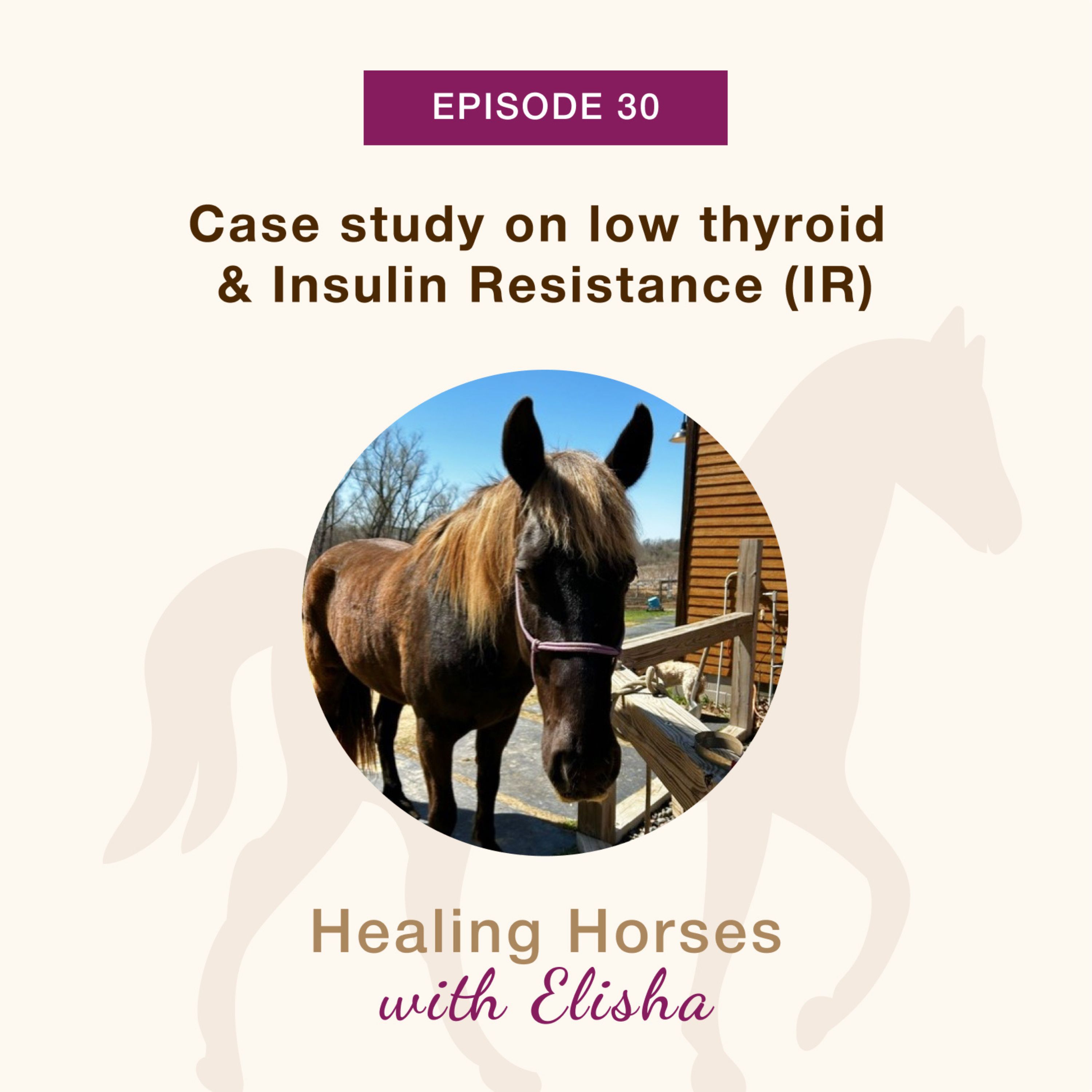
30: Case study on low thyroid and Insulin Resistance (IR) for Horses
About this episode
Today, we are diving into a case study of a horse called Monty.
His journey is an inspiring story of dedication and progress. His owner, Lisa, and I started addressing his issues in November 2023, and since then, Monty has transformed remarkably.
This case reflects many of the concepts we have discussed recently. So, listeners who face similar challenges with their horses will easily relate to it.
Monty's Background
Monty is a 16-year-old Rocky Mountain gelding. He lives with his owner, Lisa, in Minnesota. Lisa has over a decade of experience with horses, having owned them for ten years. She and Monty have extensively engaged in trail riding, exploring areas like Wyoming, North and South Dakota, and Kentucky, also participating in competitive trail challenges.
The beginning of Monty's Health Journey
In March 2021, Monty developed laminitis symptoms, indicating a potential health issue. A blood test in May 2021 revealed high insulin levels (500), slightly elevated glucose (127), and a borderline low thyroid hormone level (1.3).
Initial Treatment and Concerns
Monty received medication to manage his insulin and thyroid levels. However, despite improved numbers, his overall health deteriorated over time. He became lethargic, had a dull coat, and showed signs of muscle wasting.
Addressing Anaemia and Nutrition
After identifying anemia and low thyroid function as critical issues affecting his well-being, Lisa and I tailored a nutrition plan, including B12, folic acid, iron, selenium, and gut-supportive supplements, and implemented it to address his problems.
Adjusting Medication and Nutrition
Over time, we shifted our focus toward a clean and balanced diet, focusing on nutrient-rich foods and supplements. We reduced his medication and adjusted his nutrition to help him gain weight, increase his energy levels, and improve his overall health.
Exercise and Quality of Life
We also incorporated exercise into his routine, tailored to his energy levels, to improve his circulation, insulin sensitivity, and overall well-being. Lisa began to notice positive changes in his energy and social behavior, indicating his quality of life had improved.
Progress and Monitoring
With regular check-ins and bloodwork monitoring, Monty showed significant improvements in his insulin, glucose, and thyroid levels, indicating we had successfully managed his health issues without relying on medications. Adjusting his nutrition and lifestyle also contributed to his overall recovery and well-being.
Key Takeaways
Monty's case study highlights the importance of a holistic approach to equine health, focusing on tailored nutrition, exercise, and lifestyle adjustments. It disproves the common belief that horses with metabolic issues cannot recover without medication and highlights the effectiveness of proper nutrition and care for achieving optimal health outcomes.
Links and resources:
Connect with Elisha Edwards on her website
Join my email list to be notified about new podcast releases and upcoming webinars.
Free Webinar Masterclass: Four Steps to Solving Equine Metabolic Syndrome Naturally
Register for Resolving Equine Metabolic Syndrome Naturally now
Get every episode summarized
Each time Healing Horses with Elisha publishes, we email you a written briefing from the transcript — the topics, who appeared, and any specific claims, with the ad reads skipped.
Email me new episodesFree for 3 shows. No card needed.
Hosts & guests
No transcript yet
This episode has not been transcribed. Request it and it moves to the front of the queue.
More episodes
More from Healing Horses with Elisha

104: Deep Work Requires Downtime - For You and Your Horse's Metabolism
Healing Horses with Elisha

103: When Traditional Care Wasn't Enough: Trish & Teddy's Story
Healing Horses with Elisha

102: What Your Horse's Body Is ACTUALLY Trying to Tell You
Healing Horses with Elisha
101: The Three Things Standing Between Your Horse and Their Health
Healing Horses with Elisha