2013: Four Paths to Lean Office Productivity: Can the Just-In-Time Concept Work for You? By Laura Stack of The Productivity Pro
About this episode
Get every episode summarized
Each time Optimal Work Daily - Career, Productivity and Entrepreneurship publishes, we email you a written briefing from the transcript — the topics, who appeared, and any specific claims, with the ad reads skipped.
Email me new episodesFree for 3 shows. No card needed.
Hosts & guests
Transcript ready
153 searchable segments. Every word is indexed and playable.
Full transcript
Optimal Work Daily - Career, Productivity and Entrepreneurship — 2013: Four Paths to Lean Office Productivity: Can the Just-In-Time Concept Work for You? By Laura Stack of The Productivity Pro. Machine-transcribed; use the interactive transcript above to jump the player to any line.
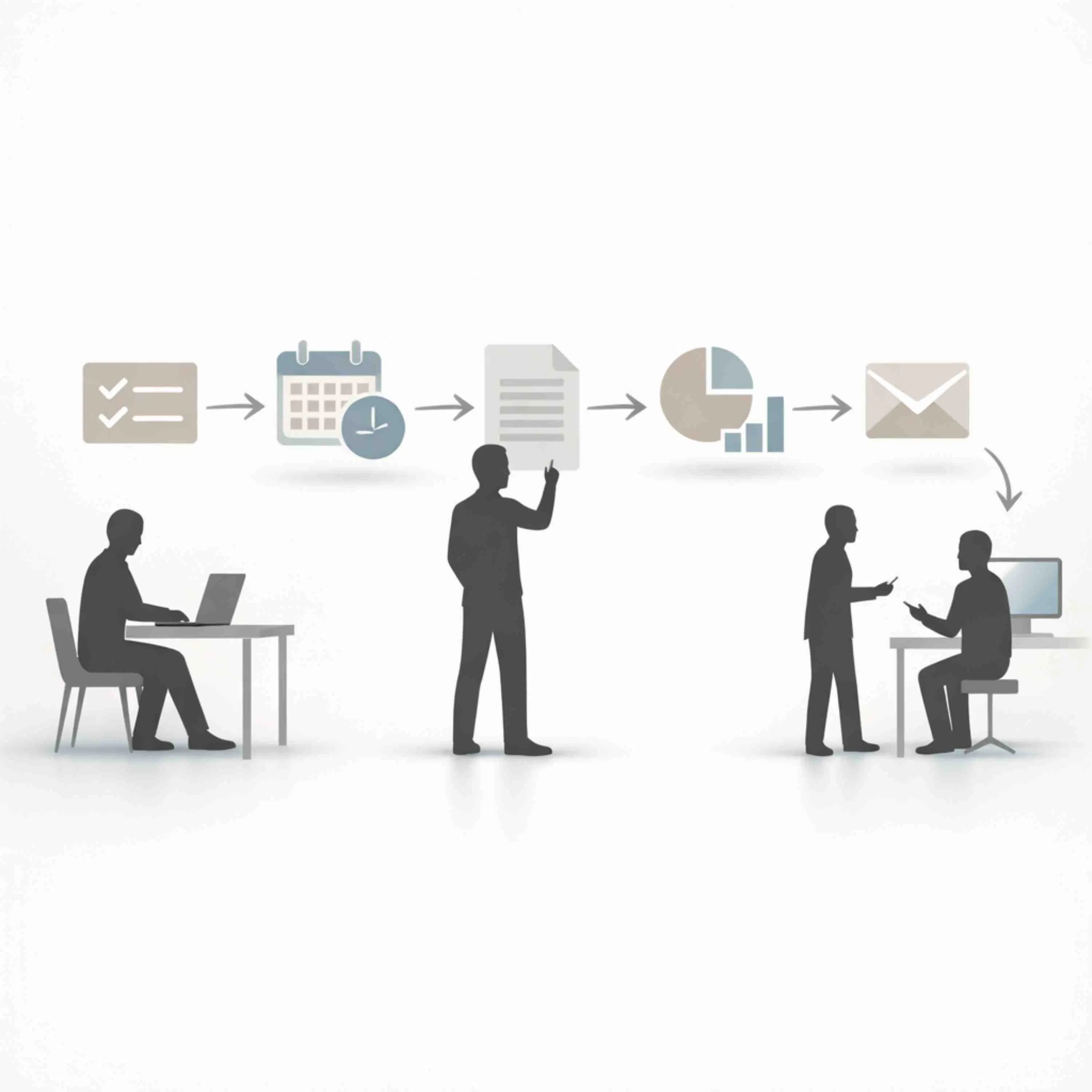
This is Optimal Work Daily. Four paths to lean office productivity. Can the just-in-time concept work for you? By Laura Stack of the productivitypro.com. Quote. The most dangerous kind of waste is the waste we do not recognize. Shigeo Shingo, Japanese Industrial Engineer. Ever since Toyota invented lean manufacturing, much has been made of its application to all professions, quote-unquote, desk jobs. The lean philosophy boils down to this. Cut anything in the work process that fails to add value to the end user. The end user may be a consumer, one supervisor, or the group in the organizational structure to which you deliver your final product. A central tenet of lean is just-in-time or jit production. Rather than guess your user's future needs, you provide goods and services just-in-time as they're needed. So instead of making a hundred sandwiches every morning in your deli and risk-wasting product if nobody buys them all,
you make sandwiches only as people order them. It works very well for subway. But can it work in the standard office? Yes, though not necessarily as well as in manufacturing. Let's look at four ways jit applies to the white-collar segment of the workforce. One, recruiting. You may remember a time when headhunters contacted you occasionally, just to see if you might be interested in changing jobs and something interesting came along. Similarly, the HR divisions of companies you applied to might have told you, we'll keep your resume on file in case something comes up. It was to their advantage to keep candidates on hold, so when someone said, I need a good coder, or the R&D section needs a new manager. They could offer up resumes on the spot. This still happens, but in many fields, HR starts looking for new people only when management tells them to. With online platforms like Upwork, they can find workers anywhere in the world, audition them with test projects, shed the ones who don't measure up, and hire the best performers. Two, equipment.
Back in the typewriter Steno days, it made sense to order IBM's Selectrix or StenoPads in bulk. You knew that someone would use them eventually, even if they sat in storage for a year. No one would dare do this with office equipment today, due to the constant upgrades and lack of backward compatibility in some cases. Apple's Macs, for example, used an entirely different OS than the Apple 2s, as some of us discovered to our chagrin. A Pentium might have looked like a godsend in 1994, but three years later, you couldn't even give one away. Nowadays, almost all offices buy electronic equipment on a jet basis, and you can bet the companies they buy from order a new stock only when they need it. Three, production. Many items produced by the modern office are produced just in time from raw material and recycled components, because it's often impossible to predict the end user's needs or a product's contents in advance. Consider the banker who compiles a report on the million dollar plus deposits at his big city branch each week. Obviously, he can't guess for certain
who will make such deposits or how much they'll come to. While he may use a template to prepare the report, its contents and the dollar total will always differ from week to week. Similarly, computer coders may reuse existing code, modules, or engines to speed up production, but each program requires its own unique combination of recycled and new code. Besides, most software projects evolve as they proceed, if you can predict the shape of the final product. Similarly, report writers may use boilerplate in the reports to set up the background, but otherwise, the details, content, and language will vary based on the results of their tests or investigations. And four, product distribution. With electronic communications, we no longer have to guess how many copies of a report, memo, or email we need to print in advance for our audiences or meetings. Electronic copies are endlessly replicable. Once you've done the work, you can make as many copies as you need whenever you need them. Right on time. GIT doesn't work for every office process,
but its adaptation to most has become inevitable. Ultimately, lean office work, just like lean manufacturing, is all about flexibility, one of the prime components of the agile modern office. Rather than anticipating a demand and having something in the pipeline or waiting in the wings, you wait until someone expresses the need and quickly produce the goods based on prior preparation. No longer does perfectly good work go to waste, because you finalize nothing unless someone proves they want or need it. Have you looked at the work you're creating lately and asked if it's a value to your end user? Do they use it? How do they use it? How often do they use it? Could you provide it on an as-needed basis instead of a set amount? Apply these ideas to your own work and see if you could cut back and spend the time on something even more valuable to the end user. What is that? You'll have to ask to find out. You just listened to the post titled four paths to lean office productivity. Can the just-in-time concept work for you
by Laura Stack of the productivitypro.com. And big thank you to Laura, who is an award-winning keynote speaker and best-selling author of eight books, obviously known as the Productivity Pro for good reason. Her engaging personality, combined with over 25 years of experience helping organizations achieve results, have made her one of the most sought-after experts and keynote speakers in her field. Laura has been featured in the New York Times, USA Today, The Wall Street Journal, Entrepreneur and Forbes magazines, and has been a spokesperson for Microsoft, Danon, 3M, Office Depot, Xerox, and more. And if that wasn't enough, her client list includes top Fortune 500 companies, including Starbucks, Walmart, Bank of America, GM, Wells Fargo, and Time Warner, plus government agencies like the US Air Force Academy, the Census Bureau, the US Senate, and the IRS. So she is very experienced, lots to learn from her, and you can come by the productivitypro.com for a lot more. She's got all of her videos, books, store, newsletter,
and blog, all there on the site. Again, that is the ProductivityPro.com. Okay, that's gonna put a wrap on this episode. I hope you enjoyed it. And of course, we appreciate you being a subscriber to the show as well. So have a great rest of your day, and I'll see you back here tomorrow, where your optimal life awaits.
More episodes
More from Optimal Work Daily - Career, Productivity and Entrepreneurship

2164: Staying Motivated to Work on the Road by Leo Babauta of Zen Habits on Buil...
Optimal Work Daily - Career, Productivity and Entrepreneurship

2163: The 2 Biggest Myths In Selling Today by Brian Tracy on Sales Success
Optimal Work Daily - Career, Productivity and Entrepreneurship

2162: Why Coaching Is Important in the Workplace by Lisa Jeffs on Business Leade...
Optimal Work Daily - Career, Productivity and Entrepreneurship

2161: Feeling Like a Fraud? How to Identify Impostor Syndrome by Sara Stanizai o...
Optimal Work Daily - Career, Productivity and Entrepreneurship