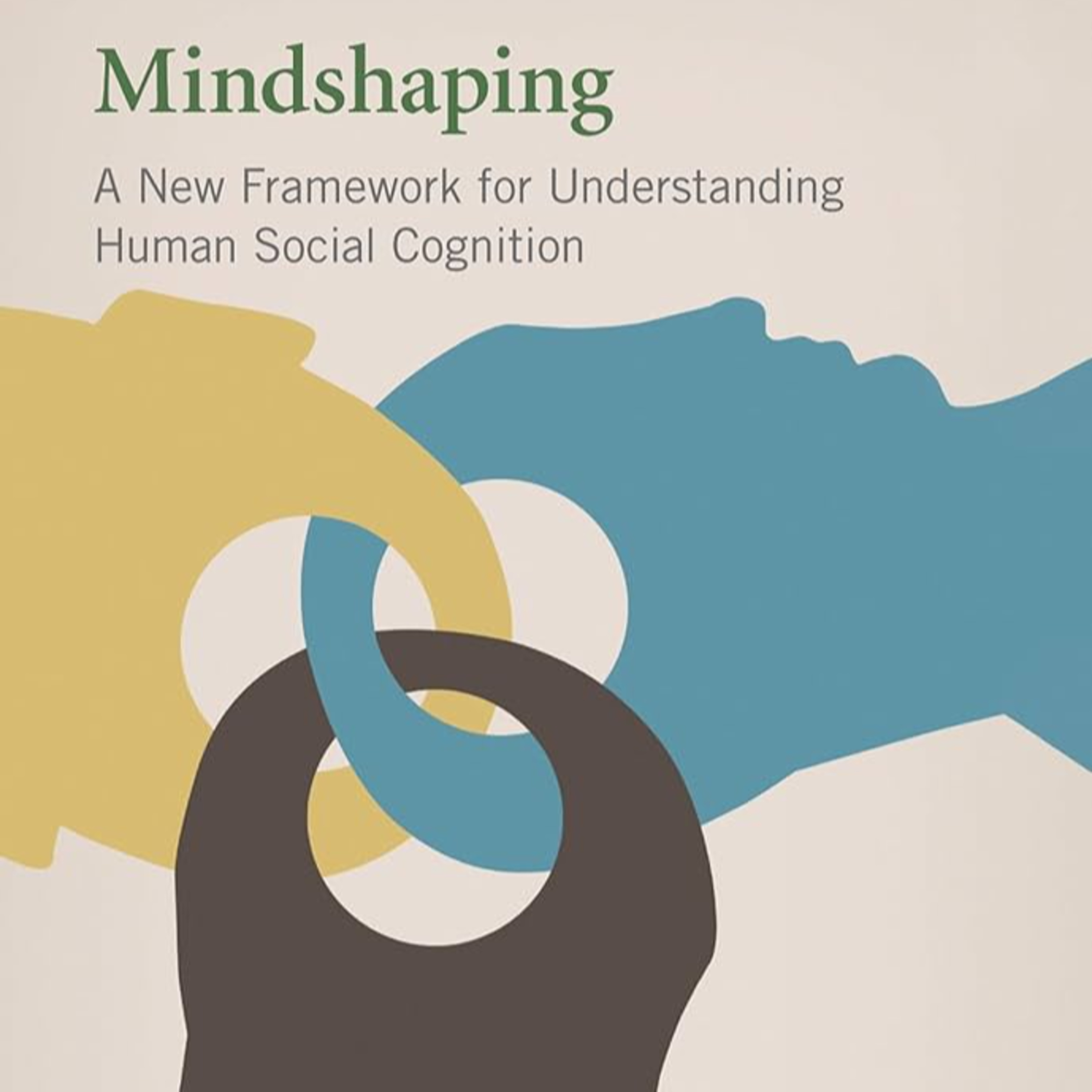
[137] Mindshaping A New Framework for Understanding Human Social Cognition By Tadeusz Zawidzki
About this episode
Ai introduction and summary of Mindshaping A New Framework for Understanding Human Social Cognition By Tadeusz Zawidzki 2013
A proposal that human social cognition would not have evolved without mechanisms and practices that shape minds in ways that make them easier to interpret.In this novel account of distinctively human social cognition, Tadeusz Zawidzki argues that the key distinction between human and nonhuman social cognition consists in our complex, diverse, and flexible capacities to shape each other's minds in ways that make them easier to interpret. Zawidzki proposes that such "mindshaping"—which takes the form of capacities and practices such as sophisticated imitation, pedagogy, conformity to norms, and narrative self-constitution—is the most important component of human social cognition. Without it, he argues, none of the other components of what he terms the "human sociocognitive syndrome," including sophisticated language, cooperation, and sophisticated "mindreading," would be possible.Challenging the dominant view that sophisticated mindreading—especially propositional attitude attribution—is the key evolutionary innovation behind distinctively human social cognition, Zawidzki contends that the capacity to attribute such mental states depends on the evolution of mindshaping practices. Propositional attitude attribution, he argues, is likely to be unreliable unless most of us are shaped to have similar kinds of propositional attitudes in similar circumstances. Motivations to mindshape, selected to make sophisticated cooperation possible, combine with low-level mindreading abilities that we share with nonhuman species to make it easier for humans to interpret and anticipate each other's behavior. Eventually, this led, in human prehistory, to the capacity to attribute full-blown propositional attitudes accurately—a capacity that is parasitic, in phylogeny and today, on prior capacities to shape minds.Bringing together findings from developmental psychology, comparative psychology, evolutionary psychology, and philosophy of psychology, Zawidzki offers a strikingly original framework for understanding human social cognition.
Get every episode summarized
Each time Branches of Philosophy Podcast publishes, we email you a written briefing from the transcript — the topics, who appeared, and any specific claims, with the ad reads skipped.
Email me new episodesFree for 3 shows. No card needed.
Hosts & guests
No transcript yet
This episode has not been transcribed. Request it and it moves to the front of the queue.
More episodes
More from Branches of Philosophy Podcast

[218] The Paradox of Self-Consciousness By Jose Luis Bermudez
Branches of Philosophy Podcast

[217] The puzzle of Experience By J.J. Valberg
Branches of Philosophy Podcast

[216] The Spread Mind: Why Consciousness and the World Are One By Riccardo Manzo...
Branches of Philosophy Podcast

[215] If Anyone Builds It, Everyone Dies: Why Superhuman AI Would Kill Us All E....
Branches of Philosophy Podcast