
091. Return to running - a guide for therapists with Tom Goom
About this episode
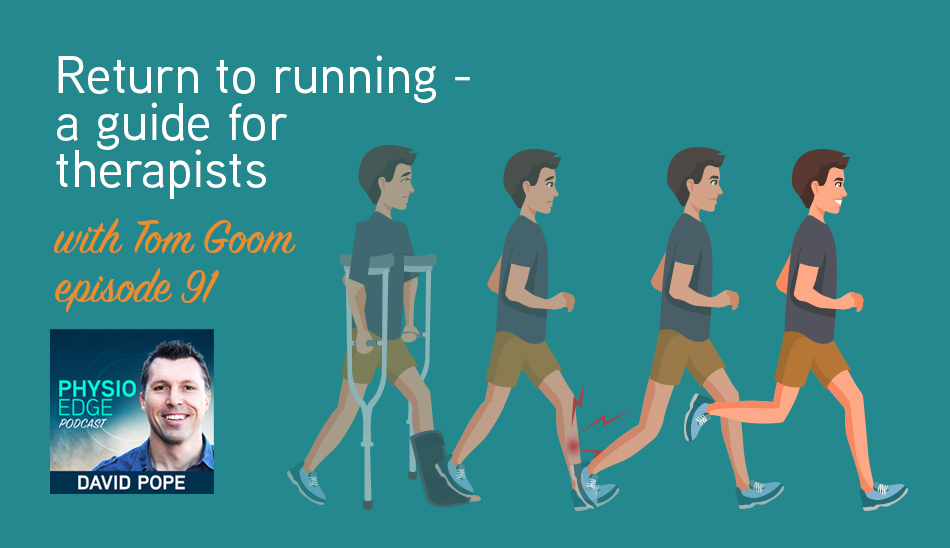
When you love running or any other sport or activity, having to take time off with an injury is really frustrating. Your patients with an injury limiting their running will feel frustrated and be keen to keep running or get back to running as quickly as possible. We can make a huge difference in helping them return to running, but how do we do it?
It would be pretty simple if we could hand all of our running injury patients a standard return to running table with a list of set running distances, and send them on their way to just follow the program. The trouble is, it doesn't work that way in real life.
Each of your patients will have different goals, and respond differently to rehab and increases in running, depending on their injury, irritability of their symptoms, their load tolerance, and a lot of factors. Since recipe-based approaches won't work for a lot of patients, how can you tailor your rehab and guide your running injury patients through their return to running?
In this podcast with Tom Goom, we're going to help you return your patients to running as quickly as possible, know which factors you need to address in your rehab, and how to tailor your rehab to each of your patients. You will explore how to:
- Test whether your patient is ready to run
- Find your patients 'run tolerance'
- Incorporate your athlete's goals into their rehab
- Use their pathology to guide return to running eg stress fractures or plantar fasciopathy
- Use irritability to guide your load progression
- Vary your treatment depending on the stage of their competitive season
- Address strength, range of movement, control, muscle mass, power and plyometric impairments in their rehab program
- Choose the number of exercises you use
- Balance risk and reward to meet patients goals
- Four key steps to return your patient to running
- Use impact tests when assessing whether your patient is ready to run
- Plan training structure and progression
- Monitor return to running
- Identify acceptable pain levels while increasing running
We will take you through four real patient case study examples so you can apply the podcast in your clinical practice, including:
- Achilles tendon pain
- Medial tibial stress syndrome (MTSS)/Shin splints
- Calf pain
- High risk tibial stress fracture




Free running injury assessment & treatment video series available now





Links associated with this episode:
- Download and subscribe to the podcast on iTunes
- Twitter - @tomgoom
- Let David Pope know what you liked about this podcast on Twitter
- Review the podcast on iTunes
- Like the podcast on Facebook
- Infographics by Clinical Edge
Other episodes of interest:
-
- Physio Edge 084 Running injury treatment - tendinopathy, MTSS, total hip replacement & high BMI patients. Q&A with Tom Goom
- Physio Edge 083 Running gait retraining, strengthening, glutes & ITB syndrome. Q&A with Tom Goom
- Physio Edge 082 Achilles tendinopathy treatment - the latest research with Dr Seth O'Neill
- Physio Edge 076 Footwear advice for running injuries with Tom Goom
- Physio Edge 075 Tendinopathy, imaging and diagnosis with Dr Sean Docking
- Physio Edge 068 Lower limb tendinopathy loading, running and rehab with Dr Peter Malliaras
- Physio Edge 042 Treatment of Plantaris & Achilles Tendinopathy with Dr Seth O'Neill
- Physio Edge 041 Plantaris Involvement In Achilles Tendinopathy With Dr Christoph Spang
Get every episode summarized
Each time Physio Edge podcast with David Pope publishes, we email you a written briefing from the transcript — the topics, who appeared, and any specific claims, with the ad reads skipped.
Email me new episodesFree for 3 shows. No card needed.
Hosts & guests
No transcript yet
This episode has not been transcribed. Request it and it moves to the front of the queue.
More episodes
More from Physio Edge podcast with David Pope

180. Patellofemoral pain 4 - How to get runners back on track (and trails, hills...
Physio Edge podcast with David Pope

179. Patellofemoral pain 3 - Effective rehab that won't flare their symptoms wit...
Physio Edge podcast with David Pope
178. Patellofemoral pain 2 - What to do when runners won't reduce their training...
Physio Edge podcast with David Pope
177. Patellofemoral pain 1 - Why it has such a high recurrence rate, and what mo...
Physio Edge podcast with David Pope