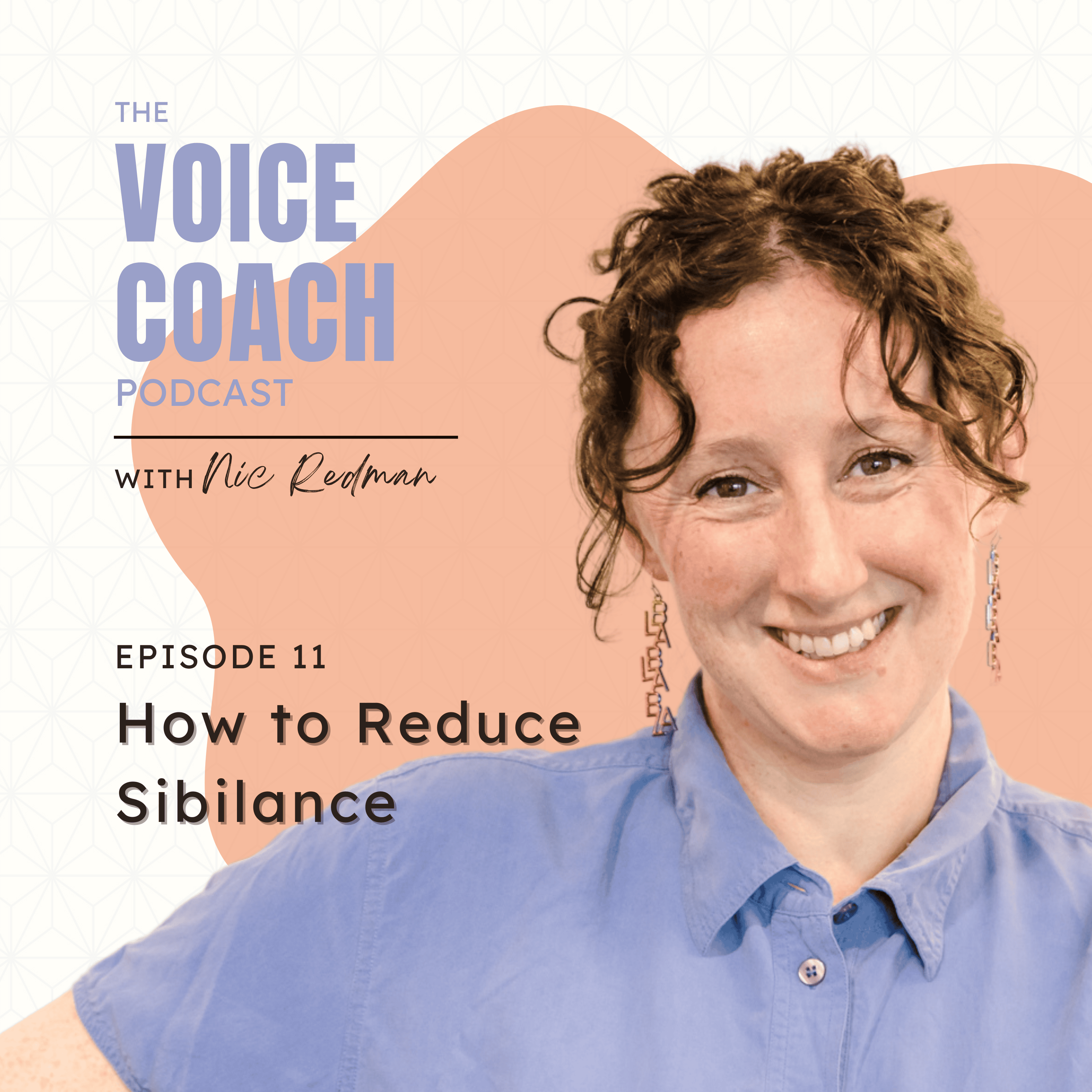
About this episode
In this episode, we talk about sibilance, what it is, why some people sound more sibilant than others, and why it gets people annoyed. We will also focus on a few practical ways of controlling our voice's features, so we can reduce sibilance.
What You'll Learn in This Episode:
- Is sibilance a speaker or a listener issue?
- What is sibilance in phonetic terms
- The sibilance and its relationship with different accents
- The effects of the various articulation contacts
- The benefits of exploring the alveolar and post-alveolar area
Next time when someone tells us we sound sibilant, we have two choices - we either ignore them, or we can observe which part of our tongue we use to make the "s" sound, we pay attention to the airflow we produce, and work on it. The only rule is to keep our voice exploration fun, curious, and free of judgement.
Resources:
- The Voice & Accent Hub https://www.facebook.com/groups/thevoiceandaccenthub
- Finding Your Voice by Barbara Houseman https://amzn.to/2NOdtgW
- Vocal Arts Workbook by David & Rebecca Carey (pg 174 & 175 for extensive consonant cluster practise) https://amzn.to/2NSC1VW
Mentioned in this episode:
Buy Nic's Book
Head to onthemicbook.com to get your copy now
Get every episode summarized
Each time The Voice Coach Podcast publishes, we email you a written briefing from the transcript — the topics, who appeared, and any specific claims, with the ad reads skipped.
Email me new episodesFree for 3 shows. No card needed.
Hosts & guests
No transcript yet
This episode has not been transcribed. Request it and it moves to the front of the queue.
More episodes
More from The Voice Coach Podcast

088 Is Steaming or Nebulising Better for Your Vocal Health?
The Voice Coach Podcast

087 How a Vocal Warm Up Can Save You Time
The Voice Coach Podcast
086 5 Mistakes People Make When Warming Up Their Voice
The Voice Coach Podcast
085 Why Does My Voice Get Higher when I'm Nervous or Emotional?
The Voice Coach Podcast