About this episode
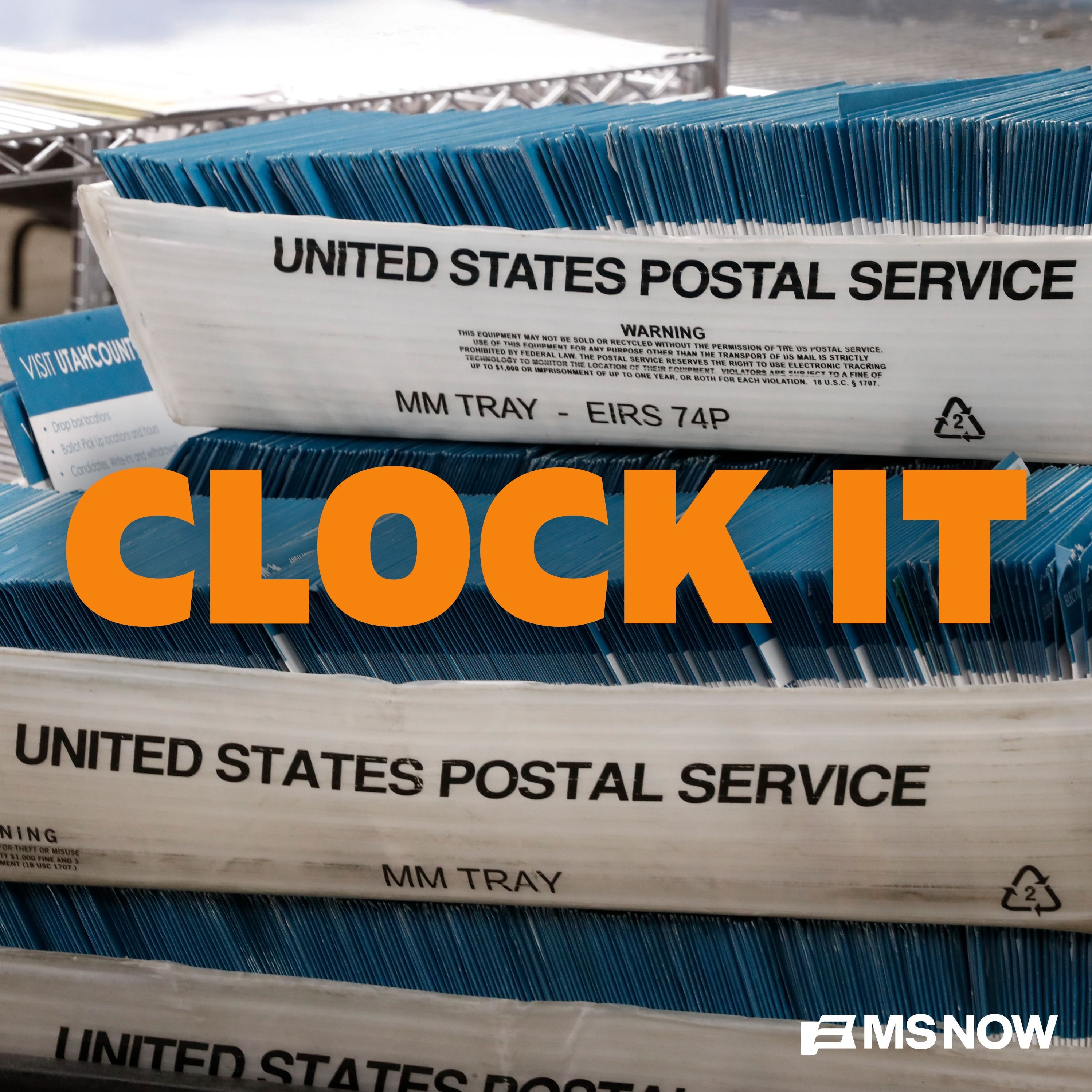
Following a whistleblower report that the White House is ignoring a court order to stop its attempts to manipulate mail-in-ballots, Eugene and Symone come to the conclusion that, “These norms ain’t working!” Then the duo is joined by best-selling author and “The Atlantic” staff writer Clint Smith to discuss the current assault on Black political power in the U.S., how racist iconography like Confederate statues help shape public policy, and how the triumphs of Black American resistance have become a source of inspiration around the globe. “ The most remarkable thing about all of it,” says Clint, “is that it was ordinary people who abolished slavery. It is ordinary people in Japan who are fighting to abolish nuclear weapons. It is ordinary people on the streets right now who are trying to imagine what life after this moment will look like, and who are trying their best to push us out of this moment that we're in.”
As the 2026 midterm elections heat up, MS NOW is headed to the Lone Star State. Join more than a dozen of your favorite hosts - including Rachel Maddow, Lawrence O'Donnell, Jen Psaki, Michael Steele, Ali Velshi and more - in Arlington, Texas on September 26 for a day of community and conversation about the issues that matter most to you. Get your tickets at ms.now/together.
Sign up for MS NOW Premium on Apple Podcasts to listen to this and other MS podcasts without ads. As a subscriber, you'll also get exclusive bonus content.
Hosted by Simplecast, an AdsWizz company. See pcm.adswizz.com for information about our collection and use of personal data for advertising.
Get every episode summarized
Each time MS NOW Presents: Clock It publishes, we email you a written briefing from the transcript — the topics, who appeared, and any specific claims, with the ad reads skipped.
Email me new episodesFree for 3 shows. No card needed.
Hosts & guests

Transcript ready
775 searchable segments. Every word is indexed and playable.
Full transcript
MS NOW Presents: Clock It — Why We Should Fight for a Future We Won’t See. Machine-transcribed; use the interactive transcript above to jump the player to any line.
Hey everybody, it's Rachel Maddo here. I wanted to tell you that more than a dozen of us from MSNOW are going to be in Texas on Saturday, September 26th. I'm going to be there. Lauren Soudon will be there, so will Jen Saki. A whole bunch of us are all going to be there in Texas. Tickets started just over 30 bucks each. And if you buy a ticket, you will get access to our new MSNOW membership free for a year. Tickets for Texas are on sale now. You can learn more at ms.nail slash together. Hope to see you in Texas. Greetings and welcome back to clock it. On Thursday, September 3rd, we are officially 61 days away from the midterm elections. Okay? I'm wondering Eugene if people are registered. Well. Okay, do they know where their polling place is? Well. Do you know when early voting starts for you? These are the questions folks need to identify. And obviously probably silly. If you're voting by mail, you're also probably thinking, oh, with this Supreme Court way
in on whether or not the Postal Service will even send me a ballot. That's a question that you have to think about currently. Yes, Eugene, because Donald Trump is trying to prevent the United States Postal Service from sending ballots to states that refuse to share voter data with the federal government. I would like to remind people that the federal government does not keep a centralized list of Americans in this country. We are not the people of Republic of China. Okay? Just trying to take us somewhere we ain't never been. The Supreme Court has weighed in on this before, but that last Supreme Court order, Eugene, it didn't rule on the merits. It didn't say whether it was constitutional or not for the government to do this. It just ruled on the procedure and the timing of which the original lawsuits were filed against his executive order. Yeah, like that the plaintiffs had sued too early because the rule wasn't out yet. The rule is out now, the lawsuits are happening. Let's see if they go up the Supreme Court on the merits. And another plan we should all be making, this is something someone has been saying for
a month, is what are we going to do the day after the midterms when people like the president start lying about the election calling it stolen land? We know the politicians are wargaming this on both sides. Newsrooms are having conversations about it. How do the people prepare for it? That's a big question. I think it's a huge question. This week we've asked writer Clint Smith to join the group chat because we want to talk about how if maybe everybody understood the history of this country, Eugene, just a little bit better. Maybe they could see very clearly what the president is trying to get his hands on and trying to require voter ID everywhere, which is not just voter ID. Really they're trying to talk about citizenship at the polls. That's what the Save America Act is really about. They want you to think voter ID, but it's really about citizenship, okay? Maybe people will just understand all of this a little bit more and understand how it's all connected. I don't know. Maybe I'm crazy. No, you're not crazy. I think everybody got to get ready. Can we just talk about the meal in voting situation though for a second? You were telling me something that happened on Tuesday morning?
Yeah, yeah. So as we're recording this, the thing that is so concerning is that you have this US Postal Service official who is alleging this is how many York times that the agency is moving forward with the quote, secretive rushed effort to carry out president Trump's order exerting federal control over mail and voting. And that is despite these court orders that Simone has been talking about blocking those plans. Because while the Supreme Court hasn't ruled on the merits, other courts have. The official filed this whistleblower report on Tuesday morning, goes published by on Tuesday morning by the Office of Democratic Senator Richard Blumenthal, asserting that the risky and haphazard implementation of Mr. Trump's order could lead to a catastrophic failure in the mail ballot system ahead of the year's midterm elections. I want to read a quote from it because I think it is. It helps to spell out how concerning this should be. USPS leadership, it appears, has discarded all best practices as they speed the project
to be ready for September 1 implementation, raising questions about whether catastrophic failure would be a feature rather than a bug. Simone. This is something that people have been and myself included have been talking about four months. Notice, yes, years actually because the postal service, if we remember all the way back during COVID, there were questions about the efficacy of the postal service and their ability to really handle the volume of mail that was coming through because given at a time where none of us were leaving our houses. 43% of people voted according to some numbers in COVID by mail. So that was a huge influx and different than the numbers that we see usually in midterms or even in presidential election. Yeah, in the last presidential election anywhere between, there are some estimates between like 29 to 30% the voted by mail in the last midterm election.
Some estimates have it at 31% of people voted by mail. But here is my concern. The postal service has actually been undergoing this like operational change for years as part of its 10 year restructuring plan. So part of that operational change is that first class mail went from three days to five days. So now if you decide it's in the mail first class, it takes five days to get there. And then in 2024, the United States Postal Service, I wrote this down, they moved toward a, what they're calling a centralized post marking system. So for example, back in the day, okay, when I had to mail something, I would, when I lived in Omaha, Nebraska, there's a post office like in the middle of everything. And so when I really, really needed a mail something and I was up against the deadline and it's like, I got to be post marked by this day, I will go to this particular place and I would drop my mail into the mailbox because I knew as long as I dropped it in before this particular time, when they picked up the mail that day, it would be post marked immediately
and like, my mail would be fine. Well, this new change means that mail is post marked when it reaches a regional processing center rather than when the voter first puts it in the mail. And who knows when it gets there? Who knows? Well, well, that's very consequential when the states have post marked deadlines and it's not in every single state, right? But it is depending on if you live in a rural place, right? For example, your mail might have to go to a regional processing center. And so if you drop your ballot, if the deadline is, it got to be post marked by election day and you drop it in on election day, but your mail has to go to a regional processing center, it will not be post marked on election day. This matters. This is not theoretical. More than 10,000 mail ballots were rejected in the Michigan primary earlier this year because they arrived after the state's 8 p.m. election day deadline in Washington state, 75% of rejected mail ballots were tossed because they arrived too late. And in Wisconsin, in the spring primary, roughly 5,000 mail ballots were rejected for arriving
late, accounting for 78% of all rejected mail ballots. And the thing is, are these efforts in good faith? Is 3 to 5? Is that in good faith? Is the regional processing in good faith? I don't know. But there's a lot of questions, especially when you have, we had Jenna Griswald. She is the Colorado Secretary of State. She is running for Attorney General this year on the show this weekend. And she said, my girl Jackie asked her, you know, have you guys thought about other ways in which you can get around the USPS, FedEx UPS? And Griswald said, basically, it's too expensive. And FedEx, and I don't see the good people at Fed, the good billionaire that owns FedEx and operates FedEx and UPS, out of the kindness of his heart, allowing people to use FedEx in UPS for free. So they could send out their ballots. That'd be nice if that was something that they did. But because it cost so much, it wasn't something that the states could provide. She said they went through this process thinking about this during COVID.
How can we make it easier for people to vote? Because if you know anything about Colorado and I lived there, went to Colorado University, I lived there and worked at a local TV station for years. And I was there as Colorado was transitioning to this, basically, anyone can vote by mail situation, right? And they have been the blueprint for how states can do it in an efficient and also equitable way. And when you, when you watch a state do that, you leave knowing that it's possible and that it's safe and that Colorado doesn't have all these issues that Donald Trump has tried to make it seem like mail-in voting states have. And I think we are in a moment where everybody should be concerned about how they're operating. And I've said this and I will say it again and again and again, one side of the aisle in part of this operation called democracy is moving at one speed and the other side is operating through the institutions and moving at a slower speed because that is how our institutions were created.
And so what does it look like when one side is moving so fast, you're moving past it and they're completely ignoring, according to this whistleblower, completely ignoring the orders that have been given by the different levels of our judiciary system. Well, you know what? I think you are absolutely correcting your diagnosis. We have Mark Elias on the show earlier this week, actually. And one of the cases that he made when we were talking about the mail-in ballot situation and the kerfuffle that is happening at the U.S. Postal Service because the president is trying to seal this election because his agenda is so unpopular and he does not care about winning the support of the American people because they think they can just take it and they are attempting to take this election. That is what is happening here, folks. It is not hyperbolic, it is not dramatic, it is not alarmist, literally read the articles, look at what is happening. Listen to the president himself. Listen to the president himself as we're recording this in Tarrant County, which is in Texas.
Okay, one of the largest counties in Texas and one of the hearings on the agenda for the County Commissioners meeting is whether they're going close 92 polling places in Tarrant County. Okay. So don't get me started. But Markelais said to your point about, there's one side that is moving at break next speed and does not care about the limitations that people say that exist. They're creating a new normal than another side that is going through the institutions. Markelais has made a point that there is something that democratic governors specifically can do. Earlier this year, the Supreme Court ruled before they went on vacation for the summer. The Supreme Court handed down a decision in a case about mail-in voting. And basically, the Supreme Court decision and Markelais litigated it, they won. And Marke one, and what he won was is that mail-in ballots are legal. Like states do have a choice that they can count these mail-in ballots after election day if they
are received. The lawsuit was basically like, oh, they can't. And so the Supreme Court said, nope, the people that Markelais representing are right, they can. They can either say, okay, they not only have to be cast, but they have to be received on election day, or we can give a grace period to afterwards. And about 19 states give that grace period and about the rest don't. And there are more democratic states that could change their laws to meet that postmarked by, rather than received by a deadline. And I urge them to do so. Because here's the thing. You know, the Republicans talk a lot about voter fraud. And they say, here's an instance here, an instance there, maybe New Jersey made a mistake, can process people and put them on the wrong list and it's a few hundred. Compare that to the tens of thousands of voters who are being disenfranchised. These are lawful voters. These are voters who have done everything right. They have entrusted, they got their ballot, they're eligible, they're US citizens, they were registered, they filled it out, and they entrusted it to the US Postal Service.
Due to no fault of their own, they are being disenfranchised. And I'm not letting the Postal Service off the hook. I'm not letting the Trump administration off the hook. But Democrats need to take self-help here. And one of the things they can do is by extending these deadlines to postmarked by, rather than received by. He says that Democrats should not be scared of being labeled as people who are trying to, you know, they're trying to bring an election or they're trying to commit fraud. He said that there is a fear, frankly, from democratic officials, it feels like that they don't want to be called names and they don't want to be called out and they don't want to seem like that they are affecting the process in a negative way. So they're not doing anything. And guess what? Republicans are going to say that anyway folks. They already say it. Republicans already say it. Donald Trump has been saying that Democrats have been selling elections since 2020. It's not going to change. She's been saying it since 2016, when he lost California and he said it was wrong because Democrats had all these undocumented
people voting. It was not true then. It's not true now, but he's going to say it anyway. He is going to say it anyway. So they should act. So do you want to be caught defending the people that you claim to defend? Do you want to be? Do you want to be caught fighting? Do you want to be seen by the American people as the folks who are trying to defend their right to vote? Or do you want to like follow the law is written? Donald Trump is not following the laws written. He is deciding that he can try and shape the way this country operates. And frankly, if you are someone who wants real change in this country, you should be watching how he's doing it and maybe replicate it, maybe do something different. But the tactics, but don't do the same thing now. But the tactics, Simone, the tactics where you say, okay, try me or go to the Supreme Court and say, you know what? We'll see if they say yes or no. Who knows? Donald Trump, everybody said on the left and the right that I talked to who were lawyers
who had worked on in presidential historians who said the Supreme Court would never give a president immunity. Oh my God, it's crazy. You will never do that. You know what Donald Trump said? Bump that. Try it. Let's see. And guess what he has for himself and every other president. I'm unity for official acts. What does an official act be? Whatever the president says it is. Exactly. Allegedly. Anything. So like, stop trying, at least try it out. The people got to get in the room and get crafty. And this, and we're just talking about mail-in voting. We're just talking about the mail-in ballots. We haven't even got to talking about what's happening at the polling places. And then what is your plan for the days after when they win, when because of this, the government is saying, you know what, we have a warrant and the FBI is coming to seize these ballots because we are concerned about what is going on in McComb County, Michigan. We're concerned about what's going on in Maricopa County in Arizona. Oh, we really don't feel like everything is on the up and up in Fulton County, Georgia. And we're going to, we have a warrant and we have a subpoena, we have a signed warrant that says we
can seize these ballots. What y'all going to do? Y'all going to get a ballots up? Yes, they are. I am saying they should not. Okay, so then that is them on the opposite sides of a quarter or another, they may fight the quarter order. But I think when you're talking, how we need an expansive imagination. They do, but I'm saying they don't have one. I think what's going to happen is that they're going to give the ballots up, right? Because also they're talking to people who don't have the power to make the decision all the way. Like they're not going to the governor like waving around the warrant, right? They're not going to Gavin Newsom with the warrant because LA County, they want to see the ballots. No, they're going to the volunteer who's at the office. They are. And then to the County Commissioner who is not in power to make these decisions. Correct. And so what I am saying, when I'm saying they got to get crafty, they got a little, got to get a little gully when they go low, you got to go toe to toe. Toe to toe here means who are the people that we are assigning to these not just these various polling places on election day, but who are the officials, the government officials that are going
to be there? What lawyers do we have that will be there at the election county offices at the ballot processing centers when they get there? Not even in 10 seconds. We need to be all standing on duty. Okay, y'all do get a desk, get an office, you want from home anyway? Correct. Bring your laptop to the ballot processing center because that is the level I believe of which like people have to be thinking. They have to be thinking about protecting and like what are you going to do? It is not enough to say that if they come and get the ballots, we're going to fight them in court. Don't give up the damn ballots. What happens when a week after election day before this election has been certified? Okay, in the various states, the government decides to go in with signed warrants from a magistrate judge in various places across the country and they take ballots from an election that has yet to be certified. Or someone posing as the federal government. I just had that thought and it scared the hell out of me. The idea that some crank will get,
because you know, warrants are easy to fake. I think they just look like they own paper, you know, they don't look, you know, I've had a bench warrant for unpaid credit card bill for fast. If you have talked about B.O. Bitworn, these are different warrants, but like the warrant, when you look at it, if you are someone who is a lay person, what it's scary, right? Someone just like, here's a warrant. I'm coming to get this thing. Like how do we know no one who has been radicalized by Donald Trump over the last 10 years talking about how people are still in elections by mail-invoting? How do we know that I'm going to do something like that? And this is why you see people not wanting to work in election offices currently in this country. Yeah, I mean, this is going to be, and I know people will say, oh, these are conspiracy theories, to be very clear, these things are happening. And so I am, I have an urgency where I am, and I am very concerned, and I want the folks listening to be concerned as well, because that concern means I'm being vigilant. That concern means I'm thinking expansively. That concern
is causing me to play out and game out different scenarios. And if you have to be the crazy one raising your hands for months and months and months, and then nothing happens, so what? That means that we were prepared. That means that we have thought through what they were actually going to do, because Donald J. Trump and the folks over there, and the administration, and the ecosystem that surrounds them, and the the podcasters, if you listen to the kind of ish that they're talking about, even if you don't want to listen, if you don't want to go deep down in there, and that dark world of podcasting on the right, just listen to Angela Corazon at Media Matters. Go to Media Matters and see what they are listening to and what they're saying. So like everybody else got to get as soon as they get gully. If you have to get go that don't know who watching, I might be related to some go Google it, go Google it, go Google it, and then get it. So I say all of this to say, I am of the belief that I want to lay the marker down right now in this podcast episode that the the democracy
coalitions position should be that after election day before any ballots are certified, they don't care who has a warrant, they should not be giving up any ballots. Like challenge it. You know what I'm saying? I guess you know what, let's stay here. I was going to go to break. What does challenge and get look like to exactly this is important? Exactly. If it's just going back and forth and be like, call your boss. Let's call your boss. And then it's like no, and then the lawyer is like actually we don't have to release it. Like there's always a loophole somewhere. That is what I have learned. Hell have we all not learned Donald Trump is president. There's clearly always a loophole. There is always a loophole somewhere. So this idea that just because they come with a piece of paper, you have to give them. Like these aren't just pieces of paper that we are talking about. We're talking about who controls the House of Representatives, who sits as the governor of the country. No, we're talking about a fundamental right of living in this country. It goes deeper than just like what the ballot signify. Like it is about what we are allowed to do in this country. It is a
fundamental right. Every single right that we have some own and viewers and y'all know this. But every single right that we have stems from the right to vote, stems from the right to choose your representation stems from the right to say what are the policies that should go on in your state city and county. It stems from it. So it is both about the actual people y'all voted for. But the fact that you did it, the fact that you participated in this thing called democracy. And to Simone's point, I think I'm getting radicalized by Simone currently. Like every one should be. It doesn't take much with her. She's very good at it. But even with the speed at which the other side is moving, it is time to get crafty as the lady say. It's time to get crafty. It is necessary. So yeah, I want to be clear. We're not telling people to break the law. But I'm telling people to just like read the law. Get under it. Read the law. Like have a legal plan. And but I am saying the baseline at the very least should be do not give up the ballots. Like I don't I
do not give up the ballots. I mean, there is no reason to turn over ballots for an election that has yet to be certified to this government, specifically a government that has particularly this one. But this one has told you what they are trying to do. They have literally shouted it from the mountain tops for months. And the idea that you would just give them the ballots because they came with a piece of paper and you're going to fight it in court later, I think is insane. Because now it's gone. Now now what happened to the ballots? And the elections are not been certified. And so like this is I know it sounds crazy, but it's also crazy that the United States Postal Service, according to the whistleblower, right, is operationalizing the president's plan or the dance. Yeah, right. Right. Like that they have been planning to do this regardless. That's crazy. That seems unreliable and like not real yet. I just read you those numbers about the number of ballots that were rejected in primaries earlier this year because the male
the male arrived late. So this is not a game. So these norms are not working. I need some laws. I need some executive orders. I need them to have some pieces of paper. Okay. See radicalize. I can't hang out with you number. You just good. Yes. Yes. I'm radicalizing you for the for the for democracy. Okay. Let's take a quick break. And when we come back, New York Times best selling author Clint Smith is joining the group chat.
Get your podcasts for ad free listening to all of your favorite shows. Subscribe to MS now premium on Apple podcasts. Welcome back. We are thrilled to now welcome Clint Smith to the chat. Y'all know Clint. He is a staff writer at the Atlantic where he's covered colonial Williamsburg, the national lynching memorial, and many of Trump's attacks on American history. His book is amazing. How the word has passed a reckoning of the history of slavery across America won the National Book Critics Circle award and the human prize for book journalism. He's also written two volumes of poetry and was a high school English teacher in P.G. County. The man is red. Okay. And a right is well read. Yes. Well read. Actually Clint is the best person to talk to frankly for today given everything that's happening in the world. Clint, we're very, very, very excited. You're here for two huge reasons. Yeah. We are in the middle of an assault. I would argue on black people on black political power
in this country. And I'm not just talking about black elected officials. And two, that assault is happening at the very same time that American history is being whitewash. Yeah. So we want to talk to you about really what's going on? Do we have that right? How do people fight back? What could the elected officials be doing? But what could the folks who are listening to this podcast at home be doing and what should they be vigilant about? So you know, nothing too small. Like stuff. Small things. Little things. Well, first of all, can I just ask like, do you think that there's an assault on black political power happening in this country? There's an questionably an assault on black political power. There's an assault on black history. There's an assault on black life as my colleague at the Atlantic Adam Soher is written, you know, we are operating in an environment where the federal government is functionally trying to reconstitute Jim Crow within the various government apparatuses. We see Pete Hagueceth and what he's done in the military preventing black
people and women and LGBTQ folks from ascending to the ranks that is commensurate with their military skillset. We have executive orders that are attempting to prevent this misonium museums from telling a non-history about black American history. We have a president who suggests that we talk too much about slavery. And that we should focus more on the quote unquote positive aspects of American life. And so it is a full throttle, well-rounded assault in ways that are fundamentally different than the first term. As is the case with so many things because there's been time for so many people who are now in powerful policy positions to think through and imagine what they want the destruction of the American infrastructure. And in this context, the black American infrastructure to look like. As you're listening off all of those things, that is every aspect of black life, right? It is, it touches on every single thing that folks want to do, should be able to do with
the Constitution, allegedly allows folks to do in this country. And that feels like to me, why it's so difficult to fight against. One, you have the right wing ecosystem, including the president of the United States and really the full government apparatus now, speeding along without thinking about rules, norms, or even sometimes laws, right? You also have the other side that is operating within the institutions and trying to figure out how you do it. It feels exactly tied to what Steve Bannon has said, you know, the flood the zone theory. But it's the flood the zone theory against black people and black political power in this country. So when you look at all of the things that you said, all the ways in which they are attacking black life, right? Not just political life, personal cultural, social life. What are the tools that folks have to actually fight back? There's a leg tour, but there's, there has to be something else because we have been here before. Or have we, we have not been here. It's worse. Some of the old school streets have said, privately, it is worse.
Yeah, I think that it's the sort of both in situation, right? It is certainly true that within the context of our lifetimes and the context of many of the folks lifetimes who you just alluded to Simone, we've not seen anything like this. There is not a precedent for this sort of assault over the course of the last few decades. And what is true is that we are in a position that is better than that of our ancestors. The thing I think about all the time is how, you know, first enslaved people came to the British colonies that would become the United States in 1619. Black people didn't become officially free until 1865. But what's also true is that from the moment enslaved people arrived on these shores, they were fighting for freedom. They were fighting for emancipation. They were fighting for liberation. It was also true is that the vast majority of people who fought for that freedom never had a chance to experience it for themselves. But they fought for it anyway because they knew that someday someone would. And I think all the time
about how my life is only possible. How my children's lives are only possible. Because the generations of people who fought for something they knew they might never see, but who fought for it anyway. Because they knew that someday someone would. And I think about what sort of responsibility does that then bestow upon me? Does that bestow upon us in order to try to build the sort of world that we might not be able to see ourselves, that we might not be able to experience ourselves. But to try to do it anyway because that's what people have done for us. And it's like we're all chipping away at this wall. And you don't know if the wall is six inches thick or six thousand miles or what you know is that the more you chip away at that wall, the less the people who come after you will have to chip away at. And so what we're doing, what we're living through is another iteration of a moment in which we're chipping away at this wall. And we don't know where the other side of the proverbial wall is. We don't know if we will live to see an era, a political moment, a social moment in black life that is better than the one that preceded this administration. We might not.
And I think we have to emotionally and psychologically prepare ourselves for that sort of long-term step back. But we also have to recognize and know that part of our job is to work to build the infrastructure to the sort of conditions, the sort of social, economic, intellectual, educational context that make it possible for our kids, their kids, the kids who come after them who will never meet to be able to live in a world that is better than the one that we live in today. And that's the lessons, even for moments that feel unprecedented. Those are lessons I think we can pull from our ancestors, pull from our history and pull from our lineage in order to stay emotionally grounded in where we are now. And this is why he is Clint Smith. I mean, I was just like the analogy is good, the reality is very sad. But I'm glad that you are painting a picture like that for us because I often have been saying that there were 88 years between the collapse of reconstruction and the
Civil Rights Act of like 1964 and the voting rights act of 1965. And what the Civil Rights Act was just trying to get back to some of the places that we had that we were in during reconstruction. And I've been saying, when I gave the commencement at Spellman earlier this year, I said, we don't have another 88 years. But what you are telling me is it might be. We don't know how long it is, but people need to be, need to steal their spines for this fight. And to think past themselves also and to think past themselves and to recognize that even if you don't see the fruits of your labor, that your labor is still worth it. Like that's the thing for me is that this this moment can make people feel so helpless. You can make people feel so paralyzed. It can make people feel as if there's nothing they can do. And I think the thing that I try to come back to is that we are in fact part of a much longer term project. Like part of the Black historical tradition is that you in fact are doing things not so that you can see it necessarily or not so
that you can experience it necessarily. You were doing things in service of your family, of your children, of your progeny. And again, of people that you may never meet. And I think that that can be a difficult thing for us to conceptualize sometimes. But I think if we understand that the only reason that three of us are sitting here on this podcast with the opportunities that we've been blessed with is because of people who came before us who never knew of our future existence. But who did it any way to make us possible to make our lives possible to make this moment possible. For me, it is it's humbling. And it also gives me a clearer sense of like, okay, well, if this election doesn't go this way or if this law isn't passed or if this school board does this or for me, it's like it's less daunting. It's less daunting because you are aware that you are part of a much longer term project that came before you that will come after you and your job is to keep pushing the project forward in whatever capacity you can. That is meaningful work.
And that's a meaningful life. You've shaken both of us. But I do wonder if that is natural to you. Have you always felt that that you are part of this longer story, this longer art? Or did you have an awakening? Yeah, like we have talked to a lot of people and we both feel the same way talking to the folks that came before us. We fighting over the same ish. We have been fighting over the same ish over and over again. And we have had our colleagues who went to the march on Friday that Reverend Al Sharpton helped to organize or any of the marches that folks have had over the last 18 months. And people over and over older black people are like, yeah, I can't believe I'm doing this again. Or hell, white people from Vietnam were like, I can't believe I'm out here fighting for the same things or fighting for the rights of people I thought we had fought for. And like I think a lot of people feel like if they don't have that inherent sense that you just talked about, it's hard to get there. So I'm wondering what was the process of you saying, oh, I'm a cog in this wheel for justice and rights and power. Because I do feel like it lowers
the need for, oh, I have to do it right this second. Yeah, I mean, I think I still feel a profound sense of urgency. Yeah, yeah. But that urgency, there's like a more sort of longitudinal conception of the way in which that urgency is framed, right? Like it's not like this has to be done tomorrow or this has to be done next month or within two years. And I think having the longer term frame shouldn't prevent you from attempting to work, decisively attempting to work intentionally and thoughtfully and you know, we're speaking on a macro context, but what's true is that on a micro context, on a state level, on a municipal level, on a neighborhood level, on an interpersonal level, you know, things looked as we know right now in our political landscape, what life looks like for black people or for anybody in New York looks different than it does in California, looks different than it does in Mississippi, looks different than it does in Georgia, looks different. So there is an unevenness of experience, but also to your previous question, like, I mean,
I wrote this book, how the word is passed. And so I traveled all across the country and across the ocean to get a sense of how people tell the story of slavery in this country. You know, in 2017, I watched several Confederate statues come down in my hometown in New Orleans, statues of PGT Beauregard, Jefferson Davis, property Lee. And as I was watching these statues come down, I was thinking about what it meant that I grew up in a majority black city in which there were more homages to enslavers than there were to enslave people and think, well, what are the implications of that? What does it mean that to get to school? I had to go down Robert E. Lee Boulevard to get to the grocery store. I had to go down Jefferson Davis Parkway. My middle school was named after a leader of the Confederacy that my parents still have on a street today named after someone who own hundreds of enslaved people because the thing is we know that symbols and names and iconography aren't just symbols. They reflect the stories that people tell. And those stories shape the narratives that communities carry. And those narratives shape public policy and public policy is where shapes the material conditions of people's lives. And that doesn't mean if you just take down a statue of
Robert E. Lee, you suddenly erase the racial wealth gap where if you change the name of Jefferson Davis Elementary School, you suddenly create more equally academic outcomes. But it does, I think, help us recognize the sort of ecosystem of ideas and stories and narratives that help ground our understanding of American history and help ground our understanding of the ways that certain communities have been disproportionately and intentionally harm throughout American history. And so in researching and reporting that book over the course of five years and going to states all across the country and spending time with members of the Suns and Confederate veterans spending time also with people who are the descendants of those who were in Galveston during the founding of Juneteenth and everything in between, you get a clearer sense of the history of slavery. And you also get a clearer sense of like our collective physical proximity to the history of slavery, how the scars of slavery are etched into the landscape all around us, but also like our temporal proximity to the history of slavery, how this thing that we are told was a long, long time ago.
I can't really wasn't that long go at all. There are people alive today who knew, who loved, who were raised by people born into shadow slavery. The woman who opened the National Museum of African American History and Culture in 2016 was a woman named Ruth Bonner and she rang the bell next to the Obama family to signal the opening of the museum. And she was the daughter of an enslaved man, not the granddaughter, not the great granddaughter, the woman who opened the National Museum of African American History and Culture just a decade ago was a woman whose father was born into slavery. My grandfather's grandfather was enslaved. Sorry, when my two young kids, so do my grandfather's lab, I imagine my grandfather sitting on his grandfather's lab. And I'm just again reminded that this history we tell ourselves was a long time ago. Really wasn't that long go at all. Slavery existed in this country for you know around 250 years formerly at least and and has not existed for about 160. So you have an institution that existed for 250 years and has not existed for
160 an institution that existed for almost a century longer than it hasn't. And then you have people who want to ask what the relevance of the history of slavery is or the history of Jim Crow is to the contemporary landscape of inequality today. And it's clear what the relevance is because the thing is only a generation or two removed from from where we are now. And I think having all of that context helps to more clearly situate where we are. It helps to situate the fragility of the moment. But it also simultaneously helps to sort of steal my spirit. I try to talk about to say as bad as this moment is, my granddad's granddad was born and lived his shadow. And everything that his generation did and the subsequent generations did that have made my life possible now are a testament to their will, to their spirit. And so I try to both hold a recognition of how dangerous this moment is and it's incredibly dangerous. And we
have moved backwards without flattening and falling into the trap of articulating the pushback and the retrenchment in a way that suggests it is the same as the history that preceded it. Because it's not this, like this is not to say there are many dynamics that are repeating themselves from the mid 20th century, from the civil rights movement, from before the civil rights movement. But I also think we, in order to be like as precise as possible, we have to be clear about the ways in which Black life is better than it was and also be clear about the ways in which part of the project of this moment is to bring a return to a version of Black life that doesn't actually exist now in part of our political and social, economic, intellectual efforts have to be oriented toward preventing that sort of backsliding in ways that aren't yet fully present. Now we're going to take a quick break right here and more with Clint Smith after it.
Now you can watch Ali Valshi five nights a week in prime time on MS now as he takes command of the 11th hour. The Justice Department is facing its own legal obstacles over this case, putting today's stories in perspective. This one is perhaps one of the more interesting surprises and tomorrow's headlines in focus. Economists are warning that American consumers are soon going to feel the hurt. The 11th hour with Ali Valshi week nights at 11 PM Easter not MS now. Okay, so Clint, there is an assault on the very fabric of our democracy in this country and I believe that this particular government is using Black people and the demonization of and the vilification of immigrants to do it. And I think Lamanica McIver, the congresswoman from New Jersey is an example of one of the test cases. For folks that maybe are an unfamiliar congresswoman McIver, she was at Delaney Hall, which is a detention facility with other members of
Congress around last year and like a curvefuffle ensued because the the federal agents there were attempting to take the mayor of Newark into custody. They were literally trying to arrest him and the members of Congress surrounded him. And there apparently was a federal agent that says that Lamanica McIver assaulted him. I think the video makes it very clear that that's a bunch of bullshit. Last week, the US court of appeals for the third circuit ruled that Lamanica McIver is not protected by legislative immunity and upheld two charges of forcibly assaulting a federal agent against her. These are charges again that she has denied, but she is facing 17 years in prison, federal jail for literally doing her job. And you would think that the entirety of the democratic caucus at the House of Representatives and even some Republicans, frankly, would be up in arms about this because- Why don't you think some Republicans would be? For the same reason that when the government tried to crack down, when this is when Pam Bondy was the attorney general,
and they started trying to crack down on speech, specifically some of the folks on the right are like no, no, no, no, no, Pam, hold up, don't go that far because they know that the pendulum will in fact swing. Yeah, because they want to say slur sometimes, but they're not going to come defend a black woman. And this is the point. This is not just about Lamanica McIver, just like frankly, Lisa Cook and who is still in court against the federal government was not the case. That's not just about Lisa Cook. That was about the federal reserve, but they are attacking the very essence of a co-equal branch of government right now. They is in this particular government. They is in the executive branch. They is in Donald Trump and the Trump administration. And they are using Lamanica McIver to do it. If they are successful, if she even spends two days in freaking jail, frankly, it is setting a precedent. A precedent has already been set in my opinion. Correct. And I am shocked that at least the entirety of like not just a black elected official in this country, but the people that say they believe in democracy who are elected are not up in arms talking about this every single day because this is one of the ways in which
they are chipping away at our democracy. They is in this government. No, I think that that's absolutely right. And you know, it's interesting because I I've just finished my manuscript for a book about World War Two memory that's coming out next year. Congratulations. Yes, can't wait. That's very exciting. Now the New York Times best seller is on the way close. Correct. We'll see. We'll see. But it's called just beneath the soil and similar approach to how the word is passed. But in here, I'm thinking about World War Two memory. And so I go to Japan and spend time with survivors of the atomic bomb. I go to Korea and spend time with survivors of the of sex slavery at the hands of the Japanese military. I go to Germany and spend time with Holocaust survivors. I go to Californians, Ben time with Japanese American incarceration survivors. Navajo nations, Ben time with Navajo code talkers, go all over the world, all over the country to get a sense of how different nations and how different communities tell the story of World War Two. And what happens when you study World War Two is you become aware of how
it wasn't always 1941. Right? Like what happened, you know, if you look at Europe, like there was a decade plus of build up to what eventually became the Holocaust, what eventually became the persecution and execution of political opponents and gay people and disabled people and all of these different things. And you can see very similar echoes of that in the Pacific theater, you know, with regard to how Japan extended its sort of impulatory reach across Asia. And what is true is that it never looked like it does at its worst before it gets to its worst. And so I say that because I want to make sure I'm clear, you know, before I'll say, you know, we have to be clear about what's happening and what's not and what's gotten worse and what hasn't. I think you do have to be clear on that. But I'm also not naive as to think that like if you are not careful, if we don't do
what is necessary, if we don't, you know, push back and resist in every form that we can against what this administration is doing, that the very test cases, Simone, that you're talking about 10 years from now, you know, worst case scenario, we would look back at and be like, that's where it started. Right? Like it started with, are we going to put this, you know, local elected official in jail for a week or a month or a thing? And then over time, it cascades into something much worse. And to be clear from many communities, it already is much worse. People are being snatched off the street. Right? People, families are being decimated. People are black people, brown people, all sorts of people, right? And that's the thing I think for our community to make sure that we understand, I think many people do, is that like the immigration crackdown is not just impacting Latino folks. Right? Like you got black people who were being snatched off the street all across the country and even, you know, horrifically, it's been made even worse with stripping away of TPS.
And yeah, look at Haitians. People who came here, yeah, and Haitians who came here after, after an earthquake that people forget was beyond horrible. So yes, I think that we have to pay attention to these seemingly small moments, right? Like, oh, well, she won't go to jail for that long or oh, she, this won't be that bad or oh, because that's how it starts. And the lessons from history show us that if you don't speak up as you're saying, you know, more people need to smoke in these moments, then people in positions of power start to look around. They're like, oh, I thought there'd be more pushback. All right, let's take it a step further. You know, these folks throwing spaghetti at the proverbial wall, but all you need is for a little bit of spaghetti to stick to the wall in order for somebody to end up in prison in order for somebody to end up dead to be like, oh, we're cooked. That's the thing. Ain't that why you're out throwing spaghetti? I don't cook. I think that when you're doing that, it's nobody's right. It's spaghetti at the wall. Is that what they do? No people do that. If it sticks, that means that it's done.
Right. That's where it comes. Yeah. It's like if the spaghetti is finished, then it would stick to the wall. See, look, so we're learning something a lot of things. Um, educators, educators, clear, we don't cook. Um, I think the thing that is really interesting about the Trump era, I guess, is the trial balloons. And this is what you're talking about the spaghetti at the wall, even during the first term, they were throwing out trial balloons. So Donald Trump is very good at this. He was, he did this as a businessman, right? Say something kind of ridiculous. See how it lands. If there's bowback, just move on, right? And you don't have to think about the impact of what you said, the fear that you instilled in people with what you said. When they blocked Muslim majority countries in that first term, like as one of the first things they did, right? Um, and it blocked folks from coming here from those countries. What you saw was this massive response, right? You saw lawyers in these states racing to the airport to help defend
these people. You saw the American people of every creed color standing up and saying like, no, we're not cool with this. And so they kept doing it look secretly, but like they kind of backed off a little bit. And I think what they took from the beginning of this administration, when they started doing all types of crazy ish all at the same time, that was much more meticulous, that was undergirded by Project 2025 and lots of fever dreams that the right wing of this country has had for our political process for a very long time. People didn't know what to do. You know, folks were kind of frozen somewhere exhausted. I get that some were scared absolutely get that feels like we might be in a different world now where people are standing up a little bit more institutions, not Congress, not the Supreme Court. Other institutions are like standing up and saying like, I don't know, we actually do not believe in the unitary executive theory here in this country. Right? Like the American people have been clear about that. I think media institutions are doing
a bit of a better job at demanding the First Amendment and continue to be a right that this country holds dear. But I wonder if any of that, this is very cynical with me, but if any of that matters, if the standing up now matters because we didn't stand up at the beginning, right? Like the lesson that was taught to the people that are doing the trial balloons that are throwing the spaghetti at the proverbial wall was that, oh, we can kind of do whatever we want. And so standing up later, doesn't matter. And I guess that's what it feels like we are in this moment that they have already learned the lesson, which is that we're fine. No one's that we can do whatever we want. I think there's so much to that. And it makes me think of, you know, we brought up Steve Bannon and this idea of flooding the zone earlier in the conversation. And I'm not a political reporter, like Captain Pete, a reporter, a White House. And so I, you know, caveat this with that. Honestly, good for you. It's very, it's very, it's very, it's, it's, it's, it's, it's terrible. That's why it's why it's one of my favorite people to read because I never had to
custom out when I went to the White House. She cuts out a lot of it. I prefer it that way. Everyone. I prefer it that way. Yeah, she did. So she never said after you to me, I will just say, one of the ones. I'm sure it would have just brought you closer. That's true. It has. But as a layperson in this regard, I remember in the first term, when on Twitter, Trump put a meme, there was a sort of video and somebody in Trump's world that Trump posted it. It was from when Trump was part of the WWE wrestling world. And he was jumping and body slamming someone from a rope. And they put the head of, they put on its head the image of CNN's logo. And I remember this must have been 2017. I remember I watched that and I was a gas. I was like, this is the president. Like the president is posting a video of him in a wrestling competition
jumping off a rope and body slamming. See it like it was so profoundly upsetting. Yeah. And how quaint is that now? Right? Like how like I think about that. And I think about how like it made me upset the rest of the day. I was like, this is the president of the United States behaving like this. Now that's Tuesday. That's Tuesday at 10. You know, like it is three. And so sometimes Tuesday. And I say it because I think it can be easy for us to forget how much the goal posts have shifted. Right? Like and part of it is natural. Like we're human. So what we do well is we adapt and we can't have our nervous systems activated, you know, incessantly and perpetually by the actions of this man and his administration. And so what we do is we subconsciously adjust and things that used to be profoundly offensive and profoundly shocking and profoundly difficult to learn about or read about or see are not in the same way. And now that
is happening in the context, not just of like videos on the internet, but in terms of policy. Right. In terms of law. In terms of, you know, again, I'm not a Supreme Court reporter. But I watch the Supreme Court just over the last 18 months the way in which because what they do is they throw so much at the court. They're like, we're going to sue this person. We're going to do this. And we probably won't win, but they know that it'll eventually make his way up to the Supreme Court. And their record there is pretty phenomenal. And what happens is that the Supreme Court, I can imagine, this is just speculative, like John Roberts sitting there and be like, we can't say no to everything. Because then we will have a constitutional crisis and we will be rendered illegitimate and the fabric of American society will fall apart. This is a good faith interpretation of what John Roberts is thinking in my head. And so what they do is they say they green light the things that are less existential. That's agreed to the nation. And then when they have to say no, like, oh,
these tariffs. All right. Well, because we said yes to the last 20 things, we have more ability to say no to this. Again, I don't know if this is how they're thinking about it, but from the outside, that is one version of how the story goes. But that still, Trump loses on tariffs, but still wins on 19 other things that have changed and will change this country forever. Right. Like whatever administration comes in next, it will never be the same as what it was before. It will never be the same for this country. It will never be. And what we have to do to, you know, come back to the beginning of our conversation, like to reconstitute the infrastructure of Black life, we're going to have to reimagine what that looks like in some ways because some of the the very things like, you know, I live in the DMV. I taught in Prince George's County. Prince George's County, you know, it's a tale of two counties in many ways. There are some parts of Prince George's County, like where I taught that we're really impoverished and where people were really struggling. And there are other parts of Prince George's County where it is the most
affluent place of Black life in America. Part of the reason that the DMV has the so many middle and upper middle class Black people is because of the government infrastructure that provided Black people with jobs that allowed them to accumulate wealth and income and opportunity and intergenerational wealth in ways that that are incredibly difficult. But that government infrastructure has been decimated and it probably won't go back to what it looked like even under, you know, West more administration or Gavin Newsom administration or whoever. And so in that way, that aspect of Black life will have to be reimagined and will have to you will people will have to look elsewhere in order to find the very opportunities that the government and many oftentimes the military afforded Black people for so many years. You just I mean, just a comment that like, I mean, last
week Eugene and I were talking about this phrase like we need an expansive imagination about this moment. And so people who are, you know, think of themselves in the democracy coalition, right, they need an expansive imagination about what the other side is capable of doing. But they also need and I think all of us need an expansive imagination about what can come next and not be, you know, confined to what has been, you know, when I used to work by Spiderman Harris and she, you know, she always used to say to see what can be unburdened by what has been. And I think a lot of people terrible impersonation. Well, I'm not trying to resonate. I never impersonate the lady. Never, never, never she, no, she listened to this podcast. I'm not my am this is not impersonation. This is you know, the Zahd talk to see what can be unburdened by what has been and then privately she would always tell us, but you also have to know what it is. And I think she was widely panned, right, oftentimes is like, oh, she's somebody that speaks in a word salad and did it. But actually what Kamala Harris was talking about was the
expansive imagination about what this country is capable of. And right now people have to have an expansive imagination about what this country is actually capable of for good and for bad. And and to name it and look, you're right to be clear, we ain't going back folks. Let's not even hold hands. That's another communism. And so it's always being clear, right? Like it feels to me that it is going to require whoever comes out of 2028, right, as the Democrat and have the Republican to make a decision that we are going to just go back to the institutions that we had before, right? That people are ready around the country. Black, white, poor rich felt weren't doing the best they could for the American people. Or you can have an expansive imagination and say, you know what, these institutions could look different. I wonder what is history tell us about what happens when people do something like that? What could that look like in this moment? And
it feels like a long project and it feels like a difficult project because most importantly, there are so many emergency issues that whoever is going to be president is going to have to take over. We could still be at war with the wrong. The street of promos could still be closed. The gas could still be high as hell. The grocery prices are unlikely to be down where people want them because the folks that are making the money off these high grocery prices are not about to do any of us any favors. The tariffs may still be decimating the ways in which people buy things and keeping those prices high. So how do you have that expansive imagination? How do you as a politician, as someone who's in the work of trying to create better lives for people? How do you do the big thing, right? Which is rethink the institutions while having to deal with all of the bad that is right in people's faces at the moment? Yeah, does history give us any roadmap for that? You know, I want to bring it back to this World War II book I've been working on.
But it's fascinating. One of the things that I learned all over the world was the extent to which the black American experience is a reference point for everyone around the world. Jesus. And in this context, what I mean is that there was a moment where I was sitting in the Atomic Bomb Museum and I was sitting there with the former director, a man whose parents had been killed by the Atomic Bomb, or they survived the Atomic Bomb itself, but then later died as a result of radiation from the bomb. And part of what's so amazing is that so many of these Atomic Bomb survivors and their descendants have dedicated their lives to the project of nuclear abolition. Right? They want to abolish nuclear weapons. They see what nuclear weapons did to that country, to those people, to those families. And they say these weapons should not exist in the world. And they have dedicated their entire lives to the project of eradicating them from the world.
And so, you know, what I would say to them, it sounds like there's so much to admire about your dedication to this project and your dedication to getting rid of nuclear weapons because you've seen what they can do. But there will be some who say, you know, that that's unrealistic. Right. There will be some who say that that, you know, we're way past that now, that that is not possible and that you are naive to think that you could possibly work toward a world in which nuclear weapons no longer exist. Now, always remember this man across the world. Look to me. And he was like, he kind of turned his head. And he said, hundreds of years ago, there are people who said that slavery could never be abolished in the United States. But black people in the United States didn't accept that. So they worked and they worked and they worked and they did something that so many people said was impossible. And they abolished a thing in the United States in which
there was no precedent for not having. Like the United States was synonymous with slavery. There had never been a United States that existed without slavery. And so when you would bring up to somebody in 1855, we're going to abolish slavery. We're going to get rid of slavery. Most people would look at you like you're crazy because they'd be like, what does that even mean? Like I can't even conceptualize the idea of America without slavery because America has always had slavery. Like we were born as a country and slavery was right there with us. And so this man in Japan, this man who watched his family burned by the atomic bomb, genuinely felt inspiration. Yeah. He felt a sense of moral clarity from the experience of my ancestors from hundreds of years ago. I experienced a version of that in so many of the places I went. And I think that that's you know, it comes back to the beginning of our conversation. Like we have to think about
the lessons that our ancestors have taught us. And not to be a historical about it and not to sort of like talk about them in ways that can unintentionally turn them into caricatures. Yeah. Because I think sometimes we can talk about our ancestors in ways, you know, if we talk about people coming from Africa, they were all kings and queens. And we talk about, you know, people who lived through slavery. And we can talk about ways that are both admirable, but also flattened their humanity. And so I think that it weren't completely exactly. Yeah. Exactly. And they were ordinary people like all of us. And that in fact is the most remarkable thing about all of it is that it was ordinary people who abolished slavery. It is ordinary people in Japan who are fighting to abolish nuclear weapons. It is ordinary people on the streets right now who are trying to imagine what life after this moment will look like and who are trying their best to push us out of this moment that we're in. And that's just that's not only in the political
sector. I see people at my church. I see people in my neighborhood. I see people at my kids school. I see people in the context of the work they do. But also in the context of like who they are is people. Like we forget also like how you engage in the world, interpersonally, the things you do on a small scale, like on the level of community, on the level of your neighbor, that those matter, it is in fact the the amalgamation of those relationships and those experiences that create the sort of more large scale change that we also desperately are looking for. But it starts on the level of the person. It starts on the level of the human. And our history teaches us that. And I think that in a while in so many ways this moment feels unprecedented. There are still lessons and precedents that we can take from the past in order to clearly understand where we are and clearly envision where we want to go. I think that I clent, you must come back.
Yeah, well, you must come. I feel like Clint Smith is one of the greatest intellectuals of immigration. I really, really, really, really do. Like people talk about like where's our Baldwin's and I did like what right here? Right here. Okay, right here. So thank you, Clint. Thank you so much for your for your expertise taking us on a history tour. But also really making it plain for the moment that we experience him right now. Yeah, thank you for that. Thank you so much. Thank you. Wow. Jesus. Wow. You can subscribe to MSNOW Premium on Apple Podcasts to get this and other MSNOW podcasts and free as a subscribe. You'll also get exclusive bonus content. All episodes of Clucket are also available on YouTube. Visit MS.now slash Clucket to watch.
Clucket is produced by Franny Kelly. Our associate producer is Iggy Monda. Additional support from Brittany Ruff, Adriana Thomas, Elasia Gibbs Jones, Malcolm Thomas, Cassidy Cory and Lyn Hilton. Many thanks to Julia Squilla and to our DP Joey Rafini. Our audio engineer is a Hasek Ben Ameth Farad and Bob Mallory. Katie Lau is the senior manager of Audio Production. Aisha Turner is the executive producer of MSNOW Audio. A Madeline Herringer is Senior Vice President in Charge of Audio Digital and Long Form. Our theme music is by Jesse McGinty. And we're your hosts, Simone Sanders Townsend and Eugene Daniels. See you next week. See you next week. Home to the Rachel Maddo Show. Morning Joe, the briefing with Jen Saki and more voices you know and trust. MSNOW is your source for news, opinion and the world. Learn more at MS.now.
More episodes
More from MS NOW Presents: Clock It

It's Time for Democratic Donors to Get Up Off the Mat
MS NOW Presents: Clock It

Using the Press Pool as a Decoy, and La La Anthony on Criminal Justice Reform
MS NOW Presents: Clock It

Are we really gonna defend democracy again?!?
MS NOW Presents: Clock It

Democratic Voters Want a Fighter. Trump Wants a Coup.
MS NOW Presents: Clock It