About this episode
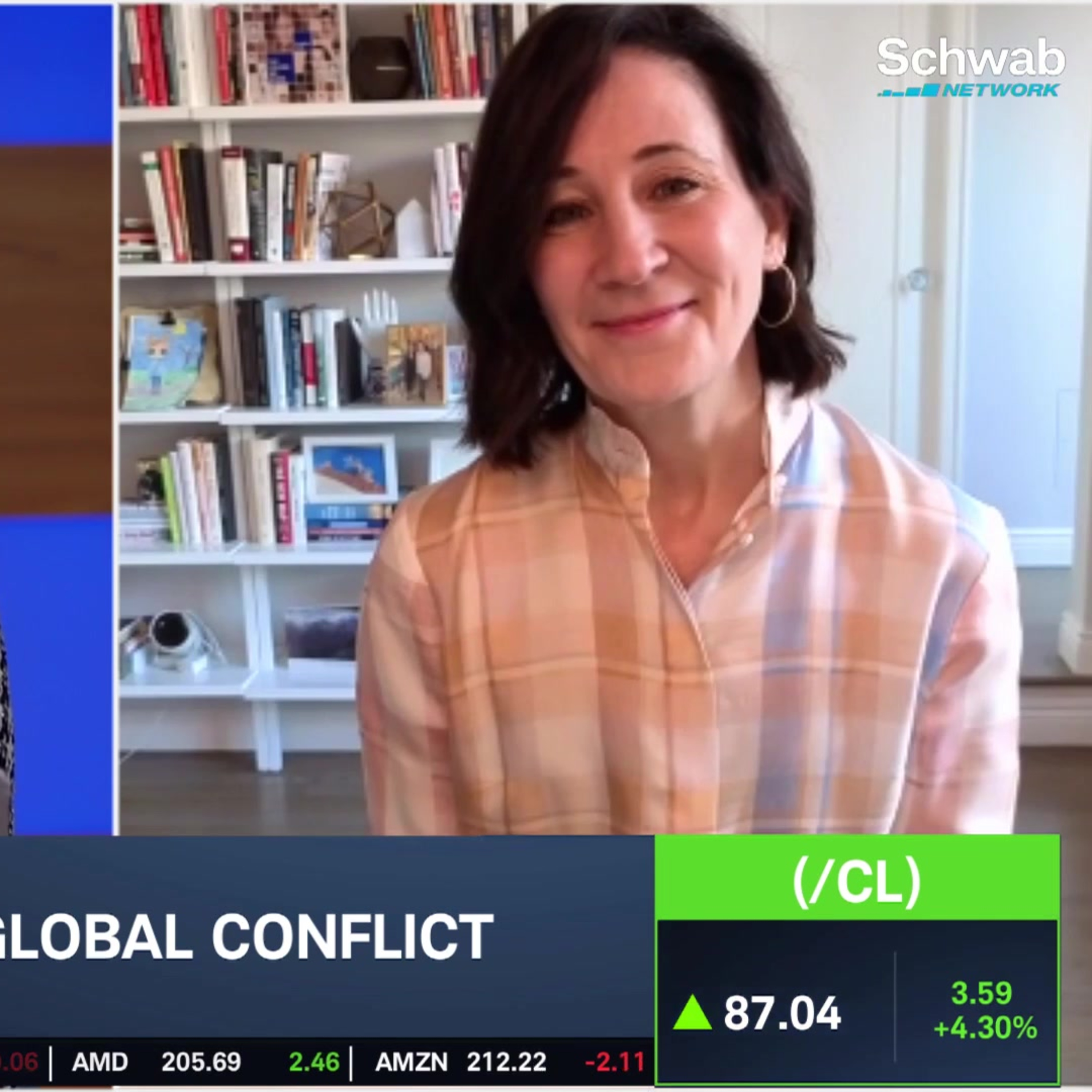
Michelle Brouhard explains how the U.S. energy sector is entwined with the global oil trade, and how a U.S. export ban would affect the system. She notes that prices would fluctuate around the country and U.S. maritime rules would make moving energy around more difficult. It would also make the U.S. look like an “unreliable supplier” to the rest of the world. The move would also “exasperate” global energy prices, with a total of 25-30 million barrels per day disappearing from the market.
======== Schwab Network ========Empowering every investor and trader, every market day.Options involve risks and are not suitable for all investors. Before trading, read the Options Disclosure Document. http://bit.ly/2v9tH6DSubscribe to the Market Minute newsletter - https://schwabnetwork.com/subscribeDownload the iOS app - https://apps.apple.com/us/app/schwab-network/id1460719185Download the Amazon Fire Tv App - https://www.amazon.com/TD-Ameritrade-Network/dp/B07KRD76C7Watch on Sling - https://watch.sling.com/1/asset/191928615bd8d47686f94682aefaa007/watchWatch on Vizio - https://www.vizio.com/en/watchfreeplus-exploreWatch on DistroTV - https://www.distro.tv/live/schwab-network/Follow us on X – https://twitter.com/schwabnetworkFollow us on Facebook – https://www.facebook.com/schwabnetworkFollow us on LinkedIn - https://www.linkedin.com/company/schwab-network/About Schwab Network - https://schwabnetwork.com/about
Get every episode summarized
Each time Schwab Network publishes, we email you a written briefing from the transcript — the topics, who appeared, and any specific claims, with the ad reads skipped.
Email me new episodesFree for 3 shows. No card needed.
Transcript ready
88 searchable segments. Every word is indexed and playable.
Full transcript
Schwab Network — Why a U.S. Energy Export Ban is a Last Resort. Machine-transcribed; use the interactive transcript above to jump the player to any line.
It's time to discuss the future of oil and the global conflict and what the outlook could be if the United States were to pursue some creative options, one of which could be potentially ban-include oil exports. Joining us now to take a closer look at some of these options, Michelle Brohard, the Geopolitical Analyst at Kepler, Michelle, a really interesting report that you put out at the start of the war that outlined several policy options that could be available to the U.S., they included things like lifting Russian sanctions, releasing barrels from the Strategic Petroleum Reserve, providing insurance support for ships, which we've already seen that one now being executed. And then in the most extreme case, this U.S. export ban. So I want to dive into what that might look like. If that were something that the administration were to consider, or perhaps put into place, and there's a couple different versions, right? Maybe my export, all oil products, perhaps just refined products. So can you walk us through just sort of an overview of why you wrote this letter and how realistic
you think this possibility could be? Yeah, sure, thanks for having me. The U.S. export ban would be an extreme measure. And today, right before this call, the IEA just announced that they were going to release some of the SPR. They said 400 million barrels of SPR releases. I haven't yet seen the breakdown of that. How much is going to be crude and how much is going to be products? But if the U.S. went to export crude or products or the two of them, it would be really significant. So the U.S. exports about four to five million barrels a day of crude oil. A lot of that goes to China, Russia, sorry, China, Europe, some of it to Africa. If they stop exports, U.S. exports of crude, those countries would be even in a worse position than they are right now without receiving the straight of our moves and flows. If they move to export products, you're talking about other Asian countries like Thailand, Vietnam, even Latin American countries like Mexico, Colombia, that are receiving U.S. products.
If they stop receiving those products, then they will also have a crunch. I've already seen Thailand have fuel shortages. We've seen Vietnam have fuel shortages. So you're starting to see like a real crunch if the U.S. does move to export these products. It would be a real extreme measure. But the administration did float the idea yesterday. And at a high level, if we were to see an export ban like this, what would that do to oil and fuel prices in the United States, specifically versus the rest of the world? Yes, that's such a great question. And it really is the reason why it would happen is because U.S. products, the U.S. system and the global oil system is a combined system, right? Whereas before 2015, the U.S. was really insulated because we didn't export any crude oil. It was in 2015 when the export ban was lifted and the U.S. became a big exporter of crude plus products because of the shell boom. So if they went back to banning crude oil exports, the price of crude oil in the United States
versus the price of crude oil globally, the spread between those two could move 25 to $30 where the price of crude oil in the U.S. would be significantly lower and the price globally would be significantly higher. If they do a ban of products and allow crude to flow freely, the price of products in the U.S. would go down dramatically. Again, there will be dislocations, so like the U.S. Gulf Coast where we make most of our product, the prices would be significantly lower than the U.S. East Coast or the U.S. West Coast, because we have to send both of those coast import crude oil, import products from either Europe or Asian countries, because we have a rule in the United States called the Jones Act, which means that if you want to go from one U.S. port to another U.S. port, you have to have a ship that was made in the U.S., that flies a U.S. flag, and that has U.S. crude. And there's only a limited number of those ships. So if they were to ban exports, they should also waive the Jones Act at the same time so that U.S. Gulf Coast products can move
to the East Coast and the West Coast. All right, so a lot of potential implications here, but you've said things like this would be an extreme case, even though it's been floated or a last resort potentially. Why would the government be reluctant to use this type of export ban? Well, one reason is, is it makes the U.S. look like an unreliable supplier. And if you are supplying products to Europe and now Europe can't get their products, for example, you look like an unreliable supplier. So it makes the U.S. It would make you think twice about doing business with the U.S., whereas if you look at Saudi Arabia, they're kind of the gold standard of being like the reliable supplier. They, even now, they haven't cut their commitments to their clients, their customers, because they can get some, they can reroute some of their crude three, and they also have global storage that they're able to draw down to send to their customers globally. So they pride themselves on being a reliable supplier,
whereas we've seen disruptions across the world over the last several years. If you look at the Arab Spring, we've had Libyan disruptions, we've had Algerian disruptions, we even had like the Suez Canal disruptions with the Houthis. And so because you see these disruptions, you want someone that's a reliable supplier, and the U.S. not being a reliable supplier would be, would be detrimental for the U.S. producers and the U.S. producers of refined products. And it would also be bad for our allies like Europe or even Latin America. And Michelle, obviously the argument behind putting something like this in place would be to lower the prices here at home, but from a market perspective, would an export ban actually solve the issue of higher oil prices overall, or would it just simply shift the pressure to other parts of the world? Yeah, it would only solve a U.S. problem. It would certainly not, it would exasperate a global problem. So it would raise prices globally significantly, because we export six million barrels a day of crude plus products. And that's a lot already,
the world can't receive 20 million barrels a day from from the Strait of Hormuz. China stopped exporting, which is another call it million barrels a day of products. So it's the U.S. stopped you're talking about 25 to 30 million barrels a day that has just disappeared from the market altogether. Well, Michelle, we really appreciate you being with us to highlight some of the potential avenues that we could see explored as this conflict in the Middle East continues. Michelle Brohard, the Geopolitical Analyst at Kepler, thanks again for being with us today on Trading360.
More episodes
More from Schwab Network

JNJ Balances Growth, Patent Transitions, and Legal Overhangs
Schwab Network

nCino (NCNO) CEO on Earnings, AI in Banking & Overcoming "SaaS-pocalypse"
Schwab Network

The Big 3: NET, TWLO, ASTS
Schwab Network

Tie Lasater on Inflation Floors, Energy Risk, and Private Credit Stress
Schwab Network