What Nasdaq Options Flows Say About Current Market Positioning
About this episode
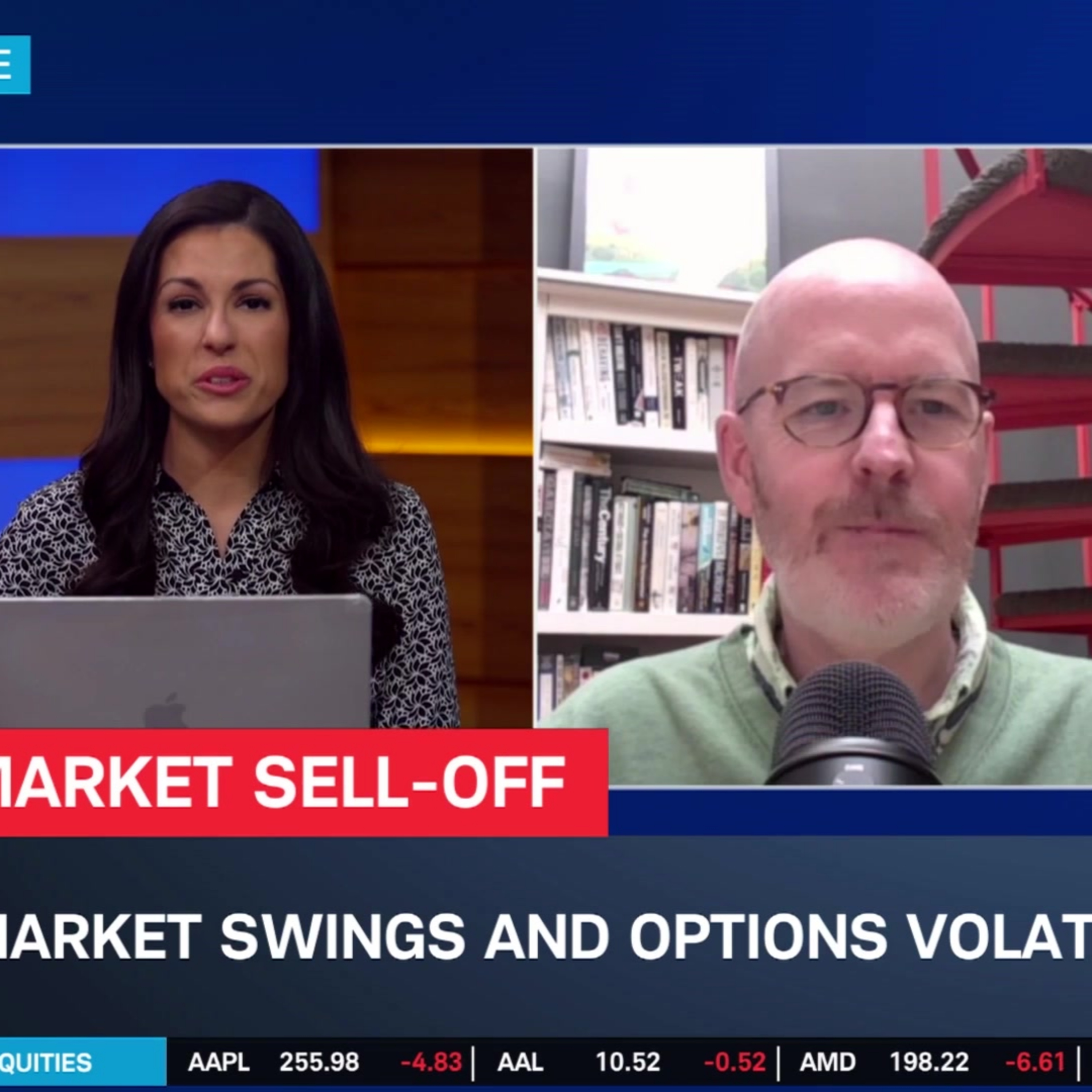
“It’s been a tsunami of potentially concerning headlines,” says Kevin Davitt. He uses Nasdaq’s data to help gauge recent performance in tech after the latest earnings cycle. Turning to options, Kevin looks at flows, which he interprets as showing a swing back towards macro risk. Retail investors are becoming “increasingly sophisticated” very quickly, he notes.
======== Schwab Network ========
Empowering every investor and trader, every market day.
Options involve risks and are not suitable for all investors. Before trading, read the Options Disclosure Document. http://bit.ly/2v9tH6D
Subscribe to the Market Minute newsletter - https://schwabnetwork.com/subscribe
Download the iOS app - https://apps.apple.com/us/app/schwab-network/id1460719185
Download the Amazon Fire Tv App - https://www.amazon.com/TD-Ameritrade-Network/dp/B07KRD76C7
Watch on Sling - https://watch.sling.com/1/asset/191928615bd8d47686f94682aefaa007/watch
Watch on Vizio - https://www.vizio.com/en/watchfreeplus-explore
Watch on DistroTV - https://www.distro.tv/live/schwab-network/
Follow us on X – https://twitter.com/schwabnetwork
Follow us on Facebook – https://www.facebook.com/schwabnetwork
Follow us on LinkedIn - https://www.linkedin.com/company/schwab-network/
About Schwab Network - https://schwabnetwork.com/about
Get every episode summarized
Each time Schwab Network publishes, we email you a written briefing from the transcript — the topics, who appeared, and any specific claims, with the ad reads skipped.
Email me new episodesFree for 3 shows. No card needed.
Transcript ready
180 searchable segments. Every word is indexed and playable.
Full transcript
Schwab Network — What Nasdaq Options Flows Say About Current Market Positioning. Machine-transcribed; use the interactive transcript above to jump the player to any line.
Evan David, the head of index options content over at NASDAQ. Kevin, great to have you with us. I hope you're with us. There you are. Wonderful. Taking a look as we're nearing the end of our season pretty much, we've got Adobe coming after the bell here. But most of the big names are behind us at this point. We've mostly been focused on this headline risk, though. We're doing this headline-driven market. We're constantly talking about oil and Oracle had a really strong report the other day. But even that was touched on maybe 50 percent of what it normally would be touched on because we have so much happening in the headlines right now in terms of geopolitical risk. So I'd love to just start with your thoughts on the earnings season. I know you're always studying the data and get some of your observations from what we learned about the markets this earnings period. Well, thank you very much for the opportunity, Marley. I would argue that markets are probably appropriately focused on geopolitics and headline risk here and now. If I stand back and think about the past three months,
there's arguably been some of the greatest headline deluges in my time in markets. So you think the Venezuela, Greenland, Nauran, Japanese bonds, the moves in metal, private credit, AI breakthrough, I could go on and on. It's been a tsunami of potentially concerning headlines. And I understand that concern, but I also would argue that it's worthwhile considering the fundamental backdrop since earnings are effectively behind us. Now, my colleagues in NASDAQ's index team, they do a great analysis around earnings and there is a visual that hopefully we can share and then talk through what viewers are looking at. We have a look at the top 20 constituents in the NASDAQ 100 and their relative weights are reflected in the bubble size. Then the Y-axis, the vertical axis, goes from 20% down to 30% up.
That is tracking 2026 year-to-day price performance. So in that situation, you see names like Tesla and Microsoft are down meaningfully, names like Amat, Micron, Costco, and Intel are up quite a bit. The X-axis, the horizontal one, shows Q4 profit growth year over year. So that's the one I'm kind of more focused on here and now, Micron and Vidya and Palantir are leaders there and Tesla and T-Mobile are kind of laggards. Now, of the top 20 constituents in the NASDAQ 100, the vast majority, 85% have seen year-over-year profit growth and by and large, their forecasts are for continued growth. Margins are not coming in, but the sentiment has and the narrative has certainly shifted focus of late, which again, I understand that given the level of uncertainty. And I don't know what's next,
but it's kind of a forest for the trees reminder. And I think it's also no wonder against that backdrop that we continue to see primarily risk-defined index options, volumes and flows, significant flows from Schwab clients in particular. And Kevin, I'm glad you brought up the index options. I wanna talk about the trends that you're seeing recently here in terms of what's happening with index options in this new more volatile environment that we've had since the end of February. I mean, you mentioned Venezuela, which feels so far removed almost from the headlines we're having right now, but it has been a particularly volatile several weeks here. As you're looking at it, where are you seeing the most interest? How are you seeing the new options' explorations perform? That is a broad question. Now, I'll hopefully answer it broadly and then zero in a little bit. From a broad perspective,
this growth has been going on for the past handful of years. Pretty much since daily options have been available to the market. More recently, given the sort of shift to managing macro risk, we are on pace as an industry for back-to-back record volume weeks for index options. Now, that's a move away from single name equity options or ETFs, ETF options have been very active as well. So I think this is indicative of a swing back toward macro risk given those headlines and away from kind of the more sector or stock specific narratives. And index products, index options in particular allow and users to really efficiently manage that portfolio risk. Now, we see this in our data at the exchange. And I would say that Schwab flows stand out early in the month. I look at NDX option volume and relative to last month,
which was very strong. Schwab clients are up 25% in terms of volume. Now, I compare that to the queues, which are one of the most active option products in the market. That volume is up 13%. So I would say that's indicative of your client base clearly caring about NASDAQ 100 exposure. Beyond that, though, I think that individual investors and the investing public are becoming increasingly sophisticated. And I think that's happening very quickly. Specific to index options. I think they understand and appreciate the cash settlement, the European styling and that kind of expiration certainty. That is distinct from the physical delivery and post-close expiration on certainty with single stock names and ETF options. Last time when I was in the studio, we talked about that nuance with respect to this broader rollout of Monday and Wednesday
options in nine securities. And then the last point I would make here is that as we approach the middle of April and tax day, I think it's worth pointing out that index products typically get preferential tax treatment relative to ETF sort of brethrens. And that comes with the caveat of you out to consult with your advisor. And Kevin, I want to get your take to on the volatility that we've seen. You know, I'm looking at it right now. We're at 26. But we've seen some pretty impressive swings over the past few weeks. They've been rather significant. So in terms of options, volatility levels, how are you seeing that play out? You frame that really well. I think some of the swings that we have seen intraday, particularly over the past couple of weeks have been very, very significant. I think back to Monday, which was roughly a greater than 4% high-low move in the NASDAQ 100. The average daily range, when I look back two weeks
at the NASDAQ 100 futures, which as your listeners know are trading overnight, is 565 points. Let's put that in a little context. That's about 2.3% of the spot index level. Now for what it's worth, that same measure in the S&Ps is about 1.9% of spot. One of my theories is that I believe that some people are drawn to the NASDAQ 100 complex in part because of that slightly higher volatility metric. They see it as opportunistic. To your question about implied volatility measures, you reference the VIX around 2627, the VXN, which is NASDAQ 100 facing, is up around 30. Now I have another visual if we're able to pull that up that shows risk reversal metrics and I'll explain what that means for the audience. But in short, it looks at one month 25 delta calls and puts.
And what we see here and now is that the put volatility as of last week, last Friday, which was a very weak close, was trading 12 VAL points over the 25 delta call. That is the most significant premium or sort of bid for the downside, outside of the sort of tariff tantrum from April of last year, you'd have to go back to 2022 for a bigger skew. It's a great proxy for index skew. And that's really the takeaway that the way I interpret this is that the relative cost of insurance is elevated. You could make an argument that upside screens cheap, but again, that would be sensitive to how it's managed. But in general, volatility is elevated, but not at panic levels. And it'll be very interesting to see how that plays out over the rest of this week and next week.
Well, Kevin, we really appreciate you joining us today to take a closer look at some of the options activity that we're seeing on the index level and highlighting some of those trends that you've observed there. That's Kevin David, the head of index options content over at NASDAQ. Thanks for watching. I'll see you next week. Bye.
More episodes
More from Schwab Network

JNJ Balances Growth, Patent Transitions, and Legal Overhangs
Schwab Network

nCino (NCNO) CEO on Earnings, AI in Banking & Overcoming "SaaS-pocalypse"
Schwab Network

The Big 3: NET, TWLO, ASTS
Schwab Network

Tie Lasater on Inflation Floors, Energy Risk, and Private Credit Stress
Schwab Network