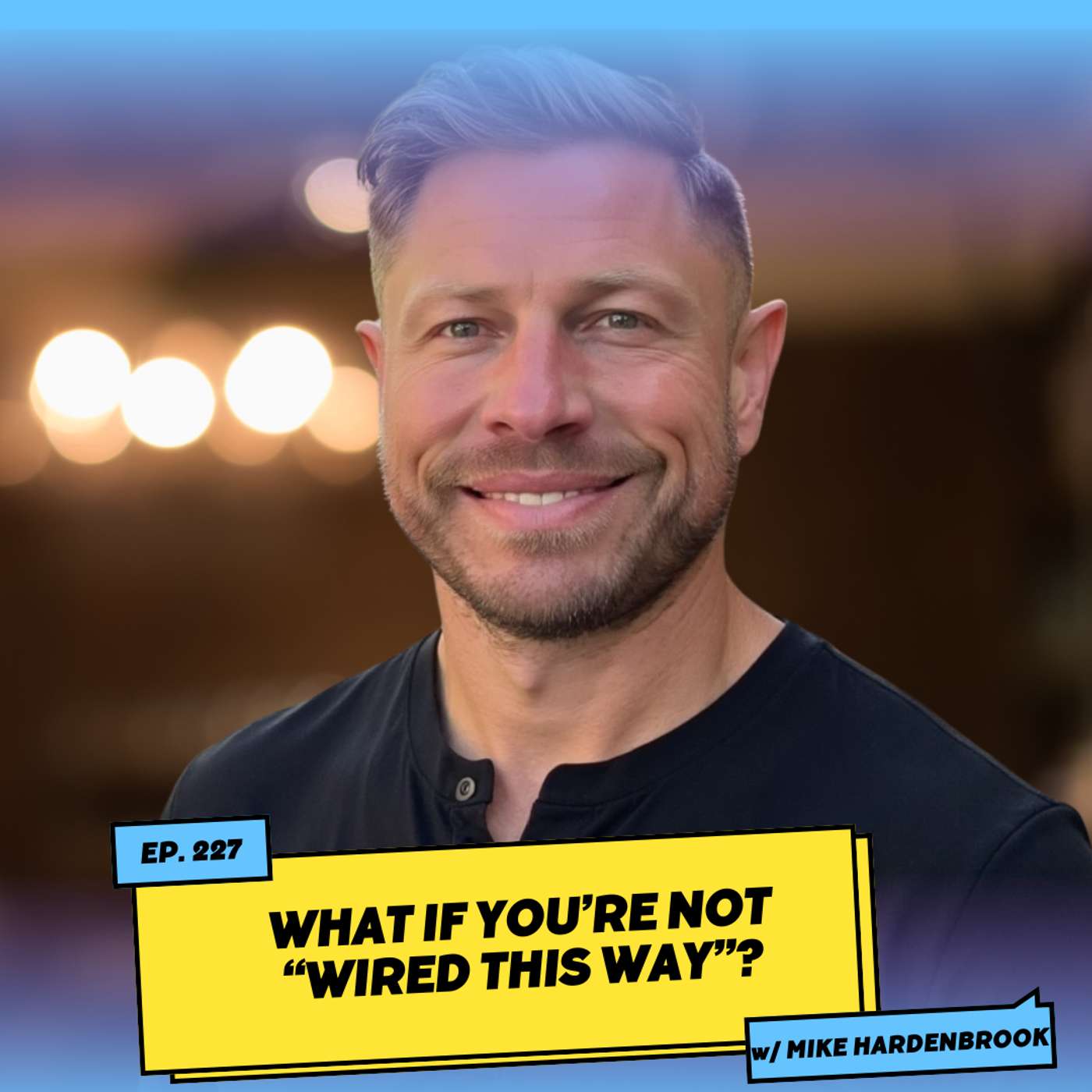
About this episode
At some point, a lot of people assume their drinking is just part of their personality. In this episode, we unpack the myth of the “addictive personality,” explain how habits get automated in the brain, and explore why reinforced behavior can start to feel like identity. What if this isn’t who you are — but just what your brain learned?
CONNECT WITH SUNNYSIDE:
- Listen to Journey to the Sunnyside Podcast: https://bit.ly/4bxCqT3
- Subscribe to Sunnyside’s YouTube Channel: https://bit.ly/3zuoID4
- Instagram: https://www.instagram.com/joinsunnyside/
- Facebook: https://www.facebook.com/joinsunnyside/
- Twitter: https://x.com/joinsunnyside
- TikTok: https://www.tiktok.com/@joinsunnyside
ABOUT SUNNYSIDE:
Sunnyside is the #1 alcohol health app that helps you drink less without any shame, guilt, or pressure to quit. Optimize your alcohol habits to achieve benefits like sleeping better, losing weight, feeling more energy, and saving money. We know that an all-or-nothing approach doesn’t work for everyone, so we focus on helping you set your own goals, celebrate small wins, and build a lasting system of accountability. As a result, 96.7% of our members see a big drop in their drinking after 90 days.
We now offer Sunnyside Med, a new program that provides access to compounded naltrexone, a medication that can reduce alcohol cravings at the brain level, offering a more clinical pathway for people who need it. Sunnyside Med is a complete, holistic approach to help you drink less or quit, including coaching, community, habit change, education, and more to help you create longterm change while the medication does its work.
Disclaimer: This podcast is not intended as medical advice, and the views of the guests may not represent the views of Sunnyside. If you’re concerned about your health or alcohol use, please consider seeking advice from a doctor.
Get every episode summarized
Each time Journey to the Sunnyside publishes, we email you a written briefing from the transcript — the topics, who appeared, and any specific claims, with the ad reads skipped.
Email me new episodesFree for 3 shows. No card needed.
Hosts & guests
Transcript ready
118 searchable segments. Every word is indexed and playable.
Full transcript
Journey to the Sunnyside — What If You’re Not “Wired This Way”?. Machine-transcribed; use the interactive transcript above to jump the player to any line.
Welcome to Journey to the Sunny Side, the podcast that helps you build a better relationship with alcohol and uncover the secrets to mindful living. Each episode brings you real stories, expert insights, and practical tools to support your goals. Whether you're cutting back, taking a break, we're thinking about quitting for good. I'm your host, Mike Hardenbrook, bestselling author, neuroscience enthusiast, and habit change expert. This show is brought to you by Sunny Side, a personalized science-backed program that helps you to drink less through habit change, coaching, and community. And for added support, we now have Sunny Side Met, a clinical option offering access to compounded naltruxum, a prescription medication that reduces cravings and helps prevent binge drinking. If you're ready to start your journey, get your free 15-day trial at sunnyside.co. Hey everybody, welcome back to another one of these 10 Minute Mondays, and today I want
to start with something that I hear all the time. And it usually sounds like a version of this. I don't know, it's just kind of this is who I am, and I've always been this way. Maybe I just have an addictive personality, or I'm just wired for this. Even way or another I've heard many different versions of that, and underneath it there's usually shame, and a little bit of a quiet resignation. And today I want to separate something very clearly. Your habits are not your identity. Let's start with the idea of the addictive personality, because that gets tossed around a lot. It sounds scientific, it sounds like maybe it's been proven, but here's the truth. There is no formal psychiatric diagnosis called addictive personalities. It's just not something that clinicians diagnose. What the research does show is that certain traits in individuals does potentially increase the likelihood. So things like higher impulsivity, higher neuroticism, more novelty seeking personalities, and
if you have a lower tolerance for distress. So here's the thing, correlation is not predestined, is not your destiny, personality influences risk, of course, but it does not determine your fate. That's a distinction that really matters here, because what most people interpret as their identity is often just a reinforced behavior, and that's very important here because those live in very different systems inside of the brain. Here's where the neuroscience gets interesting. Your brain has an automation system. Think of it like a habit hard drive. When you repeat a behavior enough times, the brain shifts out of the conscious decision-making center and into the automated loop. So you have the cue, the routine, the reward, the structure for the habit loop. Repeat that loop enough times, and it runs on very little conscious effort. That's all around the brain looking for efficiency.
Now here's the key part, your sense of identity does not live in that automation system. Identity lives in completely different networks in the brain. The one that activates when you reflect on yourself, when you think about your story, when you ask yourself things like, who am I? So we have two different systems, one automates behavior, the other explains behavior. They are not the same thing, but when we don't understand that, we blend them together, and that's where the shame starts. Here's what usually happens. You repeat a drinking pattern. Maybe it starts off as stress relief. Maybe it's social ease. Maybe it helps you unwind during a hard time in your life. The brain reinforced it because it worked, and this is important because dopamine doesn't just fire because something is bad or good. It fires because something is relieving and it's meaningful inside your brain. Now the loop is strong, the brain wants the story to match the behavior.
So instead of saying, I'm reinforcing a coping loop, we just say, this is who I am. In psychology shows that we prefer self-consistency. So once we adopt a label, the brain looks for evidence to support that, it filters it, it reinforces it, because it prefers coherence. So if you decide this is your identity, your nervous system will start behaving in a way that supports that belief. And here's the thing, that's powerful, it's also reversible. Let's go one level deeper though. A lot of drinking habits are not personality-driven, they're nervous system-driven. There's something in psychology called the self-medication hypothesis. The idea is that many substances in these patterns begin as an attempt to regulate emotional discomfort, things like stress and loneliness, and being overwhelmed in anxiety. And alcohol, it works quickly on calming the brain, we all know that.
And it quites the mind, it kind of just takes the edge off, right? From a nervous system perspective, that's really adaptive. Your body was able to find belief. Now the problem with that is that this strategy, which we all know is not a good strategy for self-medication, got reinforced by the body and the brain. Add chronic stress to the mix, and the brain amplifies that relief signal and that loop that I talked about, the habit loop strengthens faster. Again, this is biology, this has nothing to do with identity, and most people, they don't have a problem when it comes to personality, they have a nervous system that is just basically learned a very efficient coping strategy. So those are two different stories. Now here's the part that matters, something called neuroplasticity. The same mechanism that wires habits can also rewire them. So circuits strengthen with repetition, circuits weaken when they're not reinforced, and
new patterns can override old ones. So if a personality determined your fate, neuroplasticity, it basically wouldn't exist. But it does, and your brain learned the loop, it can also learn something else, and here's the truth. Identity often follows behavior, but not the other way around. When you reduce frequency, when you build friction, when you interpret cues, when you experiment with new responses, something starts to shift, and the narrative shifts with it. You don't wake up one day and declare, hey, I've got a new identity. You build it through repeated actions, and reinforcing these new behaviors. So going back to where we started, if you're listening to this right now and thinking, maybe this is just who I am, I want you to pause there, because is that actually true? Or is it a pattern that your brain has just automated? Because those are not the same things you are not you're drinking habit, you're the one
just noticing it. And the moment that you can notice it, you're putting yourself already on the outside of it. It's about understanding what your brain has learned, and once you understand that, you can start shaping what it learns next. All right, thanks for hanging out with me today. If you got anything out of this, please rate and review. Of course, I love hearing from you, send me an email mic at sunnyside.co, and until next time, cheers to your mindful drinking journey. Journey to the sunnyside is brought to you by sunnyside, a personalized science-backed program that's already helped over 500,000 people cut out more than 24 million drinks. No matter where you are on your journey to build healthier drinking habits, sunnyside meets you where you are. And now, with sunnyside med, you can access compounded now-treksum. A doctor prescribed medication proven to reduce cravings and prevent binge drinking, giving you the peace of mind you need to make lasting change.
If you could benefit from drinking a bit less, head on over to sunnyside.co for a free 15-day trial.
More episodes
More from Journey to the Sunnyside

Before Mindful Drinking, There Was Moderation Management w/ Andrea Pain
Journey to the Sunnyside

Why “I Thought I Was Past This” Is Completely Normal
Journey to the Sunnyside

Cravings vs Habits: Understanding How Naltrexone Really Helps w/ Jenny Williamso...
Journey to the Sunnyside

Not an Alcoholic. Still Not Fine w/ Jennifer Kautsch
Journey to the Sunnyside